The last stop rewrites everything
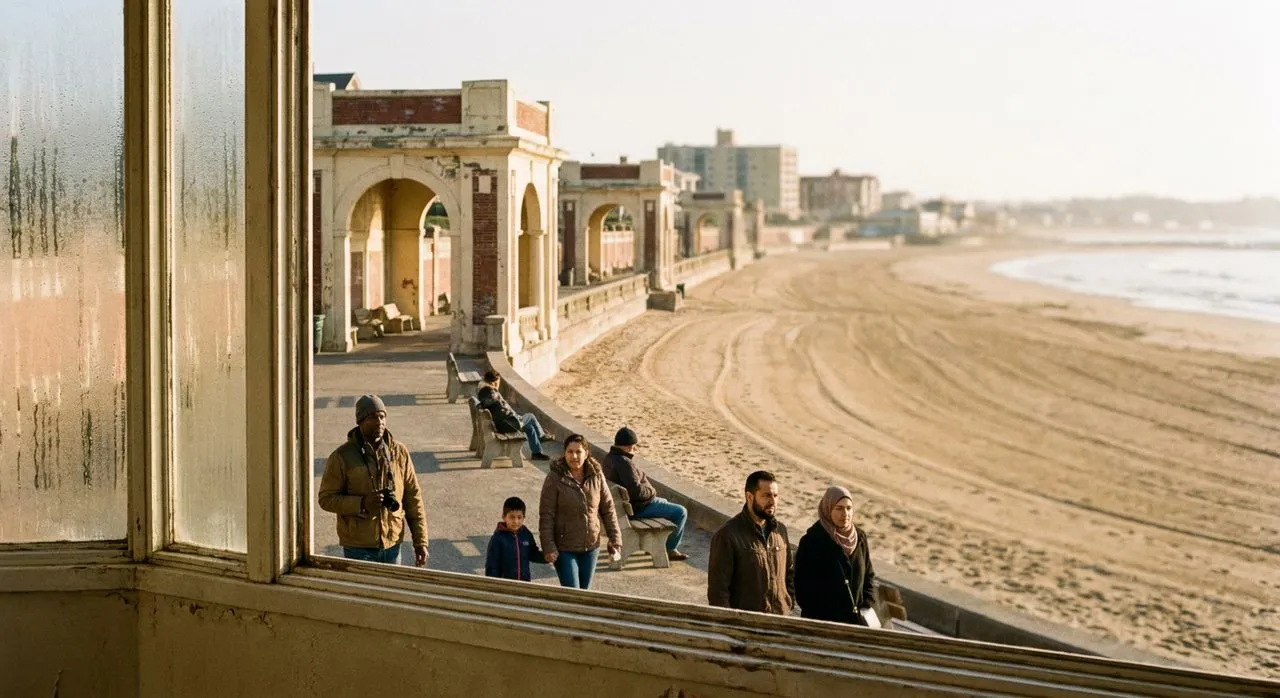
The Bx12 pulls away from Fordham Road, crosses into Pelham Bay Park, and suddenly you're threading through salt marsh and woodland that feels borrowed from Cape Cod. You step off at the final stop and there it stands: a sweeping art deco pavilion the color of old cream, its twin towers flanking a promenade that Robert Moses commissioned in 1936. Before 11:47 a.m.—the moment when the second wave of buses deposits weekend warriors—this mile-long crescent belongs to early risers and people who've learned that timing beats destination every time. The parking lots sit half-empty. Gulls own the hexagonal pavers. You can choose your section of sand the way you'd choose a seat in an empty theater.
Updated August 2026: hours, prices, reservations, event dates, transit details, and venue policies can change. Use the linked official venue, city, or operator sources in the Sources section as the final reference before you go.
The pavilion's central archway frames Long Island Sound with the precision of a Renaissance painting. Photographers who arrive at 9:30 catch the sun at an angle that turns the columns into sundials, their shadows striping the terrazzo in perfect geometry. Stand beneath the center arch and you're looking straight through to City Island's masts, a composition Moses himself probably sketched on the back of a permit. The locals know section three—the stretch directly in front of the middle food pavilion—clears first after rain because of the drainage angle. They also know the benches on the eastern colonnade catch shade by 10 a.m., making them the superior spot for coffee and the Times before committing to sand.
The arithmetic of arrival
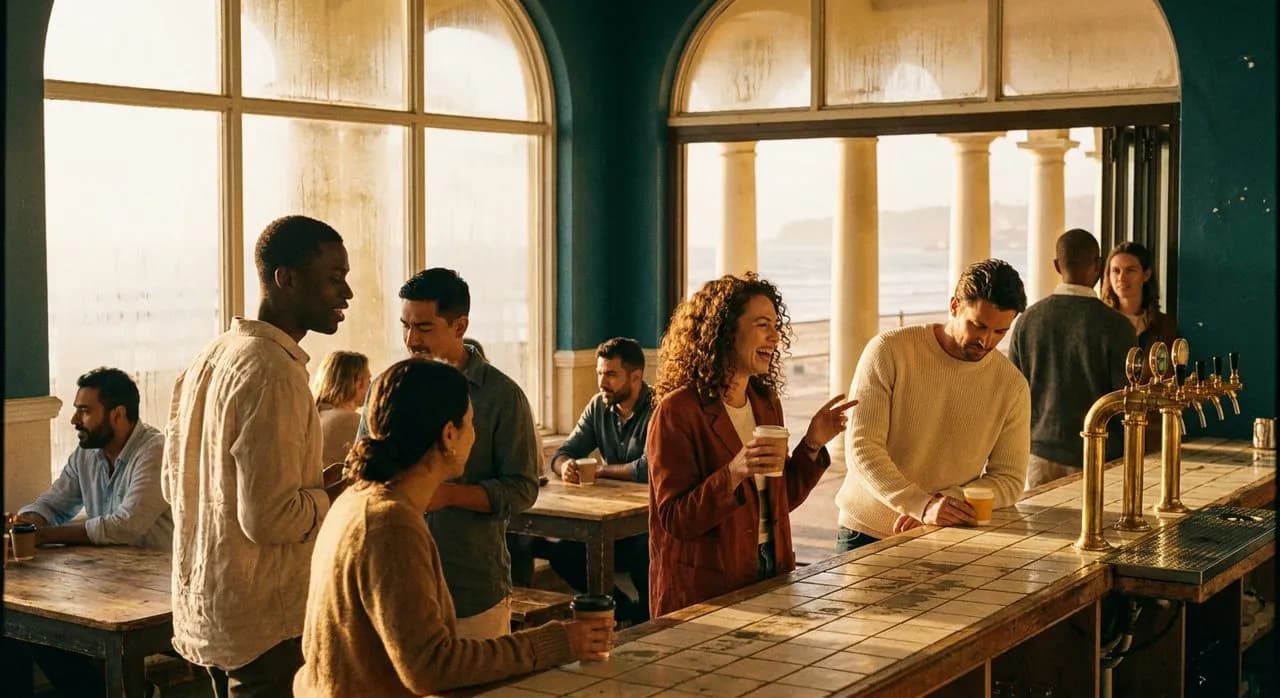
Pelham Bay Park swallows 2,772 acres, making it the city's largest park, but Orchard Beach's 115 acres of sand and promenade operate on a different clock than Prospect Park or Central Park. The Bx12 runs every twelve minutes during morning hours on weekends. The 9:03 departure from Pelham Bay station puts you on the sand by 9:18. The parking lot—thirteen thousand spaces when full—charges twenty dollars, but only after 10 a.m. on weekdays, all day weekends. Arrive at 9:45, park free, walk the promenade before the lot attendant even unlocks the booth. By noon, cars circle like sharks. By 12:30, people are double-parking and arguing in three languages.
The beach crew—ask for Ramon or Delia at the main comfort station—will tell you the bathroom nearest the eastern food stand stays cleanest because fewer people walk that far. The showers work best before 11, when water pressure hasn't yet dropped from overuse. These details matter when you're planning to stay past the quiet window and into the afternoon swell.
Reading the promenade's architecture
Moses built this beach by trucking in sand from Sandy Hook and the Rockaways, creating something that didn't exist: a Bronx shoreline that could compete with Coney Island. The pavilion's design quotes Mussolini-era Italian rationalism, all symmetry and nautical motifs rendered in cast stone. The food stands—there are three, spaced evenly—still operate from their original 1930s shells, though the menus have evolved from hot dogs and soda to include jerk chicken, arepas, and bubble tea. The middle stand, directly under the main tower, sells the coldest drinks because its refrigeration unit sits in the shadiest corner of the structure. Order a coconut water, walk to the colonnade's north end, and watch the Throgs Neck Bridge traffic crawl while you stand where WPA workers mixed concrete ninety years ago.
The hexagonal pavers—thousands of them, each one hand-laid—create a pattern that looks random until you realize it's based on a six-pointed star radiating from the central arch. On early mornings, before foot traffic scuffs them, you can trace the geometry like a treasure map. Skateboarders discovered years ago that the eastern ramp, the one leading down to section five, has the smoothest gradient for tricks. They arrive at dawn, before park enforcement, and they're gone by the time you're spreading your towel.
The sand's social geography
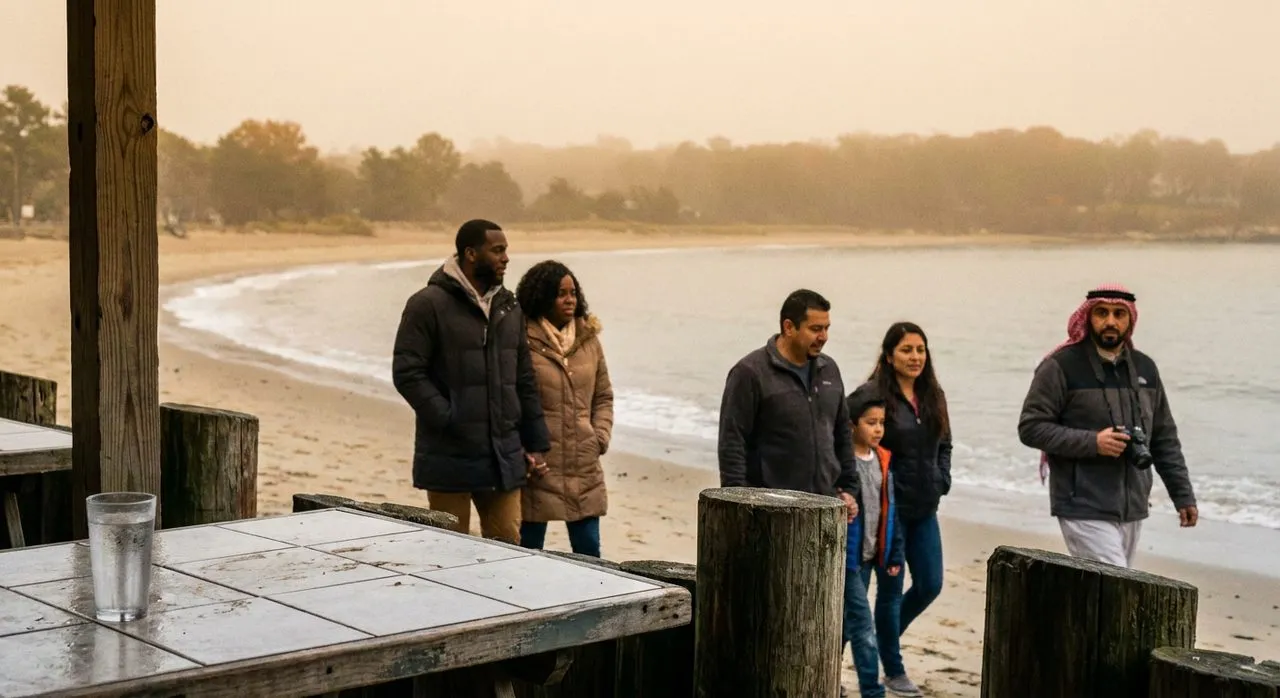
Sections one and two, closest to the parking lot, fill first because humans are lazy and will always choose proximity over quality. Section four, at the eastern end, attracts families with small children because the water stays shallow longer and the lifeguard station there has the friendliest crew. Section six, the western edge, draws teenagers and volleyball players who've claimed that stretch through sheer consistency. The middle sections—three and five—remain the choicest real estate for anyone who wants space to think, read, or simply watch the Sound without someone's speaker drowning out the waves.
The lifeguards rotate positions every ninety minutes. The 9 a.m. shift, usually staffed by the senior guards, tends to be more relaxed about where you set up your umbrella. By the afternoon rotation, they're enforcing the fifteen-foot rule from the waterline with tape measures and whistles. Early arrival means you can plant yourself in the sweet spot—close enough to hear the water, far enough back to avoid the splash zone—without negotiation.
What the morning light reveals
Before noon, the beach shows you its bones. The sand, imported and raked smooth each spring, hasn't yet been churned into the moonscape it becomes by 3 p.m. The promenade's cream-colored stone glows instead of glares. You can see the Bronx's only beach for what Moses intended: a democratic resort, a place where working people could access something that felt European and grand without leaving the city. The irony—that he demolished a thriving community of summer bungalows to build it—sits in the historical record, but the morning light doesn't judge. It just illuminates the arches and the water and the people smart enough to arrive before the crowd rewrites the day.
Bring a book you've been meaning to read. Bring good sunscreen—the Sound's reflection doubles the UV. Bring cash for the food stands, which don't always trust their card readers. And bring the understanding that this window, this quiet stretch before noon, is the real find. The beach doesn't change after lunch; you just have to share it with ten thousand other people who didn't check the bus schedule.
Practical notes
Orchard Beach sits at the southern end of Pelham Bay Park, accessible via the Bx12 bus from Pelham Bay Park subway station (6 train). The beach opens daily from Memorial Day through Labor Day, 10 a.m. to 6 p.m., though the promenade remains accessible year-round. Parking costs twenty dollars on weekends and summer weekdays after 10 a.m.; arrive before that window and it's free. The beach is free to enter. Food stands operate 11 a.m. to 5 p.m., cash preferred though cards accepted. Lifeguards on duty during posted hours. The Bx12 runs every 12-20 minutes depending on time of day; check MTA schedule. Bathrooms and showers located in the main pavilion and at both ends of the promenade. No alcohol permitted. Beach chairs available for rent near the main pavilion, fifteen dollars per day. Bring your own umbrella or rent one for twenty dollars. The promenade is fully accessible; beach wheelchairs available at the main office by request.
Tags: #OrchardBeach #BronxRiviera #PelhamBayPark #NYCBeaches #RobertMoses #ArtDecoNYC #TheBronx #BeachLife #MorningBeach #NYCParks #Bx12 #HiddenNYC #BeachArchitecture #SoundView #TimingIsEverything
Sources consulted: Time Out New York · NYC Parks · Atlas Obscura
All trademarks are the property of their respective owners.