 SoHo Stationery Shop Gift Picker for a New Job Desk
Hidden Gems & Odd Finds
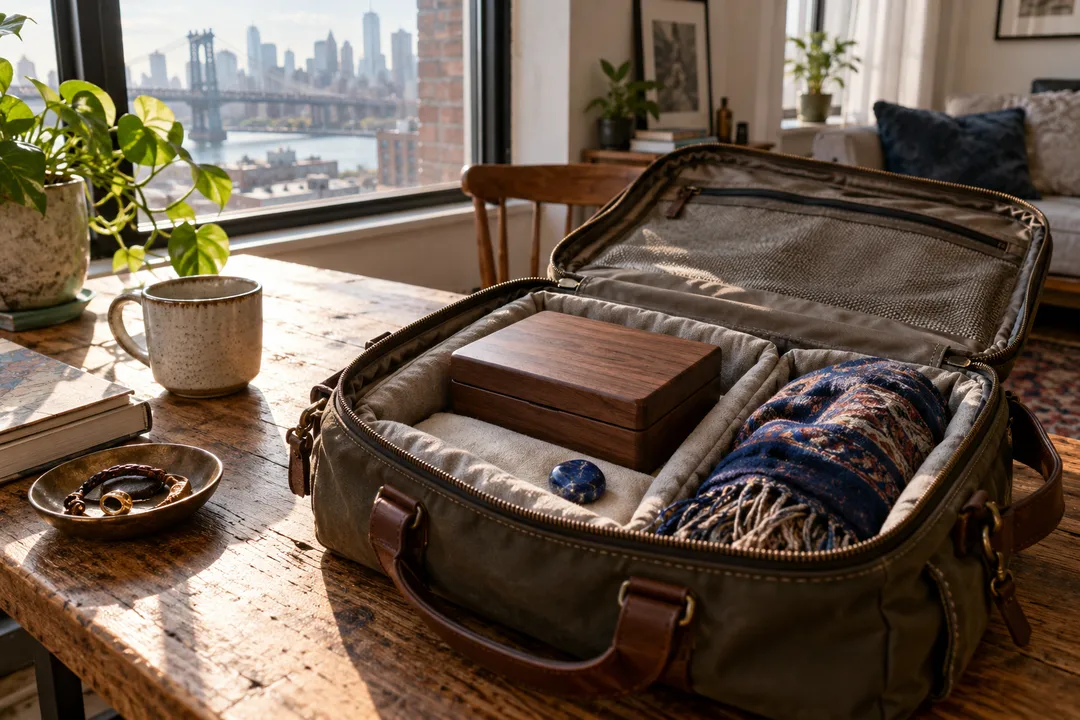
NYC Oddities Shop: Choose Small Finds You Can Carry
Choose portable NYC oddities shop finds around your bag, packing needs and journey home, then use Karpo to plan a practical shopping shortlist.
Choose an NYC oddities shop purchase around the journey home before choosing the object. A compact collectible can still have a fragile edge, a heavy base or a display case that takes more room than expected. Tell the Karpo APP where you are starting, what sort of object interests you and how you will carry it afterward. Ask for a shopping plan that ends near your next destination. The aim is a manageable purchase and a sensible route, with packing and transport decisions made while you can still change your mind.
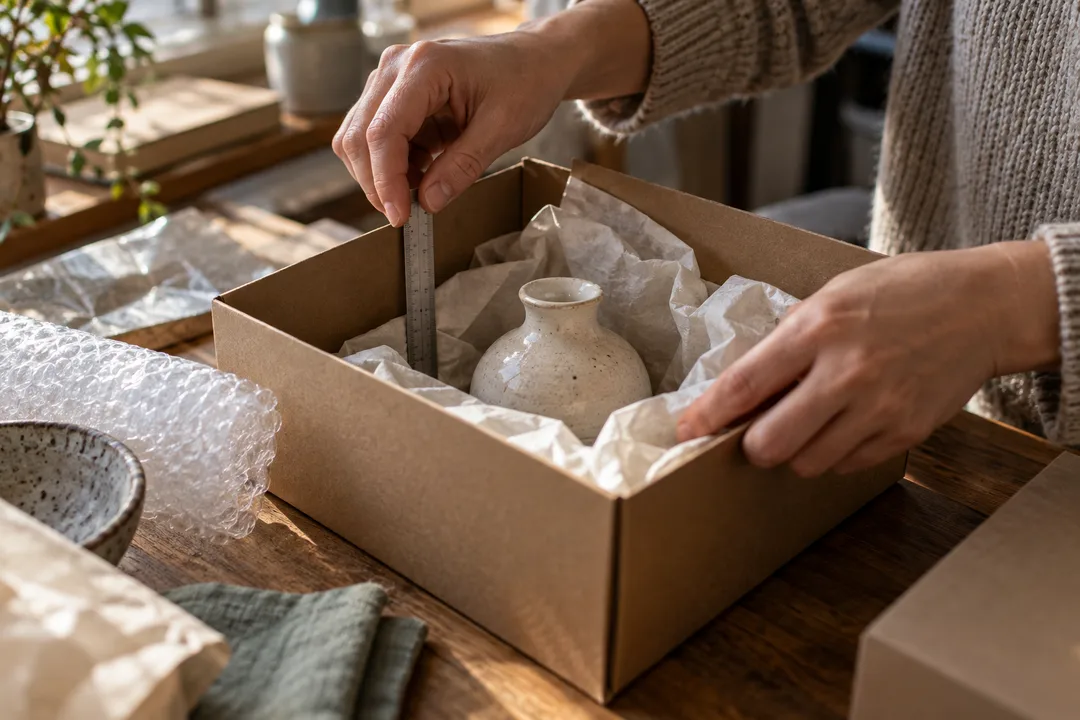
Start with the bag you actually have
Look at the bag you will bring rather than the bag you imagine buying later. Note its interior dimensions, its closure and whether it has a firm bottom. Decide how much of that space can belong to a purchase after your everyday items are packed. A small piece that fits in your palm might need a much larger protective box. Treat the packed dimensions as the meaningful limit when you describe your search, and leave room for your hands to lift the box without catching a delicate surface.
Weight deserves a separate decision. A dense stone and a similarly sized hollow ornament can feel quite different during a long afternoon. Set a personal carrying limit that works for you, especially if your plan includes stairs, crowded transit or walking between stops. This is a constraint to communicate, not a claim about what any retailer sells. If you cannot describe the acceptable size precisely, compare it to an empty box you own and measure that box before sending your request.
Ask for objects that match the trip
A useful message might read: “Help me find an oddities shop in New York for a small unusual object I can carry comfortably. I prefer solid stone or sturdy decorative metal, and I have limited space in my bag. Start near where I am staying and finish near my dinner plans.” Add the actual neighborhoods and your size limit. Karpo can help explore places and shape the outing around those preferences. It is not inspecting packaging, reserving merchandise or approving an object for a flight.
Keep the material request flexible enough for discovery. If your first idea is a tall glass dome, explain that you also like the look of small freestanding objects. That allows a recommendation to satisfy the visual interest without requiring the same fragile format. When the response includes a place that mainly sells furniture or large installations, point out the mismatch. A shorter refined list is more useful than trying to force every intriguing shop into a trip built around a small bag.
Judge the full object, including its support
Look beyond the central piece in a product photograph. A mineral on a stand may be sold with that stand, without it or as part of a larger arrangement. Only the seller's description settles the question. Record the dimensions of the complete item you would receive and any separate parts that need packing. An irregular outline can be more awkward than a simple box even when its longest measurement is smaller. Think about corners, projecting handles and surfaces that rub against nearby objects.
Do not assume that detachable means easy to transport. A removable element still needs a protected place, and a screw or fitting can be lost when the package is opened along the way. Ask the seller how the item is intended to be handled and whether its packaging supports that method. Follow those instructions rather than using this page as object-specific conservation advice. A photograph cannot tell you whether an antique finish, a repair or an unfamiliar material will tolerate pressure from wrapping.
Make packaging part of the decision
Before paying, establish what packaging is actually included and what the packed size will be. A plain shopping bag and a fitted rigid box solve different problems. Ask whether the object can remain upright and whether any separate component has its own compartment. These are questions to bring to a seller, not advertised services attributed to every oddities shop. If the package exceeds your carrying space, pause the purchase decision while you can still choose a simpler object or a different collection method.
Shipping is another separate choice. A shop recommendation does not establish that a seller ships, that it ships to your destination or that its charges fit your budget. If delivery is offered, use the seller's stated terms for the specific object and destination. Compare the complete cost against the alternative of collecting locally. Avoid treating a shipping option as a way to rescue an impulse purchase automatically. It creates its own timing, handling and recipient arrangements that deserve a deliberate answer.
Plan the purchase near the end
Build a route that gives the shopping stop a sensible position. If you will carry the purchase yourself, placing it near your return journey can reduce unnecessary handling. Give Karpo your endpoint as well as your starting point, and ask it to explain the order of suggested stops. A route estimate is planning information rather than a promise about traffic or train departures. Keep room in the schedule for the actual transaction and any conversation about packing, instead of using the whole afternoon on travel.
Leave a long outdoor walk optional once you have a fragile package. You can enjoy a neighborhood before shopping, then head toward your next destination afterward. That order keeps the outing pleasant without making the object the center of every later decision. If friends are joining you, tell them that the shopping portion may finish with a trip home rather than another café. A clear plan is easier to adapt than a bag of delicate objects carried through an unplanned evening.
Flying changes the questions
For a flight, identify the material and the complete contents before choosing how to transport the item. Airline baggage conditions and official security or customs guidance govern those decisions, not a recommendation from a city app. This page makes no statement that a particular specimen, liquid-filled object or antique is permitted through an airport or across a border. When travel documentation matters to you, choose an object whose description you can understand and use the applicable official guidance for your itinerary.
Keep the receipt and the seller's item description together if you buy. They explain the transaction and the seller's claims, without turning those claims into an independent authentication. Avoid relying on a souvenir label as a complete explanation of composition or origin. For a straightforward local gift, you may decide that sturdy contemporary decoration is a better fit than a delicate historical piece. That is a practical selection, and it can leave more of the trip available for exploring the city.
Practical Notes
Prepare three measurements: your bag space, your preferred object size and your maximum packed size. Add a comfortable carrying weight and the journey after the shop. Use those details in the Karpo APP to refine a compact shortlist, then ask the seller the packing questions before deciding. No purchase is required for the outing to succeed. Returning with a clear preference and an empty bag is better than buying something you cannot transport comfortably, and it gives your next search a much sharper brief.
Ask Karpo for more information.
Keep reading
- SoHo Stationery Shop Gift Picker for a New Job Desk
 SoHo Consignment Shop Crawl Planner: Designer Handbag Checks
 Williamsburg Stationery Shop Gift Picker for Office Swaps