 Chelsea Consignment Shop Crawl Planner for Your First Studio
Hidden Gems & Odd Finds
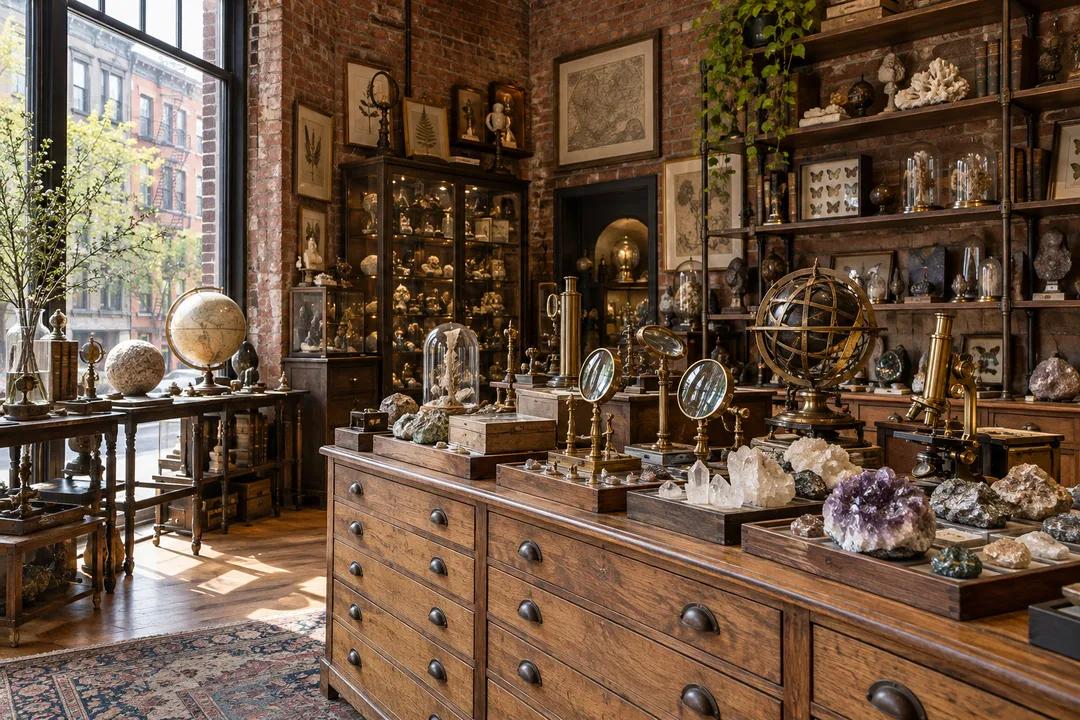
NYC Oddities Shop: Compare 3 Types Before You Buy
Compare NYC oddities shop options by object type, materials and size, then use Karpo to shape a focused shortlist for your first collecting trip.
An NYC oddities shop search becomes easier when you separate natural specimens, decorative reproductions and antique objects before choosing a store. Those categories can look similar in a photograph and answer very different shopping goals. A mineral collector needs identification and dimensions. Someone furnishing a desk may care more about color and a stable base. Use the Karpo APP to describe your preferred objects, starting neighborhood and available time, then ask for a small set of places to research. This page builds that request and explains how to compare the information you receive.

Name the object before the neighborhood
Begin with a plain description of what you want to bring home. “Something strange” invites almost any gift shop into the results. “A small geological specimen for a bookshelf” gives the search a recognizable subject and a practical size constraint. If the attraction is an antique instrument, say whether you want a functional mechanism or an object for display. A decorative replica can be a satisfying purchase when appearance is the goal. It becomes a poor match only when the buyer expects documented age or scientific significance.
Put your nonnegotiable detail first. That could be a material, a maximum height or an exclusion such as no animal-derived objects. Keep preferences separate from requirements so a promising shop does not disappear merely because its photographs use a different color palette. For a first outing, choose one main category and one secondary interest. A search that simultaneously asks for minerals, antique furniture, rare books and mechanical toys is unlikely to produce a concise comparison.
Three categories, three kinds of evidence
Natural specimens call for a name, an explanation of what the item is and any disclosed treatment or repair. Decorative objects call for material, finish, size and condition. Antiques call for evidence supporting the description of age and origin. These are comparison questions, not promises that every seller publishes the answers. When a description omits an answer, record that gap rather than supplying an attractive explanation yourself. An unlabeled object does not acquire a provenance merely because it resembles something in a museum.
A useful comparison can fit into three short entries. For each candidate, record the category it actually advertises, the material described and the information needed to decide whether a visit is worthwhile. Add a source link beside each observation. Avoid making a numerical score from missing information: a blank dimensions field and a clearly oversized object are different findings. The first needs a question. The second can be ruled out against your stated shelf measurement.
Give Karpo a request it can work with
Try this conversational brief: “Help me find an oddities shop in New York for a small mineral or unusual desk object. Start from my neighborhood, keep the trip compact and prioritize descriptions that identify materials. Exclude furniture and animal-derived pieces.” Replace the starting area with your own and add a preferred finish or display size. The request asks for discovery and comparison, which fits Karpo's role as a city exploration companion. It does not ask the app to certify a collectible or guarantee a seller's stock.
When recommendations arrive, narrow the list through a follow-up rather than adding more destinations immediately. Ask which options best match the category and which fit the time you have. If a result is a museum or an online seller, explain that you want a public retail visit and request another option. The goal is a usable shortlist whose assumptions are visible. A long list of fascinating names creates more reading without necessarily improving the shopping decision.
Compare prices only for equivalent descriptions
A small polished object and a large mounted specimen are not meaningful price competitors. Compare dimensions, material, condition and included display hardware before deciding that one listing is better value. Delivery or protective packaging can also matter to the total you are willing to spend. Treat an advertised product price as evidence about that listing only. This page supplies no store prices and makes no claim that a named piece is available. Your comparison should use the actual descriptions you choose to evaluate.
Set a personal spending ceiling before you leave and include the amount in your request as a preference. That number is your budget, not a quotation from a shop. If the resulting options exceed it, ask for a smaller format or a different material rather than an unsupported “cheap” alternative. There is little benefit in crossing the city for a category you cannot comfortably buy. Browsing without purchasing can still be the right outcome when the object and the information do not align.
Look at the object and the supporting words
During a visit, distinguish what you can observe from what someone tells you. A chipped edge is an observation. A claim about where a piece was collected needs a source. Ask staff before moving an object or opening a display case, and follow the shop's own handling instructions. These are suggested visitor habits rather than a report of a particular store's rules. Photographing a label, when permission is given, can be more useful later than taking another wide picture of a crowded shelf.
Choose one or two comparison questions instead of asking for an improvised appraisal. For example, ask what material is stated on the listing and whether the display stand belongs to the item. Write the answers alongside the description, preserving uncertainty where it remains. Karpo can help organize the preferences you provide, but a conversation about a place does not replace an inspection or a specialist assessment. Expensive or technically complex purchases deserve a decision process proportionate to what you are buying.
Turn the shortlist into one outing
Ask for an order that starts near your actual departure point and finishes where you want the afternoon to end. Keep a second stop optional. A longer journey may be worthwhile for a specific category, but make that tradeoff consciously rather than treating every recommendation as part of one walk. Add a café or a neighborhood stroll only after the shopping portion fits your time. Do not attach invented opening times to the route or assume that online product photographs describe a shop window today.
Practical Notes
Your finished brief should contain an object category, a display measurement, a personal budget, exclusions and a starting area. Your finished comparison should contain source links and a clear reason for choosing the first destination. Leave claims about stock, authenticity and shop policies attached to the source that actually supports them. The next step is simple: open the Karpo APP, send the brief and refine the shortlist around the object you would enjoy owning. Three distinct categories are enough to begin. You do not need to become a collector before taking a thoughtful first look.
Ask Karpo for more information.
Keep reading
- Chelsea Consignment Shop Crawl Planner for Your First Studio
 East Village Consignment Shop Crawl Planner: Leather Jackets
 Harlem Consignment Shop Crawl Planner for a Jazz Night Look