 Chelsea Consignment Shop Crawl Planner for Your First Studio
Hidden Gems & Odd Finds
Oddities Museum Near Me: The City Reliquary's Unofficial Brooklyn Cabinet
The City Reliquary turns everyday New York artifacts, neighborhood memories, and miniature landmarks into a small, deeply local oddities museum in Williamsburg.
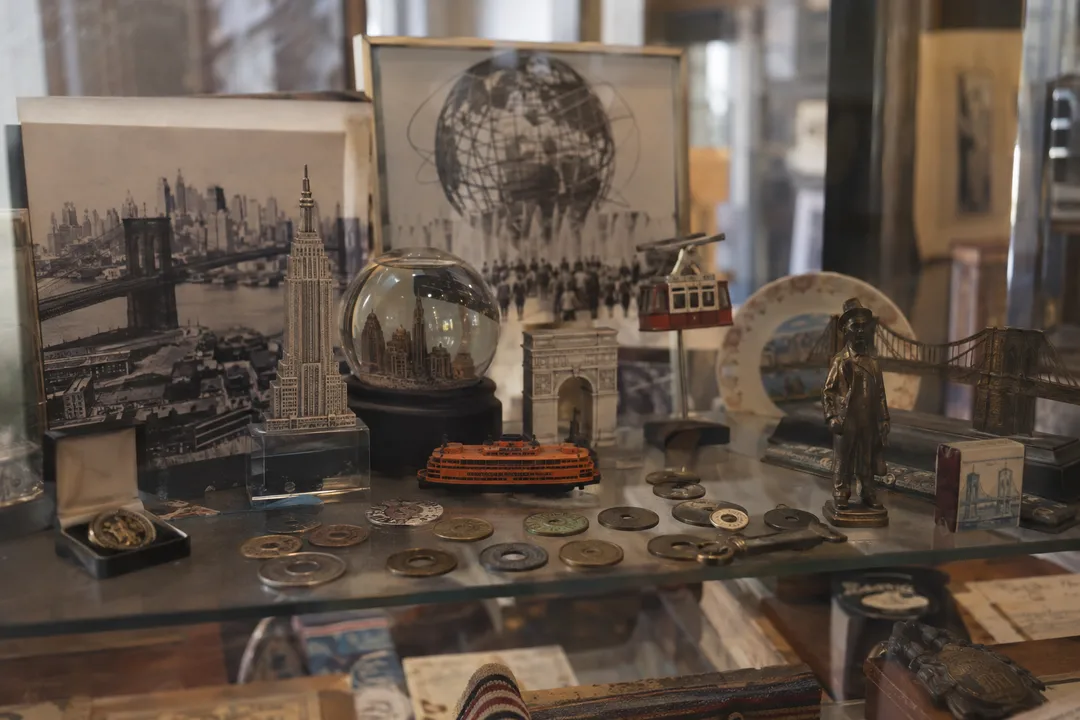
If you type oddities museum near me while wandering Williamsburg, The City Reliquary is the answer for people who prefer a neighborhood cabinet of memories to a grand institutional hall. At 370 Metropolitan Avenue, this volunteer-minded museum gathers ordinary New York objects and gives them the attention usually reserved for masterpieces. Miniature landmarks, transit fragments, local photographs, and donated keepsakes make the room feel less like a display of rarities than a portrait of how a city remembers itself.
Getting there is part of the design. The museum sits on Metropolitan Avenue, a short walk from the G train at Metropolitan Avenue and close enough to Bedford Avenue for a longer Williamsburg loop. Come on foot from McCarren Park, or use the L train to Bedford Avenue and walk east through side streets lined with old industrial buildings and newer storefronts. The compact address rewards a planned visit: it is an intimate stop, not a venue that fills an entire afternoon by itself.
The City Reliquary is unusual because its collection is about New York as a lived place. A subway token, a small model of a familiar building, an old sign, or a piece of local ephemera can carry more emotional weight here than an expensive artifact. The displays invite comparison between the city people photograph and the city people carry in drawers. That makes the museum especially good for visitors who enjoy finding the story behind an object rather than simply admiring its age.
Start with the transit material. The museum's New York objects connect boroughs through the systems that made everyday movement possible, from subway memorabilia to small reminders of street-level travel. The details are easy to miss if you rush: look at the scale of the models, the wear on the surfaces, and the way one donated object sits beside another with no attempt to turn the room into a luxury showroom. The charm comes from closeness, variety, and the human act of donating something once considered ordinary.
The miniature landmarks deserve their own slow pass. They compress the city into a shelf-sized skyline, letting you notice shapes that disappear when buildings are seen from street level. This is a practical reason to visit with children or out-of-town friends: the collection gives them a visual map of New York while keeping the mood playful. Adults tend to stay longer over the details, especially when a tiny object recalls a neighborhood that has changed around it.
Another pleasure is the rotating community material. The City Reliquary has long made room for neighborhood voices, temporary displays, and contributions that do not fit a conventional museum taxonomy. One case may feel archival, another personal, and a third almost comic. That mix is the point. You are not being asked to accept a single official history of Brooklyn; you are seeing a patchwork assembled by people who cared enough to preserve a fragment.
The room is small, so the visiting rules are simple but important. Keep bags close, give other visitors room around the cases, and do not treat the displays as a photo set. The museum works best when you read the small labels and let each object lead to a question. There is no long line strategy in the theme-park sense, but arriving near opening gives you the quietest look and makes it easier to spend time at the narrowest display areas.
A weekend afternoon can bring a natural cluster of visitors, particularly in October when people are looking for unusual indoor stops. The practical move is to arrive at noon or later in the final hour, rather than landing in the middle of the busiest window. Admission is $7 for adults and $5 for students and seniors; children under 12 enter free. Bring a card for convenience, but a small museum like this is also a good place to support with a purchase or donation.
The museum's atmosphere is intentionally close and handmade. You can see how an object has been mounted, grouped, or protected rather than encountering a polished black-box installation. That physical honesty changes the pace. Instead of moving from spectacle to spectacle, visitors bend toward cases, talk quietly, and notice how a local story gains meaning through its neighbors. It feels appropriate for Williamsburg, where traces of older working life still sit beside creative studios and new apartment buildings.
The City Reliquary also works because it refuses to separate history from affection. A souvenir, a transit token, or a small model may be inexpensive, yet each can mark a migration, a commute, a first apartment, or a family ritual. That is the real story behind the museum: New York is full of objects that look disposable until someone explains where they came from. The collection gives those explanations a physical home without pretending the city ever had one tidy identity.
For a neighborhood walk, leave the museum and head west toward Bedford Avenue for coffee, independent shops, and the busier Williamsburg retail corridor. A quieter route goes south toward Grand Street, where former warehouse blocks reveal a different layer of the neighborhood. McCarren Park is an easy reset if you want open space, while the East River waterfront works later in the day for skyline views. The best pairing is museum first, wandering second, so the objects give the streets a little more context.
Practical Notes: the address is 370 Metropolitan Avenue, Brooklyn, New York 11211. Listed hours are Friday through Sunday, noon to 6 p.m. General admission is $7, student and senior admission is $5, and children under 12 are free. The museum is a compact indoor visit with no full-service cafe, so plan food and a longer restroom break elsewhere. Comfortable shoes help because the surrounding walk is part of the experience.
This is a strong pick for travelers who want an oddities museum near me search to lead somewhere genuinely local rather than a generic attraction. It suits curious adults, families who like objects with stories, photographers who can work respectfully without flash, and New Yorkers showing friends what makes a borough feel distinct. It is less suited to anyone expecting a huge collection or a jump-scare format. The reward is subtler: you leave with a sharper eye for the small evidence of city life.
Ask Karpo for more information.
Keep reading
- Chelsea Consignment Shop Crawl Planner for Your First Studio
 East Village Consignment Shop Crawl Planner: Leather Jackets
 Harlem Consignment Shop Crawl Planner for a Jazz Night Look