Somewhere between the third round of soju and the fourth attempt at a Whitney Houston high note, you realize it's 3 a.m. and you've never felt more alive. That's the particular magic of Koreatown's basement karaoke bars, where the fluorescent hum of 32nd Street gives way to carpeted corridors, disco balls spinning lazy light across mirrored walls, and private rooms booked by the hour. On Friday and Saturday nights in late May 2026, these underground spots stay open until five in the morning, a rare breed of venue in a city that increasingly rolls up its sidewalks by two.
The appeal of the private room
Unlike the stage-and-spotlight format that strikes terror into the hearts of the shy, Koreatown karaoke is a sanctuary of privacy. You and your party get a room—small ones fit four to six people, larger suites accommodate up to twelve—and what happens inside stays inside. The doors are thick enough to muffle your crimes against Mariah Carey, though the occasional duet does spill into the hallway when someone props open the door for air or a bathroom run.
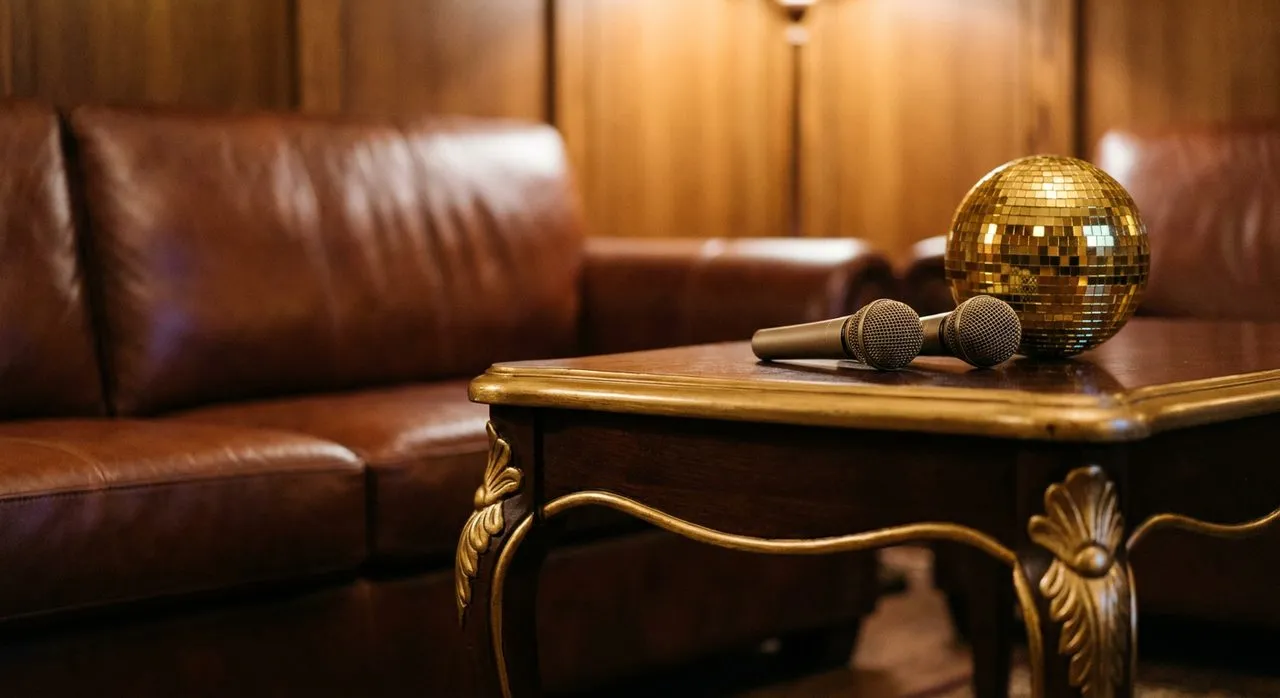
Each room comes standard with a pair of microphones, a television screen displaying lyrics in English and Korean, a remote control that's seen better days, and a tambourine or two for the person who can't carry a tune but wants to contribute. The songbooks are epic tomes, hundreds of pages thick, organized by artist and genre. Flipping through one is its own form of time travel: early-2000s emo anthems next to 1980s power ballads next to K-pop hits released last month. The aesthetic skews early-2000s nightclub—black leather couches, recessed lighting that shifts from purple to green to red, and the faint scent of sanitizer mixed with stale beer.
What you'll pay and what you'll eat
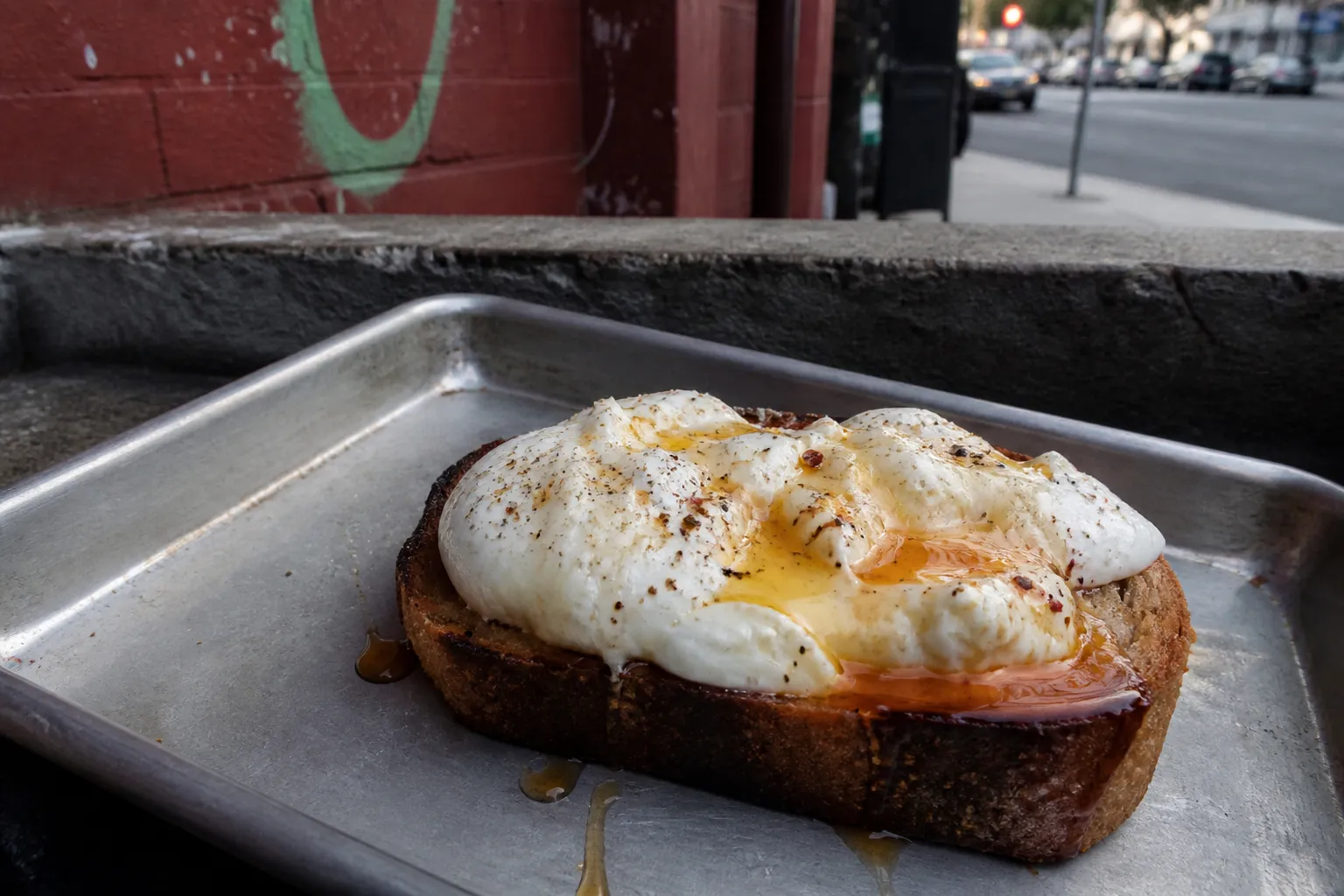
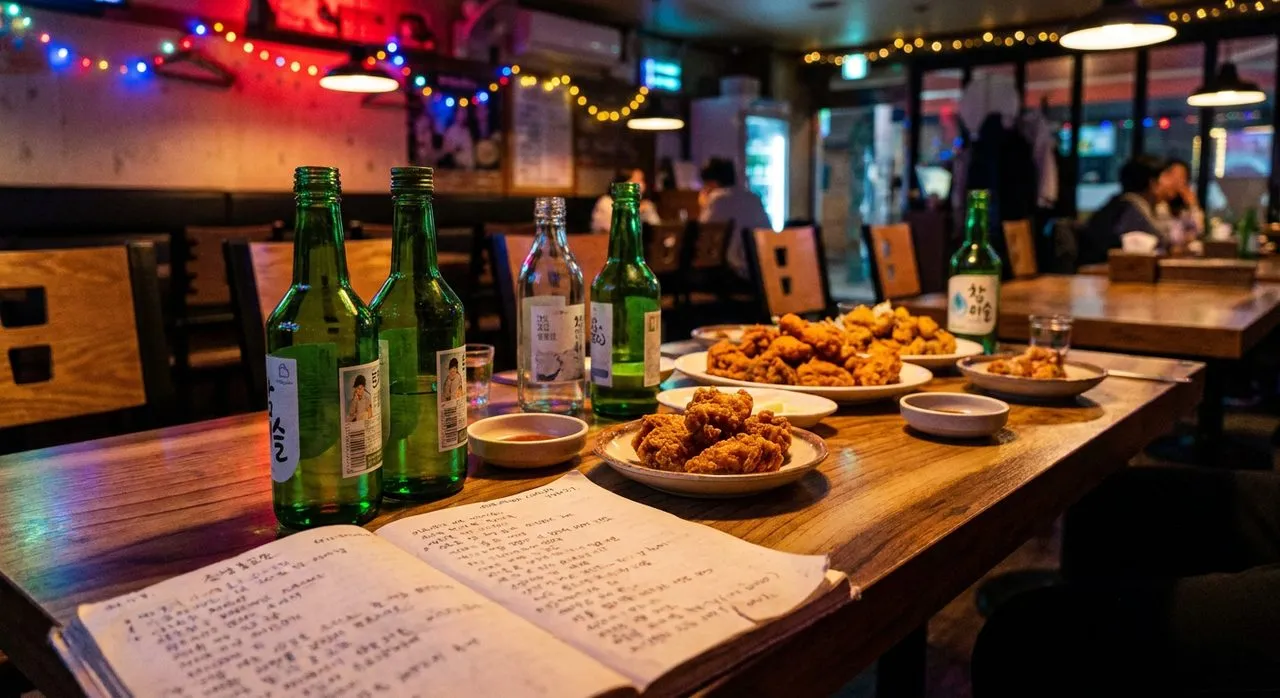
Pricing is straightforward: room rates vary by venue, room size, and time of day; check current pricing directly. Friday and Saturday evenings command the higher end of that range, while weeknights and daytime slots dip lower. Most venues require a minimum rental period—usually two hours—and a food or drink order. The menus are designed for sharing and for soaking up alcohol: fried chicken with sweet-and-spicy glaze, tteokbokki swimming in gochujang, fries, edamame, and assorted anju snacks.
Drinks tend toward soju, beer, and simple mixed cocktails. Soju arrives ice-cold in green bottles, and the ritual of pouring for one another becomes part of the evening's rhythm. Some venues offer bottle service; others keep it simple with a laminated drink list and a buzzer to summon staff. Don't expect craft cocktails or an extensive wine list. The point is lubrication, not sophistication, and the prices reflect that—affordable enough that a group of six can sing and drink for three hours without approaching triple digits per person.
The vibe at 4 a.m.
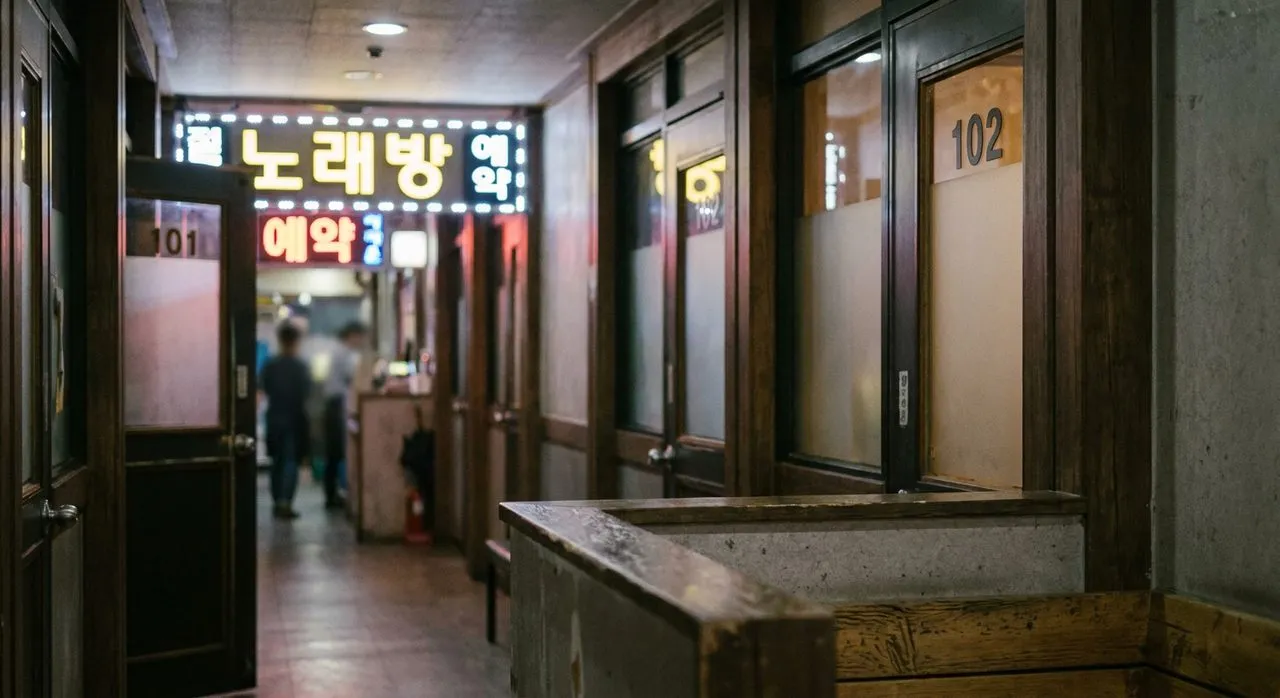
There's a particular energy to Koreatown in the deep hours. By four in the morning on a Saturday, the foot traffic has thinned but not disappeared. Clusters of friends spill out of restaurants, couples lean against storefronts waiting for cars, and the karaoke spots are still humming. Inside the basement venues, the hallways take on a dreamlike quality—muffled music leaking from a dozen rooms, someone laughing too loud, the distant clatter of plates being cleared.
It's not rowdy, exactly, but it's loose. Strangers nod at each other in the corridor. Someone holds the bathroom door for you. A group of twenty-somethings attempts a twelve-person rendition of a boy-band anthem, and you hear it echo as you pass. The staff moves through it all with calm efficiency, delivering chicken platters and clearing empty bottles, unfazed by the hour or the off-key crescendos. There's no dress code, no velvet rope, no posturing. Just people who want to sing badly and laugh hard and stay out past the point when the rest of the city has gone to bed.
Who shows up
The crowd skews young but not exclusively. You'll see birthday parties, bachelorette groups, clusters of coworkers blowing off steam, and the occasional older couple who clearly make this a regular Saturday ritual. Late May brings a mix of college students wrapping up the semester and young professionals celebrating long weekends. The common thread is a willingness to be ridiculous, or at least to tolerate ridiculousness in others.
There's a specific kind of catharsis in belting out a breakup anthem at three in the morning with your best friends as backup singers. The private rooms strip away the performance anxiety of public karaoke and replace it with something more generous—a space where you can be as earnest or as campy as you want, where no one is recording for social media, where the only audience is the people who already know all your bad habits.
What to know before you go
Most venues take walk-ins, but calling ahead on weekend nights is wise; rooms fill up. Arrive with a rough set list in mind—scrolling through that songbook under time pressure is harder than it looks. Bring cash for tips; not all spots include gratuity automatically, and the staff working until five in the morning have earned it. If your group is larger than six, book the bigger suite; cramming ten people into a small room designed for four is technically possible but not comfortable.
The culture leans toward keeping things inside your room, but if you do step out, be mindful. These are narrow hallways, often shared with other late-night businesses. Most importantly, pace yourself. Five hours is a long runway, and there's nothing glamorous about peaking at 1 a.m. and spending the rest of the night slumped on a leather couch while your friends attempt Fleetwood Mac.
Practical notes
Koreatown's karaoke cluster runs along West 32nd Street between Fifth Avenue and Broadway in Manhattan. The nearest subway stops are 34th Street–Herald Square (B, D, F, M, N, Q, R, W trains) and 33rd Street (6 train), both a short walk away. Street parking is nearly impossible; if you're driving, use a nearby garage and budget accordingly. Weekend hours at some venues may extend until late night or 5 a.m., though hours vary by business—verify hours directly before making plans. Some basement locations involve stairs and may not be wheelchair accessible; call ahead to confirm accessibility Bring a credit card for the room rental and food, and cash for tipping. No outside food or drink is permitted.
Tags: #KoreatownNYC #LateNightNYC #KaraokeNYC #TheOddEdit #UndergroundNYC #32ndStreet #NYCNightlife #KaraokeBars #ManhattanNights #May2026 #NYCAfterDark #KoreatownEats #PrivateKaraoke #WeekendNYC #MidtownNYC
Sources consulted: Koreatown, Manhattan · Karaoke · Time Out New York · NYC Manhattan Neighborhoods · NY Times New York Region
All trademarks are the property of their respective owners.