 Haaland Has Seven Goals and Norway Runs Entirely Through Him
⚽️2026 FIFA WORLD CUP

NYC's Quirkiest Pickup Soccer Fields Before World Cup 2026
From Bushwick rooftops to FDR asphalt, six unusual pitches buzzing with pre-tournament fever as MetLife preps for the final.
The Rooftop Pitch: Bushwick's Sky-High Soccer Scene
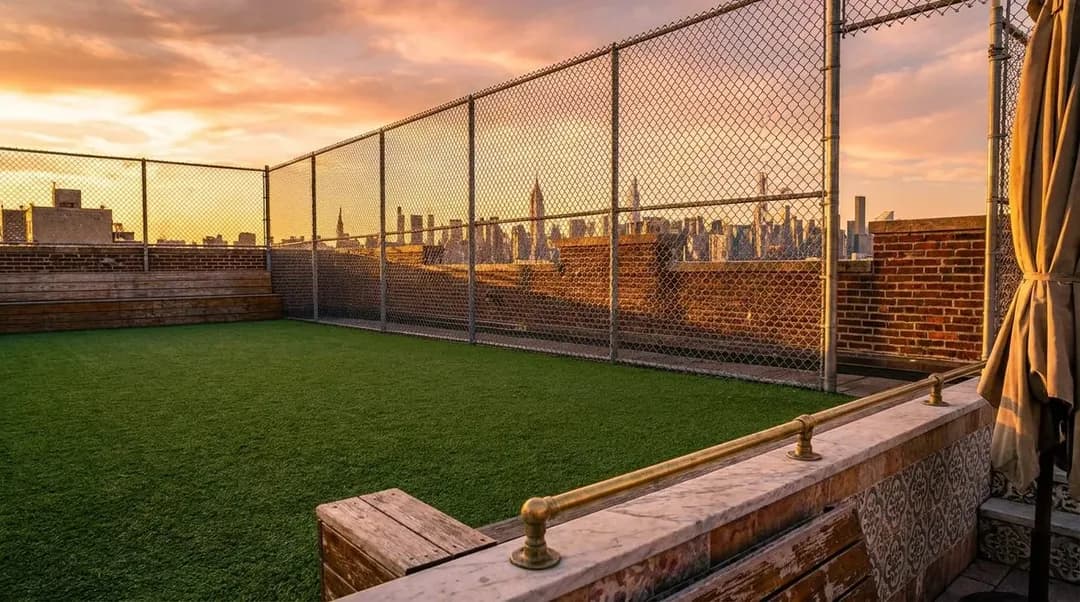
Tucked atop a converted warehouse on Troutman Street, a weathered turf rectangle hosts some of Brooklyn's most devoted pickup players. The field measures barely half regulation size, ringed by chain-link netting that catches errant shots before they sail into the East Williamsburg skyline. Every Tuesday and Thursday evening, a rotating cast of baristas, graphic designers, and line cooks lace up cleats and climb four flights of stairs for ninety minutes of small-sided chaos. With World Cup 2026 less than a month away and the final scheduled for MetLife Stadium on July 19, the rooftop regulars have added a new ritual: each session now opens with predictions about which nations will lift the trophy in New Jersey.
The elevation changes everything. Wind gusts redirect passes mid-flight, and the low evening sun blinds goalkeepers facing west. Players joke that the conditions prepare them for high-altitude matches in Mexico City, one of the three host nations this summer. The venue has no formal name or booking system—word spreads through group chats and Instagram stories—but its reputation has grown steadily since a former MLS academy player started organizing games here in 2023. On clear nights, you can spot the Manhattan skyline beyond the netting, a reminder that some of the world's best soccer will unfold just across the river in a matter of weeks.
Concrete Dreams: The FDR Drive Underpass Courts
Beneath the elevated stretch of FDR Drive near East 6th Street, a pair of asphalt rectangles serve as Manhattan's grittiest soccer venue. The courts were originally painted for basketball, but at some point in the past decade, makeshift goals appeared—welded pipe frames with fraying nets—and the soccer community claimed the space. Traffic rumbles overhead, creating a constant low roar that drowns out most conversation. Players communicate through gestures and shouted names, their voices competing with the thrum of tires on concrete. The hard surface punishes ankles and knees, so games rarely last more than an hour, but the central location and twenty-four-hour accessibility make it a magnet for shift workers, insomniacs, and anyone craving a match at odd hours.
The FDR courts have become a melting pot of soccer cultures. On any given night, you might see premier league tactics argued in Cockney accents, South American nutmeg artists embarrassing defenders, and recent immigrants recreating the styles of their home countries. As World Cup 2026 approaches, the diversity feels especially resonant—the tournament will showcase forty-eight nations across three host countries, and this shadowy underpass already feels like a microcosm of that global gathering. Someone has spray-painted "ROAD TO METLIFE" on the support column nearest the eastern goal, a defiant claim that the journey to soccer's biggest stage begins right here, on unforgiving asphalt under a highway.
Beach Soccer: The Riis Park Shoreline Games
Jacob Riis Park in the Rockaways transforms into an impromptu beach soccer venue most summer weekends, with games stretching along the sand between Beach 149th and Beach 156th Streets. The soft surface slows the pace and rewards technical skill over raw speed—trapping a ball in deep sand requires a delicate touch, and shooting demands perfect timing as your plant foot sinks with each strike. Matches here follow loose interpretations of FIFA beach soccer rules, with smaller teams and no offsides, though arguments about whether a goal counts when the makeshift markers shift in the wind are frequent and passionate. Seagulls circle overhead, occasionally diving toward abandoned water bottles, and the Atlantic breeze carries the scent of salt and sunscreen across the pitch.
The Riis Park scene has exploded in recent months as World Cup 2026 fever builds. Pickup organizers report twice the usual turnout, with players driving from as far as Connecticut and Pennsylvania to join weekend tournaments. Many participants cite the tournament's proximity—MetLife Stadium sits just thirty miles northwest—as motivation to get match-fit before attending group stage games or watch parties. The beach setting also evokes memories of iconic World Cup moments in coastal host cities, and more than one player has mentioned dreaming of recreating a Ronaldinho flick or a Messi dribble with the ocean as backdrop. A hand-painted sign near the volleyball nets now reads "RIIS PARK WORLD CUP TRAINING CENTER," planted in the sand with driftwood stakes.
Indoor Hustle: West Side YMCA Gym Floor Soccer
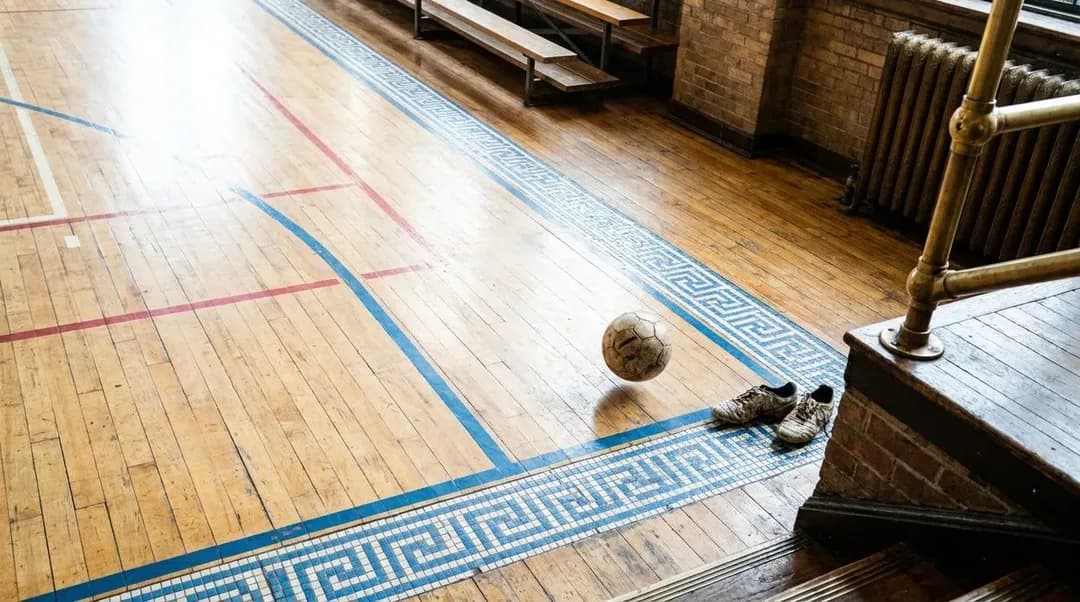
The West Side YMCA on West 63rd Street converts its basketball gymnasium into a soccer court three nights a week, rolling out portable goals and taping boundary lines over the hardwood. The setup accommodates futsal-style play—a smaller, heavier ball and an emphasis on quick passes in tight spaces. Sneakers squeak against the glossy floor, and the acoustics amplify every shout and collision, creating an atmosphere more intense than the outdoor fields. Games run on a strict schedule, with twenty-minute halves and a five-minute break for the next group to warm up. The Y's membership includes a cross-section of Manhattan's working and middle classes, so the player pool spans ages, skill levels, and backgrounds, united by a love of the sport and a willingness to pay the modest facility fee.
Indoor soccer has surged in popularity as the World Cup 2026 countdown accelerates. The Y's programming director notes that the waitlist for gym floor sessions has tripled since January, with many new participants mentioning the tournament as their catalyst for getting back into the game. Conversations during water breaks inevitably turn to bracket predictions, MLS playoff hopes, and debates about which premier league stars will shine on North American soil. The controlled environment also appeals to players who want to avoid the unpredictability of weather—with the tournament spanning June and July, the gym offers a climate-controlled alternative for those training through the humid New York summer. A laminated World Cup 2026 bracket hangs on the bulletin board near the entrance, slowly filling in with marker as qualifiers conclude.
The Fenced Lot: Long Island City's Industrial Pitch
A gravel lot on 46th Avenue in Long Island City, wedged between a auto body shop and a warehouse loading dock, hosts one of Queens' most dedicated pickup soccer communities. The playing surface is compacted dirt and stone, uneven enough to make dribbling an adventure and sliding tackles a guaranteed trip to the first-aid kit. Ten-foot chain-link fencing surrounds the space, installed years ago for reasons no one can quite remember, but now serving to keep the ball in play and the games semi-private. Goals are marked by orange traffic cones repositioned before each match, and the boundaries shift depending on how many players show up—sometimes the lot accommodates eight-on-eight, other times it shrinks to a five-a-side scrum. The neighborhood's industrial character means games can run late into the evening without noise complaints, and the distant glow of the Queensboro Bridge provides just enough ambient light after sunset.
Long Island City's soccer regulars skew heavily toward the city's immigrant communities, with players hailing from Ecuador, Bangladesh, Poland, Mexico, and a dozen other nations. The lot has become an unofficial World Cup 2026 nerve center, where fans of competing countries engage in good-natured trash talk and organize group trips to MetLife Stadium for the July 19 final. One player, a construction foreman originally from Guadalajara, has been collecting signatures on a Mexican flag he plans to wave at the tournament's opening match. Another regular, a Bronx-born defender who grew up watching MLS games at Red Bull Arena, insists the United States will surprise skeptics and advance deep into the knockout rounds. The fenced lot may lack grass and grandstands, but it pulses with the same anticipation that will soon fill stadiums across three countries.
Downtown Grit: Sara Roosevelt Park's Concrete Pitch
Sara Roosevelt Park, stretching along Chrystie Street from Canal to Houston, features a concrete soccer court that has anchored Lower Manhattan's pickup scene for decades. The surface is cracked and patched, painted lines faded to ghosts, but the games remain fiercely competitive. Regulars include restaurant workers from nearby Chinatown, art students from Cooper Union, and finance types who dash over from their Bowery offices during lunch breaks. The court sits below street level, surrounded by park benches where spectators gather to watch, critique, and wait their turn. On weekends, the action runs continuously from mid-morning until the park lights shut off, with players cycling in and out as stamina and schedules dictate. The downtown location makes it one of the city's most accessible soccer venues, reachable by half a dozen subway lines.
Sara Roosevelt Park has always reflected the rhythms of the city, and spring 2026 is no exception. As World Cup fever intensifies, the court has become a gathering point for fans organizing watch parties, ticket swaps, and group excursions to MetLife Stadium. A hand-drawn mural on the adjacent handball wall now depicts the World Cup trophy flanked by the Statue of Liberty and the tournament's official emblem, unsigned but clearly the work of someone with both artistic skill and deep soccer passion. Conversations between points drift toward the premier league players who will represent their national teams, the MLS stars hoping to prove themselves on the global stage, and the logistics of getting from Manhattan to East Rutherford on match days. The park's gritty authenticity feels like the perfect counterpoint to the gleaming stadiums that will host the tournament—both are essential threads in the fabric of soccer culture.
Practical Notes for Pickup Soccer Pilgrims
Each of these six venues operates on its own informal code, but a few universal principles apply. Arrive early if you want guaranteed playing time, especially at popular spots like Sara Roosevelt Park or the Riis Park beach. Bring water, because none of these locations offer reliable concessions or fountains. Respect the regulars—every pickup community has unwritten rules about fouls, substitutions, and who calls next game, and observing before jumping in will earn you goodwill. Most importantly, embrace the imperfections. These fields will never match the manicured perfection of MetLife Stadium's pitch, but their quirks and challenges are precisely what make them memorable. The rooftop wind, the asphalt hardness, the sand resistance, the gym acoustics, the gravel unpredictability, and the concrete wear all shape the game in ways that polished surfaces never could.
As World Cup 2026 approaches, these unusual venues offer something the stadiums cannot: accessibility and spontaneity. No tickets required, no security lines, no assigned seats. Just show up with cleats and a willingness to play. The tournament will deliver elite athleticism and historic moments, but the soul of soccer lives in places like these—improvised pitches where anyone can join, where skill matters more than pedigree, and where the love of the game transcends language, background, and circumstance. Whether you are training for a watch party kickabout or simply want to feel connected to the global soccer community this summer, New York's quirkiest pickup fields are waiting. The countdown to July 19 is on, and the city is ready to play.
- Bushwick rooftop: Troutman Street, Tuesday and Thursday evenings, small-sided games, bring your own water
- FDR underpass: East 6th Street courts, open twenty-four hours, asphalt surface, watch for uneven pavement
- Riis Park beach: Between Beach 149th and 156th Streets, weekends, bring sunscreen and expect sand everywhere
- West Side YMCA: West 63rd Street, membership or day pass required, indoor gym floor, advance signup recommended
- Long Island City lot: 46th Avenue, evenings and weekends, gravel surface, closed-toe shoes essential
- Sara Roosevelt Park: Chrystie Street between Canal and Houston, daylight to park closing, concrete court, high turnover
All trademarks are the property of their respective owners.
Ask Karpo for more information.
Keep reading
- Haaland Has Seven Goals and Norway Runs Entirely Through Him
 World Cup Trophy Ceremony Timing Medals and Postmatch Celebrations
 Olise and France's Attack: The Semifinal Tactical Question