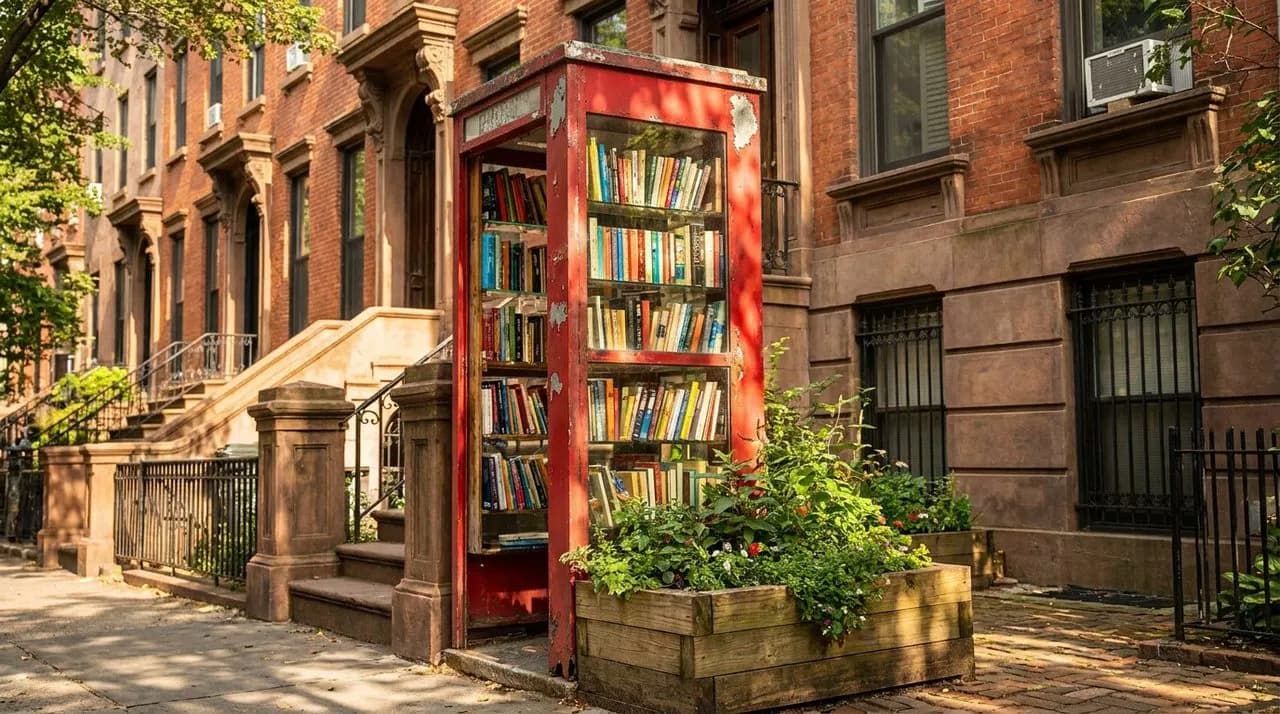
The Red Booth on Bedford Avenue
At the corner of Bedford Avenue and North 7th Street in Williamsburg, a scarlet phone booth stands as a relic of another era—except now it's crammed with paperbacks instead of a dial tone. The booth, salvaged from a 2019 city auction, was repainted by local street artists and converted into a lending library by the Northside Civic Coalition. On any given afternoon, you'll find commuters swapping thrillers for poetry chapbooks, their MetroCards tucked into pages as makeshift bookmarks.
Volunteer curator Jenna Ortiz stocks the booth every Tuesday and Friday morning, hauling tote bags of donations up from her apartment three blocks away. She's noticed patterns: true crime vanishes within hours, literary fiction lingers for weeks, and someone keeps leaving behind immaculate first-edition Stephen Kings. The booth's glass panels are tagged with wheat-paste stickers and band flyers, turning it into an inadvertent gallery of Brooklyn neighborhoods' creative churn.
Park Slope's Sidewalk Shelf Network
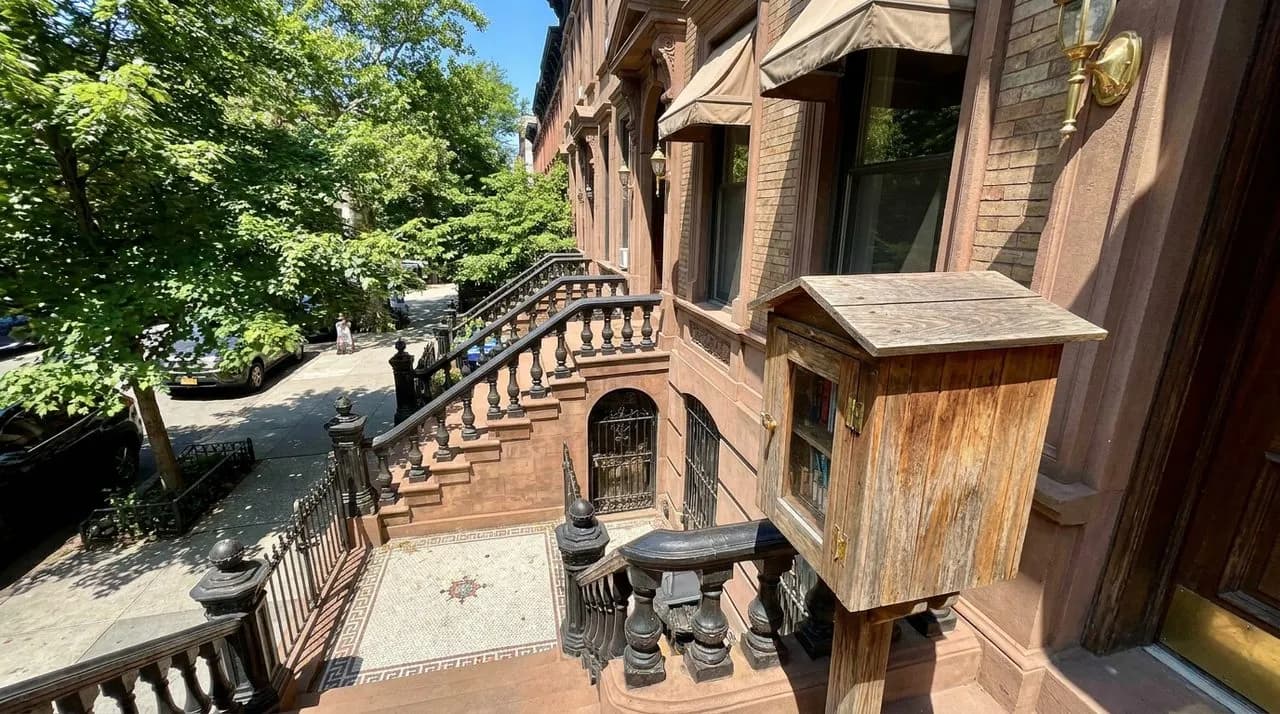
Park Slope took a different approach: instead of phone booths, residents built narrow wooden shelves bolted to tree guards along 7th Avenue between 9th and 15th Streets. Each shelf holds maybe twenty spines, but collectively they form a decentralized library system that mirrors the neighborhood's brownstone rhythm. The 11th Street shelf skews toward parenting guides and picture books; the 14th Street outpost is heavy on cookbooks and design monographs.
Marcus Chen, a retired librarian who helped install the first shelf in 2021, walks the route weekly to tidy and rotate stock. He's built relationships with local bookstores—BookCourt's successor and Community Bookstore—who donate unsold advance reader copies. The shelves have become waypoints for dog walkers and school pickups, their spines sun-faded and rain-warped but perpetually replenished. Chen keeps a handwritten log of titles that pass through; after five years, he's tracked over twelve thousand books.
Astoria's Multilingual Exchange
The phone booth on 31st Street near Ditmars Boulevard in Astoria reflects the neighborhood's linguistic sprawl. Volunteers from the Astoria Mutual Aid Network stock it with Greek, Arabic, Spanish, and Bengali titles alongside English paperbacks. On weekends, families browse together, grandparents pulling out novels in their first languages while kids grab graphic novels. The booth's interior is lined with hand-drawn maps marking other micro-libraries across Queens, a constellation of literary nodes spreading east.
Coordinator Leila Haddad sources books from estate sales, stoop sales, and a partnership with the Queens Public Library's discard program. She's particular about condition—no mold, no missing pages—but otherwise catholic in taste. The booth sees the highest turnover of any in the network, sometimes cycling through fifty books in a single day. Haddad suspects it's because Ditmars is a transit hub, pulling foot traffic from across the borough and funneling readers toward the N and W trains.
Sunnyside's Genre Havens
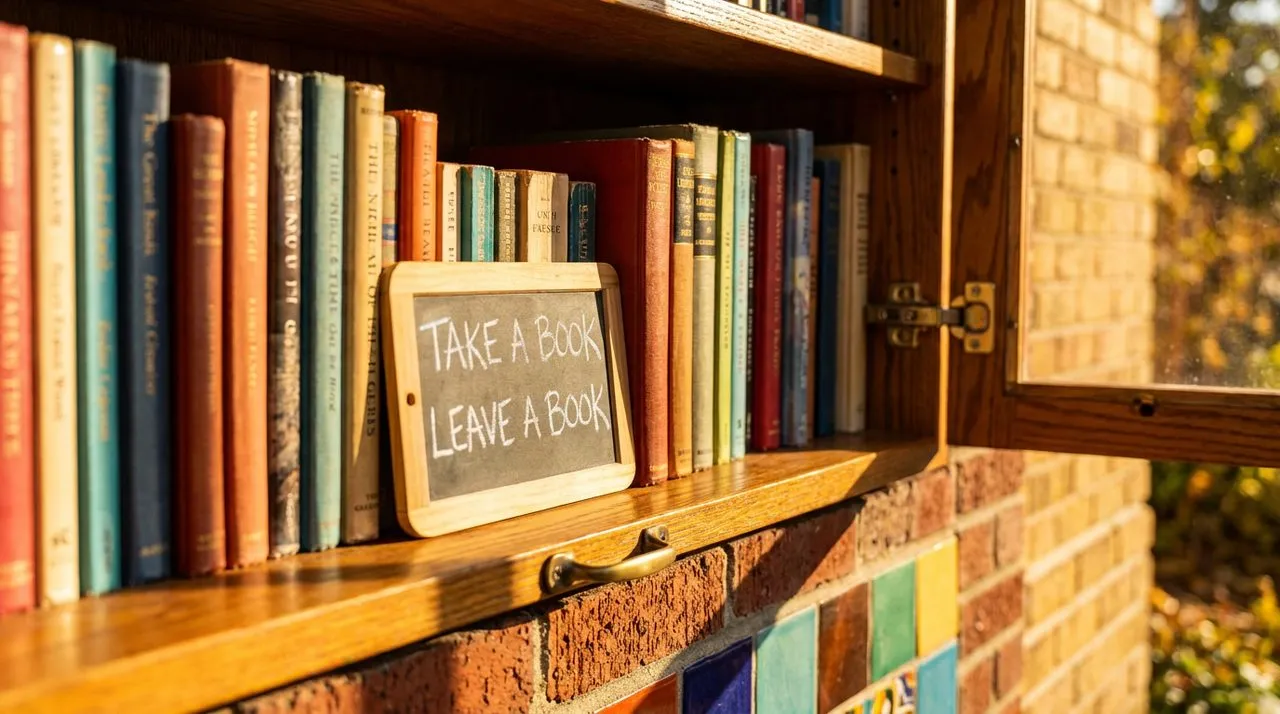
Sunnyside Gardens has three micro-libraries within a six-block radius, and each has developed a distinct personality. The shelf on 48th Street is romance-only, curated by a book club that meets monthly at Aubergine Café. The booth on Skillman Avenue leans sci-fi and fantasy, its exterior painted with a mural of dragons and starships that doubles as NYC street art. The third, a repurposed newspaper box on Queens Boulevard, is pure mystery and noir—someone even installed a tiny magnifying glass on a chain.
These specializations weren't planned; they emerged organically as donors learned what stuck and what didn't. Now readers traverse the triangle deliberately, hunting specific fixes. The romance shelf sees the most active community notes—readers leave Post-its rating steam levels and trigger warnings. The sci-fi booth has a waiting list system for popular series, with names scrawled on a laminated sheet. It's a hyper-local algorithm, powered entirely by index cards and neighborly trust.
The Volunteer Economy
Running a phone-booth library requires no permits but considerable stamina. Volunteers haul books in all weather, repair vandalism, and mediate the occasional dispute over whether someone can take fifteen books at once. Most curators are self-appointed, driven by a mix of civic pride and book-hoarding guilt. They form loose networks via neighborhood Facebook groups and group chats, swapping tips on weatherproofing and rodent deterrence.
The work is Sisyphean but satisfying. Volunteers report a strange intimacy with their communities—they recognize regulars by their reading habits, watch kids grow through the chapter books they borrow, and sometimes find handwritten thank-you notes tucked between pages. A few have started keeping 'greatest hits' lists of books that circulate most, and those lists reveal neighborhood character: Williamsburg loves memoirs by comedians, Park Slope devours anything about urban planning, Astoria goes hard for historical fiction.
Practical Notes for Visitors
The micro-libraries operate on pure honor system: take what you want, leave what you can, no questions asked. Most are accessible twenty-four hours, though late-night browsing requires a phone flashlight. The phone booths offer more shelter from rain, but the open shelves are easier to browse quickly. Peak restocking happens mid-morning on weekdays and Sunday afternoons, so those are prime times to find fresh arrivals.
- Bedford Avenue booth (Williamsburg): Best for contemporary fiction and art books; check Tuesday/Friday mornings for new stock
- 7th Avenue shelves (Park Slope): Distributed across ten blocks; the 11th Street location is most family-friendly
- 31st Street booth (Astoria): Multilingual selection; highest turnover rate, visit early in the day
- Sunnyside trio: 48th Street for romance, Skillman Avenue for sci-fi/fantasy, Queens Boulevard for mystery
- Etiquette: Take as many as you'll actually read; donate books in good condition; respect genre themes where they exist
Why It Works
The phone-booth libraries thrive because they're frictionless. No library cards, no due dates, no late fees—just books and trust. They tap into the same impulse that makes people slow down for sidewalk art or drop coins in a bodega tip jar. In neighborhoods where rents climb and third spaces vanish, these tiny libraries offer something rare: a public good that asks nothing in return, a commons that grows richer the more it's used.
They also succeed because they're deeply local, shaped by the blocks they serve rather than imposed from above. The Williamsburg booth reflects its corner's art-scene energy, the Park Slope shelves mirror brownstone domesticity, the Astoria booth celebrates immigrant polyglot culture. They're infrastructure in the truest sense—invisible until you need them, essential once you notice. And in a city that often feels too big to grasp, they offer something human-scaled: a phone booth full of stories, right on time when you walk past.
Sources consulted: Queens Public Library · Brooklyn Public Library · NYC Parks Department · Official NYC Government Site · Little Free Library
All trademarks are the property of their respective owners.


