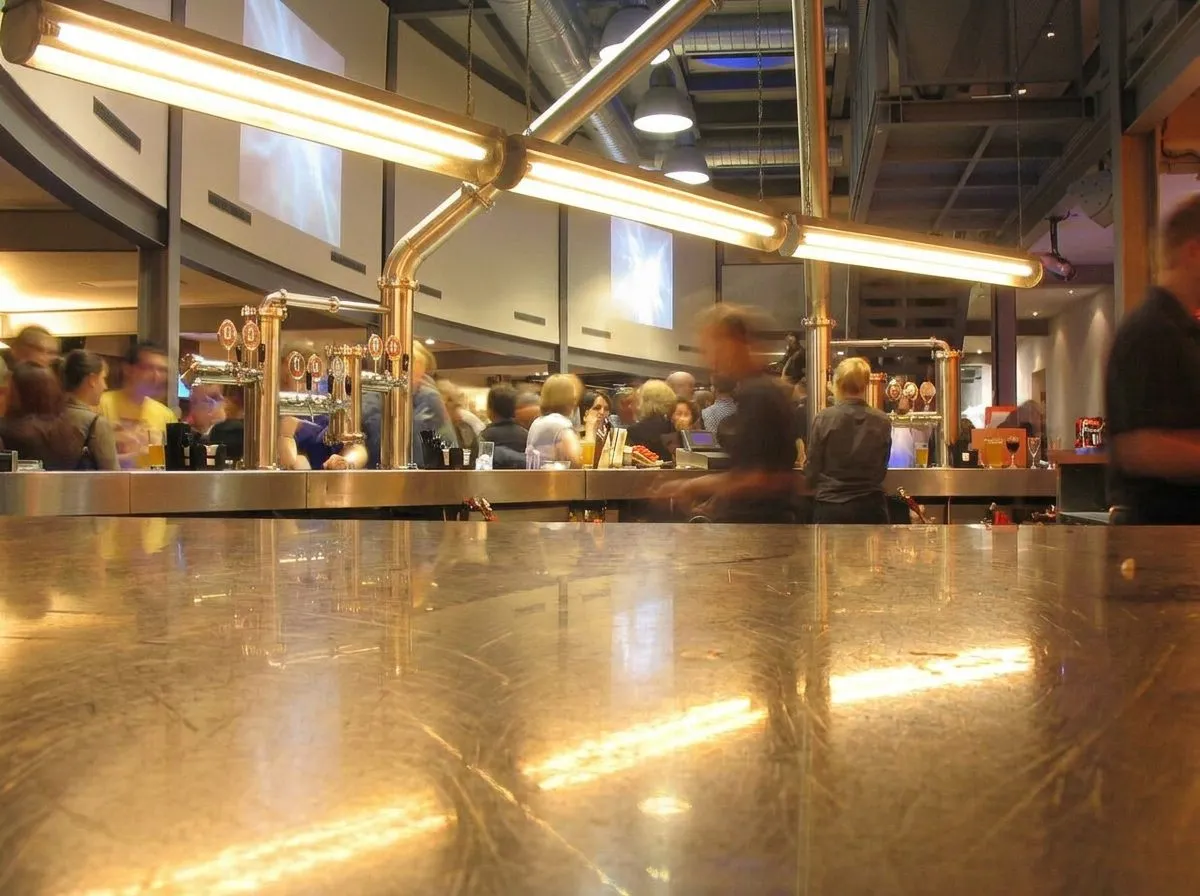
The final buzzer sounds a few minutes past eleven. Outside Madison Square Garden, the crowd fractures: bridge-and-tunnel families stream toward the LIRR escalators, corporate ticket-holders flag black cars on Seventh Avenue, and a smaller, quieter cohort drifts west into the Penn Station tangle or catches the N train toward Astoria. These are the believers, the ones who need another hour—or three—to metabolize what just happened on the court. They're not looking for velvet ropes or craft-cocktail menus. They want a stool, a beer that costs less than the second-quarter pretzel, and a bartender who won't ask them to recap the game because she already watched it on the same flickering screen.
The Penn Station perimeter after dark
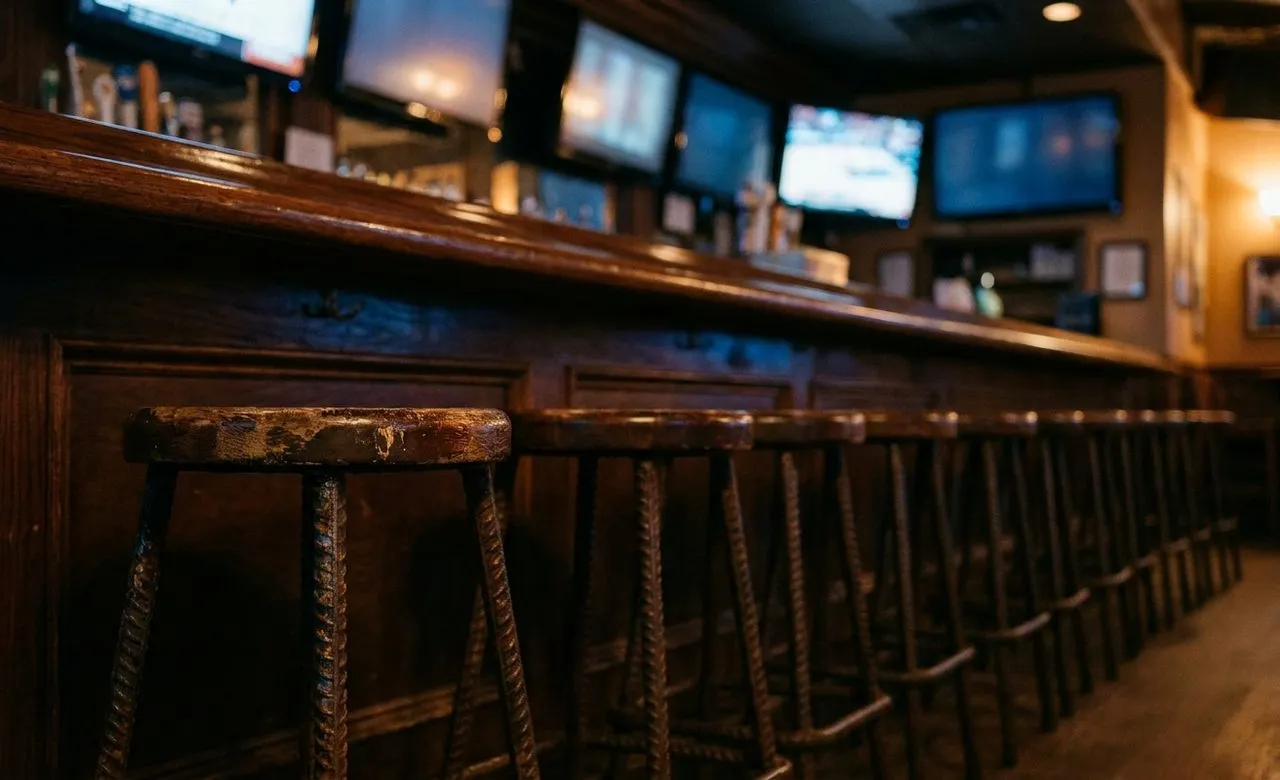
West of Eighth Avenue, a handful of anonymous taverns occupy the ground floors of pre-war walk-ups and budget hotels. No awnings, no sandwich boards—just a half-curtained window, a neon Budweiser sign, and a door that's heavier than it looks. Inside, the aesthetic is pure 1987: Formica bar tops scarred by decades of bottle caps and elbows, vinyl stools patched with duct tape, drop ceilings stained by radiator steam. The light is dim and amber, the kind that softens faces and makes everyone look like they've been here longer than they have.
Late May means the playoffs, and by this point in the season every regular knows the rhythms. If the Knicks win, the mood is buoyant but cautious—no one wants to jinx the next round. If they lose, silence settles like fog, broken only by the clink of glass on wood and the occasional muttered epithet. The bartenders are lifers, women and men who've poured drinks through the Ewing era, the wilderness years, and every false dawn since. They don't do small talk, but they'll top off your beer without being asked.
Astoria's 31st Street corridor
Cross the East River and the texture shifts. The bars along 31st Street in Astoria skew Greek and Irish, multi-generational neighborhood fixtures where the back room still smells faintly of cigarette smoke grandfathered in from another decade. Here, the post-game crowd mixes with late-shift hospital workers from Mount Sinai Queens, cab drivers on break, and insomniacs who wander in because the lights are on. The televisions stay tuned to YES Network or MSG, replays looping on mute while someone's Spotify plays low-volume yacht rock or forgotten Eurodance.
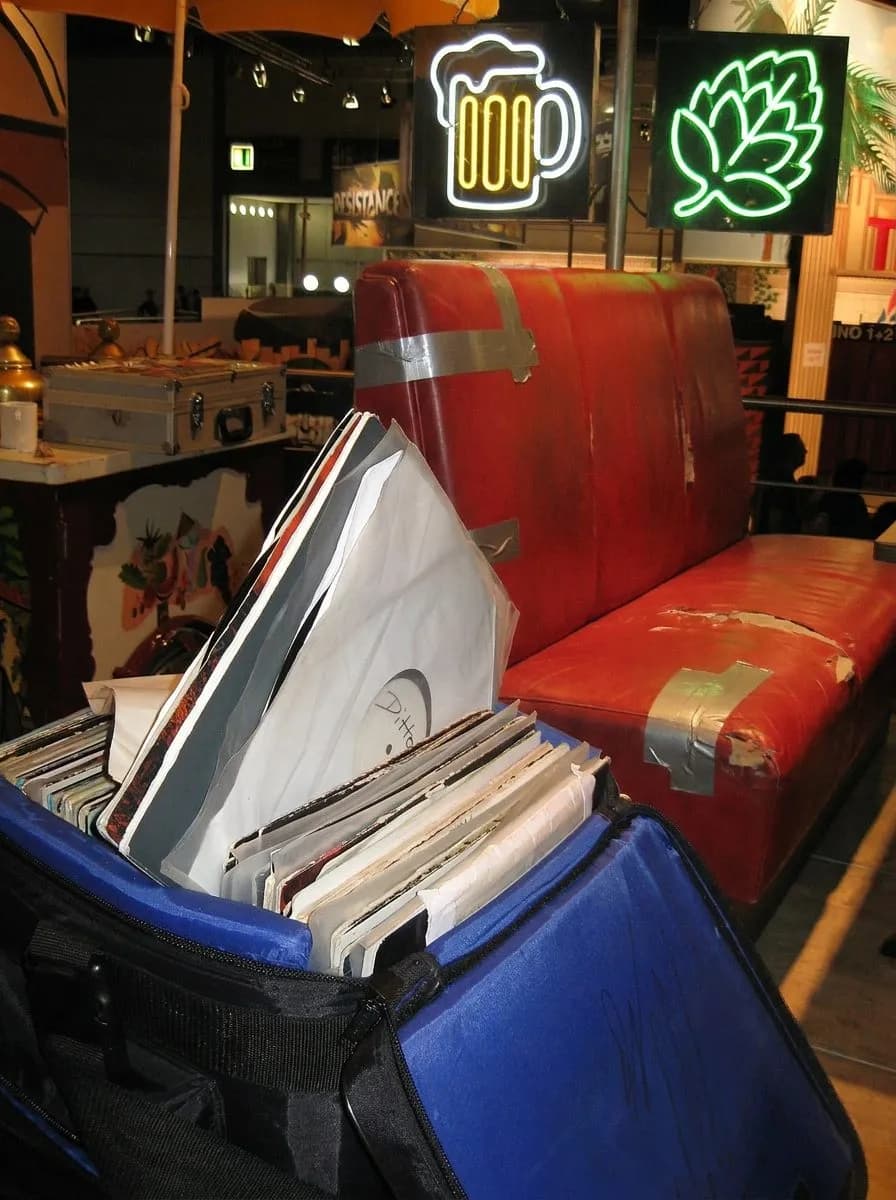
The floors are checkerboard linoleum, the booths are cracked red leatherette, and the bar itself is a slab of scarred oak that's been refinished exactly once, sometime during the Clinton administration. You can still order a shot-and-beer for under ten dollars. The bathrooms require a key attached to a wooden paddle. There's a payphone on the wall that may or may not work. It's the kind of place where regulars leave twenty-dollar bills under their coasters when they step outside to smoke, confident no one will touch them.
What you won't find here
No Edison bulbs. No reclaimed barn wood. No mezcal flights, no small plates, no QR-code menus. The beer list is whatever's on tap—usually two domestics, one import, maybe a seasonal if the distributor pushed it hard enough. Wine comes in a pour that's generous to the point of hostile, from a bottle with a screw cap. If you ask for a Moscow Mule or an Aperol Spritz, you'll get a look that could curdle milk, followed by a polite offer of vodka-soda or nothing.
There are no charcuterie boards, no truffle fries, no impossibly tall burgers served on cutting boards. The kitchen, if it's open, offers nachos from a bag, wings from a freezer, and maybe a grilled cheese if the cook likes you. Most people don't eat. They drink slowly, talk less, and watch the replays with the intensity of Talmudic scholars parsing a difficult passage. Every possession is re-litigated. Every missed free throw is a referendum. It's communal grief therapy, or communal joy, depending on the night.
The unspoken rules
You don't cheer loudly after midnight. You don't wear the opposing team's jersey, ever. You don't ask the bartender to change the channel unless you're ready for the entire room to turn and stare. You tip in cash, generously, because these places run on thin margins and thinner patience. You don't take photos unless you want your phone to mysteriously disappear. And you don't ask anyone why they're here—everyone's here for the same reason, and it doesn't need to be named.
If you're visibly drunk, you'll be cut off and offered a glass of water and the number for a car service, written on the back of a receipt in Sharpie. If you start trouble, you'll be escorted out by a regular who's twice your age and still twice as strong. The code is old-school and unbending: you can be sad, you can be angry, but you can't be an asshole.
Why they endure
In a city that gentrifies overnight, these bars survive through sheer inertia and rent-stabilized leases signed when Giuliani was mayor. They're not Instagram bait, they're not written up in glossy magazines, and they're not on any influencer's list of "hidden gems." They're hidden because they want to be. The clientele is self-selecting: people who remember when the city closed at midnight, when you could still smoke indoors, when the Knicks were good and it didn't feel like ancient history.
Late May in 2026 feels like every late May before it—humid, restless, thick with the possibility that this might finally be the year. The bars fill up after every home game, a tide of blue and orange that ebbs by three and is gone by four, leaving only the regulars and the ghosts of a hundred past seasons. The bartenders wipe down the bar, count the register, and lock the door. Tomorrow night, if there's another game, it will all happen again.
Practical notes
The bars near Penn Station cluster west of Eighth Avenue between 31st and 34th Streets; the Astoria spots line 31st Street between 30th and Steinway, accessible via the N/W trains to 30th Avenue or Broadway. Most open around 4 p.m. and close at 4 a.m., though hours can shift unpredictably—verify directly if you're planning a late arrival. Expect cash-only or a grumbling card minimum. There's no coat check, minimal seating, and stairs or single steps at most entrances, so accessibility is limited. Bring cash, low expectations, and a high tolerance for cigarette smoke that's seeped into every surface. Street parking in Astoria is easier than Midtown; otherwise, the subway runs all night.
Tags: #TheOddEdit #NYCNightlife #KnicksNation #MidtownAfterDark #AstoriaQueens #DiveBarChronicles #PostGameRituals #LateNightNYC #Penn Station #MadisonSquareGarden #QueensNightlife #NYCSpringNights #May2026 #BasketballBars #ClassicNYC
Sources consulted: Madison Square Garden · New York Knicks · Time Out New York Bars · NY Times New York · Penn Station
All trademarks are the property of their respective owners.


