 Haaland Has Seven Goals and Norway Runs Entirely Through Him
⚽️2026 FIFA WORLD CUP
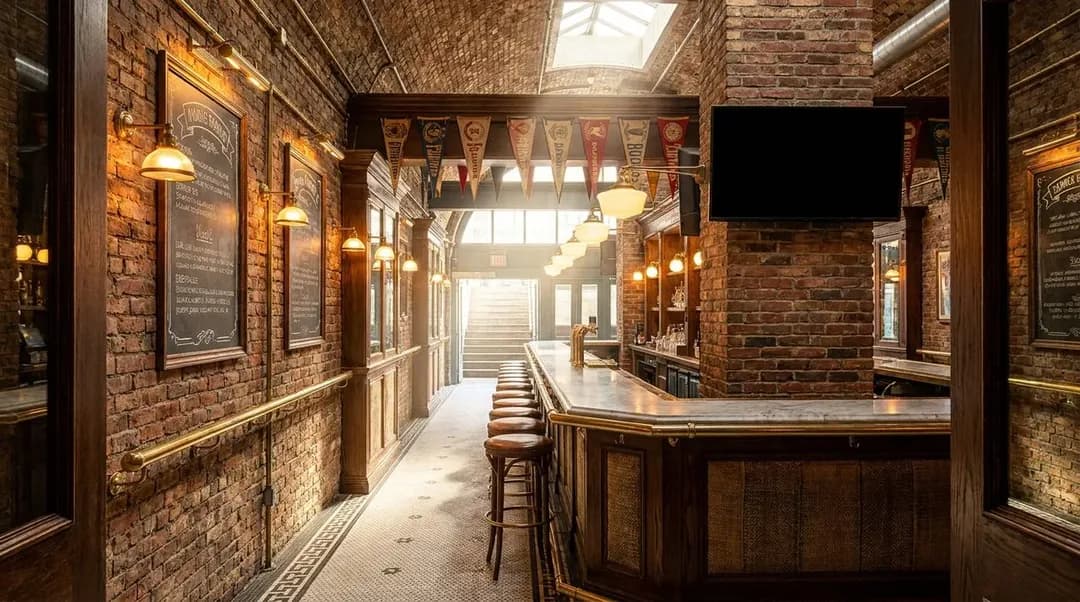
Hidden NYC Soccer Bars in Subway Mezzanines for World Cup 2026
Four vintage underground watering holes beneath the tracks will screen every match day from June through the MetLife final.
The City's Best-Kept Soccer Secret
When the World Cup 2026 kicks off on June 11, millions will descend on sports bars across New York City. But while most fans crowd into Midtown tourist traps or overpriced rooftop lounges, a handful of regulars will slip into four nearly invisible bars tucked directly inside subway mezzanines. These aren't adjacent to stations or on the same block—they occupy the actual interstitial spaces between turnstiles and platforms, carved from utility rooms and former transit offices decades ago.
Each venue holds fewer than forty patrons, screens matches on aging projectors or salvaged flat-panels, and serves beer from taps installed behind repurposed token-booth glass. The Metropolitan Transportation Authority tolerates them under grandfathered commercial leases dating back to the 1970s and 1980s, when the city experimented with revenue-generating retail in underutilized station infrastructure. With MetLife Stadium in New Jersey hosting the final on July 19, these mezzanine hideaways offer a distinctly New York way to experience soccer: gritty, intimate, and steps from your morning commute.
The Turnstile Tavern at Union Square
Enter the Union Square station at 14th Street and Broadway, descend the north staircase, and veer left before the turnstiles. A unmarked steel door wedged between a MetroCard vending machine and a tiled pillar opens into The Turnstile Tavern, a twenty-eight-seat room that began as a supervisor's break area in 1978. Owner Dmitri Koval, a Ukrainian immigrant who played semi-pro soccer in Kyiv, acquired the lease in 2003 and installed a pull-down screen that will show every World Cup 2026 match on a loop schedule.
The Tavern draws a loyal crowd of premier league devotees—especially Chelsea supporters who gather for Saturday morning kickoffs. Koval keeps the taps simple: domestic lagers, one rotating IPA, and a house ginger beer. The walls are papered with faded match-day programs, including a signed 1994 World Cup poster from when the tournament last visited the United States. Expect the space to hit capacity by 10 a.m. on tournament days, with a waitlist managed via a clipboard hung on the door.
Mezzanine Lounge Beneath Grand Central
Grand Central Terminal hides more than a hundred rooms in its sub-levels, and one of them—accessible through the Lexington Avenue passageway near Track 39—houses Mezzanine Lounge. This thirty-two-capacity bar occupies a former electrical equipment vault converted in 1982. Proprietor Lucia Ramos inherited the lease from her father, a Metro-North engineer who won the space in a city auction and spent weekends pouring concrete floors and wiring outlets.
Ramos plans to open at 6 a.m. daily throughout the World Cup 2026 window to accommodate early kickoffs. The venue's charm lies in its anachronisms: a rotary payphone still mounted on the wall, vinyl bar stools from a shuttered Bronx diner, and a nineteen-inch CRT television supplemented by a newer LED panel. Soccer fans share the space with commuters grabbing a quick beer before the evening rush, creating an egalitarian atmosphere rare in a city increasingly segmented by price point and playlist.
The Platform Pub at Atlantic Terminal
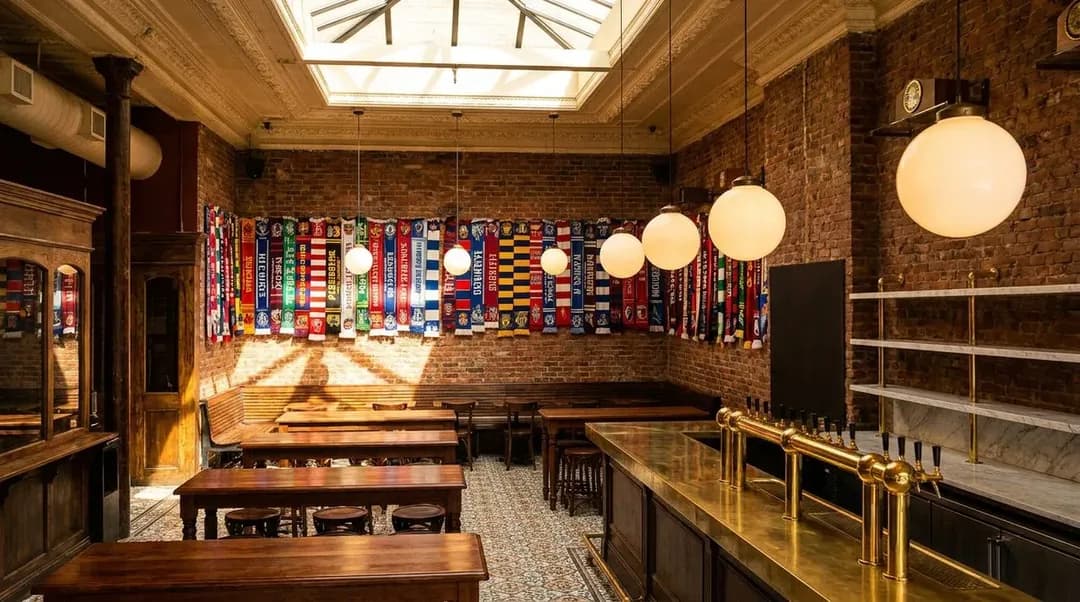
Brooklyn's Atlantic Terminal complex serves eleven subway lines and the Long Island Rail Road, and deep within its warren of corridors sits The Platform Pub. The bar occupies a mezzanine alcove originally designed as a waiting area for LIRR staff. In 1989, two transit workers, both soccer fanatics, convinced the MTA to let them install a small bar serving pre-packaged snacks and canned beer. Over three decades the operation evolved into a full-service establishment with a liquor license and a projector aimed at a whitewashed section of wall.
Current owner James Okafor, a Nigerian-born accountant who bought the lease in 2019, has cultivated a match-day culture that mirrors the English pub experience. Regulars text ahead to reserve stools for premier league fixtures, and Okafor expects the same ritual to govern World Cup 2026 screenings. The Pub's location makes it ideal for fans traveling to MetLife Stadium—catch an early match in Brooklyn, then ride the train to New Jersey for the evening fixture. Okafor stocks Nigerian and Mexican lagers in anticipation of the tournament's international crowds.
Trackside Cellar at 42nd Street–Port Authority
The labyrinthine 42nd Street–Port Authority Bus Terminal station is notorious for its confusing layout, which makes Trackside Cellar all the more elusive. Located in a sub-mezzanine accessible only via a narrow staircase near the downtown A-C-E platform, the bar occupies a former MTA storage room that once held spare signage and track tools. Leaseholder Marco Ruiz transformed it in 1995, installing reclaimed church pews for seating and a bar top salvaged from a demolished Hell's Kitchen tavern.
Ruiz, a soccer obsessive who played in amateur leagues across Queens, has pledged to screen every World Cup 2026 match with Spanish-language commentary available via a secondary audio feed. The Cellar's clientele skews older—transit workers on break, Port Authority bus drivers, and a contingent of Chelsea fans who've made it their unofficial headquarters since a viral social-media post in 2021. Ruiz plans to extend hours through July 19 to accommodate the MetLife final, offering a watch party with empanadas from a Washington Heights vendor.

Practical Notes for Finding These Venues
Locating these mezzanine bars requires patience and a willingness to explore. None advertise with exterior signage, and their legal status as grandfathered commercial tenants means the MTA does not acknowledge them on official maps. The best strategy is to visit during off-peak hours in late May, introduce yourself to the owner, and ask about World Cup 2026 screening schedules. Most operate on cash-only or Venmo payment systems, and none accept reservations beyond the informal waitlist methods described above.
- Arrive thirty minutes before kickoff for popular matches; mezzanine bars fill quickly and lack standing room.
- Bring small bills; ATMs are not always nearby, and owners prefer exact change to speed service.
- Respect the regulars—these are neighborhood spots first, tourist attractions second.
- Check social media day-of for any schedule changes; MTA track work occasionally forces temporary closures.
- Plan your route home in advance; late-night matches may end after some subway service reductions begin.
Why These Bars Matter Beyond the Tournament
The World Cup 2026 will shine a temporary spotlight on these hidden venues, but their significance extends far beyond a single tournament. They represent a vanishing strain of New York City infrastructure—spaces that evolved organically from the city's bones rather than through deliberate planning or capital investment. In an era when new bars require six-figure buildouts and branding consultants, these mezzanine establishments survive on sweat equity, word-of-mouth, and the stubborn persistence of owners who love soccer more than profit margins.
As match day crowds pack into Midtown's corporate sports bars and the MetLife Stadium final draws global attention on July 19, a few hundred New Yorkers will gather in subway alcoves to watch the same matches on salvaged screens, drinking cheap beer beneath the rumble of passing trains. It's a fitting metaphor for the city itself: the best experiences often hide in plain sight, accessible to anyone willing to descend one extra flight of stairs and push open an unmarked door. When the tournament ends and the crowds disperse, these bars will return to serving their regulars—transit workers, insomniacs, and premier league faithful—until the next global soccer event reminds the world they exist.
All trademarks are the property of their respective owners.
Ask Karpo for more information.
Keep reading
- Haaland Has Seven Goals and Norway Runs Entirely Through Him
 World Cup Trophy Ceremony Timing Medals and Postmatch Celebrations
 Olise and France's Attack: The Semifinal Tactical Question