 Haaland Has Seven Goals and Norway Runs Entirely Through Him
⚽️2026 FIFA WORLD CUP

NYC's Lost Soccer Stadiums Before World Cup 2026 at MetLife
Before MetLife Stadium hosts the 2026 final, explore three forgotten New York venues that once showcased world-class soccer history.
The World Cup Returns to New York
On July 19, 2026, MetLife Stadium in East Rutherford will host the World Cup 2026 final, crowning a champion before more than 80,000 spectators. The tournament, co-hosted by the United States, Canada, and Mexico, marks the first 48-team edition and the first time the World Cup has returned to North America since 1994. For New York and New Jersey, it represents the culmination of decades of soccer growth, from youth academies to packed Premier League viewing parties in Manhattan pubs.
Yet long before MetLife Stadium rose above the Meadowlands, New York City hosted international soccer on hallowed grounds now erased from the skyline. Three venues—the Polo Grounds in Harlem, Downing Stadium on Randall's Island, and Ebbets Field in Brooklyn—once welcomed touring European clubs, Olympic qualifiers, and American Soccer League battles. With less than two months until kickoff, this walking tour reconnects the city's soccer history with its imminent World Cup spotlight.
The Polo Grounds: Harlem's Vanished Colosseum
The Polo Grounds stood at 155th Street and Eighth Avenue from 1890 until its demolition in 1964. Best remembered as home to the New York Giants baseball club and later the Mets, the horseshoe-shaped stadium also hosted soccer internationals in the 1920s and 1930s. Touring squads from Scotland, England, and Uruguay drew crowds of 20,000 or more, their matches advertised in Yiddish, Italian, and English newspapers to reach immigrant communities hungry for the game they had left behind.
Today, the Polo Grounds Towers public housing complex occupies the site. A small bronze plaque near the corner of 155th Street and Frederick Douglass Boulevard marks the approximate location of home plate, but no monument recalls the soccer matches. Walk north along Eighth Avenue to Highbridge Park for a view of the Harlem River and imagine the roar that once echoed across these blocks when a visiting striker found the net.
Downing Stadium: Randall's Island Ruins
Downing Stadium opened on Randall's Island in 1936 as a Works Progress Administration project, a 22,000-seat oval designed for track and field. Soccer quickly claimed the infield. The American Soccer League used Downing as a neutral site for championship matches, and in the 1950s the stadium hosted exhibition games featuring clubs from Italy's Serie A and England's top flight. By the 1960s, the North American Soccer League brought Pele's New York Cosmos to Randall's Island for early-season friendlies before the team moved to larger venues.
Downing Stadium closed in 2002 and was demolished in 2005. The Icahn Stadium, a modern track and field facility, now occupies the southern end of the old footprint. Sections of the original grandstand foundation remain visible along the walking paths that circle the new venue. Reach Randall's Island via the footbridge at East 103rd Street or by car across the Triborough Bridge; the ruins lie a short walk south of the bridge plaza, offering a quiet contrast to the summer sports camps and soccer leagues that animate the island's fields today.
Ebbets Field: Brooklyn's Beloved Bowl
Ebbets Field, home of the Brooklyn Dodgers from 1913 to 1957, sat at the intersection of Bedford Avenue and Sullivan Place in Flatbush. While baseball dominated the calendar, soccer found a foothold in the 1920s when the American Soccer League's Brooklyn Wanderers and later the Brookhattan club drew Irish, German, and Polish fans to Sunday afternoon matches. International friendlies occasionally filled the 32,000-seat park, and in 1930 a U.S. national team warmup for the inaugural World Cup in Uruguay drew one of the largest soccer crowds in American history to that point.
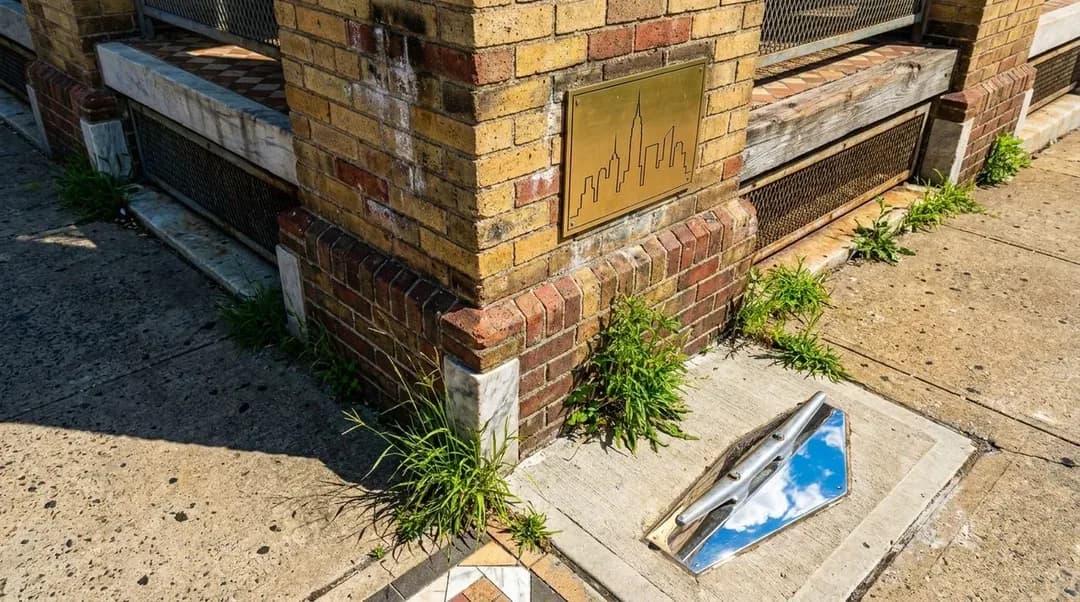
The stadium was demolished in 1960. Today, the Ebbets Field Apartments stand on the site, and a sidewalk plaque at the corner of McKeever Place and Montgomery Street marks the former location of home plate. The adjacent Jackie Robinson Intermediate School honors the Dodgers' legacy, but soccer's chapter remains largely unwritten. Walk east along Sullivan Place to explore the residential blocks where fans once streamed toward the turnstiles, their scarves and banners a preview of the supporter culture that defines modern soccer fandom.
Why These Stadiums Mattered to Soccer History
The Polo Grounds, Downing Stadium, and Ebbets Field bridged the Atlantic at a time when transatlantic travel was slow and expensive. Touring European clubs offered American audiences a rare glimpse of the game played at the highest level, planting seeds that would grow into the modern supporter base. The American Soccer League, though it folded in 1933, demonstrated that professional soccer could draw paying crowds in a nation dominated by baseball and boxing. These venues also served as proving grounds for U.S. national teams preparing for World Cup qualifiers and Olympic tournaments.
The erasure of these stadiums reflects broader urban renewal patterns that reshaped New York in the mid-20th century. Yet their stories remain relevant as the city prepares to welcome the world this summer. The immigrant neighborhoods that filled the Polo Grounds and Ebbets Field have evolved, but their descendants—now joined by newer waves from Latin America, West Africa, and South Asia—will pack MetLife Stadium and viewing parties across the five boroughs, continuing a tradition that began on these forgotten pitches.

Practical Notes for Your Walking Tour
Each site can be visited in a half day using public transit. The Polo Grounds marker is steps from the 155th Street station on the B and D trains. Randall's Island is accessible via the M35 bus from East 125th Street or a scenic walk across the footbridge at East 103rd Street. The Ebbets Field plaque sits near the Prospect Park station on the B and Q lines. Wear comfortable shoes and bring water; summer temperatures in late May already hint at the July heat that will greet World Cup visitors.
- Polo Grounds: 155th Street and Frederick Douglass Boulevard, Harlem. Nearest subway: 155th Street (B, D trains).
- Downing Stadium ruins: Randall's Island, near Icahn Stadium. Access via East 103rd Street footbridge or M35 bus.
- Ebbets Field marker: McKeever Place and Montgomery Street, Flatbush. Nearest subway: Prospect Park (B, Q trains).
- Best time to visit: Weekday mornings for quieter streets; weekends for neighborhood atmosphere and open parks.
- Combine with soccer: Catch a pickup game on Randall's Island or visit the New York City FC Academy fields nearby.
Connecting Past and Present
As MetLife Stadium prepares for the World Cup 2026 final on July 19, this tour offers a chance to honor the venues that laid the groundwork. The Polo Grounds, Downing Stadium, and Ebbets Field may be gone, but their role in building American soccer culture deserves recognition. Walking these sites today, you join a lineage of fans who have cheered for the beautiful game in New York for more than a century, from the American Soccer League to the Premier League broadcast era.
The 2026 tournament will introduce millions of new fans to soccer, just as those early internationals did a hundred years ago. By visiting these forgotten stadiums now, you carry their memory forward into the next chapter of the sport's history in New York. When the final whistle blows at MetLife Stadium in July, the echoes will reach all the way back to Harlem, Randall's Island, and Flatbush, where the roots of American soccer run deeper than most realize.
All trademarks are the property of their respective owners.
Ask Karpo for more information.
Keep reading
- Haaland Has Seven Goals and Norway Runs Entirely Through Him
 World Cup Trophy Ceremony Timing Medals and Postmatch Celebrations
 Olise and France's Attack: The Semifinal Tactical Question