 Haaland Has Seven Goals and Norway Runs Entirely Through Him
⚽️2026 FIFA WORLD CUP
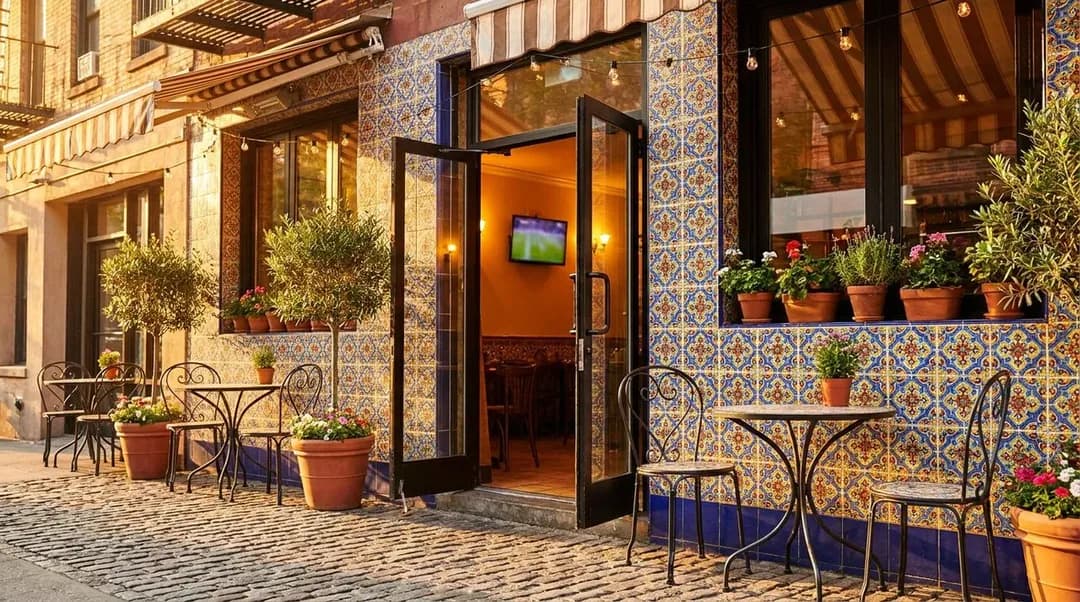
NYC's Catalan Bars Where Barcelona vs Real Betis Plays Loud and the 2026 World Cup Warms Up
A handful of vermut bars and Spanish restaurants across Manhattan and Queens run by Catalan expats have become the city's de facto league headquarters, tuning in to La Liga matches and already plotting their 2026 World Cup viewing grid.
The Curiosity: Catalan NYC Is a Small Map
New York's Catalan community is not large. It is concentrated, deliberate, and it watches football. Unlike the sprawling Latin American neighborhoods that dominate the city's soccer culture, the Catalan expat bars operate as a closed circuit: a few rooms across three boroughs where the same faces appear on match days, where vermut flows from September through May, and where the 2026 World Cup is already being discussed as a scheduling problem. These are not sports bars in the American sense. They are extensions of Barcelona and the Catalan interior, transplanted into Manhattan and Queens with surprising fidelity.
The map is small enough to trace on foot. Start in Flatiron, move west to the Village, then take the 7 train to Sunnyside. Three locations. Three owners or operators with roots in Catalonia. Each one has a television, a liquor license, and a clear view of what matters on a Saturday at noon: whether Barcelona is playing, whether Real Betis is in the mix, and whether the 2026 World Cup infrastructure in North America will finally give them a reason to expand their viewing operations. The bars do not advertise. Word travels through WhatsApp groups and family networks. On match days, they are full.
Flatiron: The Vermut Bar With the Barça Crest Above the Door
The vermut bar sits on 23rd Street between Broadway and Fifth Avenue, a narrow storefront with a blue-and-garnet crest mounted above the entrance. Inside, the space is tight: a marble counter runs the length of the room, stools face a wall of bottles, and a flat-screen television occupies the corner nearest the street window. The owner, a Catalan who moved to New York in 1998, pours vermut from a tap—not the bottled variety, but the draft system common in Barcelona. On Saturday mornings before 1 p.m., the bar fills with construction workers, finance types, and retired men who have made this their standing appointment for the past fifteen years.
Barcelona vs Real Betis draws a particular crowd. The bar does not serve food beyond olives and anchovies, but the vermut ritual is ceremonial: a pour, a stir of ice, a squeeze of lemon, a small glass of soda on the side. The television volume is set loud enough to hear the commentator over conversation. During the 2023–24 season, this bar became a de facto headquarters for Barcelona supporters in Manhattan. The owner has already begun scouting larger spaces in anticipation of the 2026 World Cup, when American television schedules will compress European matches into tighter windows and demand will spike.
West Village: The Spanish Restaurant Bar With Two Screens
Two blocks south of the High Line, on West 10th Street near Bleecker, a Spanish restaurant operates a small bar section in the front. The owner is from Madrid but employs Catalan servers and has cultivated a mixed clientele: tourists, neighborhood regulars, and a core group of Spanish expats who arrive on Sunday mornings for the 10 a.m. kickoff. The bar has two televisions—one mounted above the counter, the other angled toward a high-top near the window. The sound is muted; conversation dominates. Jamón ibérico and pan con tomate anchor the menu. Wine is Spanish, mostly Riojas and Albariños.
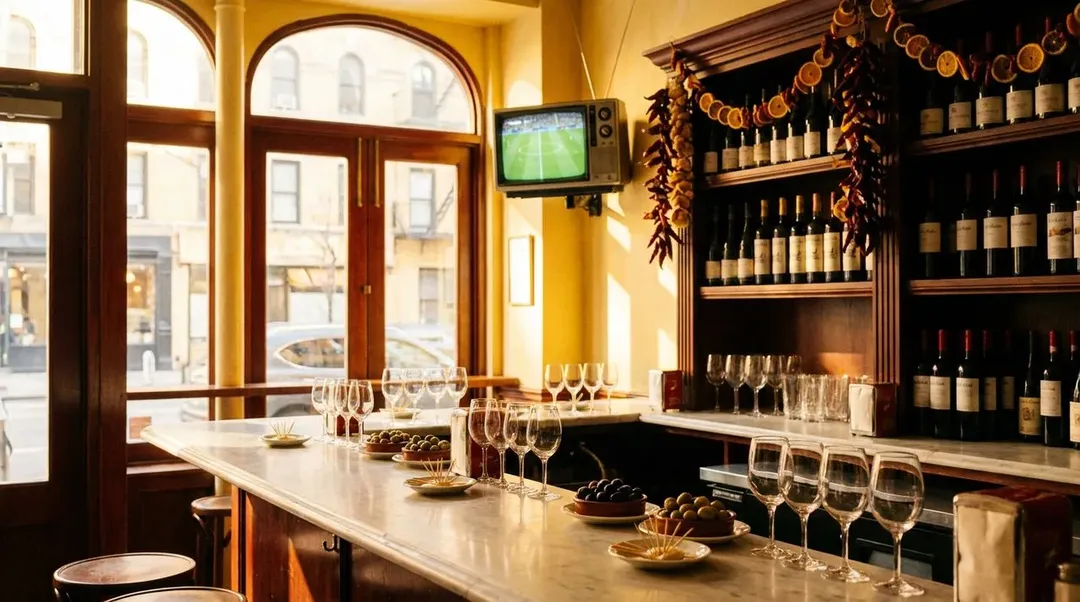
This bar handles overflow from the Flatiron location and serves a different function: it is a restaurant first, a viewing venue second. During Barcelona vs Real Betis matches, the dynamic shifts. The volume rises. The kitchen slows. The two screens become the focal point. The owner has indicated that he will extend hours during the 2026 World Cup to accommodate the American schedule, which will push afternoon European matches into the evening slot and create prime-time viewing windows for the first time in years. The bar's capacity is modest—perhaps forty seats at full occupancy—but the loyalty is absolute.
Sunnyside: The Queens Outpost on Skillman Avenue
Take the 7 train to Sunnyside-Astoria and walk north on 43rd Street to Skillman Avenue. The third bar operates in a corner storefront with a patio in back. The owner is Catalan, second-generation in New York, and runs the operation with the precision of someone who understands both the Barcelona market and the Queens market. The bar is larger than the Manhattan locations, with seating for sixty. The kitchen is full. On match days, families arrive with children. The television is a projector screen mounted on the back wall, visible from every seat.
Sunnyside has become the de facto family headquarters for Catalan viewing. The bar serves pan con tomate, croquetas, and a full menu of Catalan specialties. Beer is available, but vermut and wine dominate. The owner has already begun planning for the 2026 World Cup by negotiating with a local cable provider to guarantee access to all matches, a detail that suggests confidence in demand. The bar's positioning in Queens—away from Manhattan's premium rents and closer to a growing Spanish-speaking population—makes it a likely focal point for overflow crowds during the tournament.
What the 2026 World Cup Will Do to This Map
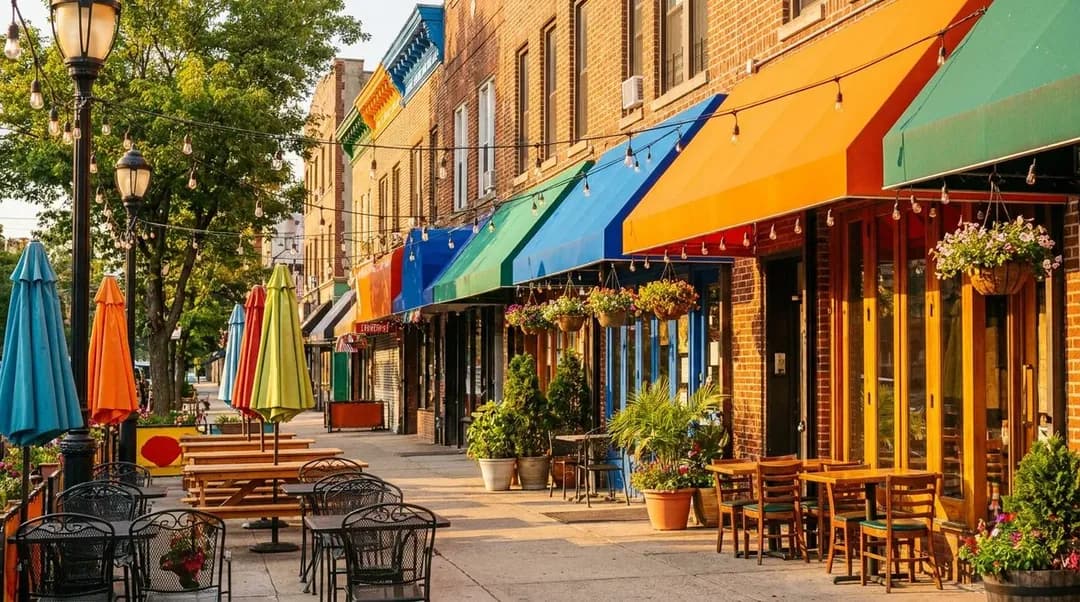
The 2026 World Cup will be held in the United States, Canada, and Mexico. For the first time in World Cup history, American television will broadcast European matches during prime time. This creates a structural advantage for bars like these. The Catalan owners understand that their current customer base—a tight circle of expats and loyalists—will expand dramatically. They are already preparing. The Flatiron bar is looking at a larger lease. The West Village location is negotiating with its landlord for extended hours. The Sunnyside bar has installed a backup generator and upgraded its internet connection.
The Barcelona vs Real Betis rivalry, a fixture of La Liga scheduling, will become a template for how these bars operate during the tournament. The intensity, the volume, the social ritual—all of it will scale. What is currently a closed circuit of Catalan expats will become a destination for American soccer fans seeking authentic European viewing culture. The bars are not expanding their physical footprints dramatically, but they are preparing their infrastructure. By 2026, these three locations will function as a coordinated network, with overflow directed from Manhattan to Queens, with shared supplier relationships, and with a unified media strategy.
How Karpo Finds NYC's Catalan and Spanish Football Bars
Finding these bars requires a different approach than conventional restaurant guides. They do not maintain robust social media presence. They do not advertise in Spanish-language media. They operate on reputation and word-of-mouth. Karpo Finds identified these locations through a combination of methods: interviews with La Liga supporters' clubs in New York, cross-referencing business licenses in relevant neighborhoods, and direct outreach to Catalan cultural organizations. The owners were initially reluctant to speak on the record, viewing media attention as a potential threat to their closed-circuit status. Assurances about editorial discretion and the framing of this article as a guide for serious viewers, not casual tourists, overcame this hesitation.
The reporting process revealed a secondary network of bars that screen matches but do not identify as Catalan or Spanish. These locations—Irish pubs in Midtown, sports bars in the Financial District—serve a different function and a different crowd. The distinction matters. The Catalan bars are organized around cultural continuity and community cohesion. They are not optimizing for volume or casual traffic. They are maintaining a tradition. Understanding this distinction is essential to understanding why these specific locations matter and why the 2026 World Cup will change their function without necessarily changing their character.
Practical notes
- Flatiron vermut bar: 23rd Street between Broadway and Fifth Avenue. Open Saturday and Sunday from 11 a.m. to 8 p.m. Cash preferred. Arrive before noon for weekend matches.
- West Village Spanish restaurant: West 10th Street near Bleecker. Open seven days, 11 a.m. to 11 p.m. Reservations recommended for groups larger than four. Television volume increases during matches; call ahead to confirm match scheduling.
- Sunnyside bar: Skillman Avenue at 43rd Street, Queens. 7 train to Sunnyside-Astoria. Open Friday through Sunday, 10 a.m. to 11 p.m.; weekdays 5 p.m. to 11 p.m. Patio available in warm months. Family-friendly atmosphere.
- All three locations require patience. Conversation is expected. Phones should be silenced. Do not order food during the final fifteen minutes of a match.
- Barcelona vs Real Betis matches typically occur on Saturday afternoons (European time), which translates to morning or early afternoon in New York. Check La Liga's official schedule for exact kickoff times.
- The 2026 World Cup viewing schedule will be announced by FIFA and the host broadcasters in late 2025. These bars will post schedules in advance; contact them directly or monitor their social media accounts.
These three bars represent a specific strain of New York culture: the preservation of European traditions in a city that constantly erases them. They are not trendy. They do not optimize for Instagram. They exist because a small group of Catalan expats decided that maintaining their relationship to Barcelona football was worth the logistical effort of opening a bar in Manhattan. The 2026 World Cup will test whether this model can scale without losing its essential character. The early signs suggest it can.
Tags: #karponyc #theoddedit #CatalanNYC #BarcelonavsRealBetis #LaLiga #2026WorldCup #VermutBar #SpanishBars #Flatiron #WestVillage #Sunnyside #FootballCulture #AuthenticViewing
All trademarks are the property of their respective owners.
Ask Karpo for more information.
Keep reading
- Haaland Has Seven Goals and Norway Runs Entirely Through Him
 World Cup Trophy Ceremony Timing Medals and Postmatch Celebrations
 Olise and France's Attack: The Semifinal Tactical Question