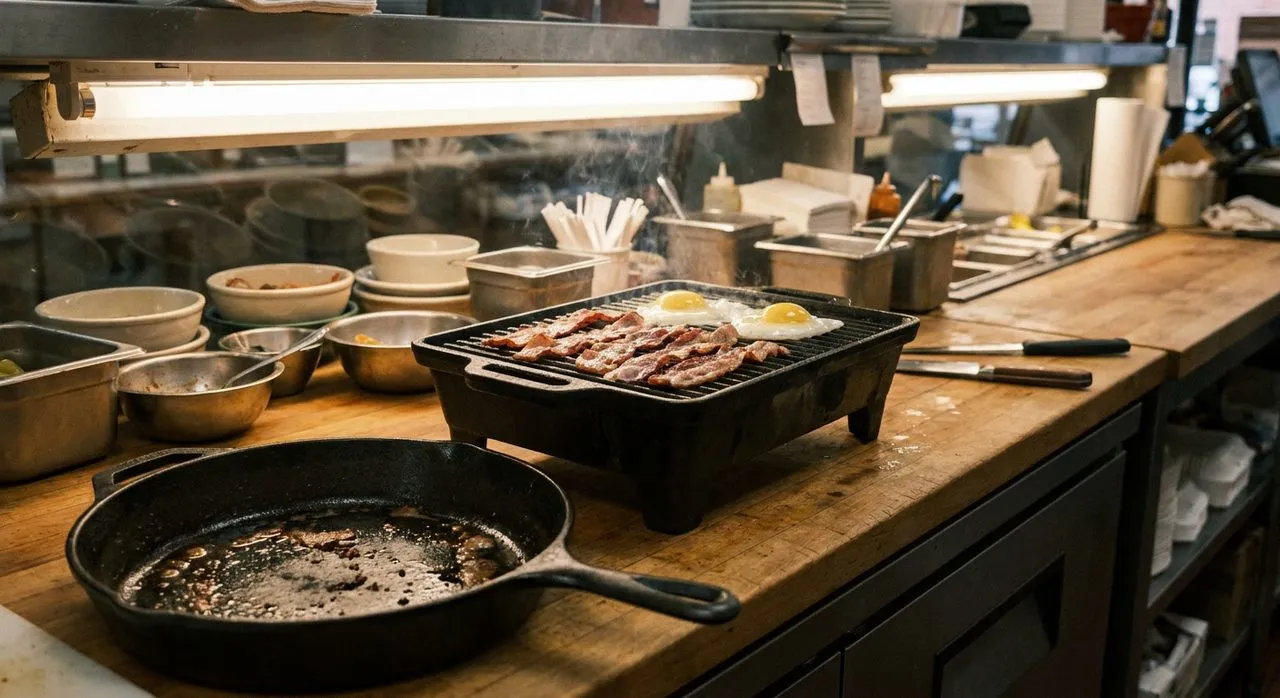
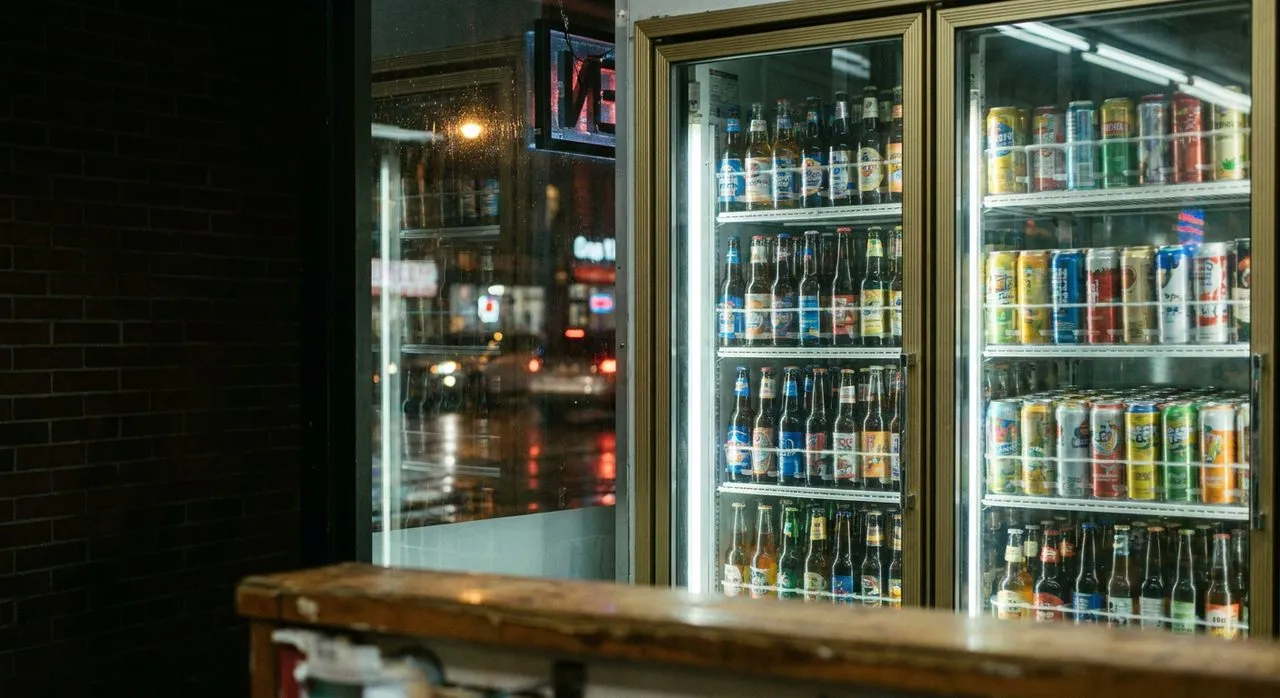
The night is still dark when you step off the L train, but Bushwick's bodega windows glow like beacons. Inside, fluorescent tubes hum above coolers stocked with Gatorade and yerba mate, while behind the counter a grill sizzles with bacon and eggs. It's four in the morning on a Saturday in late May 2026, and you're not alone—a small cluster of people wait for their orders, some swaying slightly to music leaking from earbuds, others scrolling through phones with the blank focus of the very tired or very wired. The air smells like coffee and hot oil and onions browning. Someone calls out a number in Spanish. A foil-wrapped package changes hands.
The all-night grill shift
Most New York bodegas stay open late, but only a dedicated few keep the grill running until dawn. Along Knickerbocker Avenue and the stretch of Wyckoff that straddles the Bushwick-Ridgewood border, a handful of corner stores have turned late-night sandwich service into something close to theater. The counter staff work with an economy of motion that comes from repetition: crack eggs with one hand, flip bacon with the other, season the grill, wrap the sandwich in foil while it's still steaming. They take orders in a hybrid language—English nouns, Spanish verbs, hand gestures for extra cheese.
Speed is the virtue here, but not at the expense of care. Watch how the cook presses a spatula against a chopped-cheese patty to release fat, or how they toast the roll on the grill's edge until it's golden and yielding. These are small refinements that make the difference between a forgettable sandwich and one you'll crave at three in the morning two weeks later.
What to order
The bacon-egg-and-cheese on a roll is the foundational text, and you should try it at least once to understand the form: soft hero bread, American cheese melting into scrambled eggs, bacon that's been cooked until the fat renders but the meat stays pliable. Salt, pepper, ketchup if you want it. Some people add hot sauce. It costs around five dollars and weighs enough to feel like a meal.
But the menu—such as it is, often scrawled on a whiteboard or understood through pointing—goes deeper. Chopped cheese, the Bronx-born classic that's migrated across boroughs, comes with ground beef seared on the flattop, onions, cheese, lettuce, tomato, and mayo or ketchup. You can request plantains as a side or layered into the sandwich itself, their sweetness cutting through the salt and fat. Avocado appears frequently now, mashed or sliced. Chipotle mayo has become a standard condiment alongside the usual squeeze bottles. The best approach is to start with a classic and then, on subsequent visits, begin customizing.
The after-hours crowd
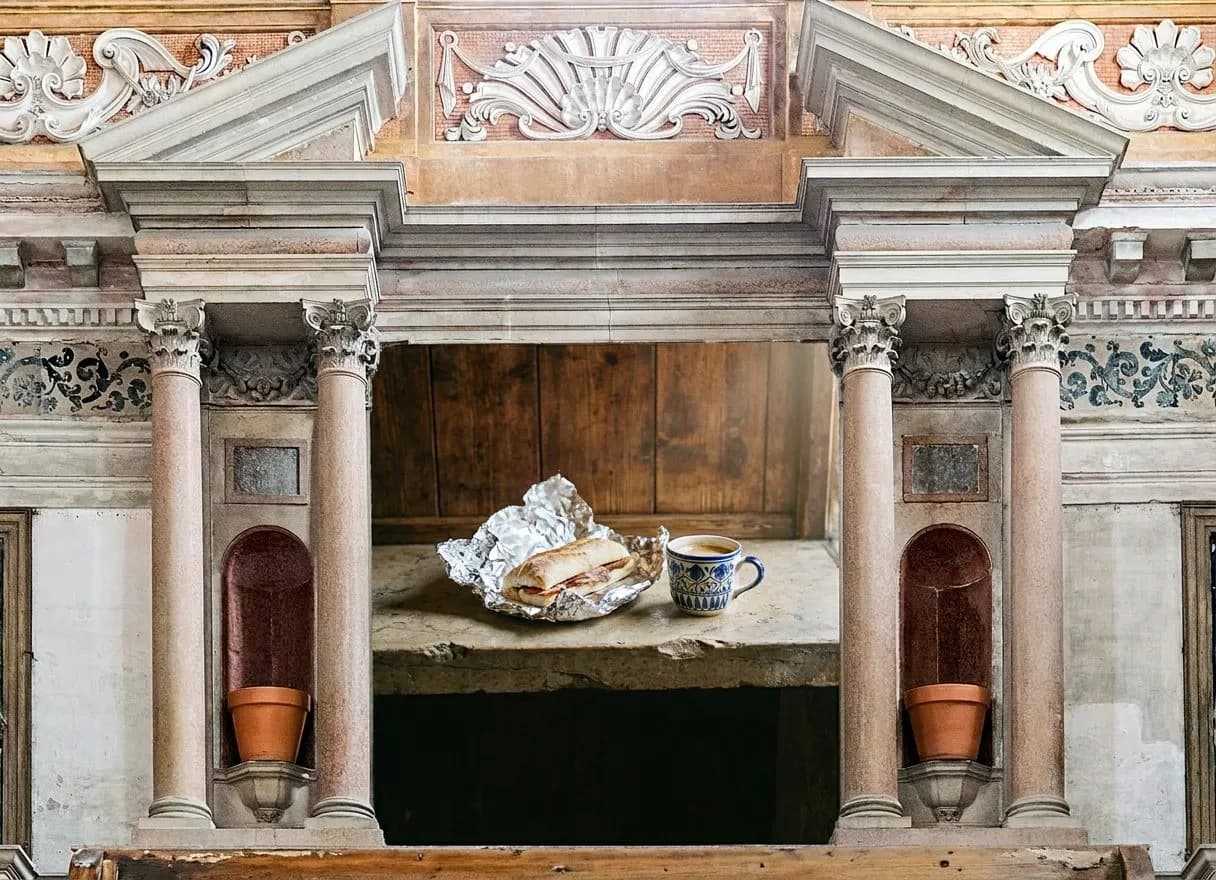
Who eats a hot sandwich at four in the morning? In Bushwick, the answer is: almost everyone, eventually. Service-industry workers finishing bar shifts stand next to artists coming out of studio sessions. Club-goers in impractical shoes wait beside early-shift construction workers in Carhartt jackets. Insomniacs, night nurses, people catching flights from JFK, people avoiding going home—the bodega grill is neutral ground, a rare moment of democratic congregation in a city increasingly carved into economic strata.
There's no seating inside, and that's part of the point. You're not meant to linger. Take your foil-wrapped sandwich and your paper cup of coffee and step back outside, where the May air still holds a faint chill. Some people lean against the bodega window to eat, foil peeling back in sections. Others walk while they chew, heading toward the next thing or away from the last one. The sidewalk becomes the dining room.
The coffee is better than it should be
Behind the counter, a percolator gurgles and steams, producing coffee that tastes like coffee used to taste—strong, hot, faintly bitter, nothing fancy. It comes in blue-and-white paper cups with a Greek key pattern, the kind that have been warming New York hands for decades. You add your own milk and sugar from a narrow counter cluttered with stirrers and napkins.
The coffee isn't trying to be anything other than functional, and that's its charm. It pairs perfectly with a greasy sandwich eaten at an unreasonable hour. It costs a dollar, maybe a dollar fifty. You can refill it if you're polite and the counter staff aren't slammed. In a neighborhood thick with third-wave cafés charging five dollars for a cortado, there's something almost radical about a cup of diner-style coffee served without ceremony or apology.
Cash preferred, cards accepted
Most of these bodegas accept credit and debit cards now, often with a minimum purchase of five or ten dollars that your sandwich will likely meet. But cash still moves faster, and if you're ordering at peak hours—Friday and Saturday between two and five in the morning—paying in bills will get you out the door quicker. The ATM inside may or may not be working. Plan accordingly.
Prices hover around five dollars for a standard sandwich, six or seven if you start adding avocado and plantains and extra meat. It's one of the last true bargains in a city where a sit-down brunch can easily cost thirty dollars before tip. The value isn't just economic—it's temporal. Where else can you get hot food made to order in under five minutes at four in the morning?
Why it matters
These bodegas aren't chasing trends or courting Instagram fame. They're performing a function that cities need but rarely celebrate: feeding people at odd hours without judgment or fuss. In an era of ghost kitchens and delivery apps, there's something deeply reassuring about a physical place with a grill and a human being who remembers that you like your eggs scrambled hard and your cheese doubled.
Bushwick continues to change—rents climb, galleries close or move farther east, the crowd at the L train platform skews younger and wealthier each year. But the late-night bodegas remain, serving the people who keep the city running while others sleep. If you want to understand New York's actual texture, the version that exists outside brunch reservations and rooftop bars, this is where you start. Tired feet, bright lights, a sandwich wrapped in foil, the sky beginning to pale over the low buildings. It's not romantic, exactly, but it's real.
Practical notes
The bodegas described operate along Knickerbocker Avenue and Wyckoff Avenue in Bushwick, particularly between Myrtle and Flushing avenues. The L train to Jefferson Street or DeKalb Avenue puts you within walking distance; the M train also serves the area. Street parking exists but is competitive, especially on weekend nights. Most of these corner stores stay open twenty-four hours, though grill service may pause during slow periods—late-night and early-morning hours (roughly 11 p.m. to 6 a.m.) are your safest bet. Verify hours directly; schedules shift. Bring small bills if possible. Steps at entrances are common; accessibility varies by location. Bathroom access is limited or nonexistent. Dress for the weather if you'll be eating outside.
Tags: #BushwickBodegas #LateNightEats #NYCAfterHours #TheOddEdit #BaconEggAndCheese #ChoppedCheese #BushwickNYC #KnickerbockerAvenue #NYCFoodScene #BodegaCulture #LateNightNYC #Spring2026 #BushwickEats #NYCNightlife #AfterHoursFood
Sources consulted: Bushwick, Brooklyn · Bodega · MTA Info · Time Out New York Restaurants · NYC Small Business Services
All trademarks are the property of their respective owners.


