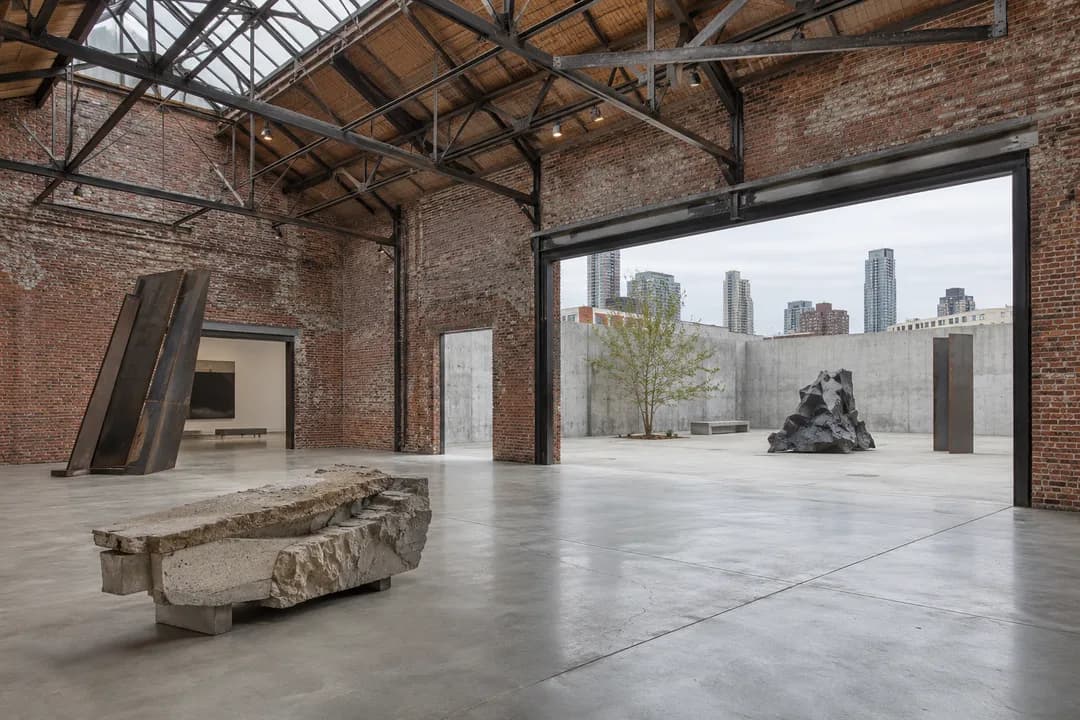
 Long Island City Art Walk Near Me in Queens
Free Things to Do

The Rose Reading Room: Two Free Blocks of Gilded Quiet on 42nd Street
Inside the New York Public Library's flagship, 52 oak tables stretch beneath a painted sky and chandeliers that predate the Depression. No library card required—just walk in.
The ceiling tells you everything
You push through the heavy bronze doors at Fifth Avenue and 42nd, climb the marble stairs past Patience and Fortitude, and enter Astor Hall. Most tourists photograph the arches and leave. You keep walking. Third floor, Room 315. The Rose Main Reading Room opens like a secret kept in plain sight: 297 feet long, 78 feet wide, 52 feet high. The ceiling is painted clouds and sky, installed in 1912 and restored in 2016 after a chunk of plaster nearly killed someone in 2014. Eighteen chandeliers hang on chains, each one original. The room costs nothing to enter. No ticket, no membership, no suggested donation box. You walk in, pick a table, and sit in the same chair where someone drafted a dissertation in 1927.
The mid-morning window

Arrive between 10:15 and 11:00 on a Tuesday, Wednesday, or Thursday. The reading room opens at 10:00 AM; by 10:15 the early-bird researchers have settled and the air has stilled. You'll find entire tables empty. Claim a seat on the north side, tables 26 through 34, where natural light from the Fifth Avenue windows slants across oak without glare. By noon, especially in autumn and winter, every seat fills. Undergraduate thesis writers, screenplay drafters, people escaping their apartments. The room holds 500; after 1:00 PM you're hunting for chairs. Weekends are chaos—families, couples on dates, influencers staging photo shoots until security intervenes. Go on a weekday morning or don't go at all.
What the oak tables know
Each table seats ten, five per side, with individual brass lamps installed in 1998. The tables are original, milled from white oak, scarred by a century of pens and elbows and wedding rings tapping. Table 15, center aisle, was Norman Mailer's favorite during his research binges in the 1960s. No plaque marks it; the reference librarians will tell you if you ask. The chairs are newer—replaced in 2016, upholstered in brown leather, surprisingly comfortable for three-hour stretches. Underneath each table: a wooden rail for your feet, installed when men wore gaiters and women wore boots. You rest your shoes there and feel the groove worn smooth.
The call slip ritual

The Rose Room connects to the library's research collections: seven floors of stacks holding 2.5 million volumes, closed to the public. You request books via call slip—paper forms at the reference desk, or digital submission through the library's catalog. Fill in the call number, your name, your reader card number (free, issued on the spot with ID). Submit the slip. Wait 20 to 40 minutes. A pneumatic tube system, installed in 1911 and still operational, carries your request down to the stacks. A staff member retrieves the book, sends it up via dumbwaiter. Your name appears on the electronic board. You collect your book from the delivery desk, return to your table. It feels like summoning a spell.
The quiet they enforce
Security guards patrol in soft-soled shoes. They will ask you to silence your phone, stop whispering, take your call outside. The acoustics amplify everything—a cough travels 50 feet, a whispered conversation sounds like gossip in a cathedral. No food, no drinks except water in clear containers. No photography with flash. No lingering by the windows for selfies during peak hours. The rules are printed and posted and enforced without apology. The result: a silence dense enough to hear the chandeliers hum when the building settles. You read, you write, you think. The room allows nothing else.
The details they restored
In 2016, after a two-year closure, the library reopened the Rose Room with 50,000 sheets of gold leaf applied to the ceiling coffers, each rosette re-gilded by hand. The murals—cherubs, clouds, blue sky—were cleaned with cotton swabs and distilled water. The chandeliers were disassembled, each crystal washed, every brass fitting polished. The floor, Tennessee marble, was releveled after a century of sag. Cost: $12 million, funded entirely by donations. You sit in a room that someone loved enough to save. The frescoes above the north and south walls, painted by James Wall Finn, depict the history of the written word. Look up between paragraphs. The paint is 112 years old and looks wet.
Practical notes
The Rose Main Reading Room is located on the third floor of the Stephen A. Schwarzman Building, Fifth Avenue at 42nd Street. Open Monday and Thursday–Saturday 10:00 AM–6:00 PM; Tuesday–Wednesday 10:00 AM–8:00 PM; closed Sunday. Admission is free. No reservation required. To request books from the research collection, obtain a free reader card at the information desk (bring photo ID). The library is accessible via the B/D/F/M trains to 42nd Street–Bryant Park, or the 7 train to Fifth Avenue. Bryant Park, directly behind the library, offers benches and tables if the reading room is full. Security checks bags at entry; allow five minutes. Lockers available on the ground floor (quarters required). No coats or large bags allowed in the reading room; use the free coat check on the third floor, open during reading room hours.
Tags: #NYPLRoseReadingRoom #NewYorkPublicLibrary #FreeNYC #BryantPark #MidtownManhattan #ReadingRoom #ArchitectureNYC #QuietSpaces #StudySpots #NYCLibraries #FreeAndFine #42ndStreet #FifthAvenue #BeauxArts #HiddenNYC
Sources consulted: Time Out New York · NYC Parks · Atlas Obscura
All trademarks are the property of their respective owners.
Ask Karpo for more information.
Keep reading
- Long Island City Art Walk Near Me in Queens
 Bushwick Collective Art Walk Near Me in Brooklyn
 Lower East Side Art Walk Near Me in Manhattan