 SoHo Tailor Alteration Shop Finder for Sample Sale Finds
Neighborhood Guides

NYC Neighborhood Itinerary Builder: 3 Picks for Mixed Tastes
Shape an NYC neighborhood plan for different food preferences by separating meal requirements, browsing interests, and the decisions everyone must share.
Different food preferences do not require separate NYC afternoons. Start a neighborhood itinerary builder request by identifying the meal everyone needs to share and the activities that can stay flexible. Three decisions usually matter more than a long restaurant list: what each person can eat, whether the group wants one table, and what happens after the meal. Use the Karpo APP to describe those decisions before asking for local ideas, so the neighborhood plan has a common center.
Separate requirements from enthusiasm
Have each person name one requirement and one preference. A vegetarian meal is a requirement for one friend. An interesting bakery may be another friend's preference. Those statements should not receive equal weight when you compare suggestions. A plan that includes a bakery but leaves someone without a meal has solved the less important problem. Write the requirements plainly and ask for ideas that address them before adding a browse, a drink, or a walk.
The conversation can begin without naming a business: “There are three of us planning an NYC neighborhood afternoon. One wants vegetarian food, one would like fish, and one mainly wants to browse shops afterward. We want to eat together and stay in one district.” The numbers and preferences describe an example group. They are not a claim about any menu. Substitute your actual needs, especially if a preference is something a person cannot compromise on.
Decide whether one table is the point
Eating together and finding everyone their favorite dish are related but different goals. If conversation over one meal is the reason for meeting, say that one table matters more than each person's first choice of cuisine. The search can then focus on a format with enough variety to consider. If the group prefers independent food purchases followed by a shared walk, state that instead. Choosing the format early prevents a list of attractive but incompatible meal ideas.
Avoid assigning a dietary role to a type of venue by assumption. A casual cafe is not automatically suitable for every vegetarian, and a large menu is not evidence of how a kitchen handles a specific request. Use the suggestions to shortlist possibilities, then base your selection on the relevant menu and direct venue information. You can ask Karpo to help compare stated options, while the establishment remains the authority for the food it actually serves.
Keep the first result set small
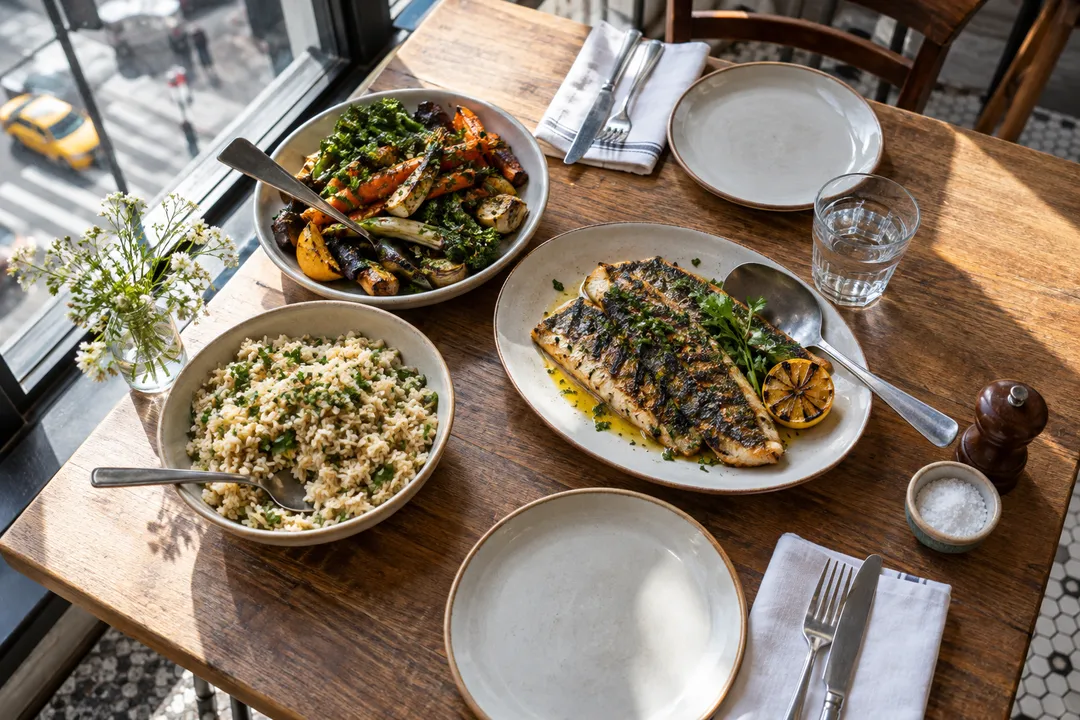
Request three contrasting possibilities, with an explanation of the tradeoff in each. Perhaps one prioritizes sitting together, another suits a shorter meal, and another places browsing at the center. These are comparison categories, not guaranteed attributes of an unnamed place. The reason to ask for a small set is social: everyone can respond to the same concrete choices. A list of twenty restaurants often sends each person down a different path before a common plan exists.
A good follow-up names the disagreement precisely. “We like the neighborhood of option two, but the meal format is too rushed. Keep that area and suggest an alternative where sitting together is the priority.” You are refining the task rather than issuing another broad request for recommendations. Keep the parts the group already accepts. If the district and meal format work, changing every other detail creates unnecessary decisions and makes agreement feel farther away than it really is.
Give the non-food activity equal attention
The person who is less interested in the meal should still have a reason to enjoy the outing. Ask what they want to browse or notice: clothes, books, architecture, design, or simply everyday neighborhood streets. Treat that interest as a real part of the plan rather than filler after everyone has eaten. A short, appealing second activity can make the afternoon feel balanced without trying to turn every stop into a perfect compromise for every individual.
Keep food and browsing in the same manageable area. The point is a coherent shared outing, not rewarding each person with a separate destination in a different borough. If the suggestions pull apart geographically, choose which interest leads this time. You can save the other idea for another afternoon. A workable compromise has one clear center and one optional extension. It does not need to prove that every person's entire wish list can fit into a single walk.
Put the spending conversation before the order
Give a personal spending boundary if it helps, and say what that boundary includes. Some people think of a meal budget as food alone. Others mean food, drinks, and everything they intend to purchase during the outing. Resolve that distinction before comparing places. A budget entered in a planning request is your constraint, not a quoted menu price. The final choice should use the terms and prices attached to the specific experience you decide to buy.
Browsing can remain genuinely optional as a purchase activity. Tell the group that nobody needs to buy something to make the second stop worthwhile. If the plan depends on paid admission or a booked activity, everyone should agree to that commitment. Do not let an inexpensive meal become the opening move of a much more expensive afternoon by accident. Ask for ideas that fit the group's intended spending pattern rather than assuming the same amount feels casual to everyone.
Change the sequence when hunger changes the mood
A hungry group needs a different order from a group that recently ate. If food is urgent, lead with the meal and treat the walk as the afterward activity. If people mainly want conversation and exploration, the meal can be shorter or later. Describe the actual state of the group when you make the request. The preferred sequence is a practical judgment about this outing, not a rule about the correct way to experience an NYC neighborhood.
Skip the extra food stop if it merely repeats the meal. A separate dessert destination can be lovely when everyone wants it, but it should not displace the browse that made the plan interesting to someone else. Use one decision after the meal: continue to the agreed activity, choose a shared treat, or finish. That small choice is easier than renegotiating every suggestion. It also gives a tired participant a graceful way to leave without ending the whole group conversation.
Practical Notes: ask one question everyone can answer
Before opening the app, collect the dietary requirements, desired meal format, meeting area, date, and finish preference. Ask each person to choose between a food-led afternoon and a browsing-led afternoon. Then send the agreed brief to Karpo and request a few local ideas with clear reasons for inclusion. You do not need to share personal medical details in order to state a food requirement. Provide only the information needed to shape the planning task.
Use the Karpo APP to turn “we all want something different” into a choice the group can actually make. Keep the meal requirement visible, preserve one activity beyond eating, and name the compromise you are comfortable making. The useful outcome is not an imaginary restaurant that satisfies every possible wish. It is a neighborhood afternoon where everyone knows why the main stop was chosen, what comes next, and which part remains optional if the group's energy changes.
Ask Karpo for more information.
Keep reading
- SoHo Tailor Alteration Shop Finder for Sample Sale Finds
 Williamsburg Tailor Alteration Shop Finder for Bike Riders
 Upper West Side Tailor Alteration Shop Finder for Kids