 SoHo Tailor Alteration Shop Finder for Sample Sale Finds
Neighborhood Guides

NYC Neighborhood Itinerary Builder: 3 Stops After an Errand
Turn an NYC errand into a small neighborhood outing by planning from the actual finish, accounting for what you carry, and keeping purchases optional.
An NYC errand can become a neighborhood outing if you plan from where it actually ends. Use a neighborhood itinerary builder to add three possible stops: something to enjoy nearby, a useful pause, and an optional extension toward home. Tell the Karpo APP what you will be carrying and how much energy you expect to have. The errand stays the reason you are there, while the extra time becomes a choice instead of another obligation.
Start with the pickup, not your front door
Your home-to-errand journey may already contain most of the day's travel. Planning the enjoyable portion from home can hide that effort and produce an unnecessary return across the same area. Give Karpo the place where you expect to finish the errand and the direction you intend to leave afterward. The exact details belong in your own request. This article does not establish the address or service hours of any shop, appointment, or collection counter.
Also describe whether the errand has a fixed end or an uncertain one. A booked appointment might give you a useful planning window. A pickup with a queue might make the start less predictable. You can ask for activities that work as alternatives rather than a rigid chain. A browse you can omit is easier to attach to an uncertain finish than an experience requiring a second timed commitment, especially when the errand itself is the priority.
Decide what the errand leaves you carrying
A light envelope, a full shopping bag, and a bulky object create different afternoons. Tell Karpo the practical category rather than sharing personal details about the purchase. If the item is awkward to carry, an easy pause near your departure may be the entire enjoyable extension. A walk that looks short can still be a nuisance if you keep switching a heavy bag between hands. Carrying comfort deserves to shape the plan as much as your interests do.
A possible message is: “I will finish an errand in an NYC neighborhood and have a small bag with me. Suggest something interesting to browse, a seated pause, and a simple finish toward my journey home. Keep all purchases optional.” Adjust that description if you need to go straight home with the item. The point is to choose an outing that fits the result of the errand, rather than treating the bag as an inconvenience discovered after you have committed.
Give the first extra stop a small purpose
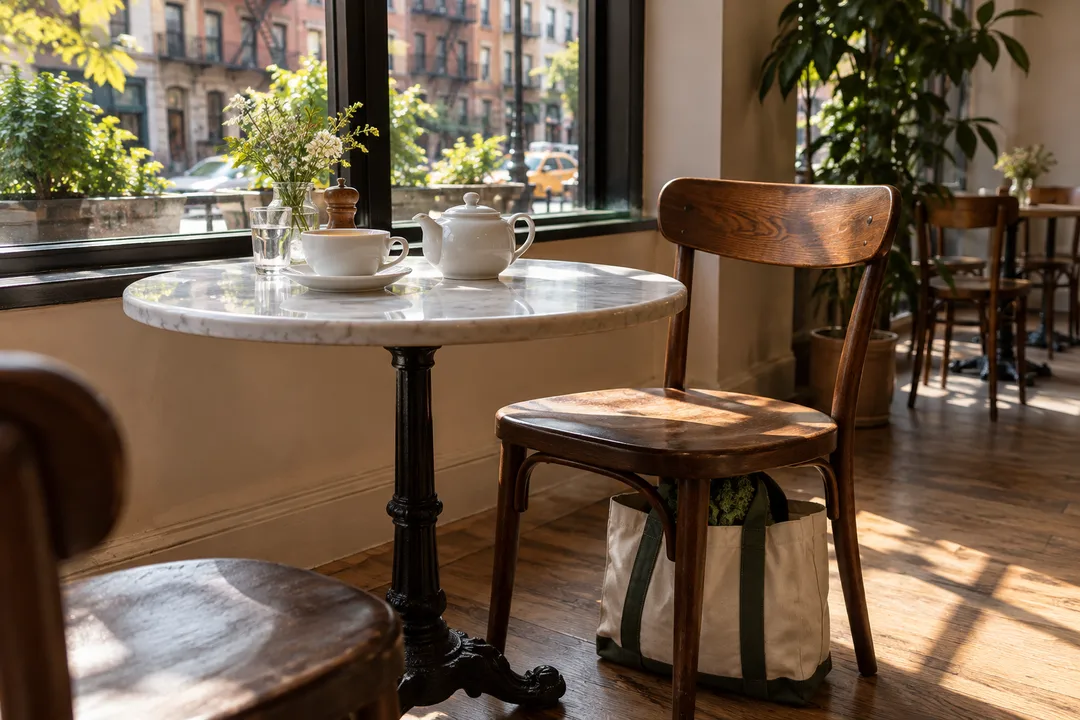
Ask what would make the detour feel worthwhile. You might want to notice a different kind of street, browse books, sit with a drink, or simply avoid going directly back to your desk. Naming that purpose helps narrow the ideas. A specific, modest pleasure can make a neighborhood feel more familiar without requiring a major activity. You do not have to convert a practical trip into an entire cultural afternoon for the extra time to count.
If you have only a brief window, request one core idea and two alternatives instead of three consecutive visits. That distinction matters. Three suggestions can be a menu of choices rather than a route. Ask Karpo to explain which idea fits a short pause, which offers more browsing, and which sends you in the right direction to leave. You can then choose the scale of the extension when the errand is finished and your actual energy is clear.
Place the seated pause where it helps
A pause immediately after the errand can be useful if you have been standing or waiting. If the errand was mostly seated, a little movement first might feel better. Say which situation you expect. The suggested order should reflect the day you are having. A cafe is one possible category to ask about, but the desire to sit is the underlying need. Do not let an attractive drink recommendation obscure whether you actually want a seated break at that moment.
Treat a business's seating as part of using that business, not as free bag storage. Keep purchases and belongings within the space available to you, and avoid blocking another chair or the path between tables. These are ordinary considerations for sharing a room. They are not a claim that a named establishment accepts luggage, offers storage, or welcomes a particular item. If carrying the object complicates the visit, a simpler plan may be the more enjoyable one.
Make optional shopping truly optional
An errand can already involve spending money, and browsing afterward does not have to become another purchase. Tell Karpo whether you are looking for an experience rather than something to buy. That lets the request prioritize looking, walking, or taking a break. If you do want another purchase, name its purpose so you do not drift into a second open-ended shopping task. The neighborhood extension should give something back to the day instead of increasing the workload.
A personal budget can guide the conversation without becoming a price claim. Say whether it covers a drink, food, and any optional shopping, or only the first stop. Leave out an amount entirely if spending is not central to your decision. The useful distinction is between an idea that can remain a casual browse and an activity that involves a commitment. Specific prices belong to the particular option you later choose, rather than to the generic planning example here.
Save the ambitious detour for another visit
Skip the extra destination that takes you away from the journey home. It may look like a reward for completing the errand, but another long connection can erase the pleasure of finishing something practical. Ask for an alternative in the area where you already are. You can save the farther idea as a reason to return without bags or a deadline. A neighborhood becomes easier to enjoy when each visit has one clear purpose instead of several competing ones.
If the errand runs long, reduce the plan before adding a replacement. You may only need the pause, or only a short look at a street on the way out. A second round of destination hunting can become another chore. Ask a focused follow-up such as: “I have less time now. Keep the seated stop and remove the extension.” This gives the conversation a clear change to make and preserves the most useful part of the original request.
Practical Notes: keep the reward easy to accept
Your brief needs the errand's finishing area, likely time window, carrying needs, preferred departure direction, and one enjoyable interest. Include whether someone is joining you after the practical part. Ask for a core idea plus alternatives if the finish is uncertain, or a short sequence if the window is reliable. Keep your own travel needs in view when choosing. A suggestion that sounds interesting should still fit the version of the day you will actually have after the errand.
Open the Karpo APP with the practical trip already described, then ask what small enjoyable thing could fit around its finish. Choose the idea you would still want if the errand took longer than expected. That is often the right scale: a browse, a seated drink, or a few different blocks on the way out. You can leave with the task completed and a new impression of the neighborhood, without adding another list of things to accomplish.
Ask Karpo for more information.
Keep reading
- SoHo Tailor Alteration Shop Finder for Sample Sale Finds
 Williamsburg Tailor Alteration Shop Finder for Bike Riders
 Upper West Side Tailor Alteration Shop Finder for Kids