 SoHo Tailor Alteration Shop Finder for Sample Sale Finds
Neighborhood Guides
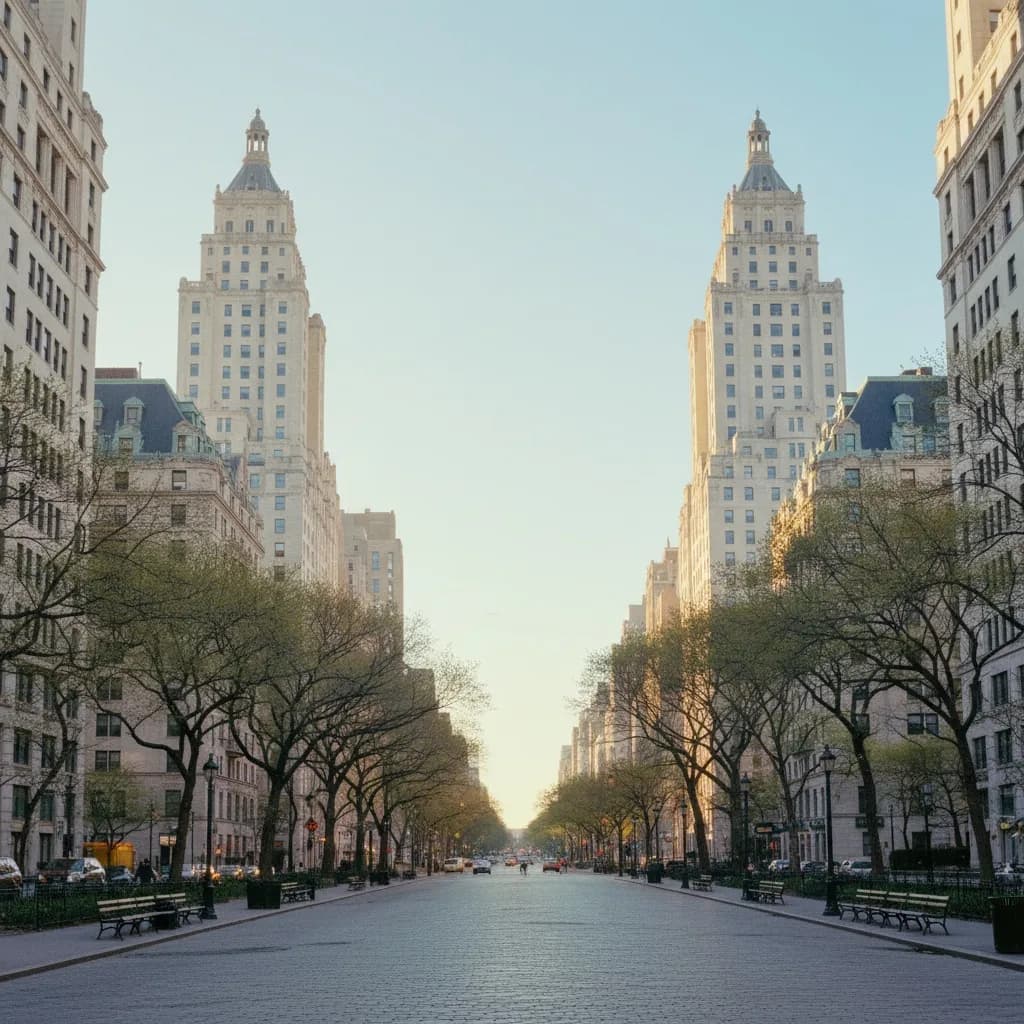
Upper West Side Neighborhood Historical Walking Tour Guide
Explore the Upper West Side historical walking tour from Central Park West twin towers to Broadway Beaux-Arts landmarks and brownstones on Karpo APP.
Bounded by the bluestone wall of Central Park on the east and the terraced Olmsted bluffs of Riverside Park on the west, Manhattan's Upper West Side offers a 1.5-mile neighborhood historical walking tour through the city's grandest late 19th- and early 20th-century residential boulevards. Protected by the New York City Landmarks Preservation Commission within the Upper West Side/Central Park West Historic District—designated in April 1990 across more than 1,000 buildings—this route connects German Renaissance apartment castles, twin-towered 1930s skyline icons, and carved brownstone side streets between West 71st and West 79th Streets in roughly 80 minutes.
The Dakota Gables and Twin Towers on Central Park West
Start at the B and C subway exit at West 72nd Street directly outside 1 West 72nd Street, where architect Henry Janeway Hardenbergh's Dakota Apartments has anchored Central Park West since 1884. Commissioned by sewing-machine executive Edward Cabot Clark when the surrounding blocks were still rocky pastures and market gardens, the Northern German Renaissance Revival fortress features buff-colored brick, Nova Scotia sandstone spandrels, stepped gables, and an iron-gated porte-cochere courtyard. Designated a New York City Individual Landmark in 1969 and a National Historic Landmark in 1976, the building convinced Gilded Age New Yorkers that luxury multi-family apartment living could rival private Fifth Avenue mansions.
Walk two blocks north along the park wall to 145 Central Park West between West 74th and West 75th Streets to view The San Remo, completed in 1930 by architect Emery Roth. As the first twin-towered apartment cooperative on the boulevard, its twenty-seven-story towers terminate in Corinthian limestone temples modeled after the Choragic Monument of Lysicrates in Athens. Stand on the wide pedestrian path just inside Central Park's Women's Gate at West 72nd Street or Mariners' Gate at West 77th Street to capture the full twin-tower silhouette above the elm canopy.
Classical Granite Museums at West 76th and 77th Streets
Continue north to 170 Central Park West between West 76th and West 77th Streets, home to The New-York Historical Society, founded in 1804 as New York's oldest museum. Designed by architects York & Sawyer and completed in 1908 with flanking 1938 pavilion wings by Walker & Gillette, the austere Roman Eclectic granite facade features engaged Ionic columns and bronze statuary reliefs looking out toward the park's natural rock outcrops.
Across West 77th Street at 200 Central Park West stretches the monumental Romanesque Revival red-granite south wing of the American Museum of Natural History, designed by Cady, Berg & See in the 1890s. Walk partway down West 77th Street under the plane trees to spot the turbulent stonework arches, corner turrets, and glimpsed red-brick Victorian Gothic facades of Calvert Vaux and J. Wrey Mould's original 1877 museum pavilion recessed inside Theodore Roosevelt Park.
Romanesque Brownstones and Copper Bays on Side Streets
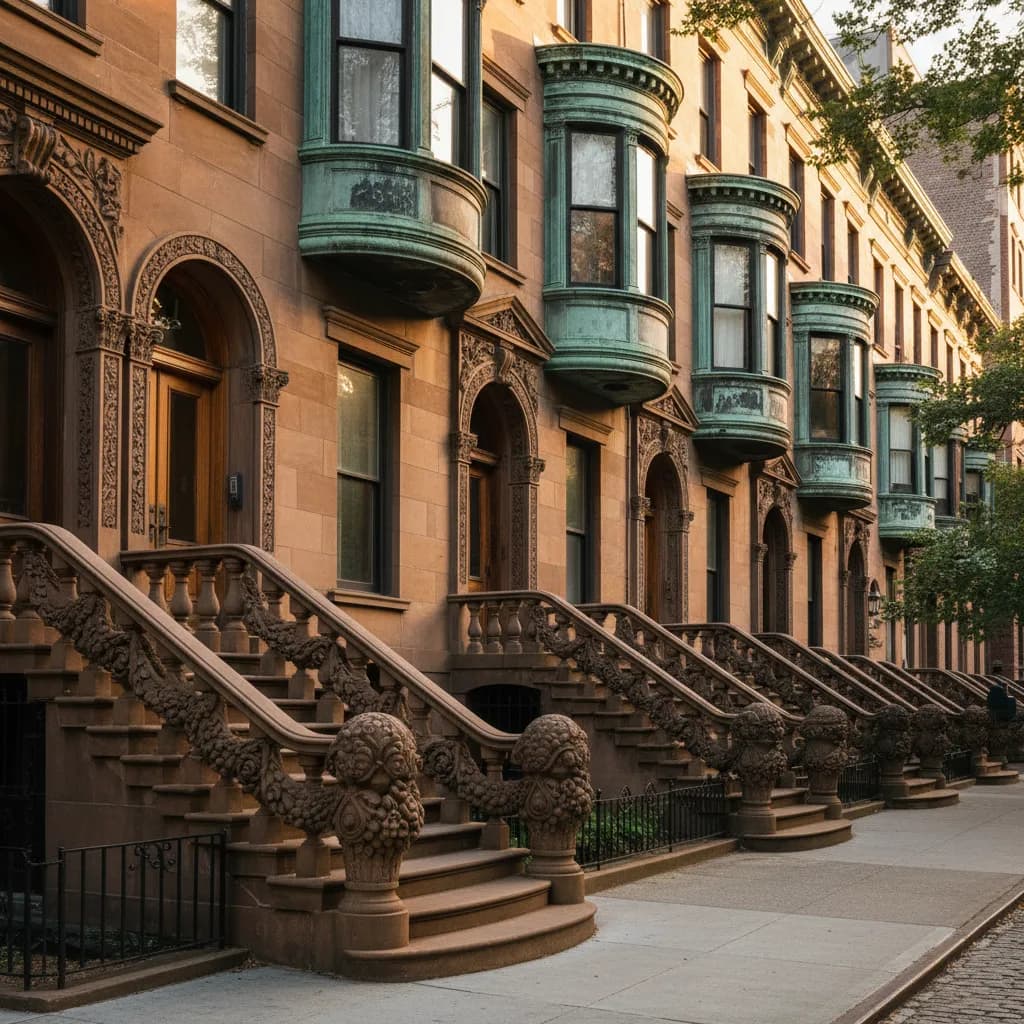
Turn west down West 76th Street or West 75th Street between Central Park West and Amsterdam Avenue, where intact rows of 1888 to 1896 brownstone, limestone, and Roman brick townhouses display extraordinary hand-carved masonry. Architects such as Thom & Wilson and Clarence True varied every stoop and roofline within a single block, pairing rusticated brownstone basements and foliate stone dragon newel posts with pressed-copper bay windows and Flemish stepped gables.
Dog walkers heading toward Riverside Park, parents pushing strollers along the bluestone sidewalks, and architectural photographers share these quiet cross streets under a clear local etiquette: keep tripod legs and camera bags off private brownstone stoop steps and never lean against historic wrought-iron basement area gates. Skip walking along Amsterdam Avenue between West 72nd and West 79th Streets if your goal is quiet architectural observation; commercial truck deliveries and narrow curb cuts interrupt the walk, whereas parallel West End Avenue and the numbered side streets between West 74th and West 78th Streets remain peaceful residential corridors.
Beaux-Arts Broadway Palaces at the Ansonia and Dorilton
Head south on Broadway to the full blockfront between West 73rd and West 74th Streets to inspect 2109 Broadway, the seventeen-story Ansonia apartment hotel completed in 1904 by developer William Earle Dodge Stokes and French architect Paul E. M. Duboy. Designated a New York City Individual Landmark in 1972, this Parisian Beaux-Arts showpiece wraps the avenue in sweeping corner rotunda towers, intricate wrought-iron balconies, terracotta garland friezes, and a steeply dormered mansard roof.
Directly across the avenue between West 73rd and West 75th Streets stand two complementary 1928 landmarks: at 2124 Broadway, architect Walter W. Ahlschlager's historic Beacon Theatre marquee fronts one of Manhattan's premier surviving 1920s movie palaces, while next door at 2112 Broadway, York & Sawyer modeled the rusticated limestone Central Savings Bank after a Florentine Renaissance palazzo complete with hand-forged wrought-iron window grilles by master blacksmith Samuel Yellin.
Walk two blocks south to the northeast corner of Broadway and West 71st Street to compare 171 West 71st Street, where architects Janes & Leo completed The Dorilton in 1902. Monumental limestone sculptures representing the globes and industry flank a dramatic wrought-iron courtyard screen and three-story mansard roof. Directly across the intersection at Broadway and West 72nd Street sits the 1904 IRT Subway Control House, a Flemish Renaissance Revival brick and terracotta pavilion designed by Heins & LaFarge for Manhattan's original underground rapid transit line.
Golden-Hour Lighting, Riverside Breezes, and Rainy-Day Plan B
For warm afternoon light across the west-facing facades of Central Park West and the east-facing turrets of the Ansonia on Broadway, start this walk two hours before sunset and finish along West End Avenue or the elevated promenade of Riverside Drive. While exploring the Upper West Side on the Karpo APP, walkers can check neighborhood landmark details and connect their architectural stroll with nearby museum blocks and park entrances.
If heavy rain or cold Hudson River winds interrupt your outdoor tour, step inside the grand 1904 terracotta-tiled subway headhouse at West 72nd Street and Broadway or visit the indoor exhibition galleries at 170 Central Park West and 200 Central Park West. Express 1, 2, and 3 trains at 72nd Street-Broadway and B and C trains at 72nd Street-Central Park West return walkers to Midtown or Downtown in minutes for a $3.00 OMNY fare.
Ask Karpo for more information.
Keep reading
- SoHo Tailor Alteration Shop Finder for Sample Sale Finds
 Williamsburg Tailor Alteration Shop Finder for Bike Riders
 Upper West Side Tailor Alteration Shop Finder for Kids