 SoHo Tailor Alteration Shop Finder for Sample Sale Finds
Neighborhood Guides
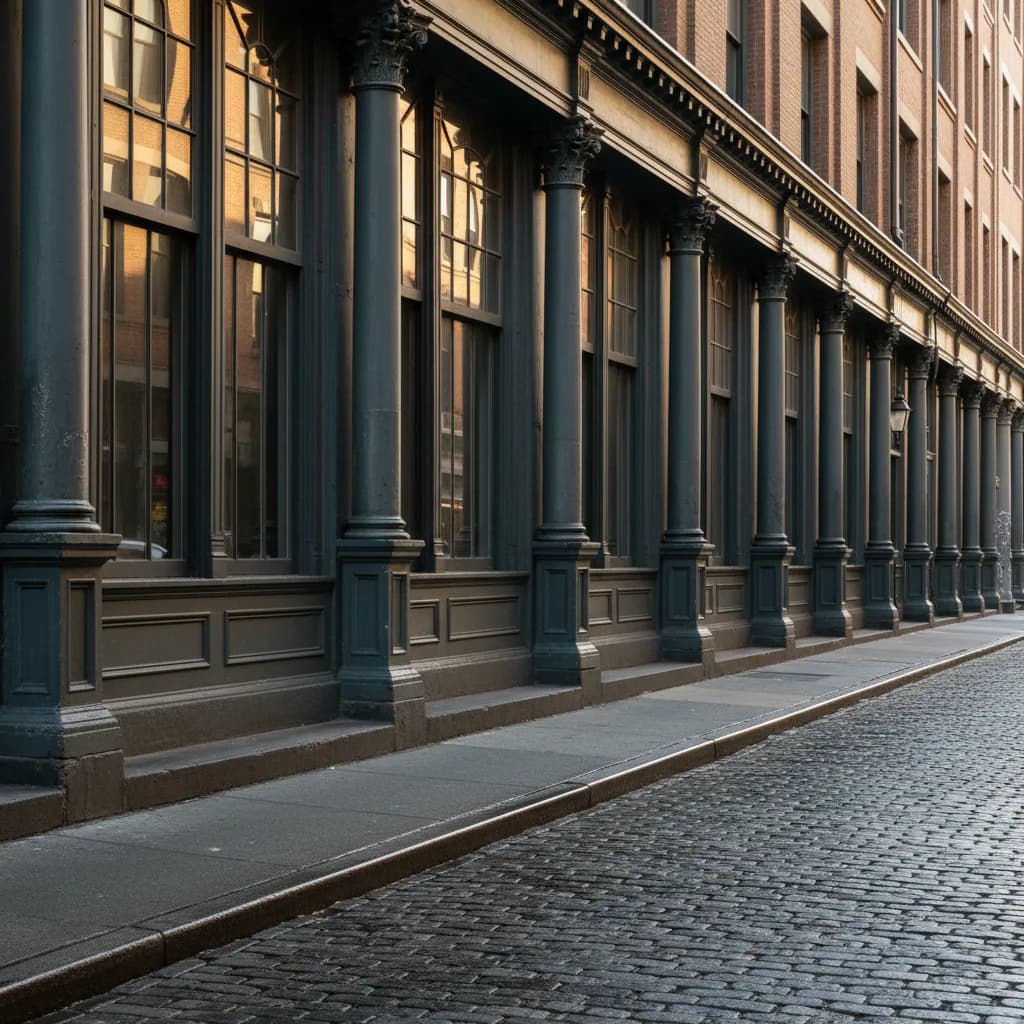
SoHo Cast Iron Neighborhood Historical Walking Tour Guide
Explore the SoHo-Cast Iron Historic District along Greene, Mercer, and Broadway with architectural landmarks and route planning on Karpo APP.
The E.V. Haughwout Building at 488 Broadway and Broome Street marks the starting point for a 1.3-mile SoHo neighborhood historical walking tour through the world's largest concentration of 19th-century cast-iron commercial architecture. Protected by the New York City Landmarks Preservation Commission in August 1973 and named a National Historic Landmark District in 1978, the twenty-six-block enclave south of Houston Street preserves roughly 250 cast-iron facades bolted together from prefabricated foundry columns between 1850 and 1904. Walking from Broadway west across Mercer, Greene, and Wooster Streets takes about 70 minutes across Belgian block cobblestones and glass-prism sidewalk vaults.
Otis Elevator History and Venetian Arches at 488 Broadway
Exit the N, Q, R, W, or 6 subway lines at Canal Street or Spring Street and walk to the northeast corner of Broome Street to examine 488 Broadway. Designed by architect John P. Gaynor and completed in 1857 for Eder V. Haughwout's chandelier and cut-glass emporium, the five-story palace features ninety-two Palladian windows cast at Daniel D. Badger's Architectural Iron Works after the 16th-century Sansovino Library in Venice. Look at the base of the corner piers where foundry stamps and bolted iron joints show how modular iron plates imitated carved quarry stone at a fraction of the cost.
Inside this emporium on March 23, 1857, Elisha Graves Otis installed the world's first steam-powered passenger safety elevator, which carried shoppers five stories up at forty feet per minute and made vertical skyscraper construction possible. Stand on the southwest corner of Broadway and Broome Street during morning hours to photograph both the Broadway and Broome elevations in a single frame without delivery trucks blocking the ground-level Corinthian colonnade.
Just half a block south at 478 Broadway stands the 1874 Roosevelt Building, the only surviving cast-iron facade designed by Richard Morris Hunt, the first American architect trained at the Ecole des Beaux-Arts in Paris. Built as an investment property for James A. Roosevelt to support Roosevelt Hospital, Hunt's Neo-Grec design replaces traditional classical flutes with crisp geometric chamfering, exposed iron rivets, and wide plate-glass bays stretching through to Crosby Street.
The King and Queen of Greene Street Cast-Iron Canyon
Head two blocks west on Broome Street, pausing at 469 Broome Street on the corner of Greene Street to admire the 1871 Gunther Building designed by architect Griffith Thomas. Commissioned by fur merchant William H. Gunther, its creamy white painted iron facade features a famous curved plate-glass corner window bay and ornate Corinthian colonnettes that wrap smoothly around the intersection.
Turn south onto Greene Street toward Canal Street, where five blocks of uninterrupted metallic facades form SoHo's famous Cast-Iron Canyon. At 28 Greene Street rises the 1872 warehouse nicknamed the Queen of Greene Street, designed by architect Isaac F. Duckworth in exuberant French Second Empire style. Its sweeping mansard roof, projecting central pavilion, and deep window reveals create dramatic shadow lines across the Belgian block roadway.
Walk one block north to 72 Greene Street to compare Duckworth's companion masterpiece, completed in 1873 and known as the King of Greene Street. Five tiers of monumental Corinthian columns frame a recessed portico that originally served dry-goods wholesalers and textile jobbers. Carry a small pocket magnet if you want to verify authentic cast iron along the lower piers, though seasoned architectural walkers simply tap a knuckle lightly against the painted plinths or check for bolted seam lines.
Minimalist Artist Lofts and Vault Lights on Spring and Mercer
Continue north on Greene Street and turn east onto Spring Street toward 101 Spring Street at the corner of Mercer Street. Designed by Nicholas Whyte in 1870, this slender five-story cast-iron and plate-glass building became the catalyst for SoHo's preservation when sculptor Donald Judd purchased it in 1968 and converted the former garment factory into a permanent live-work residence and studio. Huge sash windows wrap both street frontages, demonstrating why mid-century painters and sculptors prized industrial textile lofts for their column-free interiors and abundant northern daylight.
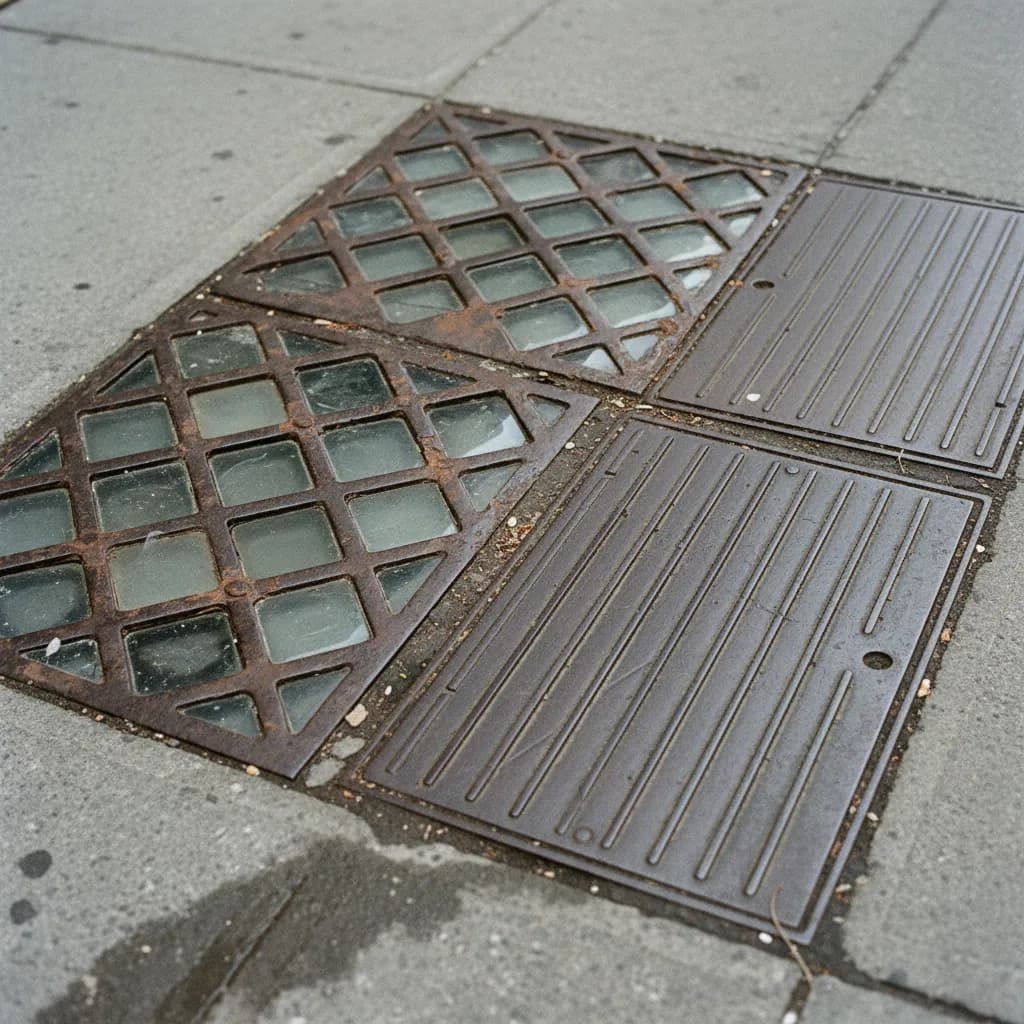
As you walk south along Mercer Street and Wooster Street, look down at the cast-iron sidewalk grids studded with thick circular glass lenses known as vault lights. Installed in the 1870s and 1880s to refract natural daylight into subterranean coal and fabric storage cellars beneath the pavement, many surviving panels still bear embossed foundry inscriptions and purplish solarized manganese glass. Fashion photographers, industrial design students, and local loft residents share these loading docks under a strict neighborhood etiquette: never block active freight elevator doors or sit on cast-iron cellar hatches during weekday mornings.
Terracotta Innovation on Crosby Street and 561 Broadway
Cut east across Broome or Spring Street to reach 561 Broadway, where architect Ernest Flagg designed the twelve-story Little Singer Building in 1904 as an experimental loft headquarters for the Singer Manufacturing Company. Combining red-brown stippled brick, cream-colored terracotta panels, curling wrought-iron balconies, and recessed glass curtain walls, Flagg bridged the gap between 19th-century cast-iron warehouses and 20th-century steel-frame modernism.
Walk around the rear of the block onto Crosby Street between Broome and Prince Streets to view the building's utilitarian service facade and walk one of Manhattan's most intact Belgian block lanes. Skip walking along Broadway between Prince and Houston Streets on Saturday afternoons if you want to inspect upper-story cornices; weekend retail lines pack the sidewalks wall-to-wall, whereas parallel Crosby Street and Wooster Street offer wide-open sightlines and quiet cobblestone acoustics.
Footwear Strategy, Timing, and Bad-Weather Alternatives
Because rough granite Belgian blocks and raised cast-iron vault frames cover Greene, Wooster, Mercer, and Crosby Streets, wear supportive flat-soled walking shoes rather than thin leather soles or heels. Planning your SoHo architectural loop between 8:30 and 10:30 in the morning guarantees empty cobblestone roadways and crisp side-lighting across west-facing facades. Walkers browsing the Karpo APP can review neighborhood landmark notes and map out nearby architectural blocks across Lower Manhattan.
If rain makes the iron vault-light grates and polished granite curbstones slick underfoot, shift your walk to the wider bluestone and concrete sidewalks along West Broadway or step inside the landmarked 1904 cast-iron arcade exteriors and covered subway passages at Broadway-Lafayette Street (B, D, F, M) and Prince Street (R, W) for a $3.00 OMNY subway connection.
Ask Karpo for more information.
Keep reading
- SoHo Tailor Alteration Shop Finder for Sample Sale Finds
 Williamsburg Tailor Alteration Shop Finder for Bike Riders
 Upper West Side Tailor Alteration Shop Finder for Kids