 SoHo Tailor Alteration Shop Finder for Sample Sale Finds
Neighborhood Guides
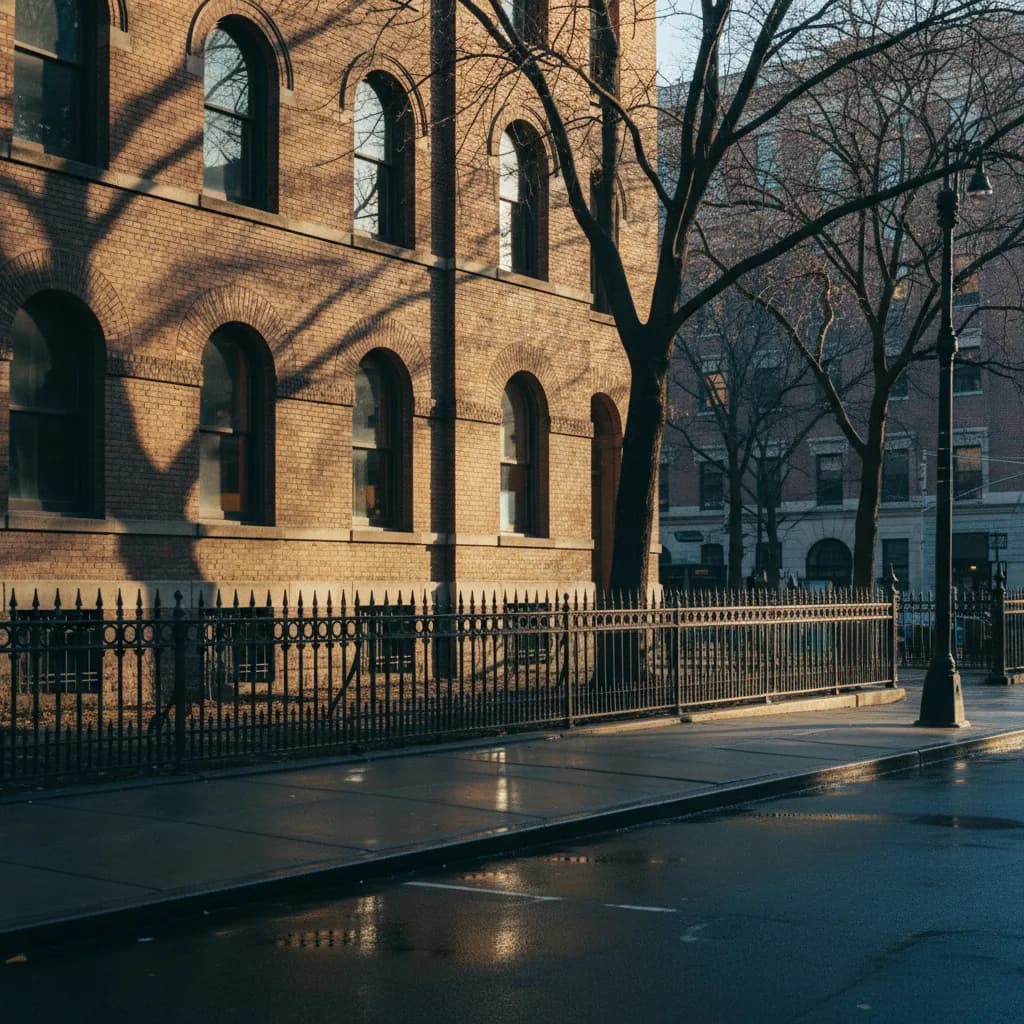
Lower East Side Neighborhood Historical Walking Tour Guide
Walk the Lower East Side historical corridor from Seward Park and East Broadway to Orchard Street tenements with route planning tips on Karpo APP.
Seward Park at the intersection of Canal Street and Essex Street anchors a 1.4-mile Lower East Side neighborhood historical walking tour through Manhattan's most densely preserved 19th-century immigrant corridor. Dedicated in October 1903 as the nation's first permanent municipal playground, the park faces 192 East Broadway, where Babb, Cook & Willard's 1909 red-brick Carnegie library still overlooks wrought-iron fencing and mature plane trees. Within six blocks north and west, five-story Italianate brick tenements, Beaux-Arts immigrant bank towers, and Moorish Revival synagogue facades document how working-class families reshaped Lower Manhattan between 1826 and 1914. Walking this flat, grid-aligned route takes roughly 75 to 90 minutes on foot and rewards architectural observers who look upward past ground-floor awnings toward carved terra-cotta lintels, sheet-metal cornices, and cast-iron fire escapes.
East Broadway Press Row and Seward Park Civic Landmarks
Start at the F train Essex Street or East Broadway subway exits and walk south to Straus Square, where Canal Street, Rutgers Street, and East Broadway converge. Directly across from the square rises 175 East Broadway, the ten-story 1912 Forward Building designed by architect George Boehm for the Yiddish-language newspaper The Jewish Daily Forward. Look closely at the limestone lower facade above the entrance archway to spot carved relief medallions in the stonework, a testament to the early 20th-century labor press that once circulated more than 250,000 copies a day across American cities.
Proceeding east along the north edge of Seward Park brings walkers to 192 East Broadway, the Seward Park Branch of the New York Public Library, designated an official New York City Individual Landmark in 2013. Built with funds from Andrew Carnegie's philanthropic grant, the four-story Jeffersonian brick structure features arched reading-room windows that flood upper floors with southern light over the park's historic Schiff Fountain. Retirees reading morning newspapers on the granite benches, sketchpad-carrying architecture students, and neighborhood dog walkers share the plaza under an unspoken rule: keep the narrow sidewalk apron directly in front of the library steps clear so readers and strollers can pass unimpeded.
Moorish Revival Stonework on Eldridge and Canal Streets
From Straus Square, follow Canal Street three blocks west to the corner of Orchard Street, where the twelve-story Jarmulowsky Bank Building at 54 Canal Street commands the skyline. Designed by Rouse & Goldstone and completed in 1912 for banker Sender Jarmulowsky, this Beaux-Arts limestone and brick tower helped thousands of Eastern European families purchase steamship tickets for relatives abroad. Stand on the south sidewalk of Canal Street rather than directly beneath the scaffolding line on Orchard Street to capture the full vertical proportion of its rusticated base and bracketed cornice.
Turn south onto Eldridge Street to reach 12 Eldridge Street, home to the 1887 Eldridge Street Synagogue, a National Historic Landmark designed by German-born immigrant brothers Peter and Francis William Herter. Its twin-tiered brick facade pairs horseshoe arches, terra-cotta stars, and keyhole windows with a contemporary blue-and-gold stained-glass rose window installed in 2010 by artist Kiki Smith and architect Deborah Gans. Even from the exterior bluestone sidewalk, the 70-foot-high barrel-vaulted roofline stands out starkly against the surrounding five-story tenement walls.
Orchard Street Tenement Facades and Cast-Iron Fire Escapes
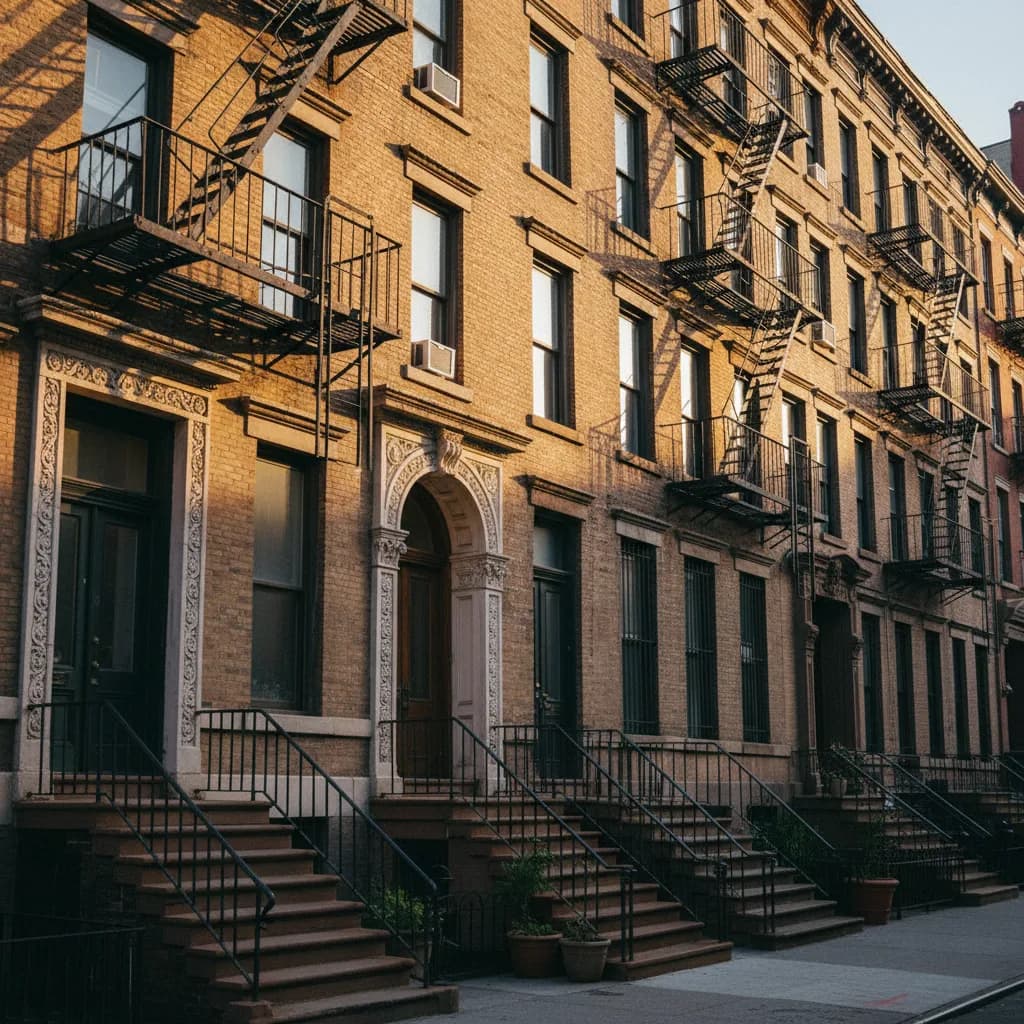
Walk north across Division and Canal Streets onto the pedestrianized blocks of Orchard Street between Hester and Broome Streets. At 97 Orchard Street stands the five-story 1863 brick tenement built by German-born tailor Lucas Glockner and designated a National Historic Site in 1998. Between 1863 and 1935, roughly 7,000 immigrants from more than twenty nations lived inside its twenty-two compact apartments before the upper residential stories were sealed rather than retrofitted under New York's strict Multiple Dwelling Law reforms.
Pause across the narrow roadway near 103 Orchard Street to study how 19th-century builders differentiated street-facing walls from rear courtyard elevations. Pressed red brick, arched Italianate window hoods, and projecting iron fire-escape balconies adorn the western facade, while first-floor cast-iron pilasters frame historic basement saloon and dry-goods storefronts. Skip walking down the center of Delancey Street between Essex and Allen Streets if you want quiet architectural photography; six lanes of Williamsburg Bridge approach traffic drown out conversation and block sightlines, whereas parallel Broome Street preserves intact 1880s brick row facades with minimal truck noise.
Schist Stone Architecture on Willett and Rivington Streets
Head east on Broome Street to 7 Willett Street, where the Bialystoker Synagogue occupies one of Lower Manhattan's oldest surviving religious structures. Constructed in 1826 of rough-cut Manhattan schist quarry stone as the Willett Street Methodist Episcopal Church, the Federal-style building became home to an Orthodox congregation from Bialystok in 1905 and earned New York City Landmark status in 1966. Its triangular pediment and fieldstone masonry contrast sharply with the machine-pressed brick and glazed terra-cotta ornament of the surrounding 1900s New Law tenements.
Continuing north toward Rivington and Stanton Streets reveals a textbook transition from pre-1879 railroad tenements to wider post-1901 courtyard apartment houses built after the Tenement House Act mandated light courts and indoor plumbing. Notice the Herter Brothers' signature polychrome terra-cotta detailing on corner buildings along Eldridge and Allen Streets, where floral friezes and incised stone lintels gave working-class apartment blocks civic dignity.
Pacing Your Heritage Route and Rainy-Weather Plan B
For unobstructed facade views and soft angled sunlight across north-south streets like Orchard, Ludlow, and Eldridge, begin this route between 9:30 in the morning and 11:00 before delivery vans park along the curbs. When exploring the district on the Karpo APP, walkers can review neighborhood landmarks and keep their favorite historical blocks organized as they move between East Broadway and Houston Street. Because Lower East Side sidewalks narrow to less than eight feet on older blocks like Hester and Canal, solo walkers and pairs move far more comfortably than large groups.
If a sudden downpour or winter wind gusts off the East River interrupt your outdoor walk, pivot three blocks north to the historic 1912 Essex Street Market corridor at 88 Essex Street or step inside the landmarked 1909 NYPL Seward Park Branch at 192 East Broadway to browse local neighborhood history collections indoors. Subway riders can board the F, J, M, or Z trains at Delancey Street-Essex Street or the B and D trains at Grand Street for a $3.00 OMNY tap ride back to Midtown.
Ask Karpo for more information.
Keep reading
- SoHo Tailor Alteration Shop Finder for Sample Sale Finds
 Williamsburg Tailor Alteration Shop Finder for Bike Riders
 Upper West Side Tailor Alteration Shop Finder for Kids