 Lower East Side Axe Throwing Group Night Picker: Bride Crew
Sports Social
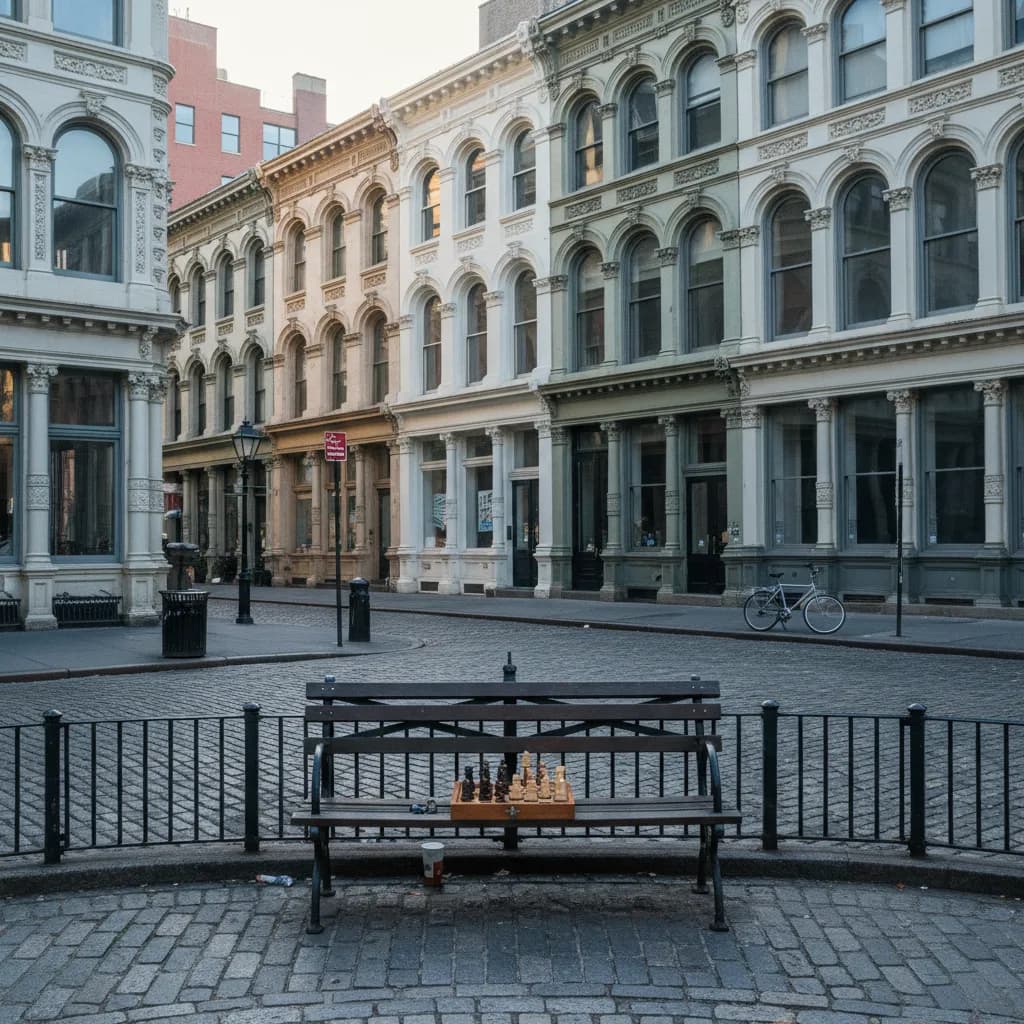
SoHo Neighborhood Chess Club Finder: 4 Loft Stops
Use this SoHo neighborhood chess club finder route from Petrosino Square to Thompson Street. Pair cast-iron atrium tables with quiet park benches.
Between West Houston Street and Canal Street, the Belgian block streets of the SoHo Cast-Iron Historic District—designated by the New York City Landmarks Preservation Commission in 1973—hide four reliable pockets for over-the-board play away from Broadway retail crowds. Applying a neighborhood chess club finder route through SoHo means looking past narrow fashion boutiques and targeting triangular plaza benches, shaded playground perimeters on Thompson Street, and deep loft coffee bars along Mercer and Crosby Streets. By timing your matches to morning gallery quiet hours or late afternoon creative breaks, two players can enjoy ninety minutes of uninterrupted classical or rapid chess.
Navigating Four SoHo Board Zones from Lafayette to Sullivan
Begin on the eastern edge of the district at Lieutenant Joseph Petrosino Square, the triangular public plaza where Lafayette Street, Cleveland Place, and Kenmare Street meet just north of Spring Street subway exits. Redesigned and expanded in 2009 with granite seating ledges, bike racks, and honey locust trees, the northern tip of the triangle stays remarkably calm between 9 am and noon on weekdays. Two players with a magnetic twelve-inch travel set can sit side by side facing the cast-iron cornices of Lafayette Street without jostling commuters.
From Lafayette Street, walk one block east to the Mulberry Street Library branch near Prince Street, housed since 2007 inside a converted nineteenth-century brick chocolate factory. Its subterranean and ground-floor reading tables provide a serene, climate-controlled refuge whenever rain slicks the cobblestones outside. Moving west across Broadway into the quiet canyon of Mercer Street and Greene Street, weekday gallery courtyards and espresso bars with long communal oak tables offer generous elbow room for fifteen-minute rapid time controls between 2 pm and 4 pm.
Complete your four-stop western circuit at Vesuvio Playground on the corner of Thompson Street and Spring Street, a neighborhood gathering spot first opened by the city in 1929. The shaded perimeter benches along Thompson Street sit beneath mature plane trees a few doors down from historic Italian bakeries, creating an inviting late-afternoon spot for casual correspondence reviews or ten-minute games with a heavy silicone board.
Regular Players Along Mercer Street and What to Avoid
SoHo attracts a distinct weekday mix of players whose schedules follow studio and showroom hours rather than traditional park-hustler routines. Around 11 am, architectural drafters and industrial designers working in upper-floor lofts along Greene and Wooster Streets step out for twenty-minute coffee breaks, often setting up compact magnetic boards to test tactical puzzles or Queen's Gambit sidelines. After 5 pm, NYU faculty members walking south from Washington Square meet gallery assistants near Spring Street for relaxed two-game matches before heading to dinner.
Courtesy in SoHo indoor and plaza spaces centers on acoustic restraint and table footprint. Unlike the vocal trash-talk traditions of Greenwich Village parks further north, loft cafes on Crosby Street and reading tables on Mulberry Street expect quiet clock taps and muted post-mortem discussions. Set digital clocks to silent mode with visual move counters enabled, and fold your board away promptly if a lunchtime line forms near the counter. Using the Karpo APP lets you compare these four SoHo stops by time of day and save your preferred walking path from Lafayette Street to Thompson Street.

Avoid trying to set up a game along the Broadway sidewalk corridor between Prince Street and Broome Street or on the front steps of cast-iron retail flagships on Saturday afternoon. Tourists queuing for limited-edition sneaker drops and weekend pop-up activations pack those sidewalks shoulder to shoulder from noon until 6 pm. Instead, stay on the quieter north-south avenues of Sullivan Street, Thompson Street, or Crosby Street whenever you play on a weekend.
Choosing Compact Gear for Cobblestone Plazas and Loft Tables
Because SoHo tables range from narrow cast-iron cafe rounds to curved granite plaza benches, standard twenty-inch tournament mats often overhang the edges. A fourteen-inch or sixteen-inch folding wooden board with internal felt storage—or a flat suede travel roll with weighted two-and-a-half-inch king pieces—fits neatly beside two porcelain cappuccino cups without crowding neighboring guests. Weighted bases lined with green baize also dampen the sound of captures on resonant marble or steel tabletops.
Lighting conditions across the cast-iron blocks shift noticeably as the sun crosses Broadway. Because five-story and six-story iron facades cast deep afternoon shadows across Mercer Street and Wooster Street by 3 pm in autumn and winter, outdoor players who prefer natural daylight should start at Petrosino Square in the morning and move west toward the wider sky opening around Thompson Street and Sixth Avenue after lunch.
If every bench at Petrosino Square and Thompson Street is occupied during a sunny autumn afternoon, or if a sudden thunderstorm sweeps across Lower Manhattan, shift your session two blocks north across West Houston Street toward Bleecker Street or duck into the Mulberry Street reading room. Having a clear indoor fallback within a four-minute walk ensures your study session never gets cut short by weather or weekend foot traffic.
Subway Connections and Evening Post-Mortem Strolls
Every corner of the SoHo chess loop connects directly to major Manhattan and Brooklyn transit trunks. The 6 train stops at Spring Street right beside Petrosino Square, the N, R, and W lines let you off at Prince Street and Broadway in the middle of the cast-iron blocks, and the C and E trains serve Spring Street and Sixth Avenue on the western boundary near Thompson Street. Players coming from Brooklyn on the B, D, F, or M trains can exit at Broadway–Lafayette Street and reach Crosby Street in three minutes.
For players carrying a board bag between stops, the flat topography between Lafayette Street and Sullivan Street makes walking the entire four-zone sequence effortless in under twelve minutes. Crossing Broadway at Broome Street or Grand Street rather than Prince Street also cuts down on pedestrian bottlenecks at crosswalks during late afternoon rush hour.
Once your clocks are packed away around 6 pm, walk south along Greene Street between Spring and Broome Streets to admire the rhythm of Corinthian cast-iron columns illuminated by warm storefront lamps. Discussing where a rook sacrifice went wrong while strolling over nineteenth-century Belgian blocks turns a simple afternoon pairing into a memorable Lower Manhattan architecture walk.
Ask Karpo for more information.
Keep reading
- Lower East Side Axe Throwing Group Night Picker: Bride Crew
 West Village Axe Throwing Group Night Picker: Quiz Rivals
 Carroll Gardens Axe Throwing Group Night Picker: Parents Off