 Tribeca Bowling Group Night Planner for Wedding Guests
Sports Social
LES Neighborhood Chess Club Finder: 4 Park Loops
Plan a Lower East Side neighborhood chess club finder walk from Seward Park to Sara D. Roosevelt Park. Compare stone park tables and quiet cafe boards.
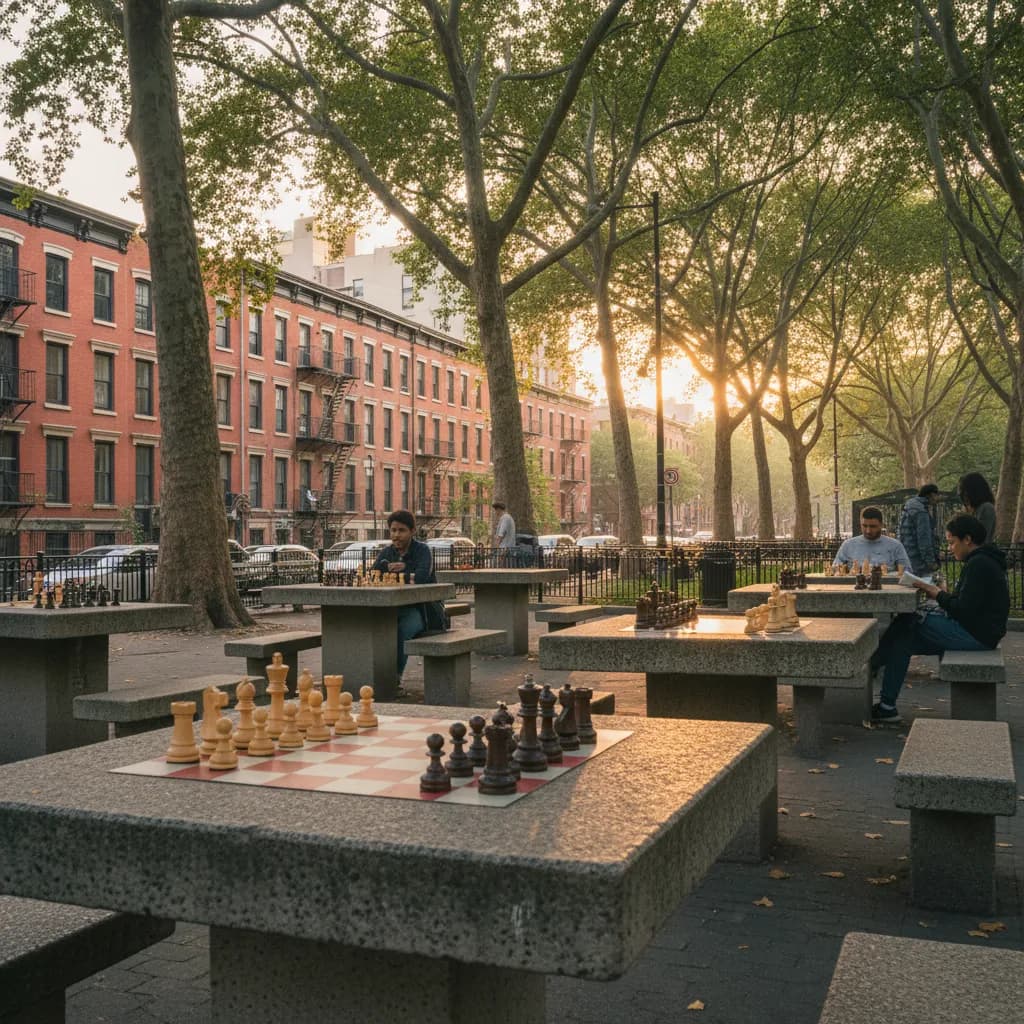
Four distinct playing zones sit within a fifteen-minute walk between Canal Street and East Houston Street on the Lower East Side, anchored by the shaded stone tables of Sara D. Roosevelt Park and the historic plaza benches of Seward Park. Using a neighborhood chess club finder approach across these tenement and park blocks lets you match your time control and equipment to the right block before you unpack a roll-up vinyl board. Instead of wandering aimlessly down Orchard Street in search of an open table, you can follow a structured four-stop loop connecting Chrystie Street, East Broadway, Ludlow Street, and Delancey Street.
Four Lower East Side Playing Zones Between Canal and Houston
Start at the southern end of the route in Seward Park at Canal and Essex Streets, which opened in 1903 as the first permanent municipal playground in the United States. The wide stone benches and mature shade trees bordering the Schiff Fountain plaza create a calm morning setting for ten-minute rapid games or endgame study with a magnetic travel set. Directly beside the park at East Broadway stands the four-story red-brick Seward Park Library, a 1909 Carnegie building whose quiet upper reading rooms offer a calm indoor retreat when wind sweeps off the East River.
Walk three blocks west along Hester or Grand Street to reach the second zone inside Sara D. Roosevelt Park, a linear greenway completed in 1934 that stretches seven blocks from Canal Street north to East Houston Street between Chrystie and Forsyth Streets. Fixed concrete game tables beneath the London plane trees near the Hester Street and Broome Street cross-paths draw afternoon players who bring triple-weighted plastic Staunton pieces and analog dual-dial clocks. Because the park is narrow and bordered by active bike lanes on Chrystie Street, ambient street noise stays brisk, making this strip far better suited to five-minute blitz than silent tournament preparation.
Continue east across Allen Street toward the third and fourth stops along Ludlow Street and the Essex Crossing concourse near Delancey Street. Independent coffee counters and bakery seating areas between Rivington and Stanton Streets work best on weekday afternoons between 2 pm and 5 pm, when two-top wooden tables near the front windows can hold a compact sixteen-inch silicone mat without blocking server aisles. Inside the public mezzanine of the Essex Market complex at Delancey and Essex Streets, sheltered communal seating gives casual partners an all-weather backup a few steps from the subway turnstiles.
Table Etiquette, Who Plays Here, and What to Skip
Across Chrystie Street and East Broadway, you will encounter three recognizable groups of local players sharing the benches. Retired garment-district and Chinatown regulars gather near the Grand Street park entrances from 10 am onward, often switching smoothly between Western chess and xiangqi while sipping hot tea from insulated steel flasks. By 4 pm, high school scholastic teammates carrying nylon quiver bags arrive from nearby selective schools around Bard and Dual Language programs, followed after 6 pm by Lower East Side graphic designers and hospitality workers looking for three-minute bullet matches before dinner.
Unspoken table etiquette on the Lower East Side revolves around piece weight and challenger rotation. On the stone slabs of Sara D. Roosevelt Park, winner-stays-on is the standard convention whenever a third player stands quietly beside the bench holding a clock or a captured pawn. Keep your hand off the clock housing when pressing the lever, and always ask before setting a beverage cup on the stone apron of an occupied board. In the Karpo APP, you can organize these four Lower East Side stops into a single walking sequence and note which blocks favor fast blitz versus unhurried post-game analysis.
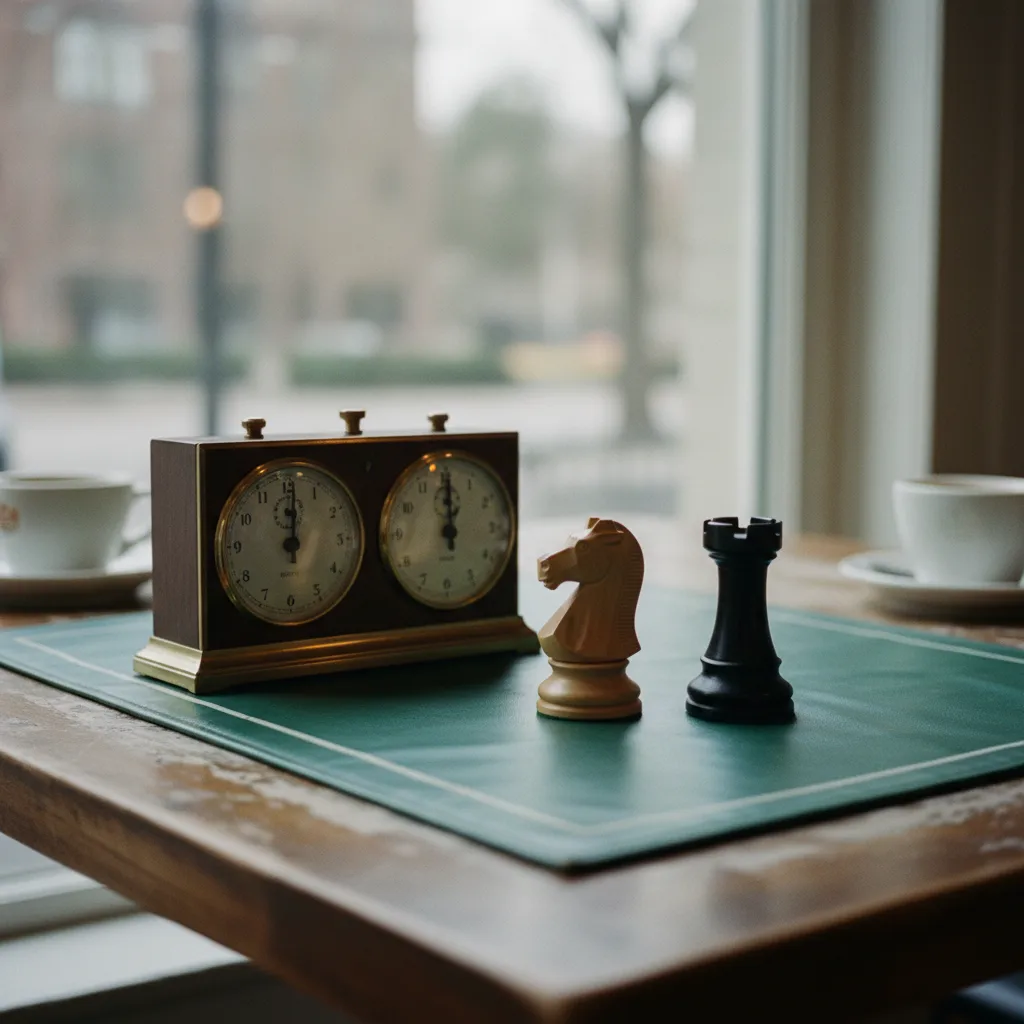
Skip dragging a full twenty-inch tournament board onto the narrow sidewalk bistro tables along Orchard Street on Saturday or Sunday afternoons. Weekend pedestrian crowds browsing the vintage clothing racks and gallery storefronts leave barely eighteen inches of table depth, and afternoon gusts funneling down from East Houston Street easily tip unweighted wooden bishops onto the pavement. If you want a quiet weekend game, head straight to the Schiff Fountain perimeter at East Broadway before 11 am or use the indoor mezzanine tables at Essex Crossing.
Equipment Checklist and Rainy-Day Backup Routes
Packing the right kit makes moving between outdoor park masonry and indoor cafe tables effortless. Bring a washable silicone or heavy vinyl roll-up board with two-inch squares rather than a folding wooden box, because the rough aggregate surface of municipal park tables can scratch lacquered mahogany veneers. Pair that mat with triple-weighted polymer pieces totaling at least thirty-four ounces per set so gusts along Forsyth Street never disturb an endgame pawn structure, and tuck two extra queens plus a compact digital delay timer into your canvas tote.
When an unexpected downpour rolls over the Williamsburg and Manhattan Bridges or wait times for an open park table exceed twenty minutes, pivot immediately to your indoor plan along Delancey and Grand Streets. Walk two blocks east from Forsyth Street to the public upper seating gallery above Essex Market, or step into the historic reading rooms at the East Broadway library branch for silent study over a pocket analysis set. Both indoor alternatives keep you dry without forcing you to abandon your afternoon pairings.
Subway Transfers and Post-Game Lower East Side Walks
Subway access makes linking these four Lower East Side pockets simple for players commuting from Brooklyn, Queens, or Uptown Manhattan. The B and D trains stop directly inside Sara D. Roosevelt Park at Grand Street, while the F, J, M, and Z lines converge at Delancey Street–Essex Street just two blocks north of Seward Park. Players arriving from the East Village can also walk south from the Second Avenue station on East Houston Street straight into the northern entrance of the Chrystie Street promenade.
After wrapping up your final match around dusk, take a fifteen-minute stroll along Division Street, Canal Street, or Broome Street to review critical middlegame positions with your training partner. Walking past the historic cast-iron and brick tenement facades between Eldridge Street and Norfolk Street gives you plenty of quiet blocks to discuss opening sidelines, compare tactical motifs from your afternoon games, and plan your next neighborhood meetup in the Karpo APP.
Ask Karpo for more information.
Keep reading
- Tribeca Bowling Group Night Planner for Wedding Guests
 Flushing Bowling Group Night Planner for Thanksgiving Break
 Bushwick Bowling Group Night Planner After Band Practice