 SoHo Tailor Alteration Shop Finder for Sample Sale Finds
Neighborhood Guides
NYC Neighborhood Audio Walk: Free SoHo Cast-Iron Route
Take this self-guided SoHo neighborhood audio walk to explore historic cast-iron facades, cobblestone streets, and quiet loft architecture on foot.
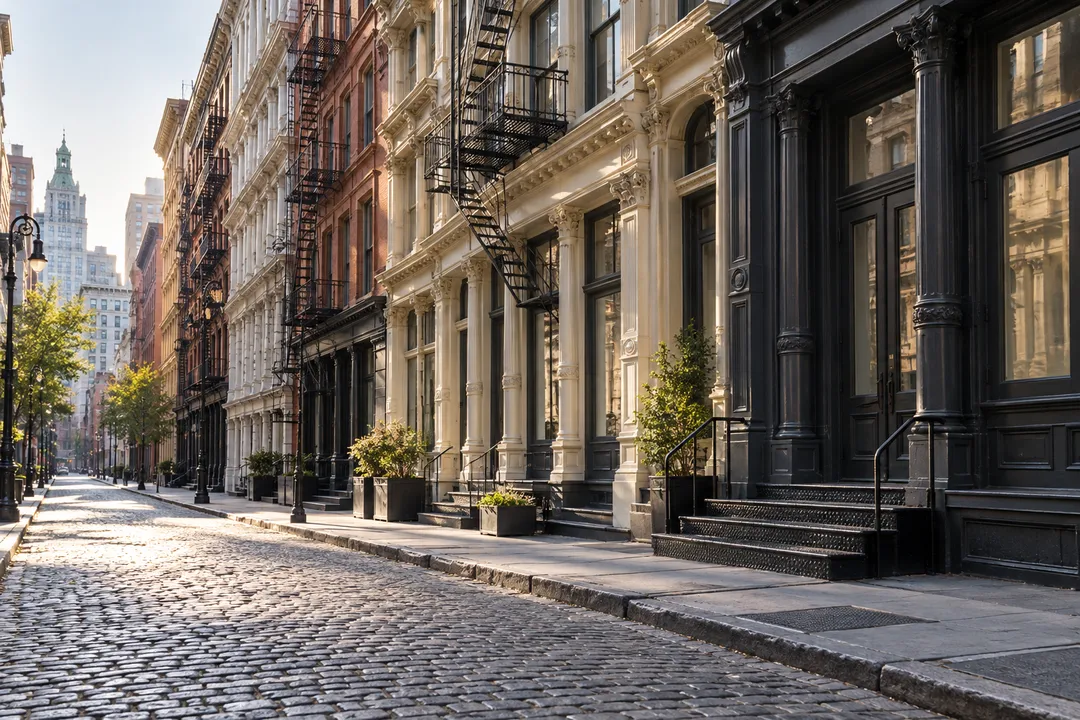
Starting this SoHo neighborhood audio walk at the corner of Prince Street and Broadway puts New York City greatest concentration of post-Civil War cast-iron commercial architecture immediately within earshot. Between Houston Street to the north and Canal Street to the south, more than two hundred and fifty cast-iron structures line twenty-six blocks of Belgian-block paving and historic iron vault lights. By threading your earbuds through your collar and setting a slow, deliberate pace down Greene Street, you transform a busy retail shopping corridor into an immersive open-air museum of nineteenth-century engineering, textile mercantile history, and pioneering loft preservation.
The Cast-Iron Heritage Along Greene Street
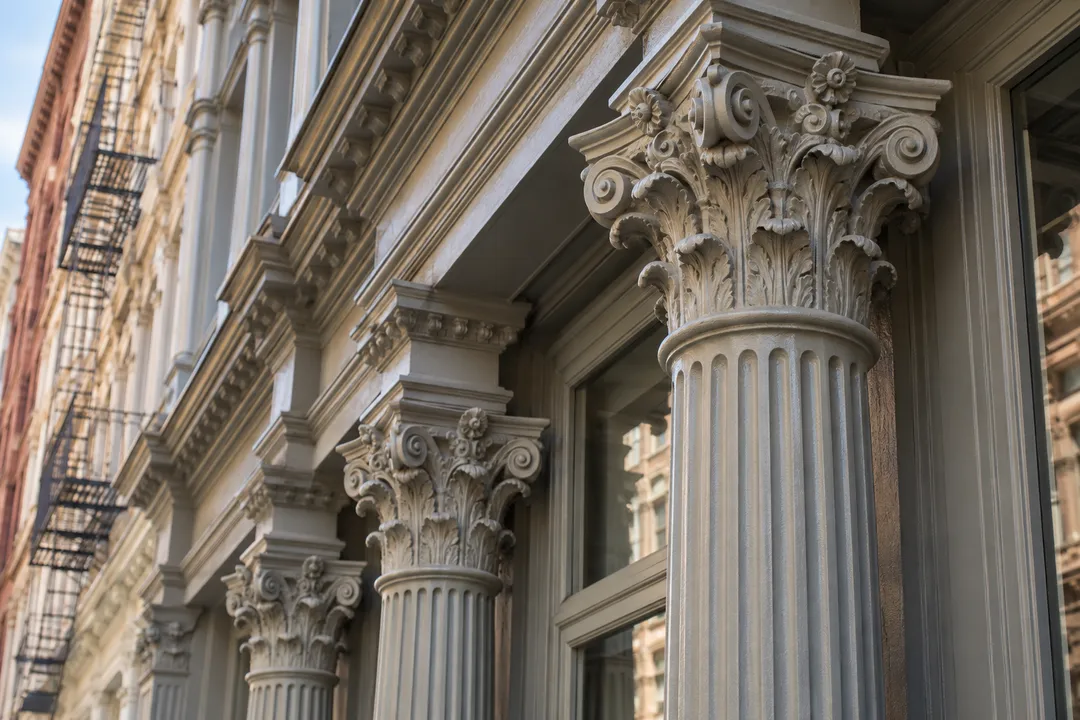
Greene Street serves as the structural spine of the SoHo Cast-Iron Historic District, designated by the New York City Landmarks Preservation Commission in 1973. Walking south from Prince Street toward Broome Street, nearly every facade on both sides of the roadway demonstrates the rapid industrial evolution of pre-fabricated architecture between 1869 and 1890. Architects such as Henry Fernbach, Griffith Thomas, and John Kellum utilized modular cast-iron elements manufactured in local foundries like Architectural Iron Works. Because molten iron could be poured into intricate molds repeatedly at a fraction of the cost of carved brownstone or granite, dry-goods merchants commissioned elaborate French Renaissance, Italianate, and Second Empire palazzo facades that gleam in the morning light.
The crowning landmark of this corridor is the famous Queen of Greene Street at 28-30 Greene Street, designed by Isaac F. Duckworth in 1872, featuring a commanding mansard roof and rhythmic tiers of arched windows. Directly across at 72-76 Greene Street stands the companion King of Greene Street, an imposing five-story commercial warehouse with monumental Corinthian porticos and projected cornices. As your audio guide directs your gaze upward, notice the hollow sound of footsteps on the raised granite loading platforms and iron diamond plates that once withstood heavy drays and textile carts.
Notable Architectural Stops From Broome to Spring
Turning west onto Broome Street brings you toward Mercer Street, where industrial utilitarianism meets high Victorian ornament. Look closely at the ground-level sidewalks beneath your feet to spot circular glass lenses embedded into cast-iron vault covers. Known historically as vault lights or sidewalk prisms, these glass discs channeled natural daylight into subterranean factory cellars and boiler rooms before the advent of widespread electric illumination. Pausing at the corner of Broome and Mercer Street, the audio commentary highlights how these subterranean vaults doubled the storage capacity of nineteenth-century dry-goods warehouses without encroaching on public rights-of-way.
A short detour along Broadway reveals the landmark E. V. Haughwout Building at 488 Broadway, situated at the northeast corner of Broome Street. Completed in 1857 by architect John P. Gaynor, this Venetian Renaissance revival structure is historically significant on two fronts. It was among the earliest commercial buildings to utilize complete cast-iron load-bearing exterior walls on two street frontages, and in March 1857, it became an early installation site for a passenger elevator manufactured by Elisha Graves Otis. The perfectly symmetrical rhythm of rounded arches framed by fluted Corinthian columns reflects Jacopo Sansovino Library of Saint Mark in Venice.
Loft Conversions and the Artist Movement
As industrial manufacturing migrated outward to New Jersey and Long Island following the Second World War, SoHo cavernous loft buildings stood largely vacant, threatened by urban renewal plans including Robert Moses proposed Lower Manhattan Expressway in the 1960s. An unexpected community of sculptors, painters, and performance artists stepped into this spatial vacuum, illegally occupying raw industrial floors where twelve-foot ceilings and expansive floor-to-ceiling windows provided unprecedented natural illumination for large-scale Abstract Expressionist and Pop Art canvases.
The audio guide narrates the pivotal activism of the Artist Tenants Association and urban preservationist Jane Jacobs, who successfully blocked the highway wrecking balls and persuaded municipal authorities to enact the 1971 Joint Living-Work Quarters for Artists zoning amendment. Walking past 101 Spring Street, the preserved home and studio of minimalist sculptor Donald Judd, one can still observe the pure spatial relationship between modular cast-iron exterior mullions and open-plan interior spaces that defined a transformative chapter in modern American art history.
Architectural Details and Foundry Trademarks to Spot
While walking along Wooster and Grand Streets, turn your attention to the building bases just inches above the pavement. Many cast-iron facades feature small iron foundry cartouches or maker marks bolted into the bottom of corner columns. These raised insignia identify prominent New York foundries of the Gilded Age, such as Badger Architectural Iron Works, Cornell Iron Works, and J. L. Mott. Discovering these discreet metal stamps provides tactile confirmation of how standard modular components were fabricated in nearby Manhattan and Queens waterfront yards before being bolted together on site.
Another distinctive architectural feature along this audio route is the Little Singer Building at 561 Broadway, erected in 1904 by architect Ernest Flagg. Unlike the heavier classical Italianate facades of the 1870s, this Beaux-Arts transitional masterpiece combines slender steel and iron framework with warm red brick, recessed balconies, and delicate wrought-iron floral tracery, showing the technological shift from heavy load-bearing iron to early twentieth-century skyscraper construction.
Pacing Your Route and Avoiding Crowds
Experiencing an audio walk through SoHo requires deliberate timing to avoid the dense weekend afternoon shopping crowds that flood lower Broadway and Prince Street. The optimal window for walking is weekday mornings between 8:00 am and 10:30 am, when delivery trucks have finished their early rounds and the cast-iron columns cast crisp geometric shadows across the cobblestones. Walking early allows you to hear the subtle ambient reverberations of streetscapes without heavy background traffic.
If foot traffic thickens around Prince and Spring Streets, steer your audio route down quieter secondary corridors like Wooster Street or Crosby Street. Crosby Street in particular maintains an intimate, almost atmospheric historic feel with its narrower roadway, brick pavers, and fire escapes cascading down rear facades. These cross-blocks allow you to pause your audio playback comfortably on a wide stone stoop while inspecting iron manufacturer foundry plaques riveted near building water tables.
Transit Access and Practical Navigation
Starting points for this route are exceptionally well served by the New York City subway system. The Prince Street station on the R and W lines deposits walkers directly onto the historic cobblestone grid, while the Spring Street station on the 6 line and Broadway-Lafayette Street on the B, D, F, and M lines sit just one block away. Wear durable, flat-soled walking shoes because the historic Belgian paving stones and granite curbs can be uneven underfoot.
Karpo APP provides a route outline and landmark prompts so you can move through the district at your own pace. Keep your phone tucked securely into a pocket and use lightweight, open-ear headphones so you remain fully conscious of bicycle messengers and local delivery traffic while immersing yourself in the rich architectural history of SoHo.
Ask Karpo for more information.
Keep reading
- SoHo Tailor Alteration Shop Finder for Sample Sale Finds
 Williamsburg Tailor Alteration Shop Finder for Bike Riders
 Upper West Side Tailor Alteration Shop Finder for Kids