 SoHo Tailor Alteration Shop Finder for Sample Sale Finds
Neighborhood Guides
NYC Neighborhood Audio Walk: Free Harlem Heritage Route
Discover historic Harlem on this self-guided neighborhood audio walk featuring landmark brownstones, Renaissance theaters, and cultural monuments.
Starting this Harlem neighborhood audio walk at the corner of West 125th Street and Malcolm X Boulevard places you at the symbolic crossroads of global Black culture, artistic triumph, and civil rights history. From the late nineteenth century through the explosive creative awakening of the Harlem Renaissance in the 1920s, this Upper Manhattan enclave transformed from rural Dutch farmland into a world-renowned capital of literature, musical innovation, and political philosophy. Guided by localized audio commentary, you leave the bustling commercial corridor of 125th Street to explore grand neoclassical boulevards, quiet residential historic districts, and exquisite architectural rows.
The Cultural Anchor of 125th Street and Apollo Theater
West 125th Street, also officially co-named Martin Luther King Jr. Boulevard, serves as Harlem ceremonial main artery and commercial nerve center. Pausing outside the Apollo Theater at 253 West 125th Street, your audio narration recounts how this 1914 neoclassical hall originally opened as Hurtig and Seamon New Burlesque Theatre before pioneering a revolutionary desegregated entertainment policy in January 1934 under owners Sidney Cohen and Frank Schiffman. The Apollo famous Amateur Night, presided over by Ralph Cooper, launched the legendary careers of Ella Fitzgerald, Billie Holiday, Sarah Vaughan, James Brown, and Stevie Wonder, establishing an enduring standard for American popular music.
Just west at the corner of Adam Clayton Powell Jr. Boulevard stands the historic Hotel Theresa at 2082 Adam Clayton Powell Jr. Boulevard. Built between 1912 and 1913 in the Renaissance Revival style with a luminous white terra-cotta and brick facade, the Theresa earned renown as the Waldorf of Harlem after integrating its guest policies in 1940. It quickly became the favored gathering place for prominent international figures, civil rights leaders including Malcolm X, and visiting luminaries like Fidel Castro, Joe Louis, and Duke Ellington, serving as a vibrant salon for political strategy and cultural organizing.
The Porches and Queen Anne Charm of Astor Row
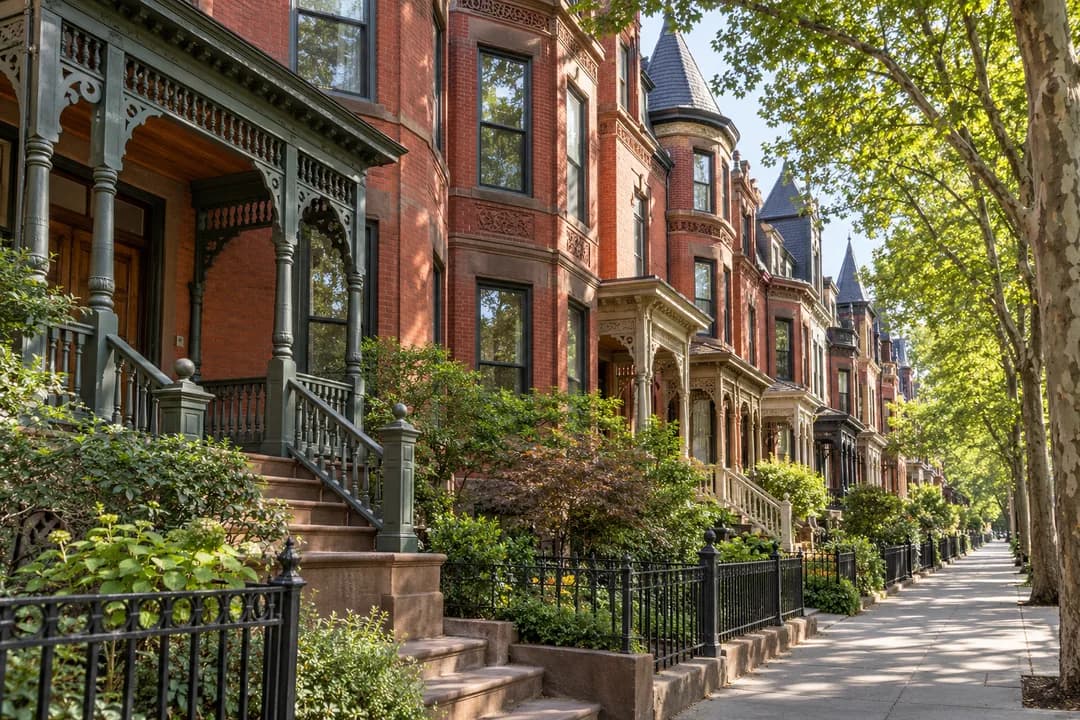
Turning south into the Mount Morris Park Historic District brings you to West 130th Street between Fifth and Malcolm X Boulevards, widely known as Astor Row. Built between 1880 and 1883 on land owned by William Backhouse Astor Jr., this unique block of twenty-eight brick semi-detached townhouses represents an architectural anomaly in Manhattan. Designed by architect Charles Buek, the residences feature expansive wooden front porches with turned spindle balustrades, ornamental wooden fretwork brackets, and generous front garden yards set back from the sidewalk.
The audio track details the pioneering preservation efforts that saved Astor Row from severe decay in the late twentieth century through community advocacy and the New York Landmarks Conservancy. Walking beneath the mature shade trees along 130th Street, you hear stories of how this tranquil pocket housed pioneering educators, musicians, and writers during the peak of the Great Migration from the American South, preserving a front-porch social culture rarely witnessed in dense urban row house blocks.
Striver Row and Stanford White Landmark Enclave
Heading north to West 138th and 139th Streets between Adam Clayton Powell Jr. and Frederick Douglass Boulevards leads you into the Saint Nicholas Historic District, celebrated worldwide as Striver Row. Developed in 1891 by speculative builder David H. King Jr., these four unified rows of townhouses were designed by three distinguished architectural firms, including the prestigious partnership of McKim, Mead and White.
Stanford White designed the northern side of West 139th Street in the graceful Italian Renaissance Revival style, using buff-colored iron-spot brick, brownstone lintels, and elegant classical porticos. Unlike almost anywhere else in Manhattan, Striver Row features private rear service alleys with historic cast-iron gates, allowing horses and early automobiles to access rear stable carriage entrances without disrupting the formal front facades. By the 1920s, successful African American professionals, including composer W. C. Handy and architect Vertner Woodson Tandy, settled here, inspiring the neighborhood proud moniker.
Mount Morris Park and Renaissance Brownstones
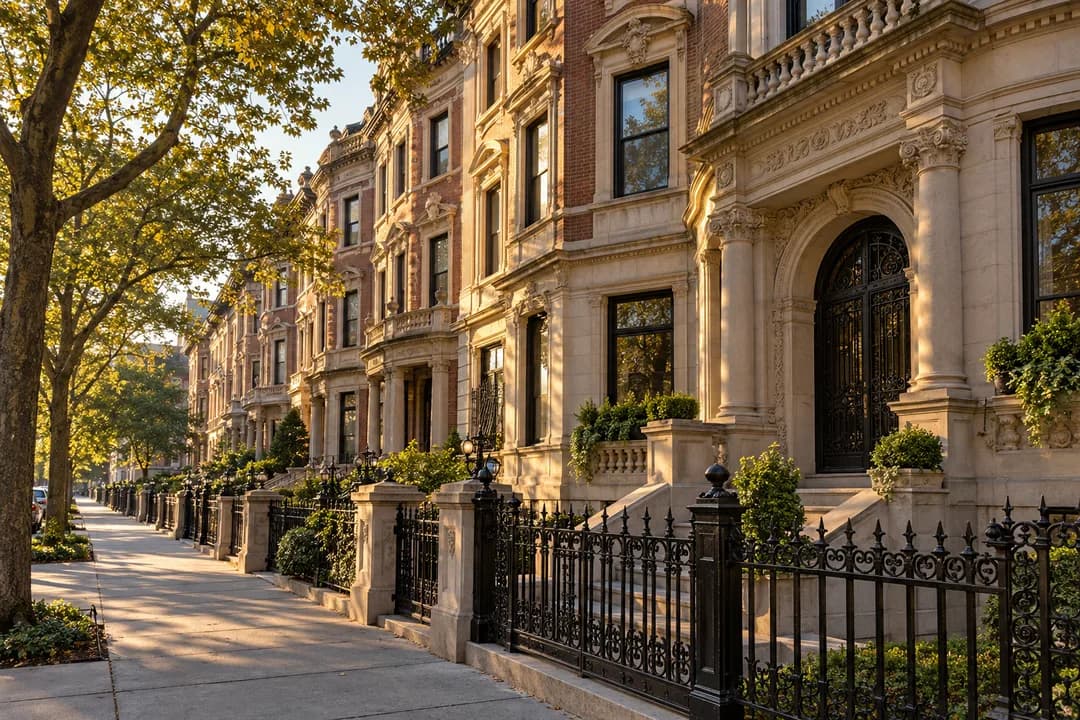
Stepping south toward Marcus Garvey Park, formerly known as Mount Morris Park, reveals an extraordinary concentration of late nineteenth-century residential masterworks. The streets surrounding the park display an astonishing variety of Romanesque Revival, Neo-Grec, and Queen Anne brownstones characterized by rough-hewn stone rustication, deep arched doorways, and dramatic peaked gables.
At the center of the park rises a dramatic natural acropolis of Manhattan schist rock crowned by the historic Mount Morris Fire Watchtower. Manufactured in 1856 by iron founder James Bogardus, this fifty-seven-foot octagonal cast-iron structure is the only surviving municipal fire watchtower in the United States. Your audio narrator explains how dedicated watchmen once struck its ten-thousand-pound bronze bell to signal fire alarms to volunteer firemen across upper Manhattan before telegraph networks existed.
The surrounding residential blocks along West 120th, 121st, and 122nd Streets showcase some of the finest intact brownstone blocks in the city. Wealthy German and Jewish merchant families initially commissioned these homes before middle-class African American church congregations purchased them during the 1910s, transforming parlors into community fellowship halls and poetry discussion circles.
Pacing Your Audio Walk and Connecting With Community
Harlem rewards an observant, unhurried pace that respects the living residential communities along its historic brownstone blocks. The ideal window for walking is weekday mornings between 9:00 am and 11:30 am, when the streets are filled with neighborhood life and school groups, or early Saturday mornings before afternoon foot traffic peaks along 125th Street. Expect to spend approximately ninety minutes covering the roughly two-mile walking loop.
Take advantage of natural pause points in Marcus Garvey Park or along the wide tree-lined medians of Malcolm X Boulevard to listen closely to audio segments detailing the poetry of Langston Hughes and the essays of James Baldwin. Karpo APP outlines key street intersections and historical landmark references across each corridor, giving you an organized self-guided framework to follow at your own pace.
Subway Logistics and Practical Tour Information
Transportation access to Harlem historic center is exceptionally rapid from Midtown Manhattan. Express subway service on the 2 and 3 trains arrives directly at the 125th Street and Malcolm X Boulevard station in less than twenty minutes from Times Square. Alternatively, the A, B, C, and D express and local trains stop at 125th Street and Saint Nicholas Avenue, placing you just two blocks west of the Apollo Theater.
Wear comfortable walking shoes suitable for concrete pavements and occasional stone steps. Keep open-ear headphones on a moderate volume so you remain alert to urban bicycle and vehicle traffic while absorbing the rich sonic tapestry of Harlem past and present.
Ask Karpo for more information.
Keep reading
- SoHo Tailor Alteration Shop Finder for Sample Sale Finds
 Williamsburg Tailor Alteration Shop Finder for Bike Riders
 Upper West Side Tailor Alteration Shop Finder for Kids