 SoHo Tailor Alteration Shop Finder for Sample Sale Finds
Neighborhood Guides
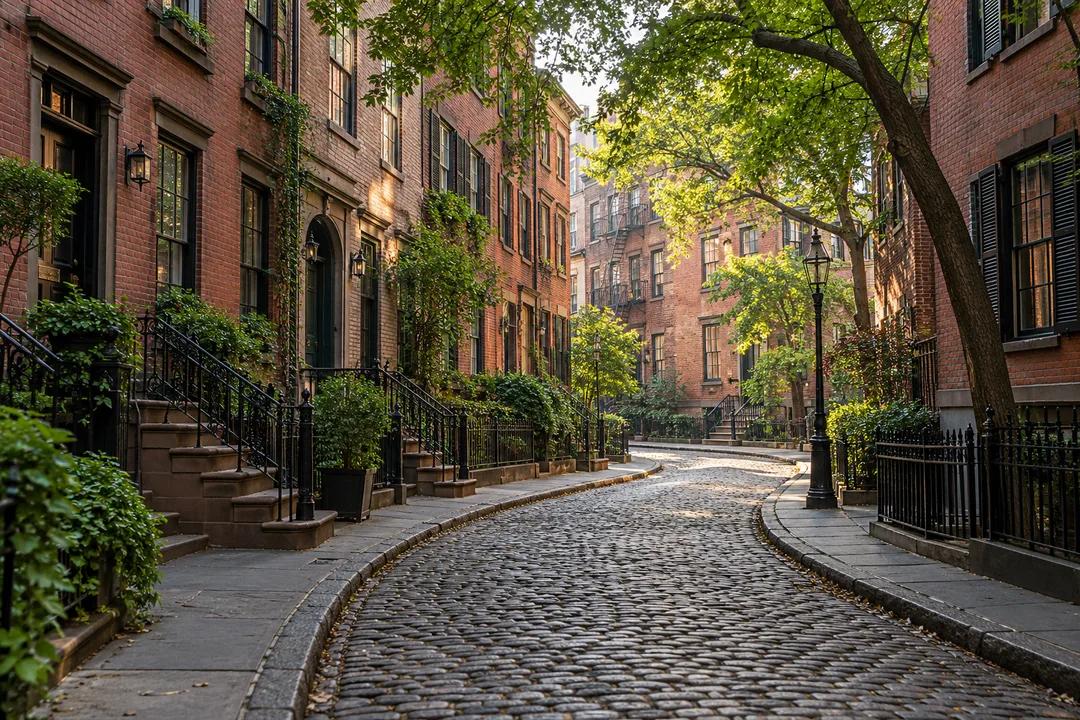
NYC Neighborhood Audio Walk: Free Greenwich Village Route
Follow this self-guided Greenwich Village neighborhood audio walk to discover hidden courtyards, historic brownstones, and storied literary spots.
Starting this Greenwich Village neighborhood audio walk under the marble arch in Washington Square Park places you at the threshold of Manhattan most storied countercultural and architectural enclave. Unlike the rigid gridiron street plan imposed across Upper Manhattan by the Commissioners Plan of 1811, the West Village retains the tangled, diagonal pathways of eighteenth-century Dutch and colonial English pastoral estates. As your narration begins, you leave the bustling chess tables and fountain benches behind, stepping into quiet residential lanes where red-brick Federal row houses and gaslit alleyways preserve two centuries of American literary rebellion.
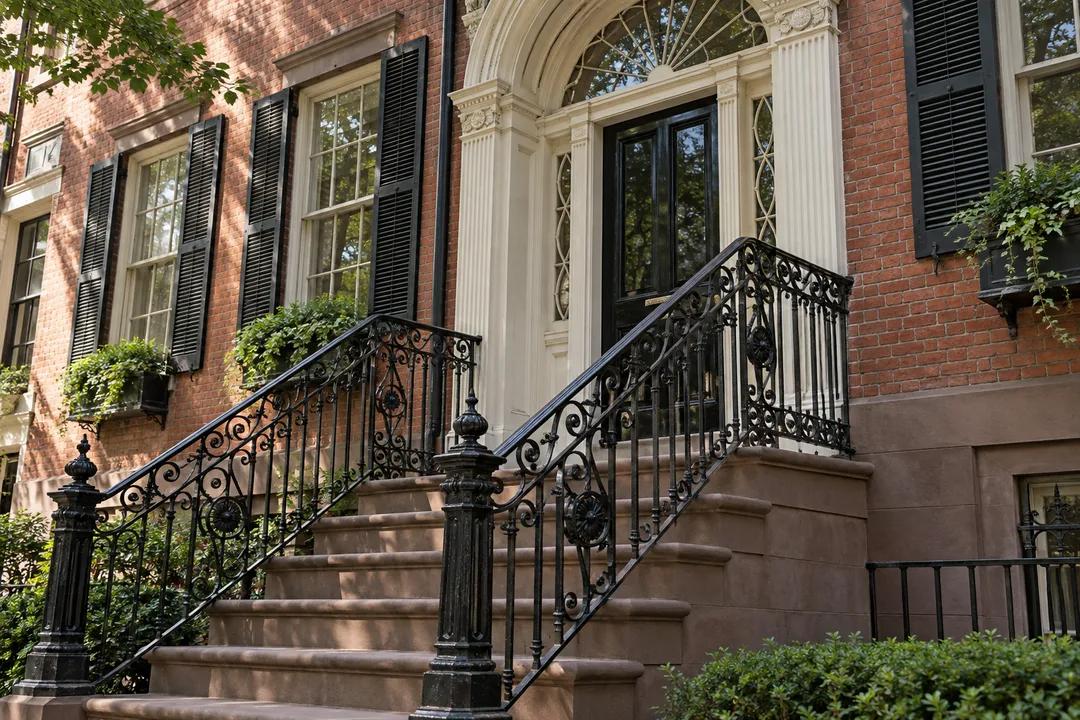
Washington Square and the Federal Row Along the North Strip
The audio tour directs your attention across Washington Square North, where an unbroken ceremonial terrace of Greek Revival and Federal brick mansions stands in aristocratic contrast to the bohemian streets further west. Erected in the early 1830s for prominent merchant families like the Rhinelander clan, these grand townhouses display deep marble stoops, classical pedimented entryways, and intricate cast-iron parlor balustrades. Writers like Henry James and Edith Wharton drew directly from this physical setting for works exploring the rigid social conventions of Old New York.
Crossing Fifth Avenue toward MacDougal Street, the audio commentary explores how Washington Square evolved from a colonial potter field and parade ground into the public heart of Greenwich Village. Notice the transition in scale as stately four-story townhouses give way to smaller, mid-nineteenth-century brick structures converted into experimental basement theaters, espresso cafes, and jazz cellars during the heyday of the Beat generation and folk revival.
The Angled Byways of Minetta Lane and Minetta Street
Turning southwest leads you into Minetta Lane and the sharp dogleg curve of Minetta Street, named after the historic Minetta Brook that once wound through marshlands here toward the Hudson River. This unique curved corridor owes its serpentine geometry to the natural contours of that buried waterway. By following the gentle arc of the street, you experience one of the few places in New York City where modern sightlines are completely blocked by historic brick facades, creating an intimate sense of spatial enclosure that feels distinct from the surrounding avenues.
During the 1920s, Minetta Street was home to a thriving African American and Italian working-class enclave, alongside speakeasies and radical publishing houses. Your audio stops point out modest three-story Federal brick homes with dormered pitched roofs and low lintels. These unpretentious dwellings stand as rare surviving examples of early nineteenth-century vernacular worker housing, carefully preserved through decades of community resistance against modern high-rise development.
Bedford Street Curiosities and the Narrowest House
Continuing west onto Bedford Street brings you into the architectural core of the Greenwich Village Historic District, designated in 1969. At the intersection of Bedford and Commerce Streets stands 75 and a half Bedford Street, famously recognized as the narrowest residential townhouse in New York City. Measuring a mere nine and a half feet wide on the exterior and roughly eight feet across the interior, this charming red-brick sliver was constructed in 1873 in what was originally a carriage alleyway between neighboring properties.
Despite its diminutive dimensions, the home attracted notable artistic residents, including poet Edna St. Vincent Millay, who lived and wrote here during the 1920s while helping found the nearby Cherry Lane Theatre on Commerce Street. Just down the block at 86 Bedford Street, the audio narrator recounts the clandestine history of Chumley historic speakeasy, where Prohibition-era writers like F. Scott Fitzgerald and Eugene O Neill entered through an unmarked back courtyard gate to evade police scrutiny.
Hidden Mews and Secret Courtyards
One of the greatest pleasures of an audio walk through the West Village is discovering the secluded mews and private alleyways concealed behind conventional street fronts. The audio walk pauses outside Patchin Place on West 10th Street, a gated cul-de-sac of ten modest three-story brick townhouses constructed around 1848 on land owned by Aaron Patchin. While neighborhood lore long claimed the houses were built for staff of the Brevoort House, that grand Fifth Avenue hotel actually opened several years later in 1854. Free from commercial storefronts and through-traffic, Patchin Place served as a tranquil writing sanctuary for authors like E. E. Cummings and Djuna Barnes, lit by one of Manhattan last surviving nineteenth-century gas street lamps.
A few blocks southwest brings you past Grove Court, a hidden residential terrace tucked between 10 and 12 Grove Street. Constructed during the 1850s as rear housing for local laborers, the secluded enclave was transformed through sympathetic restoration in the 1920s. Today, its lush private garden courtyard and ivy-covered brick facades represent a quintessential hidden corner of Village residential life.
Pacing Your Walk and Savoring Quiet Hours
Because the West Village attracts substantial foot traffic on Friday evenings and weekend afternoons, schedule this audio journey for weekday mornings or early Sunday mornings before midday. Between 8:30 am and 11:00 am, the narrow sidewalks along Commerce, Barrow, and Morton Streets are remarkably peaceful, filled only with resident dog walkers and the scent of fresh baking from neighborhood corner ovens.
The irregular street angles can occasionally disorient even experienced city walkers, especially where West 4th Street unexpectedly crosses West 10th Street and West 11th Street. Karpo APP provides a clear static route outline and key intersection pointers to help you navigate the angled grid. If a particular lane feels active with delivery cyclists, pause your stroll to linger in the public garden of the Church of Saint Luke in the Fields on Hudson Street, where shaded brick paths provide an ideal resting spot.
Transit Connections and Essential Route Guidance
Public transportation access to this audio route is remarkably convenient from multiple subway lines. The West 4th Street–Washington Square hub connects directly with the A, C, E, B, D, F, and M trains, while the Christopher Street–Sheridan Square station on the 1 line offers an immediate gateway to the western reaches of the Village. Christopher Street PATH station also provides seamless connections for visitors arriving from New Jersey.
Dress in comfortable walking shoes suited for brick sidewalks, granite cobbles, and occasional tree-root heaves. Keep your listening volume balanced to maintain awareness of quiet neighborhood intersections. By using Karpo APP for curated route outlines and background architectural notes, you uncover layers of historic craftsmanship and artistic legacy hidden plain in sight across Greenwich Village.
Ask Karpo for more information.
Keep reading
- SoHo Tailor Alteration Shop Finder for Sample Sale Finds
 Williamsburg Tailor Alteration Shop Finder for Bike Riders
 Upper West Side Tailor Alteration Shop Finder for Kids