 SoHo Tailor Alteration Shop Finder for Sample Sale Finds
Neighborhood Guides
NYC Neighborhood Audio Walk: Free Brooklyn Heights Route
Explore Brooklyn Heights on this self-guided neighborhood audio walk featuring historic brownstones, tranquil mews lanes, and skyline promenade views.
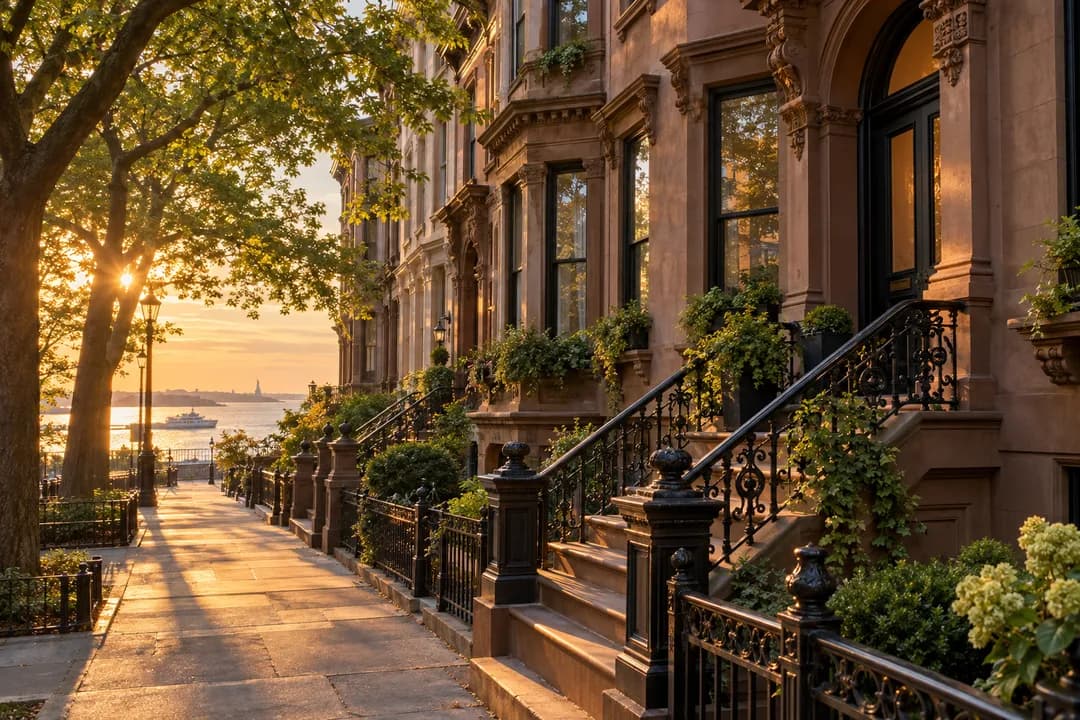
Starting this Brooklyn Heights neighborhood audio walk near the Clark Street subway entrance brings you into America first designated commuter suburb and New York City earliest historic district. Situated on a dramatic bluff overlooking the East River and Upper New York Bay, Brooklyn Heights preserves more than six hundred pre-Civil War and Gilded Age residences across a remarkably intact street pattern. Stepping westward toward the river along tree-canopied lanes, your audio narrator guides you through two centuries of naval mercantile wealth, pioneering abolitionist organizing, and quiet residential sanctuaries framed by harbor breezes.
The Architectural Legacy of New York First Historic District
When the New York City Landmarks Preservation Commission officially established Brooklyn Heights as the city inaugural historic district in 1965, it recognized an architectural tapestry spanning from the 1820s Federal era to late nineteenth-century Queen Anne and Romanesque Revival mansions. Early ferry service pioneered by Robert Fulton in 1814 connected Wall Street financiers with the bluff, transforming open farm orchards into affluent residential enclaves. As you walk down Pierrepont and Remsen Streets, look up at the soaring brownstone stoops, deep cast-iron balustrades, and heavy acanthus-leaf brackets framing high parlor windows.
Unlike the predominantly limestone facades found uptown, Brooklyn Heights is celebrated for its warm brick and Triassic Newark Basin brownstone masonry. The audio guide directs your gaze toward the subtle variations in ironwork, from delicate Greek Revival anthemion palmettes to dramatic Gothic Revival trefoil tracery, demonstrating how nineteenth-century master builders personalized speculative row house blocks for prominent ship captains, cotton brokers, and dry-goods merchants.
The Brooklyn Heights Promenade and Harbor Panoramas
Emerging from the shaded residential blocks onto the Brooklyn Heights Promenade delivers one of the world most celebrated urban vistas. Built during the early 1950s as a creative compromise over Robert Moses proposed Brooklyn-Queens Expressway, this cantilevered, multi-tiered esplanade sits directly above two active highway decks while insulating the historic neighborhood above from vehicular roar. The audio track invites you to pause at the railing as ferry horns echo across the water, taking in an unobstructed panorama stretching from the Statue of Liberty and Governors Island to the towering financial spires of Lower Manhattan.
Looking north from the promenade, the sweeping catenary cables and Gothic stone towers of the Brooklyn Bridge dominate the visual axis. The audio commentary details how early residents watched the bridge rise stone by stone between 1870 and 1883 under the direction of Washington and Emily Warren Roebling, forever anchoring Brooklyn commercial and social destiny to the island of Manhattan across the tidal strait.
Carriage Mews and Hidden Architectural Enclaves
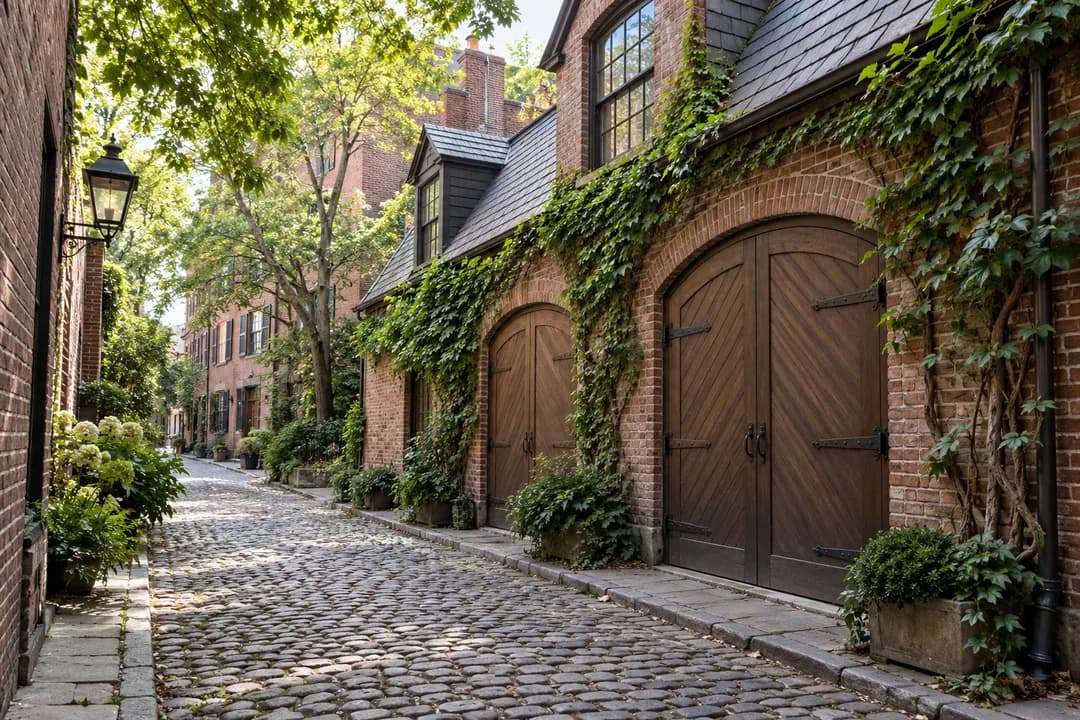
Stepping back inland toward Hicks Street reveals some of the most enchanting hidden lanes in all five boroughs: the private carriage mews. The audio walk leads you down Hunts Lane and Grace Court Alley, narrow cobblestone cul-de-sacs originally constructed during the mid-nineteenth century to house private horse stables, tack rooms, and coachmen quarters for the affluent families of Remsen and Joralemon Streets.
With the arrival of the automobile in the early twentieth century, these sturdy brick and timber mews were converted into sought-after private homes and artist studios. Notice the preserved wooden carriage doors with diagonal iron strap hinges, hayloft loading hoists, and climbing English ivy clinging to whitewashed masonry. Because these mews dead-end away from municipal traffic, they maintain an almost rural quietude, where your footsteps ring clearly off antique granite cobbles.
Literary Landmarks Along Willow Street and Cranberry
Willow Street serves as the literary and historic heart of the neighborhood walk. Passing 70 Willow Street, your audio narration highlights the yellow Greek Revival mansion where Truman Capote lived as a guest of set designer Oliver Smith during the late 1950s, completing Breakfast at Tiffany and researching In Cold Blood in a quiet garden basement apartment. Further down at the corner of Cranberry and Fulton Streets, Walt Whitman hand-set the type for the first edition of Leaves of Grass in 1855, capturing the maritime energy of Brooklyn shoreline workers.
A short stroll eastward to Orange Street brings you outside Plymouth Church of the Pilgrims, an unadorned 1849 red-brick meetinghouse that served as a pivotal national nexus for the abolitionist movement. Led by charismatic preacher Henry Ward Beecher, the church operated as a primary Grand Central Depot on the Underground Railroad, secretly harboring escaped enslaved individuals beneath the sanctuary floorboards before facilitating their safe passage toward upstate New York and Canada.
Pacing Your Audio Walk and Enjoying Neighborhood Rhythms
To experience the promenade and historic lanes at their most serene, plan your walk during late morning on a weekday, when natural eastern sunlight illuminates the brownstone facades and the promenade remains calm before midday lunch crowds. A complete circuit covering roughly two miles takes approximately eighty to ninety minutes at a relaxed, observational pace, leaving plenty of room to pause and admire historic doorway carvings.
If you wish to break the walk for refreshments, the commercial spine along Montague Street offers inviting local bakeries and cafes with sidewalk seating. Montague Street has served as the neighborhood commercial high street since the mid-nineteenth century, offering a lively contrast to the quiet, dignified residential corridors that surround it. Karpo APP provides curated landmark stops and self-guided route suggestions, letting you explore the surrounding blocks at an unhurried, comfortable walking pace.
Subway Logistics and Practical Touring Tips
Reaching the start of this audio route is remarkably straightforward via multiple public transit lines. The Clark Street station on the 2 and 3 subway lines drops you directly into the historic core via subterranean elevators beneath the historic Hotel St. George. Alternatively, the Court Street station on the R line and Borough Hall station on the 2, 3, 4, and 5 trains provide convenient entry points just a short walk south on Montague Street.
Because the neighborhood features historic bluestone flagstones and granite curbs that can be uneven around mature plane trees, flat, supportive walking shoes are strongly recommended. Keep your smartphone charged and use comfortable, weather-appropriate headphones so you can fully appreciate the immersive audio storytelling while enjoying the gentle salt breeze along the Brooklyn Heights bluff.
Ask Karpo for more information.
Keep reading
- SoHo Tailor Alteration Shop Finder for Sample Sale Finds
 Williamsburg Tailor Alteration Shop Finder for Bike Riders
 Upper West Side Tailor Alteration Shop Finder for Kids