The model train universe runs on twin tracks: nostalgia and precision. In late May 2026, with windows propped open and the faint scent of machine oil mixing with street-cart pretzels, New York's surviving hobbyist spaces feel like time capsules engineered to run forever. The Upper East Side claims the old-guard retailers—counters worn smooth by decades of elbow-lean, walls papered in locomotive lithographs. Long Island City, meanwhile, hosts the clubhouses: second-floor walk-ups where retirees and software engineers alike hunch over O-gauge turnouts, soldering irons in hand, building worlds one turnout at a time.
The Upper East Side's legacy counters
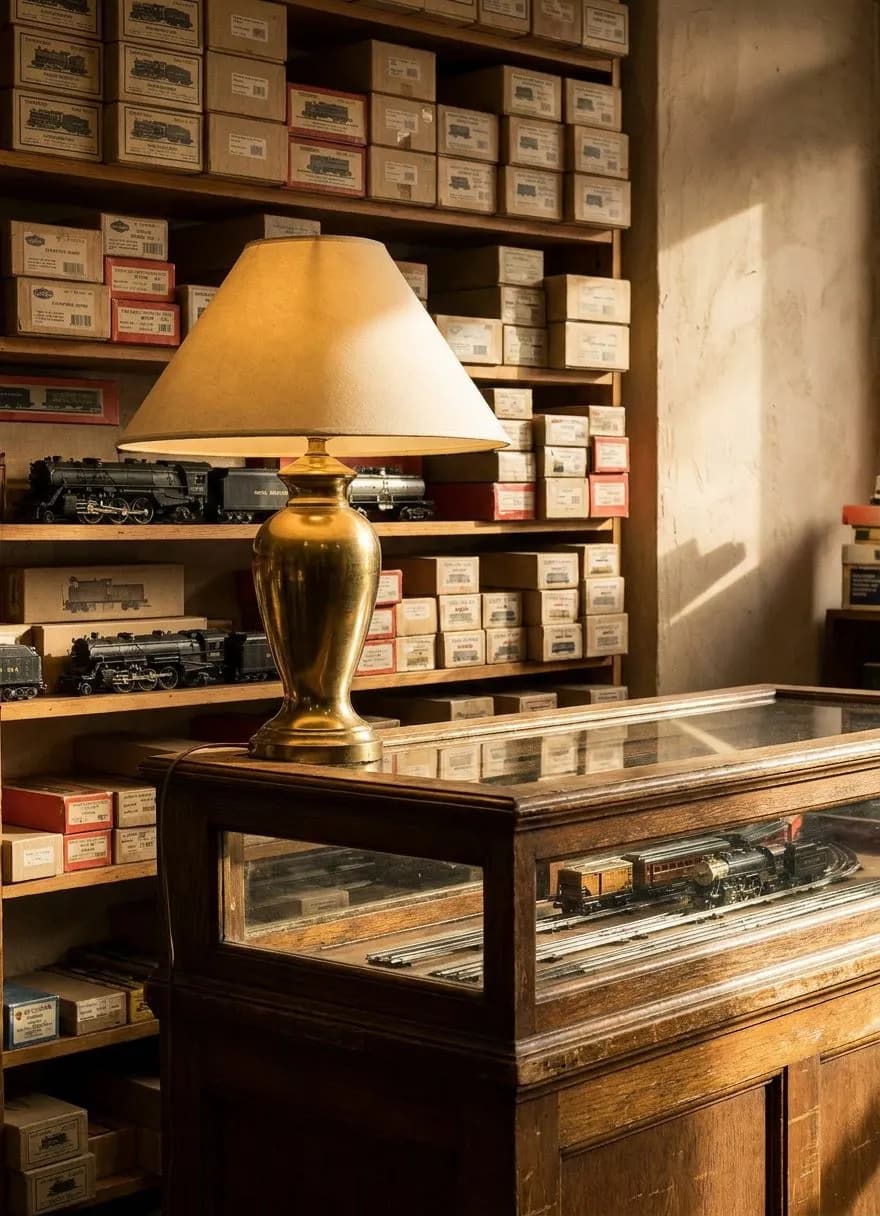
Manhattan's model train trade used to sprawl across Midtown and the Twenties, but real estate winnowed it down to a handful of survivors, most clustered above Sixtieth Street. The UES shops that remain carry themselves with the quiet confidence of family businesses that have outlasted three commercial rent cycles. Wooden display cases hold brass locomotives under glass; pegboards sag under blister-packs of miniature figures, each smaller than a thumb joint. Light here is always a little amber—partly the overhead fixtures, partly the decades of varnish on the trim.
Conversations at the counter move slowly. A regular asks about a replacement motor for a 1950s Berkshire; the proprietor vanishes into a back room and returns ten minutes later with a shoebox full of candidates. There's no hard sell, only patient taxonomy. You hear snatches of lineage: grandfather's layout, son's O-scale empire in a Westchester basement, grandson now asking about DCC sound decoders. The shops function as much as archives as retail floors, and the staff—often second or third generation themselves—serve as curators of mechanical memory.
Long Island City's operating societies
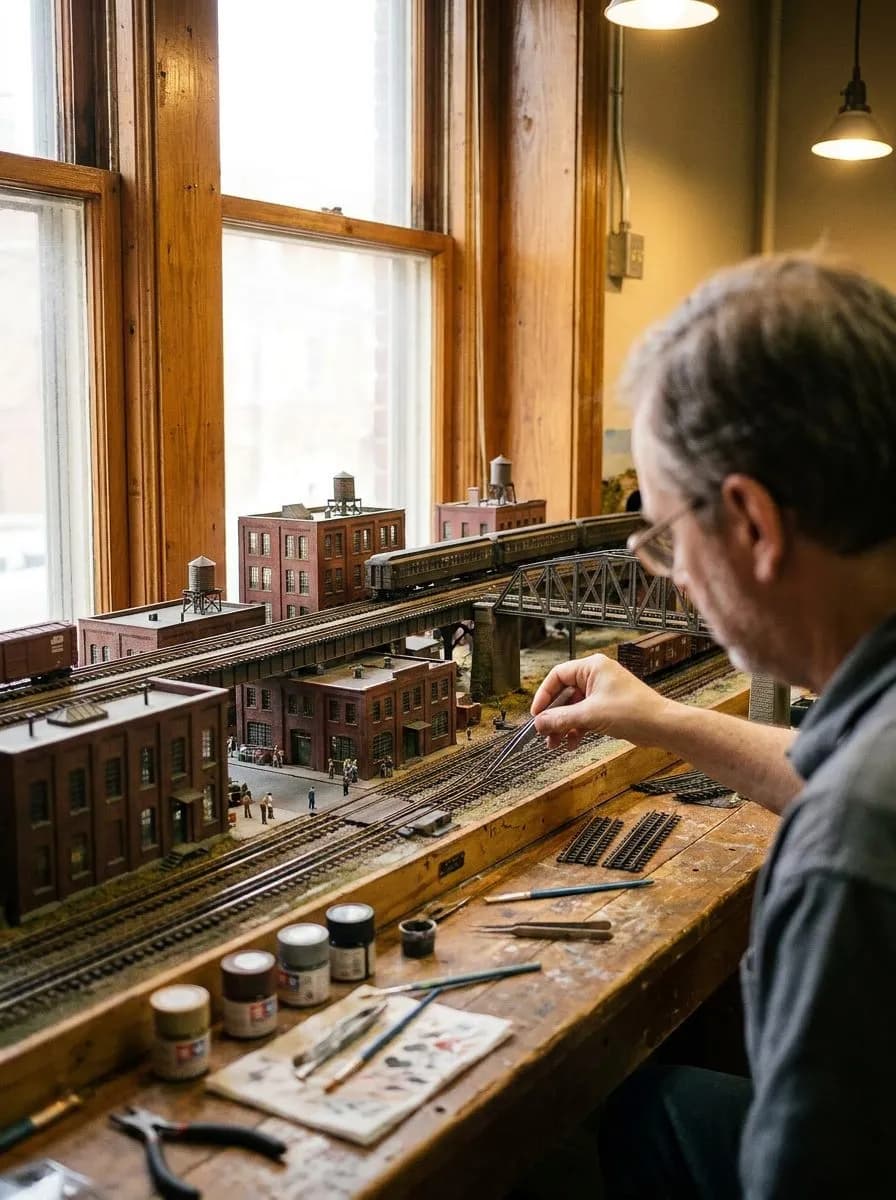
Cross the East River and the aesthetic shifts from retail to workshop. Long Island City's model railroad clubs occupy low-rent spaces above print shops and furniture wholesalers, accessed by staircases that creak in keys no one's bothered to tune. Inside, the layouts sprawl: HO-scale landscapes covering ping-pong-table-sized benchwork, valleys carved from pink foam, tunnels lined with real stone aggregate. On weekend afternoons in late spring, the windows stay open; you hear the hum of transformers, the clack of couplers, the occasional muttered oath when a turnout fouls.
Several clubs open their doors to visitors on Saturdays—call ahead, or check community boards for schedules that shift with the season. The members skew older but not uniformly; you'll spot a retired transit engineer beside a thirtysomething animator, both debating the prototypical length of a Pennsylvania Railroad coal drag. The layouts themselves are never quite finished. There's always another mountain to texture, another town square to populate with park benches and streetlights the size of rice grains. Perfectionism stretched across decades, maintained by committees that meet every Thursday night without fail.
The Queens shop with a museum in back
One hobby retailer in western Queens—easy subway distance from LIC proper—has become an unintentional pilgrimage site for Lionel collectors. The front room handles the usual trade: rolling stock, track sectionals, bottles of ballast in five shades of gray. The back room, accessible by request and a knowing nod, houses a private collection that could anchor a serious museum wing. Prewar tinplate, postwar steamers with smoke units that still puff, passenger cars in original boxes with tissue paper intact. The owner doesn't advertise; word spreads through online forums and model train show whisper networks.
Visiting feels like being admitted to a private library. The owner—call ahead, always—will walk you through the cases, recounting provenance with the care of an archivist. This locomotive came from an estate sale in Elmhurst; that set surfaced at a Pennsylvania flea market in 1987. The back room smells faintly of cardboard and old ink, the particular musk of printed ephemera aging gracefully. It's not for sale, he'll tell you, though twice a year he rotates pieces out to regional shows. The rest of the time it simply exists, a monument to the republic of small-gauge obsession.
What pulls people into the miniature
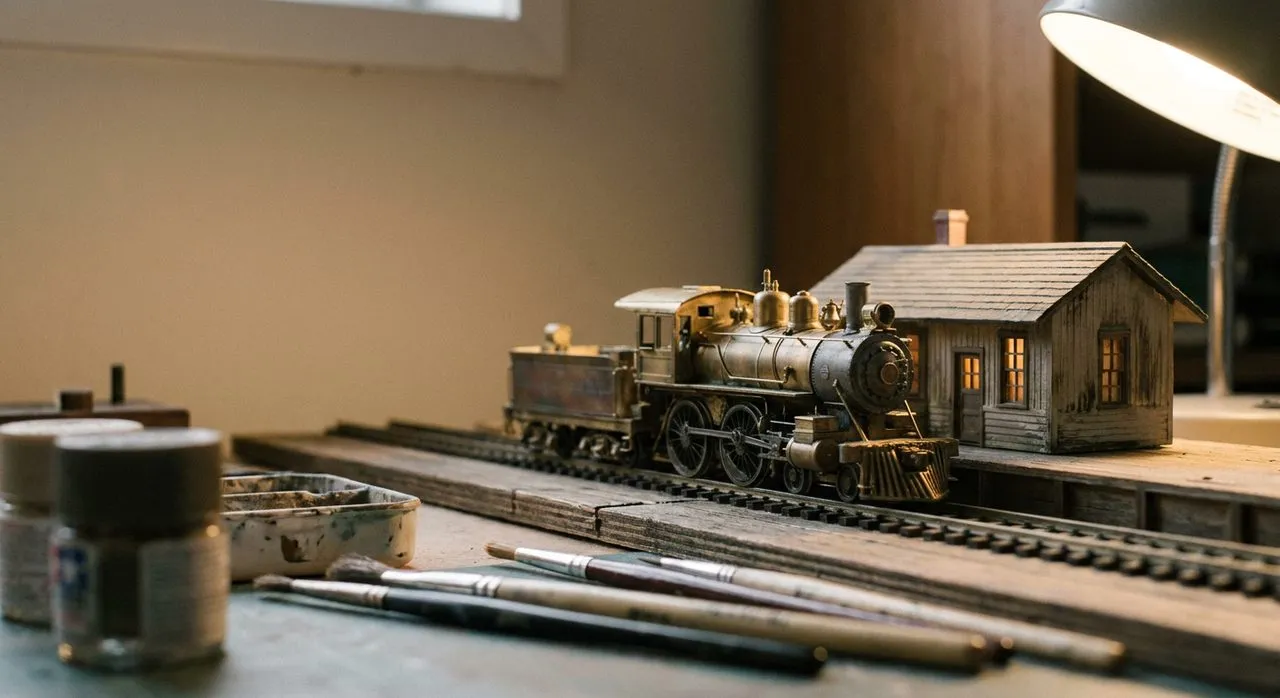
Ask a hobbyist why trains and the answers vary—childhood Christmases, a grandfather's attic layout, the appeal of a system where every variable can be controlled. But spend an afternoon in these spaces and a common thread emerges: the pleasure of scale. Here is a world complete and comprehensible, where you can hold an entire freight consist in two hands, where weather is a matter of misting spray bottles and static grass, where time runs on a transformer dial. The chaos of the actual city—sirens, scaffolding, the B train stalled between stations—shrinks to a problem you can troubleshoot with a multimeter and a wiring diagram.
There's a meditative quality to the work. Ballasting track means spreading fine gravel with a paintbrush, then misting it with diluted white glue, waiting for capillary action to wick the adhesive through. Installing a structure involves test-fitting walls, scribing siding lines with a razor blade, painting window frames with a 00 brush. It's repetitive, incremental, and utterly absorbing—the same appeal as knitting or woodturning, but with the added satisfaction of a system that moves. Flip the power and the whole landscape hums to life: locomotives pulling grade, crossing gates descending, tiny figures frozen mid-wave beside a platform.
Late spring in the layout rooms
Visit in late May and the season asserts itself even indoors. The LIC clubhouses grow warm by mid-afternoon; someone props the fire door open with a chunk of two-by-four, and the sounds of Vernon Boulevard drift up—car horns, the hiss of a bus kneeling at the curb. The UES shops run ceiling fans that stir the air without quite cooling it, and the proprietors switch from coffee to iced tea around two o'clock. Layout sessions stretch longer as daylight lingers; members lose track of time, suddenly noticing it's past eight and the Thai place around the corner is about to close.
The light changes too, slanting through dusty windows in a way that makes the miniature landscapes look momentarily real. A model town square bathed in late-afternoon gold could be anywhere—a memory, a postcard, a place that never quite existed but feels true anyway. This is the other half of the hobby's appeal: not just the engineering but the storytelling, the way a few square feet of plywood and plaster can summon an entire geography, complete with its own history and logic. You build a world, and then you get to live in it, at least for a few hours every week.
Practical notes
The Upper East Side shops cluster roughly between Lexington and Third Avenues in the low Seventies; take the 6 train to 68th or 77th Street. Long Island City clubhouses are a short walk from the Court Square–23rd Street station (E, M, G trains) or the Vernon Boulevard–Jackson Avenue stop (7 train). Street parking in LIC is easier than Manhattan but still tight on weekends; consider the subway. Most clubs open Saturday afternoons, typically one to five, but call ahead—schedules shift and some require advance notice for visitors. The Queens shop with the back-room collection keeps irregular hours; phone first and mention your interest in the Lionel archive. Bring cash for smaller purchases; not all vendors take cards. Accessibility varies—many spaces involve stairs and narrow aisles. Verify hours and access directly before planning a visit.
Tags: #ModelTrains #UES #LongIslandCity #NYCHobbies #TheOddEdit #MiniatureRailroads #LionelTrains #HobbyistSpaces #QueensNYC #ModelRailroading #NYCSpring2026 #UpperEastSide #TrainCollectors #NYCCulture #HiddenNYC
Sources consulted: Rail Transport Modelling · Upper East Side · Time Out New York Shopping · Queens Tourism · NY Times New York
All trademarks are the property of their respective owners.