 Ghost Walk Near Me in Greenwich Village: Edgar Allan Poe's Haunts
Weekend Plans
Manhattanhenge: The Two July Evenings the Sun Aligns the Grid
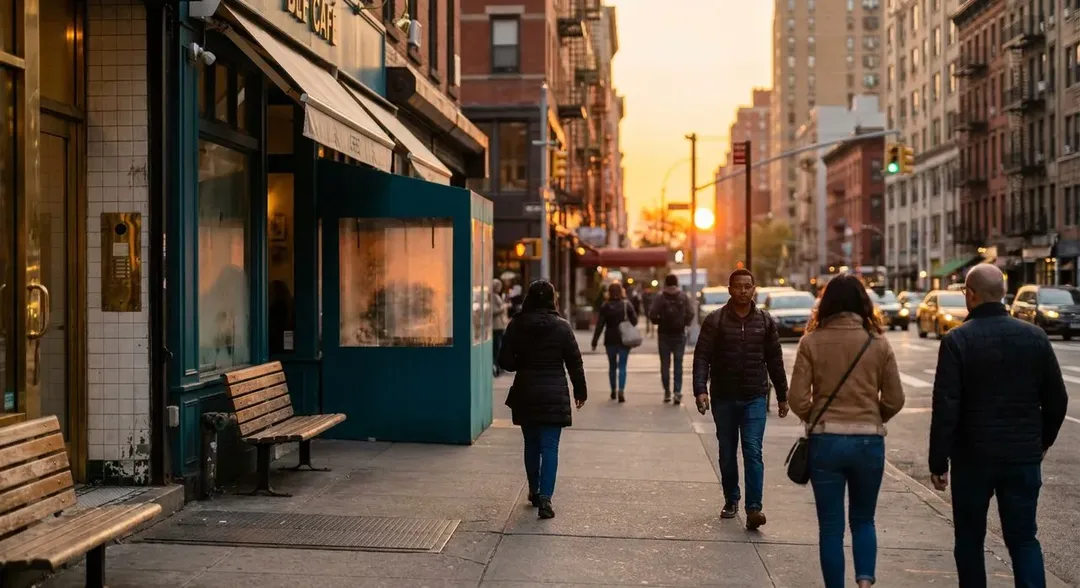
Twice a year, the sun drops perfectly between Manhattan's towers, turning the cross streets into rivers of light. The trick is knowing where to stand—and when to arrive.
The geometry of accident
The commissioners who laid out Manhattan's grid in 1811 weren't thinking about solar alignments. They were thinking about real estate, about maximizing buildable lots on an island with limited space. But their 29-degree offset from true east-west created something unintended: twice a year, the setting sun drops into perfect alignment with the cross streets, flooding the corridors between buildings with horizontal light. Astrophysicist Neil deGrasse Tyson named the phenomenon Manhattanhenge in 2002, borrowing from Stonehenge's summer solstice alignment. The dates shift slightly each year, but they cluster around late May and mid-July. This year, the July dates fall on the 12th and 13th—one evening for the half-sun sitting on the horizon, the next for the full orb before it dips. You get about fifteen minutes of peak alignment, maybe twenty if the atmosphere cooperates. The light turns amber, then copper, then something close to bronze as it rakes across the asphalt.
The four best streets
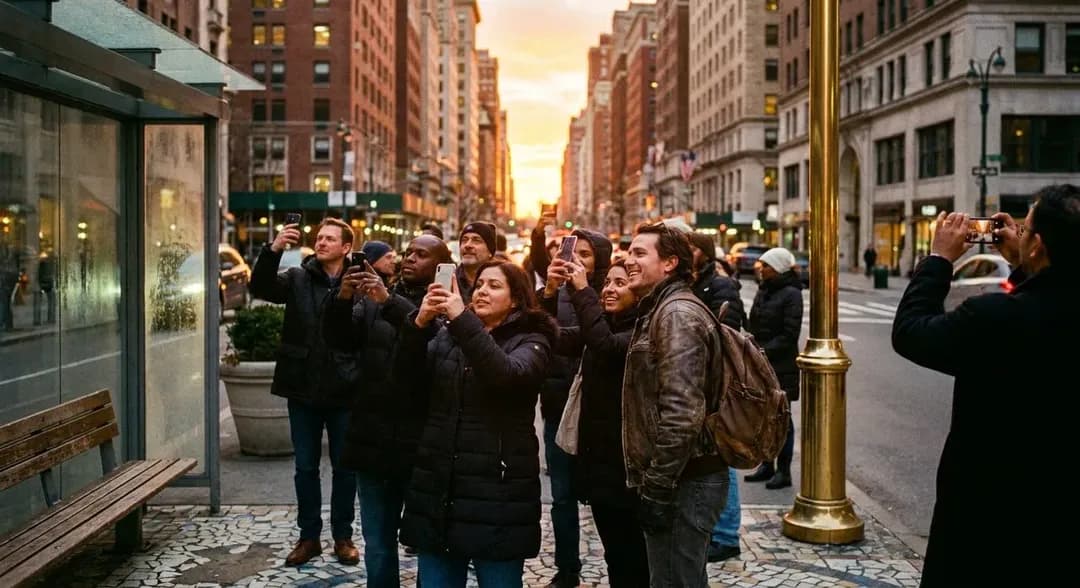
Not all cross streets work equally well. You need width, length, and minimal tall buildings on the western end to block the sun's descent. The consensus among photographers who've been shooting this for years: 14th Street from Union Square west, 23rd from Madison Square Park, 34th at Herald Square, and 42nd through Times Square. Each has its character. On 14th, you get the meatpacking district's cobblestones in the foreground and the Hudson's industrial piers in the distance. On 23rd, the Flatiron Building anchors the northern edge of your frame. On 34th, you're shooting down the canyon toward the Lincoln Tunnel, with Macy's red star just south of your sightline. And 42nd gives you the full theater district chaos—billboards, taxis, tourists—with the sun dropping straight down the center of it all. The NYPD closes 42nd to traffic during peak alignment on the full-sun evening, which makes it easier to set up but also more crowded. The half-sun date draws fewer people and sometimes better light.
Thirty minutes early means you get the spot
The published sunset time is not when you should arrive. The published sunset time is when ten thousand people with phones will be jostling for position. You want to be set up thirty minutes before that, preferably forty-five if you're aiming for 42nd Street. Scout your position in advance if possible—walk the block at the same time a week earlier to see where shadows fall and where pedestrian traffic clogs. On 34th, the southeast corner of 34th and Park gives you elevation from the subway entrance and a clean western view. On 42nd, the eastern edge of Tudor City overpass offers height, though it fills fast. For 23rd, position yourself east of Madison Avenue, where the street widens and you're not fighting the park crowd. Bring something to sit on. The waiting is part of it—watching the light change incrementally, the sky going from blue to pale to something warmer, the sun still high and white, then beginning its descent.
What the light does
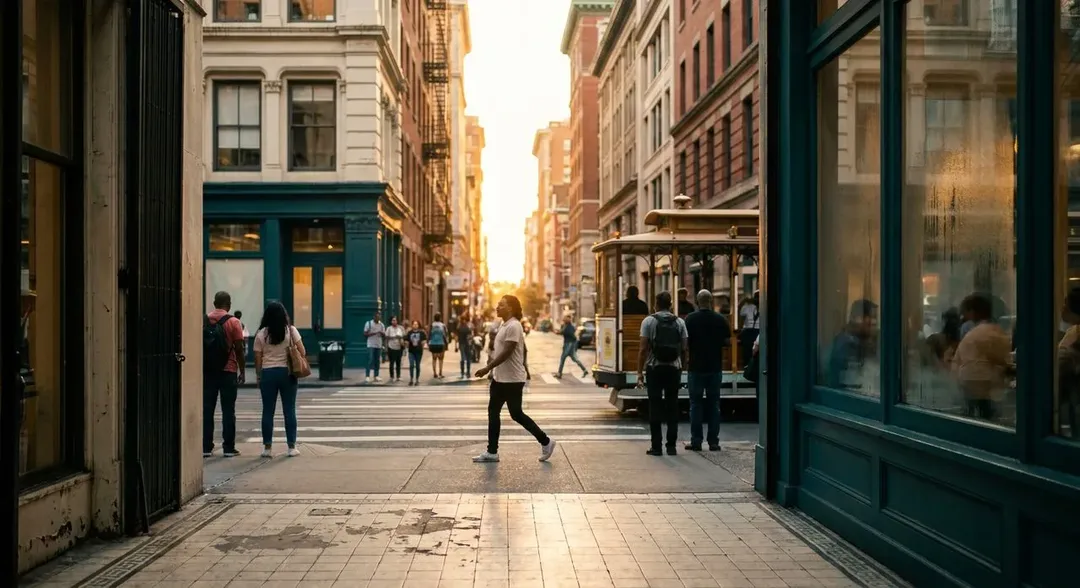
The alignment itself lasts longer than you'd think, but the best light is brief. When the sun first touches the horizon line—half-sun evening—it creates a semicircle of fire balanced on the street's vanishing point. The buildings on either side go dark in silhouette, their windows reflecting orange. The asphalt turns molten. If there's haze or humidity, the sun's disk softens and you can look at it without squinting. On the full-sun evening, the entire orb sits above the horizon for a few minutes before dropping, and that's when the light floods the street most completely, pouring east toward you, turning everything in its path into a study in copper and shadow. Traffic lights glow green against the glare. Pedestrians become cutout figures. The whole corridor feels compressed, flattened into two dimensions. Then the sun drops, the light drains away, and the street returns to its regular self.
The weather question
Cloud cover kills it. A clear western horizon is non-negotiable. Check the forecast obsessively starting three days out, and not just the general prediction—look at the hourly breakdown, the cloud cover percentage, the satellite view. A band of clouds sitting on the New Jersey horizon at sunset will block the entire show. Some years, both evenings are lost to weather. Some years, you get one clear shot. The best Manhattanhenge evenings have that particular late-spring or mid-summer clarity, when a high-pressure system has pushed through and the air feels scrubbed. If the forecast shows clouds, don't bother. If it shows haze, go anyway—haze can actually improve the color, filtering the sun into deeper reds and oranges. Wind matters too. A stiff breeze from the west can clear out atmospheric junk and sharpen the disk. No wind means more diffusion, softer light, sometimes better for photography but less dramatic to the eye.
The crowds and the alternatives
Times Square on Manhattanhenge evening is a scene. Photographers with tripods stake out positions hours early, tourists pack the sidewalks, street vendors sell glow sticks for reasons unclear. If that's not your speed, try the quieter streets. 57th Street works, though it's narrower. 79th Street on the Upper West Side gives you a residential feel with brownstones framing the view. Even-numbered streets in the 30s and 40s—38th, 40th, 44th—offer the same alignment with a fraction of the crowd. You lose some of the iconic backdrop, but you gain space to breathe. Or skip Manhattan entirely and watch from the Brooklyn side. The Pulaski Bridge at sunset on Manhattanhenge evening shows you the reverse angle: the sun setting behind Manhattan, the grid lit from within. Fewer people make the trip to Queens for that view, which is precisely why it's worth considering. The phenomenon is the same. The experience is quieter.
Practical notes
Manhattanhenge occurs four times a year: two evenings in late May and two in mid-July. For 2024, the July dates are July 12 (half-sun) and July 13 (full-sun), with sunset around 8:25 PM. Arrive by 7:45 PM for a good position, earlier for 42nd Street. The best viewing streets are 14th, 23rd, 34th, 42nd, and 57th, though any wide cross street with a clear western view works. Bring a jacket—summer evenings cool quickly once the sun drops. MTA access: L/N/Q/R/4/5/6 to 14th Street-Union Square; N/R/W/6 to 23rd Street; B/D/F/M/N/Q/R/W to 34th Street-Herald Square; 1/2/3/7/N/Q/R/W/S to 42nd Street-Times Square. No admission fee; this is a public street event. Check weather forecasts carefully—cloud cover on the western horizon will obscure the alignment entirely. For exact sunset times and dates, visit the American Museum of Natural History's website, which publishes annual Manhattanhenge calculations.
Tags: #Manhattanhenge #NYCsunset #UrbanAstronomy #ManhattanGrid #TimesSquare #HeraldSquare #UnionSquare #NYCphotography #SummerInNYC #SunsetViewing #AstronomyNYC #StreetPhotography #NYCmoments #RightOnTime #UrbanPhenomenon
Sources consulted: Time Out New York · NYC Parks · Atlas Obscura
All trademarks are the property of their respective owners.
Ask Karpo for more information.
Keep reading
- Ghost Walk Near Me in Greenwich Village: Edgar Allan Poe's Haunts
 Ghost Walk Near Me in Lower Manhattan: Phantoms of City Hall Park
 Ghost Walk Near Me in the West Village: Phantoms by Commerce Street