 Chelsea Consignment Shop Crawl Planner for Your First Studio
Hidden Gems & Odd Finds
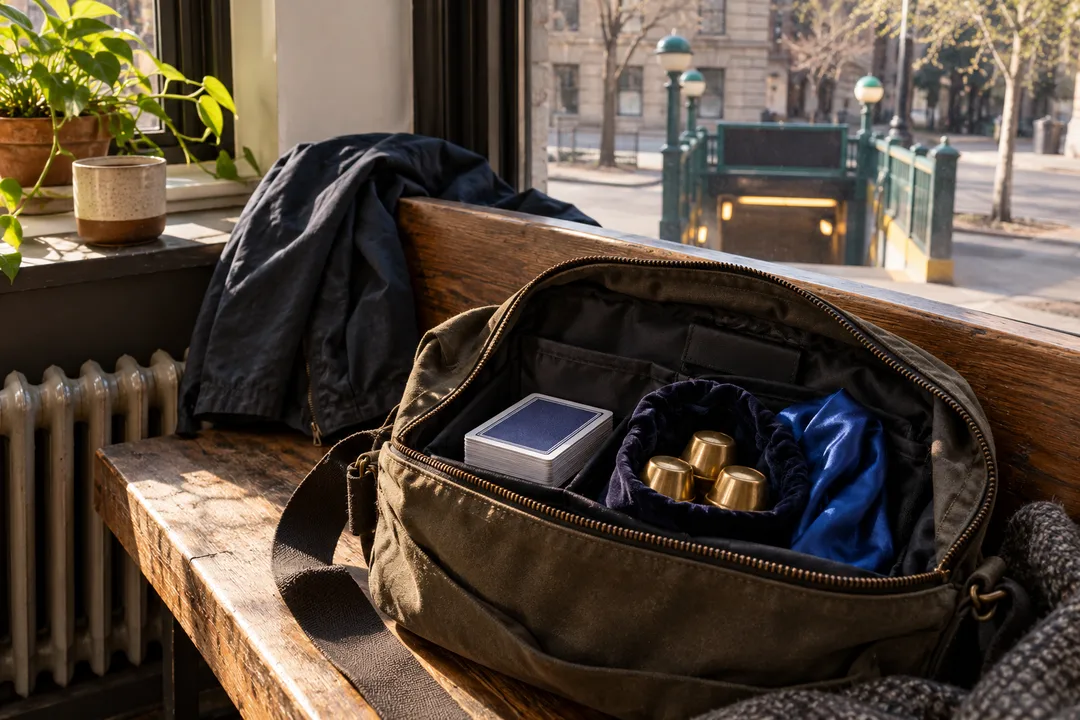
NYC Magic Shop: Choose Props for One Small Bag
Find compact props at an NYC magic shop by planning around your bag, travel day, and practice space, then shape a simple shopping route in the Karpo APP.
For an NYC magic shop visit during a trip, choose props that fit the bag you will actually carry home. Start with the space available after clothes and other purchases, then decide whether you want a practice item, a gift, or something to perform during the visit. Use the Karpo APP to place the shopping stop within your city itinerary. A compact plan gives you room to browse without turning the rest of the day into luggage management.
Measure the carrying problem first
Put your day bag on a table and imagine the purchase inside it. Cards, a soft pouch, and a larger rigid prop ask for different kinds of space. The outer packaging may occupy more room than the object itself, particularly when it protects several small pieces. Decide whether you can keep that packaging intact. Buying something that needs protection and then discarding its box to make room is an avoidable problem when you still have a full day of sightseeing ahead.
Separate what you will carry around NYC from what will go in your luggage later. A purchase made before dinner must travel through the afternoon with you, even if it eventually fits in a suitcase. Tell your travel companions when browsing is part of the plan so they can choose whether to join you. One person studying a demonstration and another worrying about a timed activity is an uncomfortable pairing. Agree on a stopping point before entering the shop.
Turn the itinerary into a useful Karpo request
Try: “Help me plan an NYC magic shop stop during my visit. I will start in Midtown, have one small day bag, and want a compact item for practicing at home. Keep the shopping route close to the rest of my afternoon.” Add where you need to finish and any step-free access preference. These details help organize local recommendations around your trip. They do not establish that a shop carries a particular prop or that an item is suitable for every form of travel.
Review the suggestion alongside the rest of your itinerary. A specialist destination can be worth a detour when the purchase is a highlight of the trip, but a casual souvenir does not need to dictate the whole afternoon. Ask Karpo to simplify the outing if the proposed stops take you away from your plans. A single visit with enough time to understand one product can be more satisfying than rushing through several places while watching the clock.
Match the souvenir to your future use
A deck makes sense when you intend to practice card routines or enjoy collecting its design. Keep those motivations separate so you choose the right kind of product. An unusual collector's edition may be a pleasant reminder of the visit, while a more ordinary deck may better suit daily handling. Ask about the lesson or routine you want to learn and the materials it calls for. The value of the souvenir depends on what you will do with it after the trip.
A compact visual prop offers another possibility. Before deciding, ask to understand its complete contents, the way it is stored, and the steps needed to return it to its starting condition. Some small effects involve several separate pieces, which makes packing discipline more important than their size suggests. Choose a pouch or container that keeps the set together. Avoid an object that only looks portable because a demonstrator has left its preparation materials out of sight.
Instruction can also be a souvenir. A book, booklet, or supported digital lesson gives you something to revisit at home, but each format has a practical tradeoff. Printed material adds weight and needs protection. Digital access requires a clear understanding of the link, account, or download process that accompanies the purchase. Ask how the specific lesson is delivered and whether you will have everything needed to begin. Choose material that suits the way you like to study.
Inspect the whole package, rather than one piece
Lay out the purchase with the seller's permission and identify what belongs together. Record the exact product name and keep the instructions with the equipment. This is especially useful when similar-looking props have different versions. If a routine uses consumable materials, ask which are supplied and which are separate. You can then decide whether the purchase is a complete starting point for your plans, rather than discovering at home that you bought only one part of a larger setup.
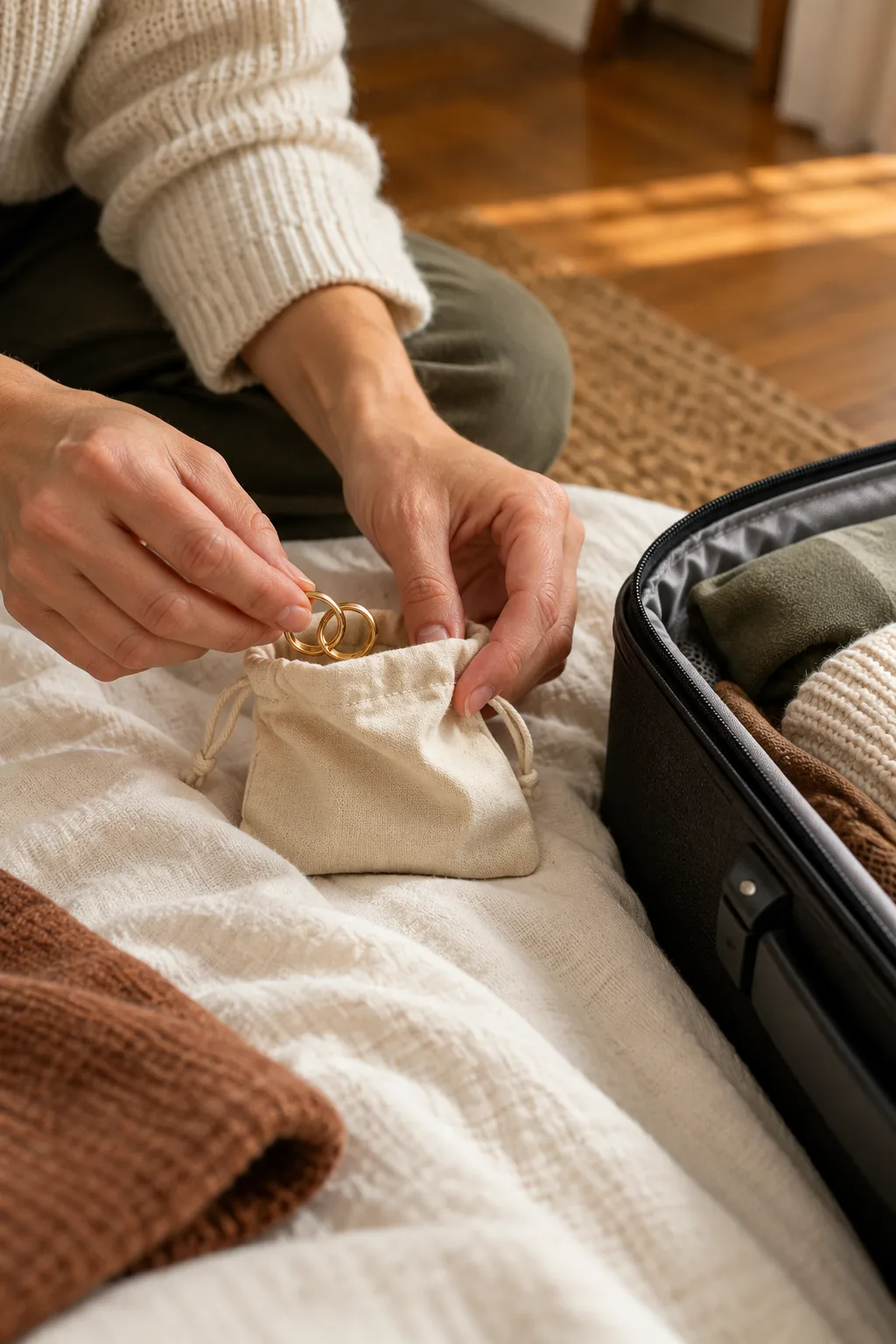
Consider how the objects will behave inside your bag. Loose metal pieces can touch delicate surfaces, a soft silk can catch on other hardware, and a card box can be crushed beneath a bottle. Separate the purchase from food, damp clothing, and heavy objects. None of that requires an elaborate case. A sensible arrangement that keeps the parts together is often enough for the walk back to your accommodation, provided it suits the actual materials you have chosen.
Leave the demonstration at the counter until you are ready
A new purchase can make you eager to perform immediately, but a moving train or crowded restaurant is a poor place to discover how its pieces work. Read the explanation in a setting where you can lay out the materials and retrieve anything you drop. Hotel rooms and temporary accommodation also vary in usable space, so choose a rehearsal area deliberately. A small clear table can be more useful than unpacking everything across a bed where tiny objects disappear into bedding.
If friends ask to see the trick, choose a moment when you understand its handling and can put the equipment away afterward. You can enjoy showing them the design or telling the story of the shopping visit without promising a finished performance. Letting the souvenir become a future project is a valid outcome. The purchase does not need to provide entertainment before you leave the city, particularly when your main interest is learning a skill over the coming weeks.
Make the trip home part of the decision
Before buying an unusual object, consider its materials and the way you will travel. Airline, security, and border rules are specific to the journey, so this page does not make an item-by-item carriage promise. Favor ordinary, clearly identifiable materials when simplicity matters. If something has a feature that creates a transport question, resolve that question through the relevant carrier or authority before including it in your travel plan. A different compact item may be a more comfortable choice for the trip.
Practical Notes: retain the receipt, put small pieces in one closed container, and keep the product name readable. Leave enough room to repack without pressing hard on the purchase. Ask Karpo to arrange the next part of your outing around your actual finish point rather than adding another shopping stop automatically. A successful souvenir fits both your interest and your journey: you enjoyed choosing it in NYC, carried it comfortably, and can begin learning when you get home.
Ask Karpo for more information.
Keep reading
- Chelsea Consignment Shop Crawl Planner for Your First Studio
 East Village Consignment Shop Crawl Planner: Leather Jackets
 Harlem Consignment Shop Crawl Planner for a Jazz Night Look