 Jackson Heights Thrift Store Crawl Planner: Kids' Coats
Hidden Gems & Odd Finds

NYC Magic Shop: Plan Three Effects for Your Party
Plan an NYC magic shop trip for a small party by choosing three effects around your room, audience, and rehearsal time, with a focused Karpo APP brief.
Plan an NYC magic shop visit for a party by choosing three effects that fit your room and audience. Start with something easy to follow, give the middle a different texture, and finish with a clear ending. The number is a planning suggestion, not a promise that three purchases make a complete show. Use the Karpo APP to organize a shopping outing after you have decided where people will sit, what you can rehearse, and how your props will travel.
Draw the room before writing the list
Sketch where you will stand and where your friends will watch. A trick that looks clear across a dining table may disappear from view when several guests are standing behind one another. Furniture also changes what the audience can see from the side. Decide whether you will invite a small group to sit down or perform while moving between conversations. That choice determines the useful size of objects, how you carry them, and whether a table is part of the plan.
Think about sound and interruptions as well. A quiet living-room moment can support a story, while a party with music and a busy kitchen may call for a more visual effect. You can propose a short pause in the evening rather than competing with every conversation. Ask the host which space is available and where coats, drinks, and serving dishes will go. These details are part of your own event, so you can settle them directly instead of guessing from a store demonstration.
Shape an opening, middle, and finish
For the opening, favor an effect whose visible result can be described in a sentence. Guests should understand what changed without needing a lecture on how magic works. Your first task is to establish attention and a friendly tone. Choose handling that already feels manageable in rehearsal. If the effect needs an object to be carefully arranged, include that preparation in your plan rather than assuming you will find a private corner once everyone has arrived.
The middle can introduce a different visual material or kind of interaction. If your opening uses cards, another card selection may feel repetitive unless the audience experience changes. An object changing places, a visual transformation, or a short piece with a volunteer can create contrast. Describe the audience action you want before looking for a prop. This keeps the routine from becoming three unrelated products connected only by the fact that they were bought on the same afternoon.
Give the finish an obvious stopping point. Put away the last object, thank the participant, and let the party resume. You do not need to perform everything you own or respond to every request for an immediate repeat. A short routine that ends comfortably leaves people with a complete moment. During shopping, ask how the proposed closer packs away and whether it needs extra materials. Those practical details matter when your performance area is also the host's living room.
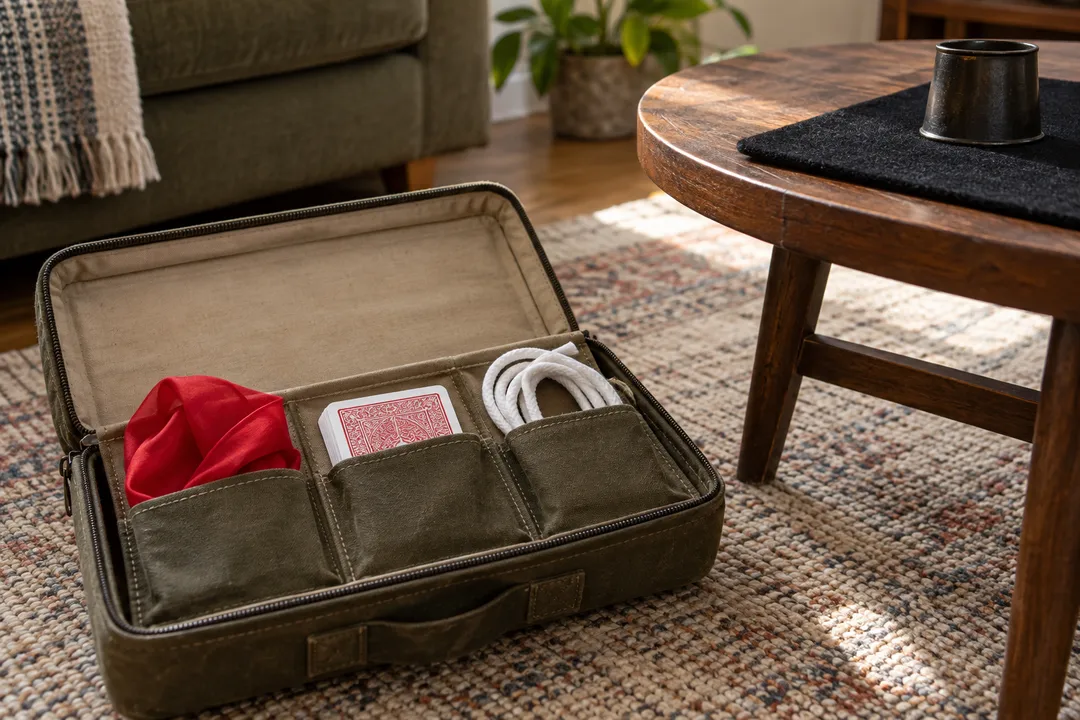
Ask Karpo for a purposeful shopping stop
A useful request is: “Plan an NYC magic shop outing for a short living-room routine at a friend's party. I need visible props for seated adults, a compact carrying bag, and beginner-friendly instruction. Start from the East Village and keep the trip simple.” Add the date of your outing and the time you can spend browsing. Karpo can help organize local discovery and a route around those preferences. You choose the equipment after understanding the seller's specific offering.
Read recommendations for relevance to the routine you described. A shop that mainly interests collectors may answer a different need from a place offering practical beginner materials. Keep the request focused on the shopping task and ask for fewer stops when necessary. Arriving with a diagram of your room and a short description of the audience will do more for the conversation than a long list of dramatic effects copied from performance videos. Your constraints are the useful part of the brief.
Buy for visibility and reset
Ask the demonstrator where spectators can stand and how far away the effect remains understandable. Some routines depend on the audience viewing the action from a particular direction. You need to know whether your planned seating respects that condition. If the answer does not fit the room, choose another effect. Avoid trying to solve a mismatch by asking guests to ignore where they naturally look. The equipment should serve the gathering you are actually hosting.
Reset deserves its own question. After one performance, what must happen before the effect can be used again? A routine that takes preparation can work well in a planned seated set, while something carried between groups may need a simpler return to its starting condition. Ask about consumable materials and replacements without assuming they are included. Keep each effect's pieces together in the bag so the second routine does not begin with a search through loose accessories.
Rehearse the transitions, including the quiet parts
At home, arrange the table and seats as closely as possible to the party layout. Run the sequence from the moment you approach the audience to the moment you leave. Practice taking out and putting away each item. Those transitions expose practical problems that a rehearsal of isolated tricks can miss. A pocket may be hard to reach, a box may open noisily, or a loose object may roll away. Fix the organization before adding another effect.
Use one trusted observer for a rehearsal and ask concrete questions afterward. Could they see the important action? Did they understand when the effect had ended? Was there a point when they did not know what you were asking them to do? Their answers can improve your presentation without turning the evening into a discussion of secrets. Keep the routine friendly to volunteers and make participation optional. The aim is a pleasant shared moment, not a contest with your guests.
Keep the outing and the performance manageable
Ask Karpo to fit the shopping stop around another part of your day, such as meeting the host or traveling home to rehearse. Leave the more delicate practice for a suitable private space. Browsing until late in the day and then immediately attempting unfamiliar material gives you little chance to notice missing pieces or awkward transitions. Choose a learning deadline that leaves room to simplify. An effect you already handle comfortably is a sensible substitute when a new purchase needs more work.
Practical Notes: pack the performance bag in sequence, keep instructions separate from the table, and tell the host what surface you need. Avoid props that introduce messy cleanup into a meal unless the host has agreed to that plan. Bring only what the short routine uses and a simple fallback you already understand. The shopping trip has succeeded when every item has a role, the audience can follow the action, and you can return to being a guest without dismantling an elaborate setup.
Ask Karpo for more information.
Keep reading
- Jackson Heights Thrift Store Crawl Planner: Kids' Coats
 Crown Heights Thrift Store Crawl Planner: Holiday Table Haul
 Tribeca Plant Shop Crawl Planner for Office Desks and Gifts