 Chelsea Consignment Shop Crawl Planner for Your First Studio
Hidden Gems & Odd Finds
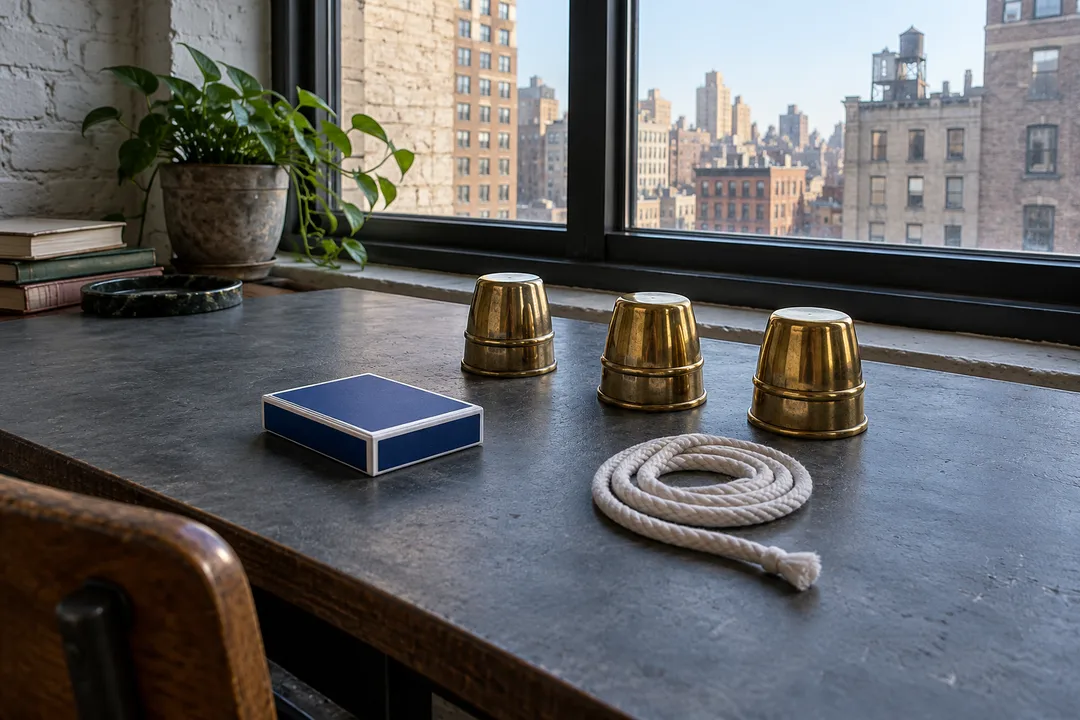
NYC Magic Shop: Choose Your First Trick to Learn
Find a magic shop in NYC for your first trick by choosing your audience, practice time, and prop size, then plan a focused visit with the Karpo APP.
A useful NYC magic shop search starts with one effect you would enjoy practicing, rather than a suitcase of props. Choose who will watch, how much rehearsal you want, and whether you prefer cards or visible objects. In the Karpo APP, give those preferences alongside your starting neighborhood and available time. Use the resulting local suggestions to build a focused shopping trip, with a short list of questions for the seller.
Describe the moment you want to create
Picture the audience before choosing equipment. Making a coin disappear across a kitchen table asks for a different purchase from entertaining a room of friends who are standing several steps away. Write a plain sentence describing the result: a selected card returns, two objects change places, or a small object vanishes. You do not need the secret to explain the effect. This sentence gives your search a practical destination and prevents a striking demonstration from deciding everything for you.
Add the conditions under which you will actually perform. Will you have a table, jacket pockets, a quiet room, and time to set up? Perhaps you want something you can carry to dinner without a bag. Alternatively, you might enjoy rehearsing a short routine at home and inviting friends to sit down. Treat these as preferences, rather than promises that every local retailer can meet. They are more useful than describing yourself only as a beginner.
Give Karpo a brief that can narrow the outing
Try this request in the Karpo APP: “Help me find a magic shop in NYC for my first close-up trick. I am starting in Chelsea, have one afternoon, and want a small prop that works at a dining table. Suggest a short shopping plan.” Add whether you prefer a demonstration, a book, or equipment to practice with. The purpose is to organize local discovery around your situation. Your message does not place an order or reserve a demonstration.
Read the suggested destinations against that brief. A general toy or costume store and a specialist magic retailer can answer different needs. For a first purchase, look for descriptions that explain the type of magic sold and how a newcomer can learn it. Keep a distinction between a useful candidate and a decided purchase. You still need to understand the item in front of you, including its instructions and the amount of handling it requires.
Compare three kinds of first purchase
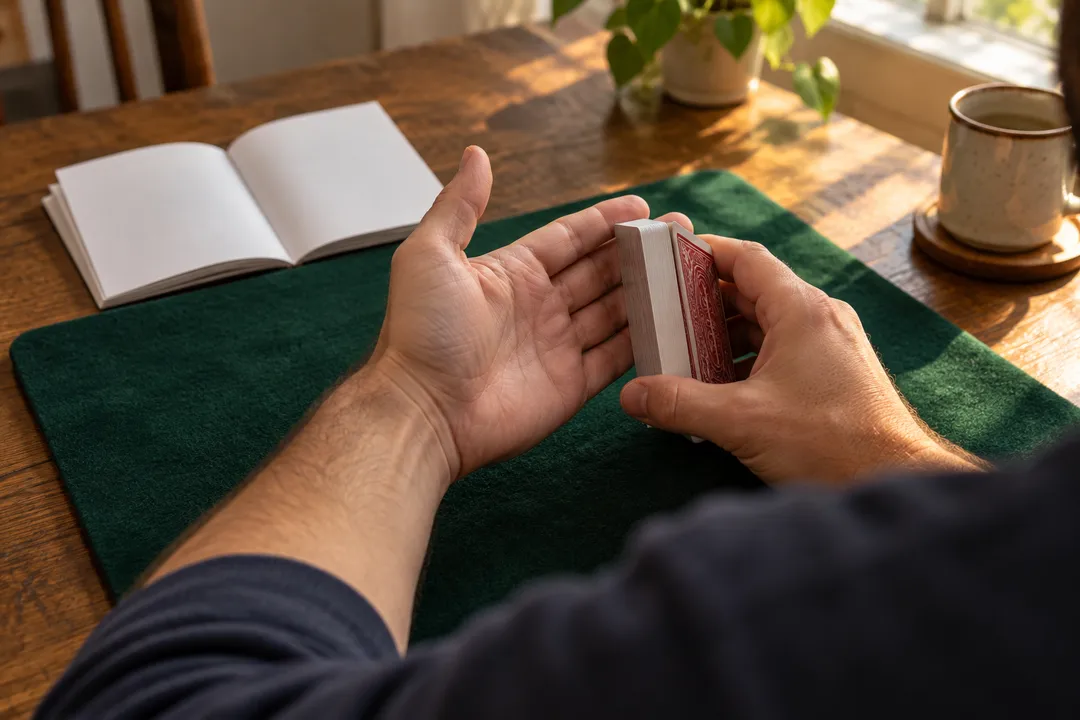
An ordinary deck appeals to someone who enjoys learning a skill that can grow over time. You can practice handling and simple procedures without carrying a large prop. The learning material matters as much as the deck: a beautiful box does not teach a routine. Ask which beginner lesson accompanies the purchase and whether its explanation matches your preferred way of learning. Someone who learns by watching may find a silent booklet frustrating, even if the cards themselves feel comfortable.
A self-contained prop suits a different preference. The mechanism may help produce the effect, but the performer still has to introduce it, manage attention, and finish naturally. Request a description of the preparation and reset, meaning the work needed before repeating the trick. Avoid choosing only by how surprising the demonstration looks. A prop that needs a private reset between attempts may be awkward if your imagined audience is a group of friends passing it around a table.
A beginner book or course is attractive when exploration matters more than taking home an immediate showpiece. Look at the projects and required materials before deciding. Several routines using ordinary objects can be more useful than a large catalog of apparatus you do not own. Choose a manageable starting lesson and a clear next exercise. Buying instruction is a commitment to practice, so make room for that in your evening rather than treating the purchase as the finished achievement.
Ask to see the practical parts
During a demonstration, watch the performer's position as well as the visible surprise. Notice where the audience sits, what remains on the table, and whether the performer retrieves anything from a pocket. Ask whether the effect can be repeated immediately and whether spectators can handle the objects afterward. These questions describe your intended use without demanding that the seller reveal a secret for free. They also help separate a strong purchase from an impressive performance by an experienced demonstrator.
Put the object in your own hands when the seller permits it. Comfort, visibility, and storage are buying criteria you can assess directly. A small packet may fit your commute bag but be hard to display to a standing audience. A larger item may look clear across a room but leave you carrying a separate case. Favor the version you can rehearse comfortably. Skip a complicated bundle if you cannot explain when you would use most of its contents.
Keep the shopping route compact
Tell Karpo where the outing must end as well as where it begins. A shopping plan that finishes near a friend's apartment or your evening meal can be more pleasant than one that sends you back across Manhattan. Ask for one primary shopping stop and a nearby place to pause afterward. This is an itinerary preference, not an assurance of walking time, transport frequency, or a particular shop's opening schedule. Use concrete details returned for the destination when making the final journey.
Leave room in the plan for a decision at the counter. If the suitable item is unavailable or the instruction feels too advanced, there is value in leaving with a clearer brief. A second stop makes sense when it answers a different question, such as comparing a book with a physical prop. It adds less when it merely repeats the same browsing. You can ask Karpo to revise the outing around the option you actually choose and the time remaining.
Turn the purchase into a first rehearsal
Back home, open the instructions before attempting to entertain someone. Lay out only the materials for the first lesson and practice its starting and finishing positions. Rehearse the words you will say as well as the handling. A short introduction gives the audience a reason to watch, while a clean ending signals that the effect is complete. Choose one friendly observer after you can follow the routine without repeatedly stopping to consult the explanation.
Practical Notes: bring a small bag, describe any material or size preferences, and keep the packaging and purchase instructions together. Record the precise item name so future questions refer to the same version. Your next Karpo request can be about a nearby outing that fits around practice, rather than another shopping list. The successful first trip ends with a suitable learning task and enough confidence to begin, even when the chosen equipment is modest.
Ask Karpo for more information.
Keep reading
- Chelsea Consignment Shop Crawl Planner for Your First Studio
 East Village Consignment Shop Crawl Planner: Leather Jackets
 Harlem Consignment Shop Crawl Planner for a Jazz Night Look