The 4th Avenue Spine
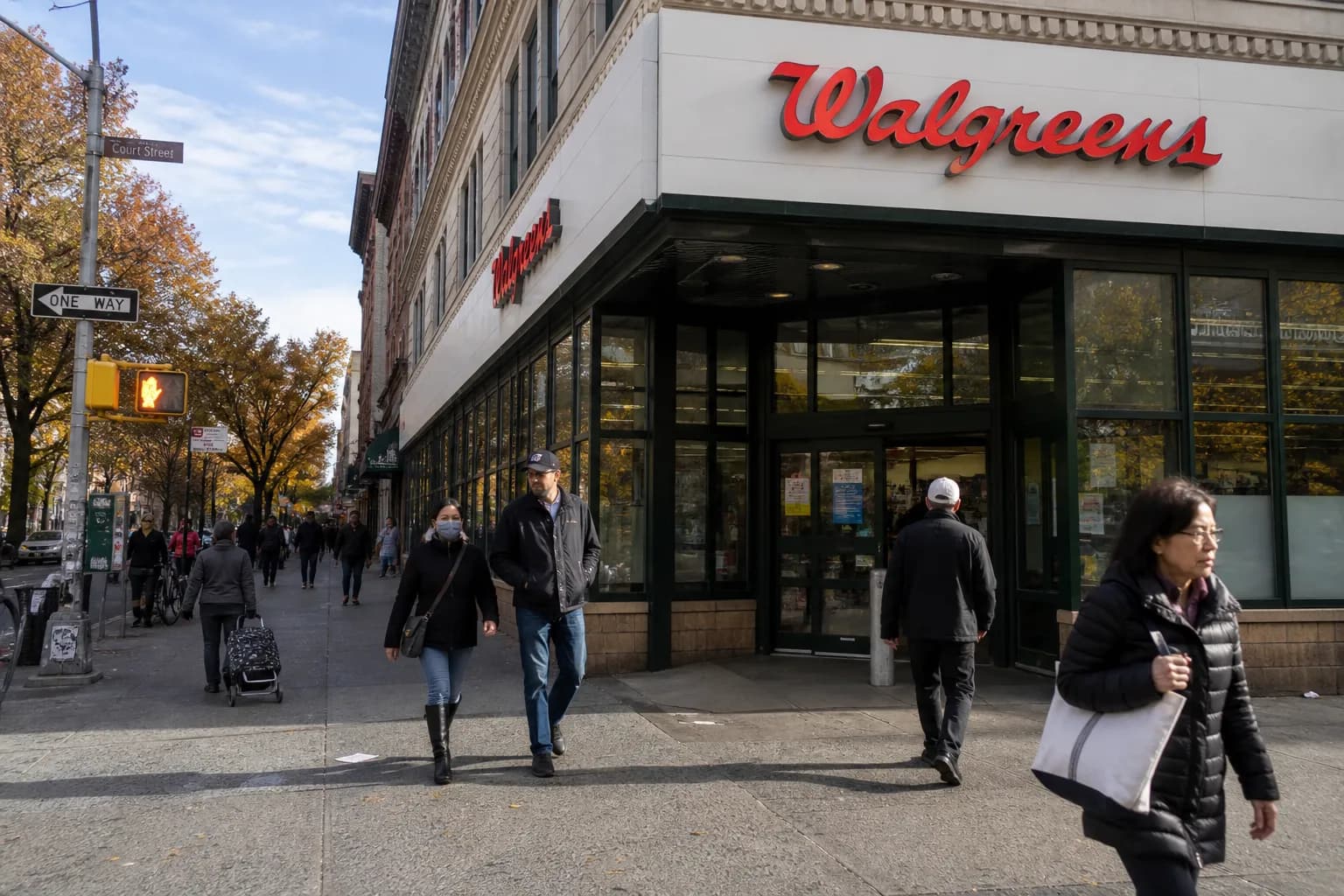
Fourth Avenue cuts through Sunset Park like a commercial artery, wide and unromantic, flanked by auto-body shops, discount retailers, and the kind of taquerias that open at seven in the morning and never seem to close. The walk starts at 59th Street, where the R train deposits you onto a sidewalk crowded with fruit carts and the smell of grilled corn. This is not Brooklyn's postcard corridor, but it holds a different kind of integrity.
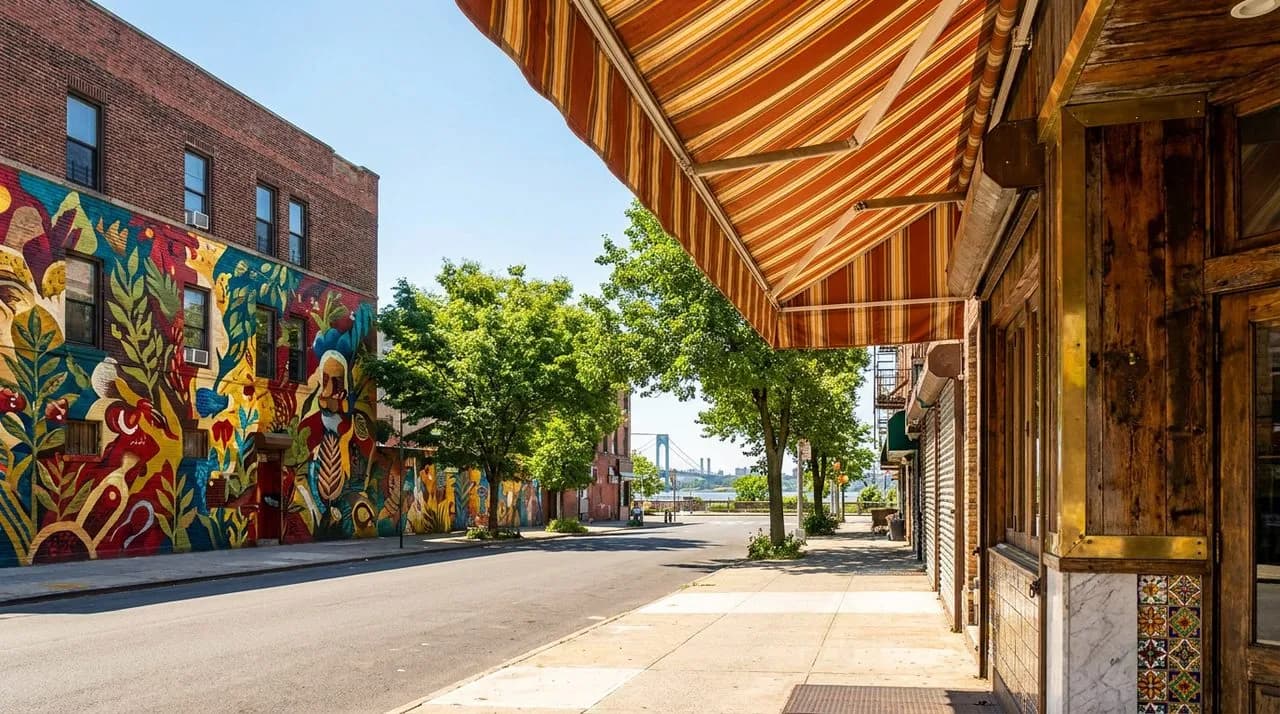
By late May 2026, the avenue hums with the rhythm of a neighborhood that has resisted the wholesale makeover happening elsewhere in the borough. Storefront signs in Spanish outnumber English three to one. The sidewalks are wide enough for double-parked delivery vans and still leave room for pedestrians. You walk south, and the city unfolds in layers—residential side streets climbing the hill to the east, industrial lots stretching toward the water to the west.
Three Taquerias That Hold the Line
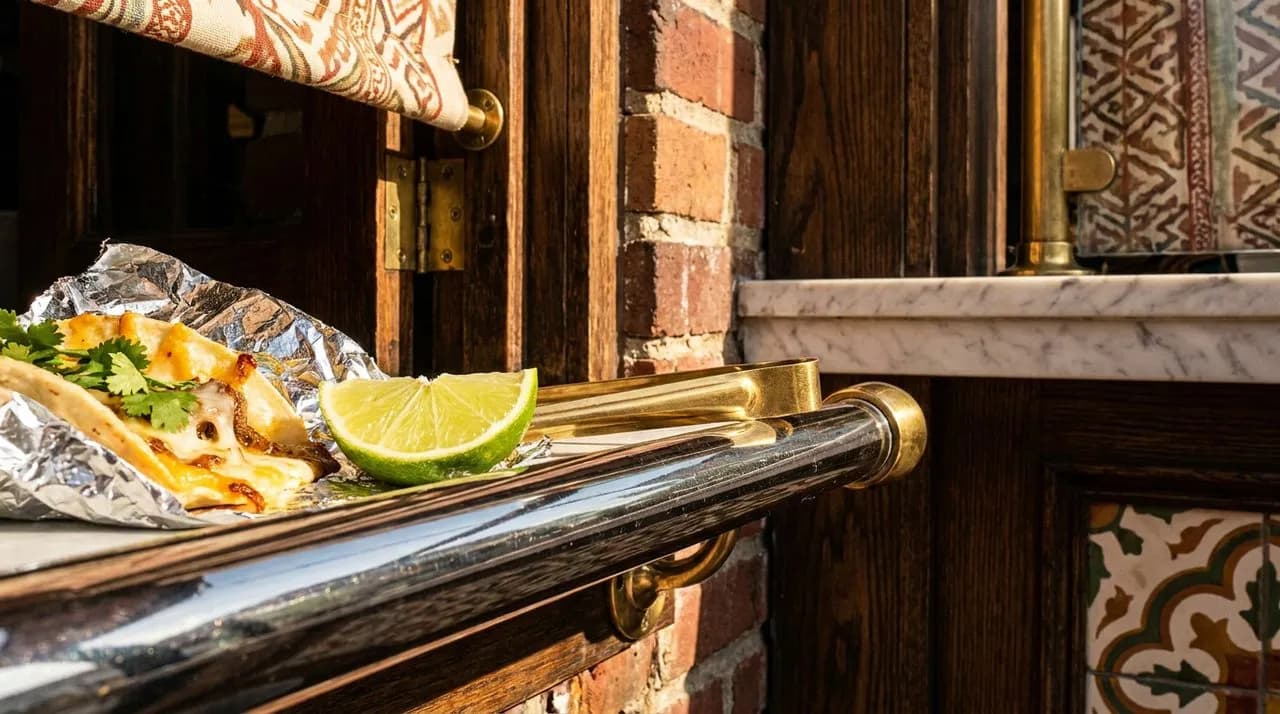
Between 59th and 48th Streets, three taqueria storefronts anchor the walk. The first sits at 56th, a narrow space with a counter and four stools, where the al pastor is sliced from a vertical spit that rotates all day. The second, near 52nd, has a larger dining room and a menu that runs two laminated pages—tortas, huaraches, pozole on weekends. The third, at 48th, is the one the construction crews favor, cash only, with plastic tables on the sidewalk when the weather cooperates.
These are not destination restaurants in the contemporary sense. No reservations, no Instagram mural, no craft-cocktail program. They serve the neighborhood first and the curious walker second, which is precisely why they matter. On a Tuesday morning in late spring, you can stop at any of them, order at the counter, and eat standing up or take your food to go. The tacos are two dollars, sometimes two-fifty. The salsa verde has bite.
Dollar-Store Detour
At 45th Street, the walk turns briefly east for a block-long detour through what locals call the dollar-store corridor. Four discount retailers occupy consecutive storefronts, each specializing in a slightly different category of household goods—cleaning supplies, kitchen gadgets, party decorations, school supplies. The sidewalk narrows here, crowded with bins of merchandise that spill out onto the pavement. You navigate around stacks of mops, towers of plastic storage bins, racks of flip-flops in every color.
This is the retail landscape that serves working families, not tourists. The prices are low, the inventory is dense, and the turnover is constant. By summer 2026, these stores remain stubbornly analog—no apps, no loyalty programs, just cash registers and hand-written sale signs taped to the windows. The detour adds five minutes to the walk and offers a glimpse of the neighborhood's economic reality, the unglamorous infrastructure that makes city life possible for people who work multiple jobs and count every dollar.
The Descent Toward the Water
Back on 4th Avenue, the walk continues south past 40th Street, where the terrain begins a gradual descent toward the harbor. The commercial density thins. Warehouses and light-industrial buildings replace the retail storefronts. The traffic noise softens. You start to smell salt air, faint at first, then unmistakable as you cross 36th Street and the Gowanus Expressway looms overhead.
This transitional stretch feels like a border zone, neither fully neighborhood nor fully waterfront. Empty lots appear between buildings, fenced with chain-link and sprouting weeds. A few auto-repair shops persist, their bay doors open, mechanics bent over engines. The sidewalk cracks and buckles where tree roots have pushed through the concrete. By the time you reach 30th Street, the city has changed character entirely—less dense, more open, the sky suddenly wider.
Industry City Arrival
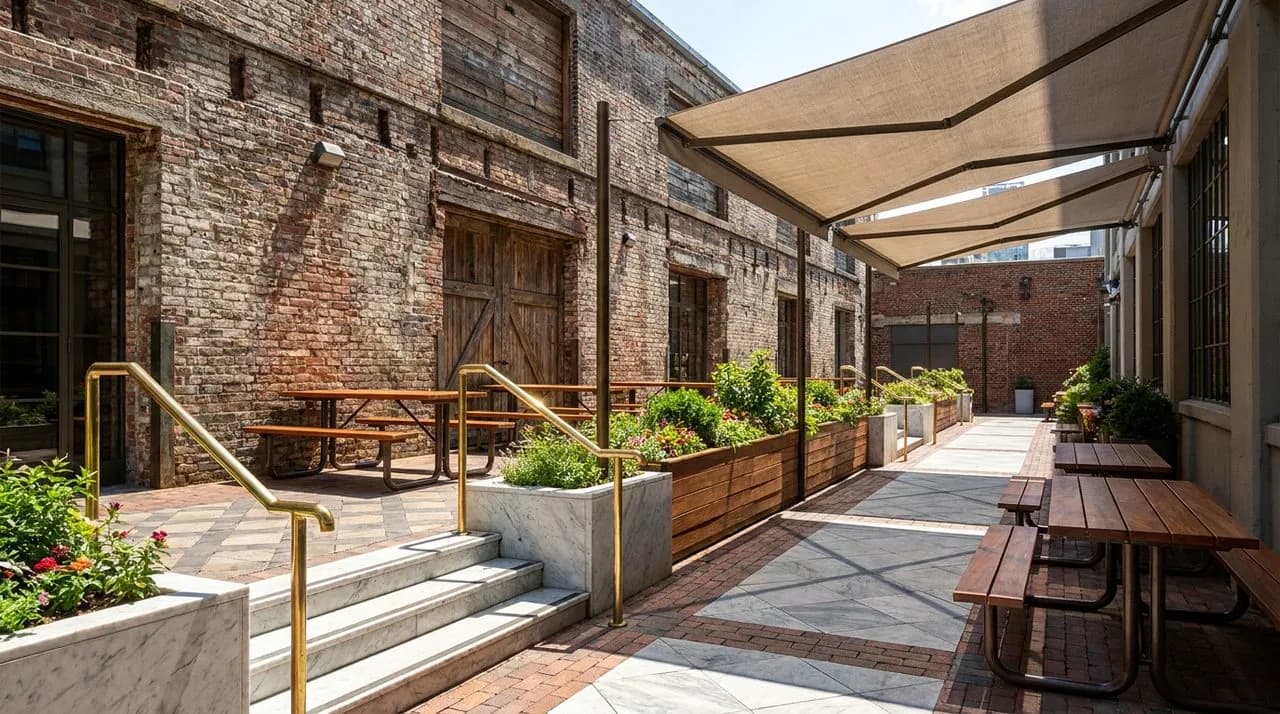
Industry City announces itself in brick and glass, a sprawling complex of former factory buildings now repurposed into a mixed-use campus of studios, workshops, food vendors, and retail spaces. The main entrance at 36th Street and 2nd Avenue opens onto courtyards where food trucks park and families gather on benches. By late spring 2026, the complex has matured into a genuine neighborhood hub, less novelty and more fixture, with a tenant roster that includes ceramicists, furniture makers, tech startups, and a dozen food stalls representing cuisines from five continents.
The contrast with 4th Avenue is deliberate. Where the commercial spine feels organic and unplanned, Industry City is curated, designed, activated. The brick facades have been cleaned and repointed. The courtyards feature landscaping and public art. The ground-floor retail is carefully programmed to balance local service and destination appeal. It is Brooklyn's version of adaptive reuse, and it works precisely because it sits adjacent to—rather than replacing—the working neighborhood that precedes it.
Practical Notes for the Walk
The full route from 59th Street to Industry City covers roughly two miles and takes sixty-five minutes at a moderate pace, longer if you stop to eat or explore. The walk is flat until 40th Street, then descends gently toward the water. Sidewalks are wide and well-maintained on 4th Avenue, more variable on the side streets. Public restrooms are available at Industry City; options are limited along the commercial corridor.
Timing matters. Weekday mornings offer the most authentic neighborhood rhythm—shops opening, deliveries arriving, the taquerias at their busiest. Weekend afternoons bring more foot traffic to Industry City but less activity along 4th Avenue. Late spring and early summer provide the best weather, with temperatures in the seventies and longer daylight. Carry cash for the taquerias and dollar stores; many do not accept cards.
- Start at 59th Street R train station; exit onto 4th Avenue
- Stop at one of the three taquerias between 56th and 48th Streets
- Detour east at 45th Street for the dollar-store block
- Continue south on 4th Avenue to 36th Street
- Walk west on 36th Street under the expressway to 2nd Avenue
- Enter Industry City at the main courtyard entrance
- Explore the ground-floor food vendors and shops
- Climb to the rooftop via the northwest stairwell (Building 5)
- Return via D/N/R trains at 36th Street station
The Rooftop the Regulars Climb
The open secret of Industry City is the rooftop access in Building 5, where a utilitarian stairwell leads six flights up to a gravel-topped expanse with unobstructed views of the harbor, the Statue of Liberty, and the Verrazano Bridge. This is not an official observation deck—no signage, no admission fee, no guardrails beyond the building's parapet. It is simply a functional rooftop that tenants and informed visitors have claimed as informal public space.
On a clear afternoon in May, the rooftop offers the walk's payoff: a panoramic view that justifies the sixty-five minutes it took to get here. The wind off the water is stronger up top, the traffic noise reduced to a distant hum. You can see container ships moving through the Narrows, ferries crossing to Staten Island, the Manhattan skyline hazy in the distance. The regulars know to bring a jacket even in summer. They sit on the parapet edge, legs dangling, and watch the light change as the afternoon stretches toward evening. This is the long way home, and the view makes it worth every step.
Sources consulted: Metropolitan Transportation Authority - Subway Information · NYC Parks - Sunset Park · Industry City - Campus Information · NYC Tourism - Brooklyn Neighborhoods · Eater NY - Brooklyn Dining Coverage
All trademarks are the property of their respective owners.