The Gowanus Canal has spent decades as Brooklyn's favorite punch line—a noxious, oil-slicked arm of water threading through brownstone neighborhoods, notorious for cholera scares and the occasional floating body. But by late spring 2026, something unexpected has happened: you can walk it. Not metaphorically, not holding your nose, but actually walk it, end to end, on a newly stitched-together network of public pathways that let you trace the waterway from its mouth at Carroll Gardens up through the industrial heart of Gowanus and into the leafier edges of Park Slope. The canal is still a Superfund site—barges churn slowly through the greenish water, dredging contaminated sediment—but the banks have been transformed into something between a linear park and an open-air history lesson.
Starting at the mouth: Carroll Gardens to Union Street
Begin where the canal meets the bay, just east of the Columbia Street waterfront. The pathway starts near the mouth of the canal at the intersection of Huntington and Van Brunt, where the water widens and the air smells faintly of salt and rust. Here the newly built esplanade is broad and paved, lined with young sycamores still held upright by guy wires. The views are surprisingly open: across the canal, old brick warehouses shoulder up against glass-and-steel condos, the kind of uneasy architectural détente that defines this stretch of Brooklyn.
Follow the path north. Benches appear every hundred feet or so, most of them occupied by retirees with takeout coffee and the occasional runner pausing to stretch. Interpretive signs explain the canal's history—dug in the 1860s to serve coal yards and tanneries, choked with industrial waste by the 1950s, added to the Superfund National Priorities List in 2010. The text is earnest and well-meaning, the kind of civic pedagogy that wants you to appreciate the complexity of remediation. You will. The cleanup barges are still visible in the middle distance, their mechanical arms scooping black muck into hoppers.
The industrial stretch: Union to Third Street
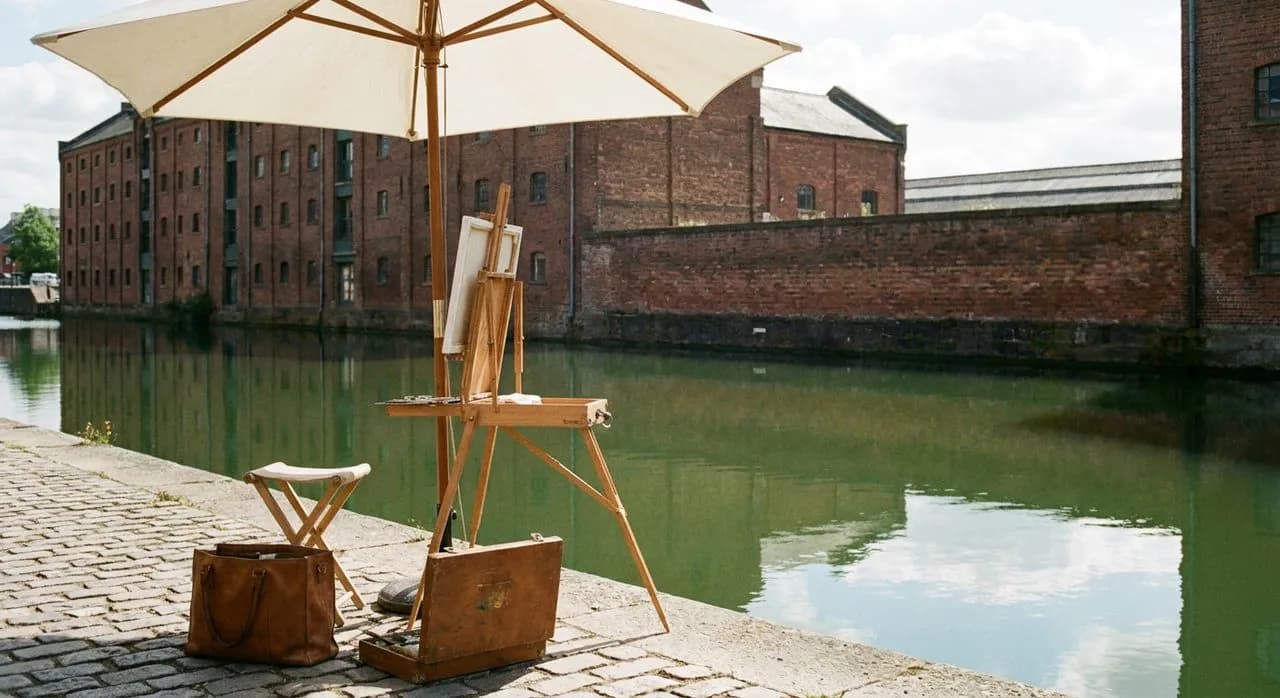
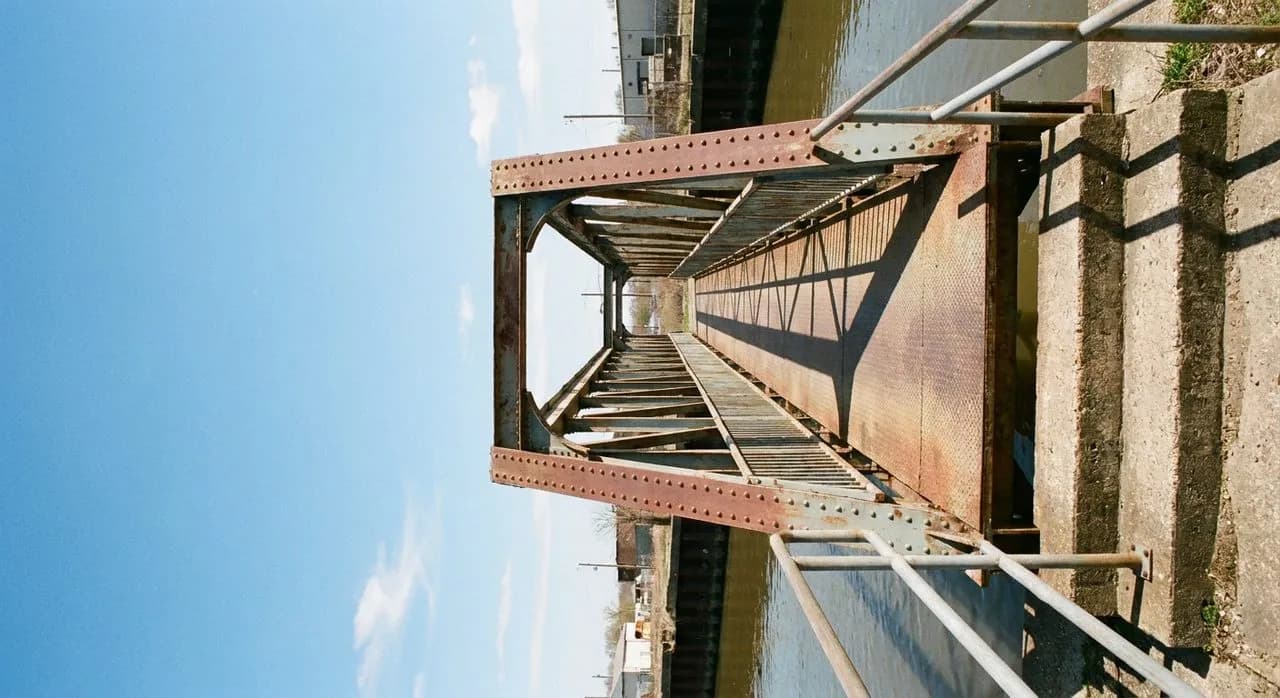
North of Union Street the pathway narrows and the aesthetic shifts. This is the oldest part of the canal district, where nineteenth-century brick warehouses loom over the water, their iron shutters painted over in layers of rust-red and faded teal. Some have been converted into studios and offices; others remain empty, their ground floors still bearing the ghosts of hand-painted signs advertising coal and feed. The new plantings here are native grasses and beach roses, chosen for their tolerance of contaminated soil. They look scraggly in May, but they'll fill in.
The Third Street bridge offers the first proper mid-canal view. Climb the pedestrian ramp on the east side and pause halfway across. From here you can see the full length of the waterway stretching north and south, a narrow ribbon of questionable water framed by cranes and construction scaffolding. The light in late afternoon turns everything softer—the brick warehouses glow, the water reflects gold and purple, and for a moment you forget about the PCBs. It's the same alchemy that makes the High Line feel romantic at sunset, though the Gowanus has a grittier, more ambivalent charm.
Gowanus proper: the Whole Foods interlude
The pathway deposits you briefly at street level near Third Street, then picks up again alongside the Whole Foods Market at 214 3rd Street. The grocery store sits in a converted warehouse, its industrial bones softened by Edison bulbs and reclaimed wood. You can detour inside for a bathroom break and an overpriced cold brew, or you can press on. The canal-side path here is the most polished section of the walk—smooth concrete, steel railings, benches that look like they belong in a Scandinavian furniture catalog.
Just beyond, the path threads between new residential buildings, their ground floors occupied by the usual Brooklyn mix of pilates studios and dog-grooming salons. The contrast is jarring in a way that feels very 2026: luxury condos with canal-view balconies overlooking an active environmental cleanup. But the residents seem unbothered. Joggers pass. A woman walks two small dogs. Life goes on, even along a Superfund site.
The northern reach: Fourth Street to Ninth
North of Fourth Street the canal bends slightly west and the pathway becomes more fragmented, alternating between cobblestone access roads and newly poured asphalt. This stretch feels quieter, less finished. You pass beneath the Carroll Street bridge, a wooden drawbridge dating to 1889, its mechanism still operational though rarely used. The wood creaks underfoot when trucks cross. It's one of the few remaining retractile bridges in the country, and the city has landmarked it, which means it will creak for decades to come.
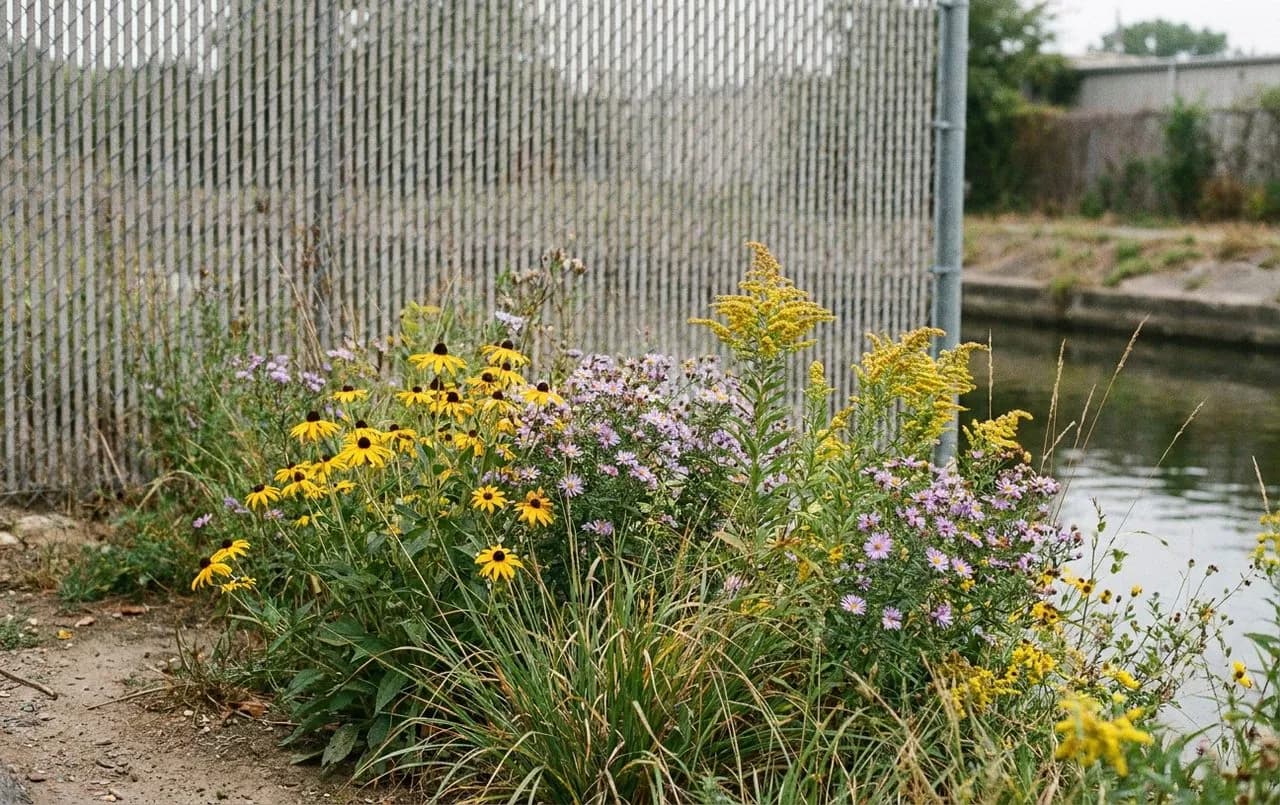
The final stretch up to Ninth Street is the least scenic but the most honest. Here the canal is still working infrastructure—you'll see barges tied up along the banks, chain-link fences protecting construction sites, and the occasional whiff of something unpleasant rising off the water. The native plantings thin out. The benches disappear. This is the Gowanus that predates the cleanup, the industrial artery that never quite stopped being industrial. It's also a reminder that transformation takes time, and that the most interesting walks are the ones that don't pretend otherwise.
Finishing in Park Slope
The pathway ends at the Ninth Street bridge. Cross to the west side and you're in Park Slope proper, where the streetscape shifts abruptly to brownstones and leafy sidewalks. It's a short walk to Seventh Avenue, the neighborhood's main commercial strip, where you'll find a dense cluster of restaurants spanning Thai, Italian, and new-American cooking. The transition from industrial canal to genteel Brooklyn feels almost too clean, like stepping from one movie set into another.
If you time the walk for late afternoon, you'll finish with an hour or two of daylight left—enough to browse a bookstore or settle into a wine bar. The contrast is the point. You've just walked two miles along a waterway that was functionally dead thirty years ago, past cleanup equipment and interpretive signs and cautious optimism. Now you're in a neighborhood that has always looked the other way. The Gowanus is still out there, doing the slow work of becoming something else. You can order dinner and think about it, or not.
Practical notes
The walk begins near the canal's mouth by Gowanus Bay, around the Columbia Street waterfront and ends at the Ninth Street bridge; total distance is roughly two miles. Nearest subway: F/G to Carroll Street or Smith–Ninth Streets, depending on your starting point. Street parking is available but competitive on weekends. The pathways are open dawn to dusk; some sections are well-lit, others less so. Surfaces are mostly paved and accessible, though cobblestone stretches near Fourth Street may be bumpy for wheelchairs or strollers. Bring water—there are few public fountains—and check weather; the route offers limited shade. Verify any venue details, including the Whole Foods location, before planning a stop.
Tags: #TheLongWayHome #GowanusCanal #Brooklyn #NYCWalks #CarrollGardens #ParkSlope #SuperfundSite #IndustrialWaterfront #UrbanExploration #BrooklynNeighborhoods #Spring2026 #WalkableCity #PublicSpace #CanalWalk #NYCParks
Sources consulted: Gowanus Canal - Wikipedia · EPA Superfund Site · NYC Parks - Gowanus Canal · Time Out New York - Gowanus · Park Slope - Wikipedia
All trademarks are the property of their respective owners.