 Haaland Has Seven Goals and Norway Runs Entirely Through Him
⚽️2026 FIFA WORLD CUP
Bronx to Harlem: A Senegal Football Fan's 2026 World Cup Walk Through NYC's African Diaspora
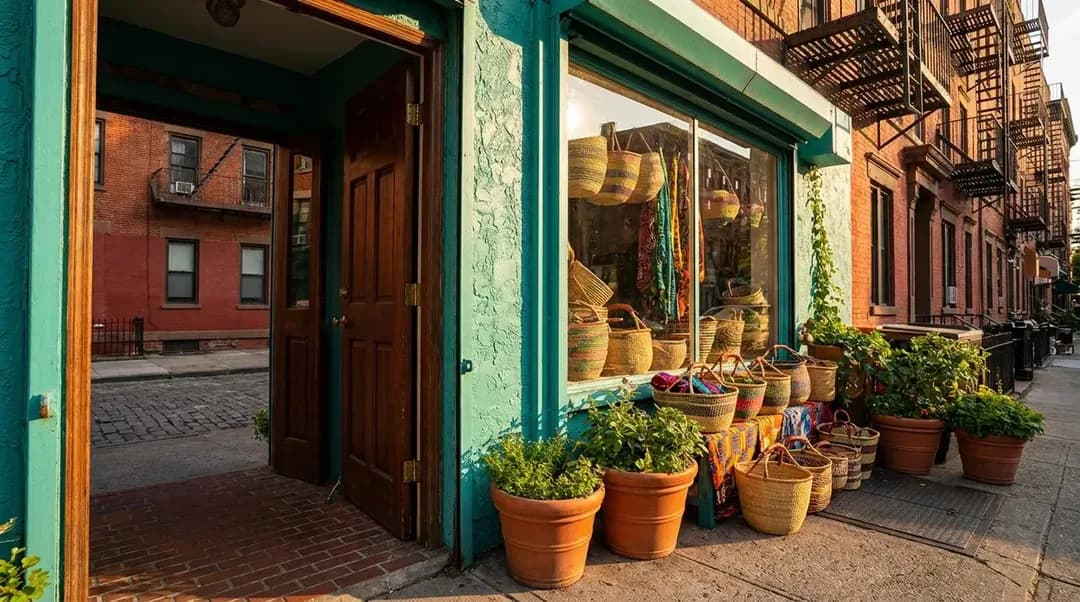
Late-afternoon stroll from Le Petit Sénégal to Harlem's Ghanaian markets—a post-match cooldown route threading the city's West African heart.
Why Walk When the Trains Are Running?
The 2026 FIFA World Cup lands in North America this June, and New York City becomes a de facto capital for the African diaspora's football faithful. MetLife Stadium hosts group-stage matches, and when Senegal or Ghana take the pitch, the Bronx and Harlem will empty into New Jersey. But the real theatre begins after the final whistle, when thousands spill back into the city's arteries, adrenaline still crackling, voices hoarse from ninety minutes of song.
Instead of cramming onto the 4 train at 161st Street, consider the long way home: a five-mile amble from the Bronx's Le Petit Sénégal down the Grand Concourse, across the Harlem River, and into the Ghanaian-Nigerian corridor of West 116th Street. It's a route that doubles as a victory lap, a commiseration march, or simply a chance to let the match settle in your bones while the city's West African heartbeat drums beneath your feet.
Le Petit Sénégal: Your Starting Line
Begin at Crotona Park, where Park Avenue between East 180th and East 170th Streets hums with Wolof chatter and the scent of thieboudienne simmering in narrow storefronts. This stretch earned its nickname—Le Petit Sénégal—decades ago, when Senegalese immigrants carved out a commercial enclave that now serves as the Bronx's unofficial headquarters for Senegal football devotion. On match days, especially when the Lions of Teranga advance deep into a tournament like the Africa Cup of Nations, every café becomes a viewing party, every sidewalk a parade ground.
Start your walk here in the late afternoon, ideally around 5 or 6 p.m., after the post-match euphoria has crested and the sun slants low over the Bronx rooftops. Grab a bissap—hibiscus juice, tart and cold—from one of the corner grocers, and point yourself south. The Grand Concourse awaits, that great artery of the Bronx, wide enough to swallow a parade and patient enough to carry you home at your own pace.
The Grand Concourse: A Boulevard Built for Processions
The Grand Concourse was designed in 1909 as the Bronx's answer to the Champs-Élysées, a broad ceremonial boulevard lined with Art Deco apartment towers and plane trees. Today it's less about ceremony and more about survival, but on a World Cup evening, when the sidewalks fill with fans in national colors and car horns blare in syncopated rhythm, the Concourse remembers its original purpose. You'll walk south from 180th Street, past Joyce Kilmer Park and the Bronx Museum of the Arts, the city unfolding in layers of brick and graffiti and corner bodegas.
This is where the walk earns its keep. The Grand Concourse is long enough to let the match replay in your head—every near-miss, every VAR controversy, every moment of brilliance or heartbreak. By the time you reach 161st Street, where Yankee Stadium looms to the west, your pulse has returned to baseline. The city's rhythm takes over: the clatter of the 4 train overhead, the shout of a street vendor, the smell of grilled meat drifting from a cart. Keep walking.
Crossing the Harlem River: The Psychological Border
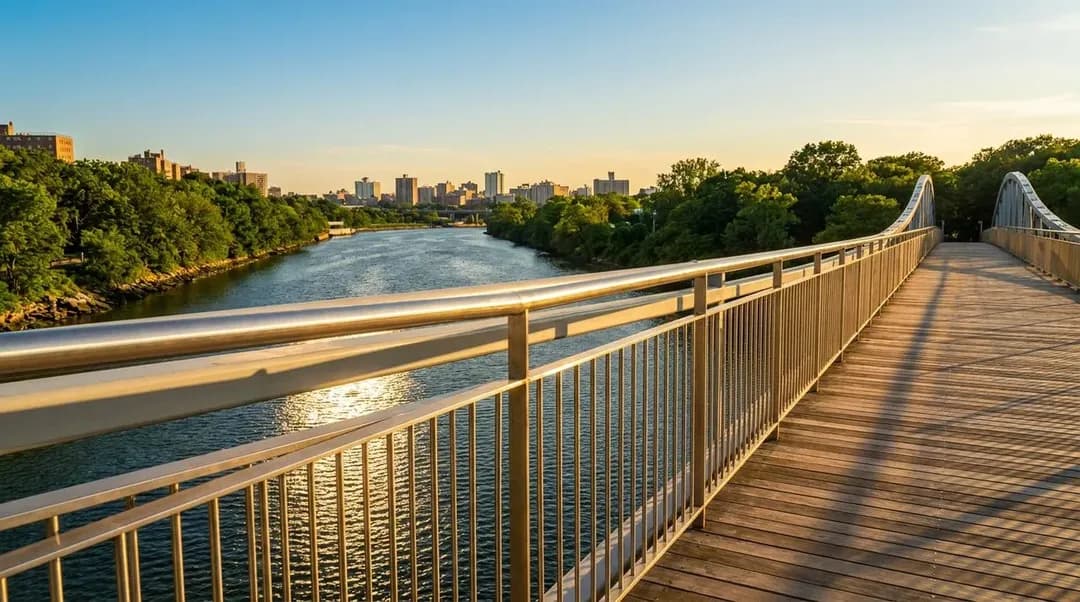
At 149th Street, the Grand Concourse bends slightly west and delivers you to the Macombs Dam Bridge, a humble span that carries pedestrians and traffic over the Harlem River into Manhattan. This is the walk's hinge point, the moment when the Bronx releases you and Harlem pulls you in. The river below is narrow and brown, but it might as well be the Atlantic—cross it and the city's texture shifts. The air tastes different. The skyline tightens.
Harlem announces itself immediately. You're on West 155th Street now, and the walk tilts downhill toward the valley of 125th Street. The buildings here are older, their cornices more ornate, their stoops more populated. If you've timed it right—late afternoon bleeding into early evening—the light turns golden and the sidewalks fill with the after-work crowd. You're no longer alone. You're part of the city's great daily migration, and the World Cup is just one thread in the larger fabric.
Harlem's African Corridor: Ghana Football's Living Room
By the time you reach West 116th Street between Frederick Douglass Boulevard and Malcolm X Boulevard, you've entered Harlem's African market district. This is Ghana football territory, where the Black Stars' jerseys hang in shop windows and the eateries serve fufu, banku, and jollof rice prepared with the kind of regional pride that can spark friendly arguments. The storefronts are narrow and deep, their interiors crowded with imported goods—fabrics, spices, bootleg DVDs of Premier League matches.
Stop for dinner. The Ghanaian-Nigerian restaurants here don't bother with menus printed in English; they assume you know what you want, or that you'll trust them to feed you properly. Order the goat light soup or the egusi stew, and eat slowly. The walk has earned you this meal. Around you, the post-match analysis continues in Twi and Yoruba, voices rising and falling in the universal cadence of football debate. The 2026 World Cup is a global event, but in this dining room, it feels like a family reunion.
Practical Notes for the Walk
This route is walkable year-round, but the 2026 World Cup runs from June 11 to July 19, which means you'll be navigating New York summer heat. Start hydrated, wear comfortable shoes, and don't be precious about your pace. The point is not to race home but to let the city absorb the match's energy and return it to you in small, unexpected doses—a vendor selling Senegal flags, a car trailing Ghanaian highlife music, a group of teenagers recreating a goal in a pocket park.
- Distance: Approximately 5 miles from Crotona Park to West 116th Street in Harlem.
- Duration: 90 minutes to 2 hours at a leisurely pace, not including stops for food or drink.
- Best time: Late afternoon, starting around 5 or 6 p.m., to catch the golden hour and arrive in Harlem for dinner.
- Safety: Stick to well-lit, populated streets. The Grand Concourse and Harlem's main corridors are heavily trafficked and safe for pedestrians.
- Transit backup: The 4 train runs parallel to much of this route if you need to bail early.
Right on Time for 2026
The 2026 FIFA World Cup is the first to be hosted across three nations, and New York City's role as a cultural crossroads has never been more relevant. When African teams take the field—Senegal, Ghana, and others—their diaspora communities don't just watch; they inhabit the match, transform neighborhoods into temporary stadiums, and turn city streets into processional routes. This walk from the Bronx to Harlem is one small way to honor that energy, to refuse the subway's convenience in favor of the city's slower, richer textures.
As of May 19, 2026, the tournament is just weeks away, and the city is already preparing. Flags appear in windows, jerseys emerge from closets, and the old arguments—Senegal's midfield versus Ghana's attack, Mané's legacy versus Partey's vision—resume with renewed urgency. Walk this route once, and you'll understand why the long way home is sometimes the only way. The city rewards those who take their time, who let the streets speak, who trust that the next corner holds something worth finding.
All trademarks are the property of their respective owners.
Ask Karpo for more information.
Keep reading
- Haaland Has Seven Goals and Norway Runs Entirely Through Him
 World Cup Trophy Ceremony Timing Medals and Postmatch Celebrations
 Olise and France's Attack: The Semifinal Tactical Question