 Haaland Has Seven Goals and Norway Runs Entirely Through Him
⚽️2026 FIFA WORLD CUP
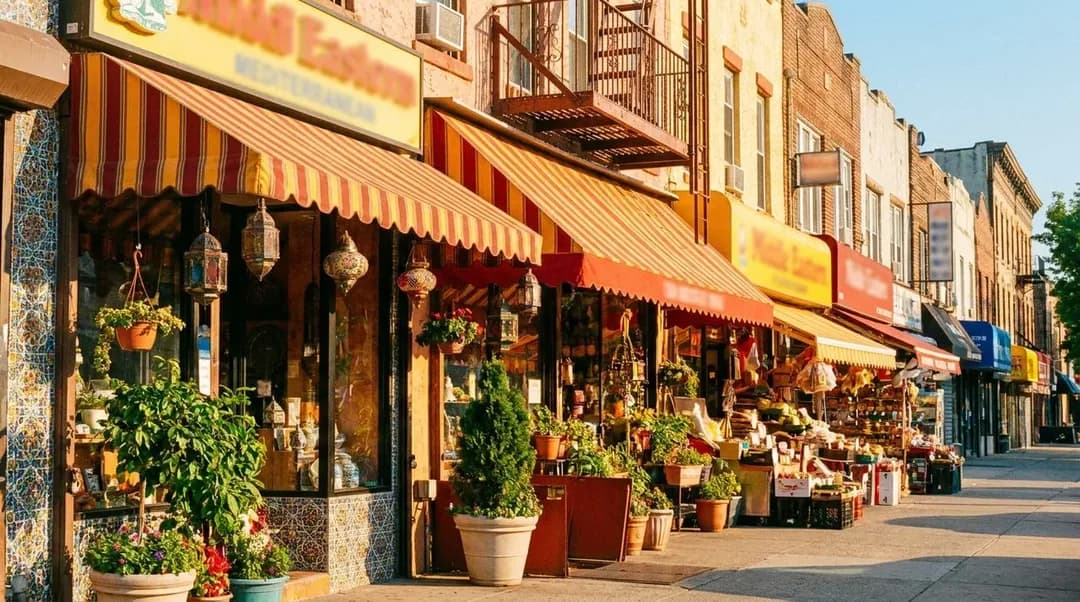
The Queens Walk From Astoria to Jackson Heights That Crosses Six Diaspora Watch Rooms in the 2026 World Cup
A 100-minute walk down 30th Avenue to Roosevelt Avenue passes Greek cafés, Egyptian shisha rooms, Bangladeshi sweet shops, Ecuadorian cantinas, Mexican bodegas, and Colombian bakeries—each tuned to a different World Cup channel.
The Curiosity: Queens Is The World Cup's Sixth Borough
During major tournament windows, the five boroughs become a single distributed nerve center for global soccer fandom. But Queens operates differently. It doesn't consolidate around a single neighborhood or stadium. Instead, it fragments—productively—into a dozen micro-territories, each with its own broadcast feed, its own diaspora logic, its own way of watching. The 2026 World Cup will be no exception. What makes this particular walk valuable is its compression: in roughly 100 minutes, moving steadily from Astoria's 30th Avenue down to Jackson Heights' Roosevelt Avenue, you'll cross six distinct diaspora rooms, each one tuned to a different corner of the tournament's geography.
This isn't sightseeing. It's a way of reading how soccer actually travels through the city—not as a monolithic event, but as six parallel conversations happening in Greek, Arabic, Bengali, Spanish, and Mandarin, each one rooted in a specific block, a specific café, a specific relationship to home. The walk works because the neighborhoods stack vertically along a single corridor. You don't need a car. You don't need a plan beyond a direction. You just need to know what you're looking for when you arrive.
Stage 1: Astoria 30th Avenue — Greek and Egyptian Cafés
Start at the intersection of 30th Avenue and 31st Street in Astoria, roughly 2 blocks west of the Astoria Boulevard subway station (N, W trains). The Greek café culture here is old and settled. Kafeneia line the avenue—small rooms with strong coffee, backgammon boards, and televisions that have been running the same channels for thirty years. Elliniko, the Greek coffee, arrives in a small copper pot. The conversation happens in Greek. During the World Cup, these rooms become nodes for Greek diaspora fandom, but also for a broader Mediterranean sensibility: matches involving Spain, Portugal, Italy, and the Balkans draw crowds here. The energy is patient, analytical, generational.
Walk east on 30th Avenue for three blocks. Around 28th Street, the storefronts shift. Egyptian shisha lounges begin to appear. These are newer establishments, typically opened in the last ten to fifteen years, but they've integrated into the fabric of the avenue. Here, the broadcast preference runs toward African qualifiers, Middle Eastern clubs, and the Egyptian national team. The shisha rooms are louder, more social, younger demographically. During tournament time, these spaces become crucial for tracking North African and Gulf region matches that wouldn't otherwise reach mainstream broadcast channels in the city. The coffee is darker, the atmosphere more animated.
Stage 2: Steinway Street — Bangladeshi Sweet Shops
At 30th Avenue and Steinway Street, turn south. The transition happens quickly. Within a block, you're in Astoria's Bangladeshi commercial corridor. Sweet shops dominate: Rajbari, Panna II, and smaller unmarked rooms stacked with sandesh, rosogolla, and other Bengali confections. These aren't primarily restaurants or cafés. They're retail spaces where people buy sweets for family gatherings, celebrations, and—during tournament windows—match-day gatherings. The back rooms often have televisions. During the 2026 World Cup, these spaces will carry feeds from South Asian broadcasters, particularly Indian and Pakistani channels that run comprehensive coverage of all matches. The demographic skews older, family-oriented. The viewing happens in clusters—uncles and cousins gathering for afternoon matches.
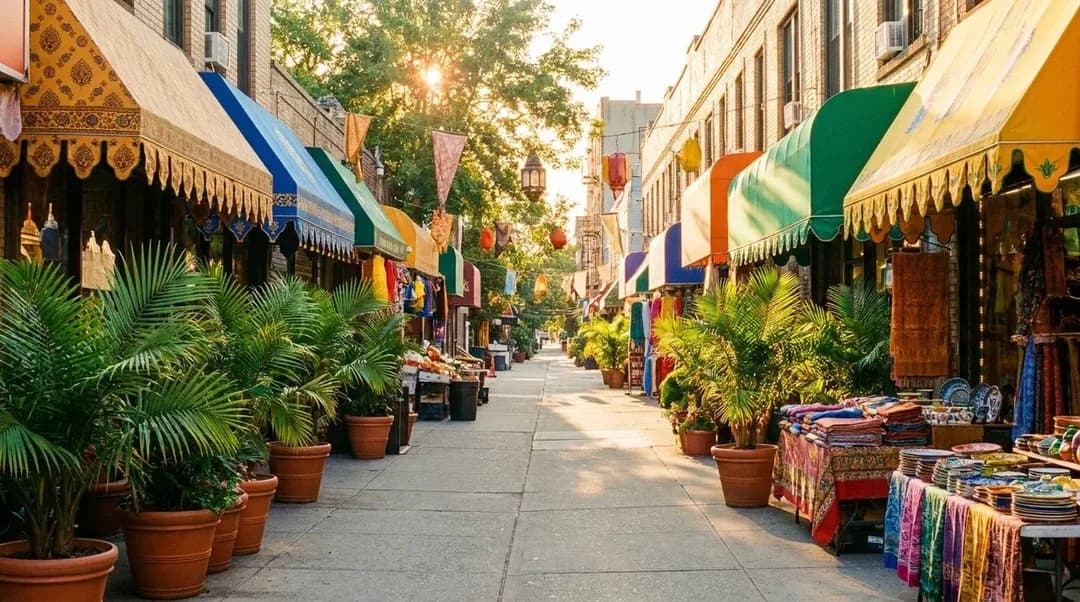
The walk down Steinway takes about fifteen minutes. You're moving through a neighborhood that's less visible to casual visitors but deeply organized around specific cultural and commercial networks. The sweet shops are the visible anchors, but the real infrastructure is social: family groups, religious organizations, and informal broadcast networks that have been running for years. During the World Cup, these networks activate.
Stage 3: Roosevelt Avenue — Ecuadorian, Mexican, Colombian Rooms
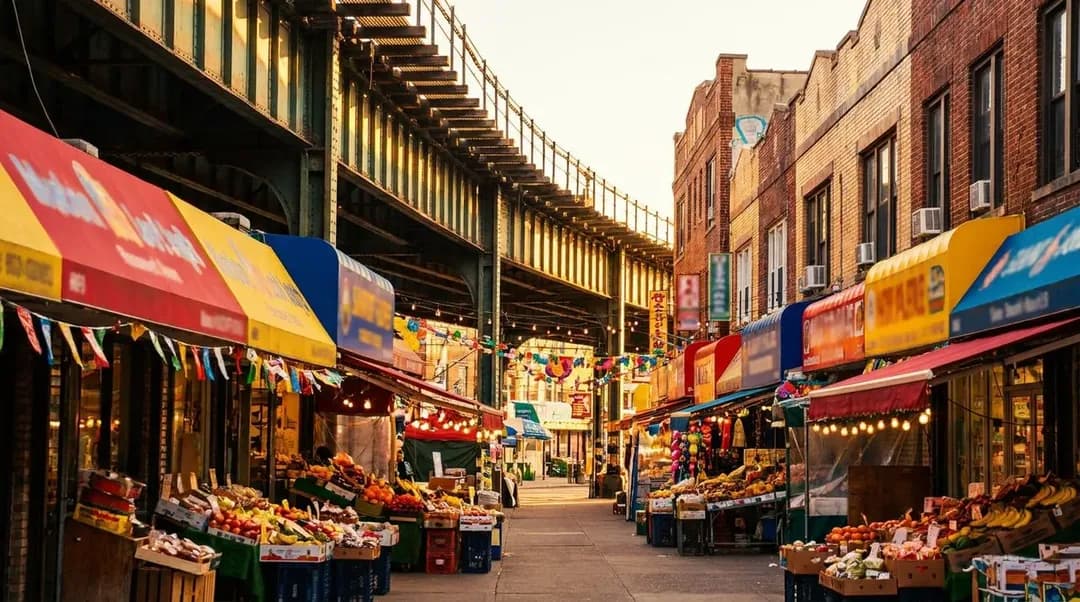
Steinway Street ends at Roosevelt Avenue. This is Jackson Heights proper, and the character changes again. Roosevelt Avenue under the elevated 7 train is the commercial spine of the neighborhood. Here, the storefronts are Latin American: Ecuadorian bakeries, Mexican bodegas, Colombian cafeterías. This corridor has been the heart of Jackson Heights' Latino community since the 1970s, and it remains the densest concentration of Spanish-language commerce in Queens. During the World Cup, these spaces become the primary broadcast nodes for Liga MX matches, Copa América coverage, and South American national team games.
The Ecuadorian bakeries typically occupy corner locations. They sell pan de yuca, empanadas, and fresh pastries. They also have televisions. The Mexican bodegas are smaller, deeper into the blocks, but they function as informal gathering spaces—places where men stop in the afternoon to watch matches and drink beer. The Colombian cafeterías are sit-down establishments with full kitchens. All three operate on different broadcast schedules. A Barcelona vs Real Betis match in La Liga will draw crowds to some of these spaces but not others. A Liga MX final—say, América versus Guadalajara—will pack every Colombian and Mexican room on Roosevelt Avenue. The Ecuadorian spaces will be quieter, their primary loyalty running toward the Ecuadorian national team and South American club competitions.
How Barcelona vs Real Betis and the Liga MX Final Travel Through This Walk
The Barcelona vs Real Betis match—a La Liga fixture—will generate interest along the entire walk, but the intensity varies by zone. In Astoria's Greek cafés, it will be background noise, one of several European matches running simultaneously. In the Bangladeshi sweet shops, it may not run at all; South Asian broadcasters prioritize Indian Super League and other regional competitions. But in the Jackson Heights Colombian and Ecuadorian rooms, Barcelona matches carry cultural weight. They're European club soccer, yes, but they're also a reference point in a global soccer conversation that these communities participate in deeply. The match will run on a television, typically with Spanish commentary.
The Liga MX final is different. This match—the championship of Mexico's top professional league—will be the dominant broadcast event in every Mexican bodega and Colombian cafetería on Roosevelt Avenue. It won't run in the Greek cafés, the Egyptian shisha rooms, or the Bangladeshi sweet shops. It will be appointment television in Jackson Heights, with crowds gathering in the hours before kickoff. The match will likely run on Univision or a Spanish-language cable channel. The energy will be partisan, loud, and sustained through both halves. This is the match that defines the walk's southern terminus. It's the match that turns Roosevelt Avenue into a single room, all watching the same screen, all invested in the same outcome.
How Karpo Maps the Diaspora Walk for Any Match
The value of this walk—and of mapping walks like this across the city—is that it makes visible the actual infrastructure of how soccer reaches people. Most coverage of international soccer in New York treats the city as a monolith: a single market, a single audience, consuming a single broadcast feed. But that's not how it works. The city is a collection of overlapping diaspora networks, each with its own broadcast preferences, its own way of watching, its own relationship to the tournament.
For the 2026 World Cup, Karpo's approach is to map these networks geographically. We identify the neighborhoods where specific diaspora communities have concentrated. We identify the commercial spaces—cafés, bodegas, restaurants, sweet shops—where matches are likely to be broadcast. We note the timing: which matches are appointment viewing in which rooms. We track the broadcast channels and platforms. Then we create walks like this one, which compress the city's soccer infrastructure into a navigable route. The walk becomes a way of understanding not just where to watch, but how the city itself is organized around the tournament. It's a way of reading the city as a text.
Practical notes
- Start at 30th Avenue and 31st Street, Astoria. The N and W trains stop at Astoria Boulevard, a 10-minute walk west. Alternatively, take the 7 train to Ditmars Boulevard and walk south 8 blocks.
- The walk takes approximately 100 minutes at a moderate pace. You'll cover roughly 1.5 miles. Wear comfortable shoes.
- Greek cafés on 30th Avenue typically open by 7 a.m. and run through evening. Shisha lounges open around noon. Bangladeshi sweet shops open early morning and close by 8 p.m. Colombian and Mexican spaces on Roosevelt Avenue are open all day.
- During World Cup matches, these spaces fill with crowds 30 minutes before kickoff. Arrive early if you want a good viewing spot. Most establishments welcome walk-ins, but some may require a small purchase (coffee, pastry, or beer).
- Bring cash. Many small establishments don't process cards reliably. The walk passes multiple ATMs along Roosevelt Avenue.
- Shisha lounges require 21+ ID in New York State. Some Greek cafés may card for alcohol. Bangladeshi sweet shops and bakeries are family-friendly at all times.
This walk works because it follows the actual geography of how soccer moves through Queens. It's not a tourist route. It's a working map of diaspora infrastructure, updated in real time during tournament windows. The 2026 World Cup will activate these spaces in specific ways: certain matches will pack certain rooms, certain broadcasts will run on certain channels, certain neighborhoods will become centers of attention while others recede. The walk lets you see that pattern in motion.
Tags: #karponyc #thelongwayhome #astoriaquenns #jacksonheights #2026worldcup #diasporawatch #ligamx #barcelonavsrealbetis #queenssoccer #soccerinfrastructure #nycsoccer #worldcupfandom #pullupchair
All trademarks are the property of their respective owners.
Ask Karpo for more information.
Keep reading
- Haaland Has Seven Goals and Norway Runs Entirely Through Him
 World Cup Trophy Ceremony Timing Medals and Postmatch Celebrations
 Olise and France's Attack: The Semifinal Tactical Question