 Flatiron Holiday Window Walk Planner for Remote Teams
Free Things to Do
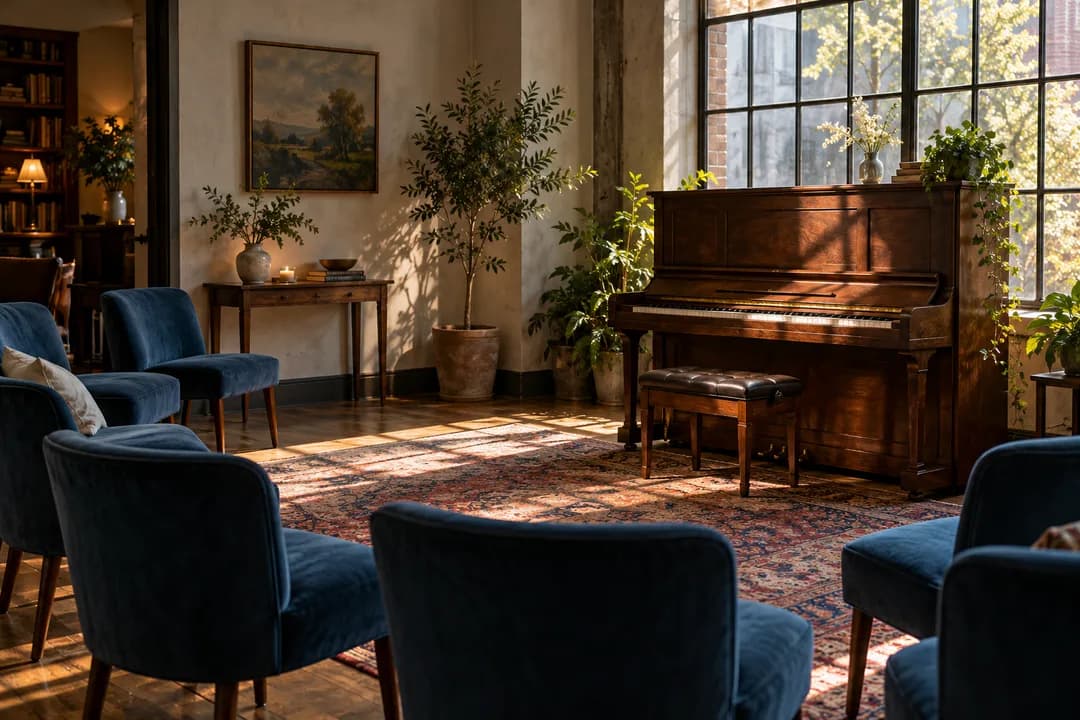
NYC Local Event Finder: Pick Your Seat and Mood
Choose an NYC event by seating, sound and social energy. Describe the atmosphere you want in Karpo APP and compare formats before committing to a plan.
The subject of an event tells you surprisingly little about how it will feel to attend. Music might mean sitting quietly with a clear view, standing close to other listeners, or talking over a background performance. For an NYC local event finder, the useful starting point is your preferred relationship to the room. Decide how much sound, movement and interaction you want, then use those preferences to explain what would make an evening enjoyable in Karpo APP.
Start with the seat you would choose
Imagine entering an unfamiliar space and choosing where to settle. Would you head toward a chair beside an aisle, the front of a small audience, a standing table, or an open area with room to move? That imagined choice gives you language for a request. You might enjoy an energetic performance while still needing a reliable seat. Conversely, a quiet room with fixed seating can feel restrictive when your ideal evening includes moving around and meeting people.
Treat seating as a requirement when it is one. “I would like somewhere relaxed” leaves too much room for interpretation. “I need to sit during the main activity” is a clearer planning condition. A seat appearing in a promotional image does not establish that every participant gets one, and a seated format does not establish that specific places are assigned. Distinguish a published seating arrangement from your preference as you read the possibilities returned by a discovery conversation.
Describe sound through what you want to do
You do not need to estimate decibels to describe your tolerance for noise. Explain the task you hope to perform: follow spoken instructions, hold a conversation without raising your voice, focus on a performer, or enjoy music without talking. These are different uses of sound. A recommendation becomes easier to assess when it addresses that intended experience rather than using a single adjective such as lively, intimate, atmospheric, or chill to stand in for the entire room.
Consider two hypothetical plans. In the first, you bring a friend and want time to catch up while something creative happens nearby. In the second, you want to become absorbed in a performance and would rather leave conversation for afterward. Neither example names an actual scheduled program. They demonstrate why the same category can produce different choices. Ask for formats that suit your intention, and let an organizer's description establish the particular event's participation and audience expectations.

Give social energy its own scale
Think about how much contact with unfamiliar people would feel welcome. At one end is observing without being called on. In the middle is an opportunity to chat if you choose. At the other end is an activity built around collaboration or discussion. Tell Karpo where you sit on that spectrum tonight. “I like a friendly room but do not want compulsory introductions” explains a boundary that broad labels like social event or community gathering fail to capture.
Be equally direct about performance pressure. Some people enjoy a workshop because it offers a shared task, while others experience the same activity as an obligation to produce something. If you want permission to watch first, include that preference. An invitation to beginners is useful evidence about experience level, but it does not automatically describe the amount of personal attention or group participation. Separate those questions instead of treating beginner friendly as a complete account of the atmosphere.
Ask for contrasting formats
A productive opening request could read: “Suggest a few New York event ideas for an evening when I want to be around people without joining a loud party. I need seating for the main activity, prefer listening over performing, and would enjoy optional conversation afterward. Explain which parts of each suggestion support that fit.” Add your date and departure area. You are describing an experience to discuss, rather than claiming the app has measured the conditions inside a room.
Ask for contrast within the answer. One candidate might center on watching, another on learning, and another on a loosely structured gathering. These are format examples, not live recommendations. Their purpose is to help you identify what attracts you. If every idea requires the same kind of participation, say which assumption you want changed. Requesting a seated alternative or a quieter format is a precise revision that preserves the rest of your brief.
Read the difference between evidence and mood words
When you examine an event description, look for concrete details that bear on your preferences. A stated seated presentation tells you more about posture than a photograph of a comfortable interior. A described group exercise tells you more about interaction than the word welcoming. A published schedule with a discussion period gives you something to assess. Keep the source of each inference visible so you can decide whether the description actually answers the condition you care about.
Room photographs remain useful for visual orientation, but they cannot establish tonight's crowd, exact noise level, or remaining seats. A discovery answer should not turn those unknowns into live observations. If the material only supports a broad format description, evaluate it at that level. You can choose a better documented option instead of filling gaps with a story about a quiet corner, a friendly host, or a convenient empty chair that nobody has established.
Resolve conflicts before choosing
Sometimes your wishes pull in different directions. You want an animated room, clear conversation, no structured introductions, and a seat beside your friend. Rank those needs. The seated activity could be essential, while the conversation could happen during a walk afterward. Or companionship could matter more than the main program, making a discussion format a better starting point. Ranking is useful because a recommendation cannot resolve a tradeoff that your own request has left undecided.
Tell Karpo which compromise you are willing to make and ask for the comparison to be revised around it. For example, keep the seat requirement while allowing a less familiar subject. Or keep the artistic subject while accepting that the event is mainly for listening. This gives the next reply a distinct job. Adding more adjectives without ranking them can expand the search while leaving you with the same uncertain decision and a longer list to read.
Leave room for your energy to change
Your preferences at lunchtime might differ from how you feel when the workday ends. Build a modest alternative around that possibility: one engaging option and one gentler activity with admission information you understand. Avoid constructing an elaborate chain of stops that depends on maintaining the same energy all evening. The purpose of a mood-based choice is to respect your capacity, including the possibility that a short visit or an earlier ending will feel better than a packed schedule.
Before settling on a program, carry the relevant published instructions into your plan, including entry arrangements and the audience format. Complete any required registration with the organizer, and keep your personal comfort needs explicit. Then return to the question that started the search: where would you want to sit, listen, talk, or move? Open Karpo APP with that answer. A clear description of your preferred atmosphere is a strong basis for choosing an event you can enjoy on your own terms.
Ask Karpo for more information.
Keep reading
- Flatiron Holiday Window Walk Planner for Remote Teams
 SoHo Holiday Window Walk Planner for a Sketchbook Afternoon
 Upper East Side Holiday Window Walk Planner After a Museum