 Fort Greene Holiday Market Browsing Guide for Young Shoppers
Weekend Plans
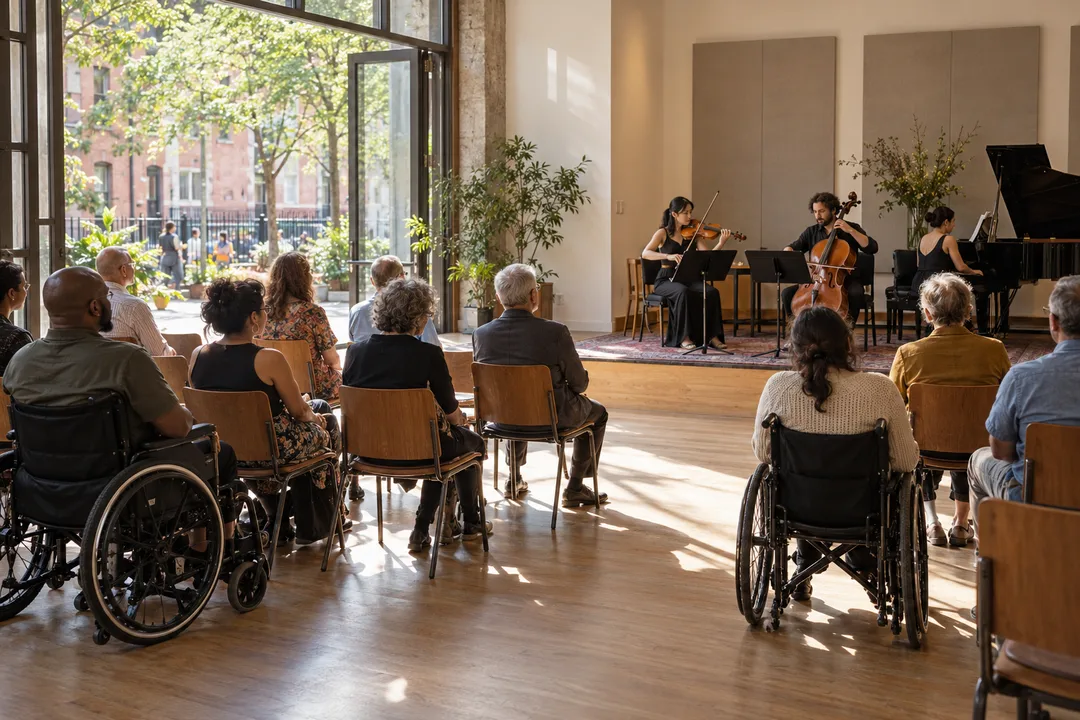
NYC Local Event Finder: 3 Steps For Easier Access
Find NYC event ideas around your access needs by describing the full journey, seating and entry requirements, then keep unresolved details visible.
Access to an NYC event begins before the venue entrance and continues after you find a seat. A local event finder is more useful when your request explains the whole journey instead of relying on a single accessibility label. Use Karpo APP to describe the entry, seating and participation conditions you need. The three steps here are to define those conditions, compare specific evidence and build an outing around a suitable candidate. No venue's accessibility is assumed in the examples.
Step one: describe your own route through the outing
Start with the part that most often limits a plan. That could be stairs, standing in line, a long corridor, an unfamiliar sound environment or the need to sit beside a companion. Different people use the word accessible for different requirements. Put your particular needs into the brief in language you would use with an organizer. You do not need to disclose a diagnosis to explain that level entry and a seat throughout the program are essential.
List the journey in order: departure, transport, approach, admission, participation and return. A candidate that works at five stages and fails at one still fails your essential requirement. For example, a level gallery floor does not establish that its advertised evening program uses a step-free entrance. A room may also change layout for a special event. Keep the question tied to the dated session and the audience arrangement, rather than treating the building's general description as a complete answer.
Separate requirements from preferences. A continuous step-free route might be essential, while a particular neighborhood is only preferred. Put those in different sentences when asking for ideas. This lets you consider a farther candidate without relaxing the condition that matters most. It also makes a follow-up more precise: you can broaden the geographic area while keeping the entry and seating needs intact. The aim is a feasible outing, and a shorter recommendation list can be an advantage.
Give Karpo a brief that preserves the essentials
An example message is: “Find cultural event ideas in NYC for this date. I need a step-free audience route, a seat throughout and space beside my companion. Start from the neighborhood below. Explain what the published event information establishes about entry and seating, and leave any missing details visible.” Add your real departure area and time window. This wording asks for useful research and comparison, with no promise that the app holds a complete access record for every event.
Consider what participation involves once you are inside. A talk and a hands-on demonstration can have similar subjects but different viewing and movement demands. You might need a clear sightline while seated, captions for spoken material or permission to take a quiet break. State those needs directly. A generic description such as welcoming or inclusive cannot substitute for information about the activity. The relevant evidence should explain how a person participates in that particular session.

Decide how many candidates you want to investigate. Two can be enough when each needs a careful reading of access instructions. A long calendar makes unresolved details harder to track and can create the appearance of choice without increasing the number of feasible plans. Ask for the reason each candidate remains under consideration. If the explanation depends on an unstated assumption, keep that point separate from the facts and avoid treating it as settled.
Step two: compare evidence about the event itself
Read the organizer's access information alongside the dated program. Look for the named public entrance, the route into the event room and the stated seating arrangement. A general building page can be useful background, but it might describe a different floor or a normal daytime layout. If a requirement is absent from the material, write down that specific question. An unanswered question should remain visible, rather than becoming a reassuring sentence in the plan.
When contacting an organizer would help, make the question concrete enough to answer. “Does the audience entrance for this session have a continuous step-free route to the room?” is more informative than asking whether the event is accessible. You can also explain the space or seating arrangement you need without providing private medical details. Any response applies to the conditions actually discussed. Keep its scope clear when you share the plan with a companion.
Skip a candidate whose appeal depends on hoping an essential condition will work out at the door. That judgment is about your stated requirements, not a rating of the venue or its staff. You can retain it as an idea for another occasion if relevant information later becomes available. For the current outing, use your attention on a candidate with a clearer participation path. Attractive programming should not pressure you into accepting an access arrangement you cannot use.
Step three: build the surroundings around the access plan
Once you have a feasible activity, give arrival some breathing room. Your own travel buffer can account for transfers, meeting a companion and finding the entrance named in the instructions. It is a planning allowance, not a prediction of a particular queue or elevator wait. Avoid adding a second timed activity immediately beforehand. Keeping the approach simple gives you room to respond to ordinary travel delays without losing the purpose of the outing.
A neighborhood stop should support the main activity. It might provide rest or a chance to talk afterward, but it needs its own evidence if access conditions are essential there too. Do not assume that a nearby café, plaza or passage has the same route and seating as the event room. You can leave the extra stop unnamed and optional. An outing with one well-supported anchor is more useful than a polished itinerary containing an unsuitable detour.
Discuss the return journey with the same care as arrival. The person who accompanies you might leave from another area, and a convenient outward route does not establish an equally useful way home. Give Karpo your return destination at neighborhood level and the time you want to finish. Ask for the implication of ending later, while treating transport information as a separate part of the decision. Your event choice should remain practical through the last stage of the trip.
Practical Notes for an access-led search
Keep a compact note of essential needs, supporting event information and any organizer response. Sharing that note can prevent a companion from replacing the carefully chosen plan with a superficially similar event. Admission and access arrangements are separate questions: a ticket alone does not describe seating or an entrance route. Complete the organizer's admission process only when the selected session fits your requirements, and retain whatever written instructions are relevant to your attendance.
Begin in Karpo APP by stating the conditions that would let you participate comfortably. Ask for a small comparison, resolve the specific gaps that matter and choose one activity whose documented arrangement supports your needs. The route, seating and return plan should all fit the same person on the same day. That is what makes an access-led event search useful: the idea survives contact with the actual sequence of getting there, taking part and getting home.
Ask Karpo for more information.
Keep reading
- Fort Greene Holiday Market Browsing Guide for Young Shoppers
 DUMBO Holiday Market Browsing Guide for Gifts to Mail Home
 Midtown East Holiday Market Browsing Guide for Commuters