 Flatiron Holiday Window Walk Planner for Remote Teams
Free Things to Do
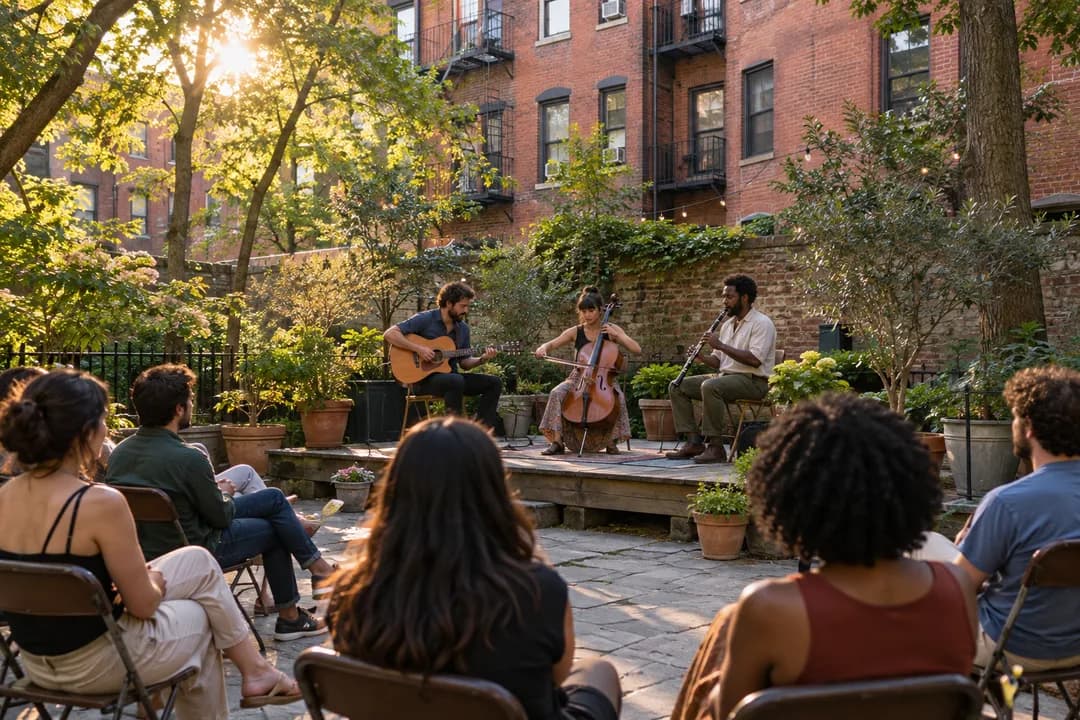
NYC Local Event Finder: Plan a Free Evening Out
Find a no-cover NYC evening by setting your time, travel and spending limits, then turn a few credible event ideas into a simple plan in Karpo APP.
A spare evening in New York can disappear while you compare listings that never quite answer the question: can I actually enjoy this without paying to enter? A local event finder becomes useful when your request distinguishes a free ticket from an evening with no compulsory spending. Start with your available time, your departure neighborhood, and the kind of participation you want. That gives the search a purpose before an attractive photograph or a long calendar takes over.
Give tonight a beginning and an ending
Picture a hypothetical Tuesday after work. You leave near Union Square, want something sociable but low pressure, and need to finish early enough for dinner at home. Those are planning conditions, not an announcement of a particular event. Put them in your opening message to Karpo APP. Rather than asking for everything happening in NYC, describe the small piece of the city and evening you can realistically use, including the latest time you want to be back.
Use a prompt such as: “Help me find a no-cover event for this evening near my starting point in Manhattan. I would enjoy a short performance or community arts activity, prefer an easy arrival, and need to leave after about an hour. Give me a few possibilities and explain any admission conditions.” Add the actual date when you send it. A date belongs to your request, while a recurring weekday on an old listing does not establish tonight's program.
Separate admission from the rest of the bill
Decide what free means for you before weighing suggestions. A free performance with optional refreshments is different from an event whose entry depends on buying something. Another distinction is between a suggested donation and a required contribution. Describe the boundary in everyday language: “No ticket charge and no required purchase.” That phrase communicates your limit without asking a discovery conversation to infer it from a vague budget preference or the word inexpensive.
Read the organizer's admission language as part of choosing a candidate. Look for a stated entry charge, required reservation, purchase condition, and any distinction between the main program and an extra activity. If the description leaves a compulsory cost unresolved, keep that candidate outside your final selection. There is no reason to turn a missing price into an invented zero. Your shortlist can remain shorter when the evidence does not support another option.
Choose between watching and joining in
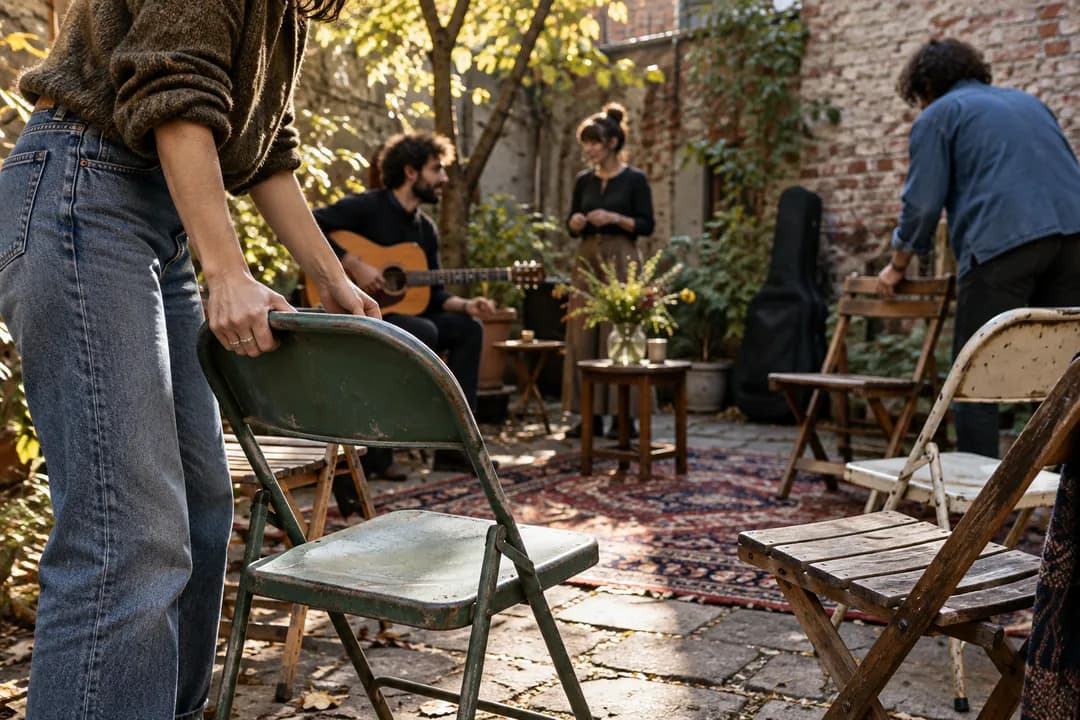
Free evenings are not interchangeable. Listening to a performance allows you to settle into one activity, while a participatory workshop asks you to contribute attention and effort. A community discussion can offer conversation but also a fixed beginning. Decide whether tonight calls for observing, making something, or meeting people. Tell Karpo which of those feels appealing and which feels like another assignment after work. That distinction is more useful than requesting a generic hidden gem.
You can make the comparison concrete with one follow-up: “Rank the ideas by how easily I can arrive alone, enjoy the main activity, and leave after an hour.” This is a request for an explanation, not a promise that entry or an early departure is allowed. An event's published format should support the recommendation. A timed workshop whose instructions depend on attending the whole session would be a poor fit for the hypothetical evening, even with free admission.
Keep three useful possibilities on the table
A small comparison should give each candidate a different job. The first can fit your original wish most closely, the second can demand less travel, and the third can offer a quieter kind of participation. This arrangement makes a fallback meaningful. Three variations of the same distant event leave the same problem unsolved if you feel tired. Ask for the reason behind the order so you can change the priority without restarting the conversation.
For each idea, you want to understand what happens, when the relevant session starts, how admission works, and why it suits your available evening. Keep unanswered questions visible instead of smoothing them into a confident description. A place being open does not establish that a particular event is happening there. Likewise, an event appearing on a calendar does not establish that you have a place. A recommendation is a candidate for your decision, with admission handled through the organizer's stated process.
Build the route around the activity
Set the event as the anchor and give the surrounding time a modest role. A short walk before the program can help you transition out of the workday. A nearby public space afterward can provide room to talk, if you are going with someone. There is no need to attach a named café, a restaurant booking, or a cross-city detour to every free outing. Keeping the extras optional protects both your spending limit and the reason you wanted an easy evening.
Think in terms of transitions rather than an idealized arrival time. You need to finish work, reach the entrance, understand the admission arrangement, and settle in. A map estimate describes movement between points, not every step of entering a building or joining a program. Give yourself enough breathing room to enjoy the activity you chose. If the schedule becomes crowded, remove the optional walk before sacrificing the portion of the event that attracted you.
Have a fallback that costs no extra effort
Choose the fallback while your preferences are still clear. It might be another documented event with a different starting time, or it might simply be an ordinary neighborhood walk without an event attached. Name those alternatives accurately. A walk is a valid evening plan, but it is not a substitute event listing. This distinction keeps a discovery request honest when there are few suitable programs, and it saves you from treating every suggestion as equally available.
If rain would change your choice, make that part of the original brief. You can request an indoor alternative and decide whether you are comfortable with an outdoor option at all. Avoid asking a planning conversation to guarantee the weather or an organizer's decision. The useful outcome is knowing what you will do under either condition. A fallback works best when it changes one feature of the evening without demanding a completely different budget, journey, or energy level.
Send one request you can act on
Before leaving, assemble your own practical handoff: the chosen program, its date and session, admission instructions, the entrance information supplied by the organizer, and your personal departure target. Complete any required registration through the named organizer. Keep a reservation acknowledgment separate from the discovery conversation. That small separation prevents an appealing suggestion from being mistaken for a completed booking, especially when the event has limited capacity or different sessions under a similar title.
Open Karpo APP with the evening you actually have: a starting neighborhood, a clear no-purchase boundary, and an activity you would enjoy for its own sake. Ask for a short comparison and refine the weakest part of the answer. You are aiming for one credible choice and one manageable alternative. Once those are in place, stop browsing. The reward of a carefully framed free evening is having enough attention left to experience it, rather than spending the night collecting possibilities.
Ask Karpo for more information.
Keep reading
- Flatiron Holiday Window Walk Planner for Remote Teams
 SoHo Holiday Window Walk Planner for a Sketchbook Afternoon
 Upper East Side Holiday Window Walk Planner After a Museum