 Flatiron Holiday Window Walk Planner for Remote Teams
Free Things to Do
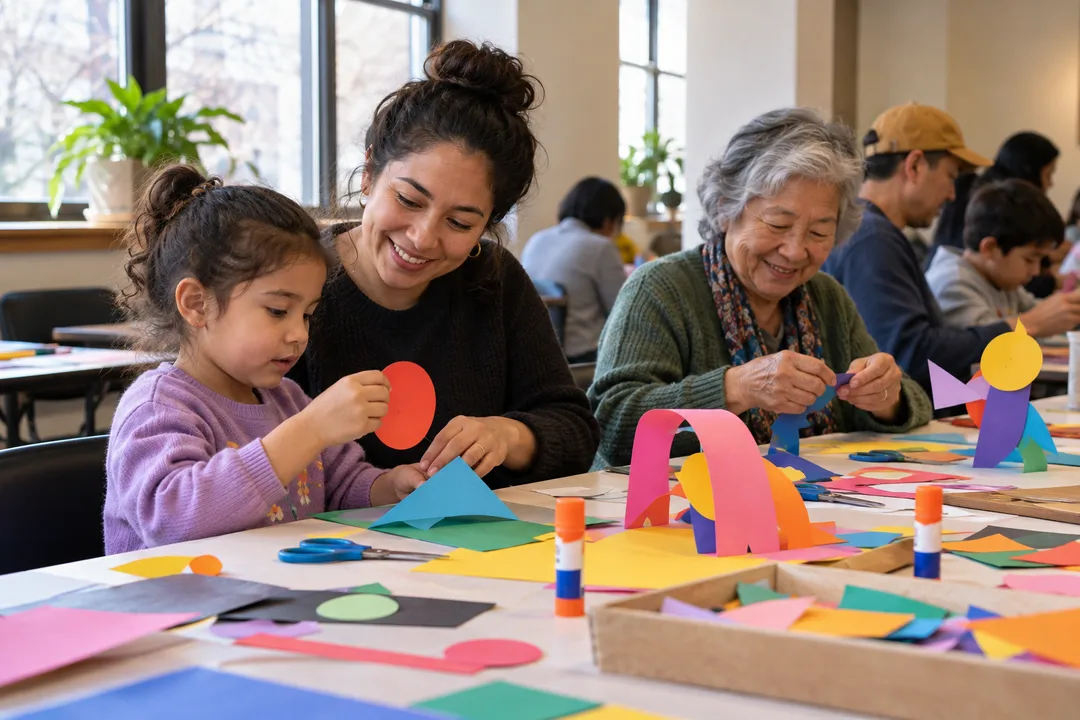
NYC Local Event Finder: Bring All Ages Along Together
Plan an all-ages NYC outing around the youngest and oldest guests. Use Karpo APP to frame the request and weigh age rules, participation and comfort.
An all-ages invitation is the beginning of a family decision, not the end of it. A child who wants to make something, an adult who needs a place to rest, and a teenager who wants some independence can attend the same NYC event and have very different afternoons. Use a local event finder to organize those needs before comparing programs. A useful request in Karpo APP describes the actual participants, the kind of shared experience they want, and the conditions that would rule an outing out.
Who needs to enjoy the main activity?
Begin with the people who would otherwise be overlooked. A family search often follows the most enthusiastic person's interest, then tries to fit everyone else around it. Reverse that habit. Name the youngest participant's age, an older guest's relevant comfort needs, and whether anyone plans to watch rather than join in. You can describe those needs without sharing names or personal histories. The goal is to establish what participation would look like for this particular group.
For a hypothetical family of four, the brief could say: “We want an NYC community event for two adults, a school-age child, and a teenager. A hands-on activity would appeal, but one adult would prefer to observe. We need a manageable visit with a place to rest and no late finish.” This is an example of a search request, not a claim that a matching program is scheduled. Add your intended date and starting area when you use it.
Does all ages describe entry or participation?
Separate permission to enter from suitability for the activity. An event can admit children while directing its content toward adults. Another might welcome observers of many ages while limiting a workshop to a stated age group. Look for the organizer's exact description of who can take part, who must accompany a child, and whether every person needs a place. Those details matter more than a broad family label when you are deciding what everyone will actually do.
Do not infer a drop-off arrangement from a children's activity, or assume adults can join a child-only session. A parent might need to remain in the room, participate alongside the child, or book a separate admission. Treat each arrangement as a distinct condition to resolve through the published program. If the evidence does not answer a condition essential to your family, prefer an option that does. There is no benefit to building the afternoon around an assumption about supervision.

What holds attention without requiring everyone to perform?
Consider the difference between continuous instruction and flexible engagement. A demonstration gives the family something to watch together, while a making activity offers a task with an outcome. A community gathering might let interests diverge briefly. These are broad formats rather than recommendations for specific events. Decide which pattern supports the people attending. If one person tires quickly or dislikes public participation, a highly structured group exercise could create pressure even when its subject sounds appealing.
Ask for an explanation of the fit instead of accepting the label fun for everyone. What would the child be doing? What role would the observing adult have? Could the teenager contribute without becoming an assistant to the younger child? These questions reveal whether the recommendation has treated the family as a collection of people or as a single demographic. A convincing answer makes room for different levels of involvement within the organizer's actual rules and the activity's stated format.
Which needs are essential rather than convenient?
Write the nonnegotiable conditions in plain language. Perhaps someone needs step-free access, a seat during the activity, a shorter visit, or a less stimulating environment. Avoid bundling these under the word accessible. A statement about one entrance does not establish the entire route, seating arrangement, restroom access, or sensory conditions. Identify which of those matter to your group, and use the information the organizer actually supplies to assess them as separate questions.
A stroller raises its own planning questions. You may need somewhere permitted to leave it, an entrance that works for its dimensions, or the option to keep it nearby. A photograph of a wide room cannot establish the relevant policy. Include the requirement in your request so it does not disappear behind the search for an interesting subject. The same principle applies to food needs and rest breaks: describe the practical condition you need, then evaluate whether a candidate addresses it.
Can the family finish before its patience runs out?
Choose a comfortable duration before you add extra stops. Time spent reaching the venue, entering, listening to instructions, and waiting for the activity counts toward the family's effort. A short program can still produce a demanding outing when those transitions are ignored. Ask for a plan whose main activity fits the available window, with the rest of the visit kept simple. Do not present a map estimate as the full time required to get everyone settled.
If food or a break must come first, say so at the start. You do not have to request a restaurant itinerary to make that need visible. For instance, tell Karpo the outing begins after lunch and must end before a child's usual dinner. That gives the comparison a useful shape without inventing a local menu or venue policy. A shorter activity that the group enjoys together can meet the objective better than a more elaborate program that consumes the whole day.
What happens when interests split?
Agree on an exit signal before the outing. That might be the end of the first activity, a natural pause in the program, or a family decision to stop when someone has had enough. An event's admission and re-entry instructions still govern whether people can leave and return. Your personal plan should fit those instructions. If the program depends on staying for a complete session, recognize that commitment when choosing it rather than treating every format as casual drop-in entertainment.
You can also discuss a low-effort alternative that does not require the same event to please everyone. Perhaps the family would prefer an ordinary walk and a shared conversation if no suitable program meets its needs. Describe that honestly as a different outing. A discovery request does not have to produce an event at any cost. Keeping the objective broad enough to include a satisfactory afternoon helps you reject weak matches without feeling that the search has failed.
How do you turn the comparison into a family plan?
Bring the decision back to a compact account everyone can understand: what the activity is, who participates, who accompanies children, how long you expect to stay, and which admission steps remain yours to complete. Registration belongs with the organizer's official process. Keep acknowledgments for the relevant participants together. A suggested event in a conversation does not establish that all family members are admitted, and one person's place should not be assumed to cover the whole group.
When you open Karpo APP, ask for a comparison built around the family's shared experience and its clearest boundaries. Request fewer options if the alternatives are becoming difficult to discuss. Let each person name one thing they would enjoy and one thing that would make the visit hard. That brief gives you a practical way to weigh the response. The strongest choice is the one whose actual format accommodates your family, leaving enough room for curiosity, rest, and a pleasant return home.
Ask Karpo for more information.
Keep reading
- Flatiron Holiday Window Walk Planner for Remote Teams
 SoHo Holiday Window Walk Planner for a Sketchbook Afternoon
 Upper East Side Holiday Window Walk Planner After a Museum