Deciding you want live music in NYC at eight in the evening puts you outside the system. Ticketing sites are built for the show you buy three weeks out; by tonight, the good ones are sold out and the available ones are available for a reason. The way New Yorkers actually do this is different and much older: you do not search for a show, you go to a room that always has one. A handful of venues in this city program music every single night as a matter of policy, and a second handful run late sets specifically designed for people who decided late. Between them you can be watching something excellent within an hour of the thought occurring to you.
Deciding on music at 8pm means every ticketing site is now useless to you — they are built for planning, not for tonight. Tell Karpo where you are and how late you can stay out, and it can work out which rooms still have a door worth walking up to within a subway ride of you.
The rooms that always have a band
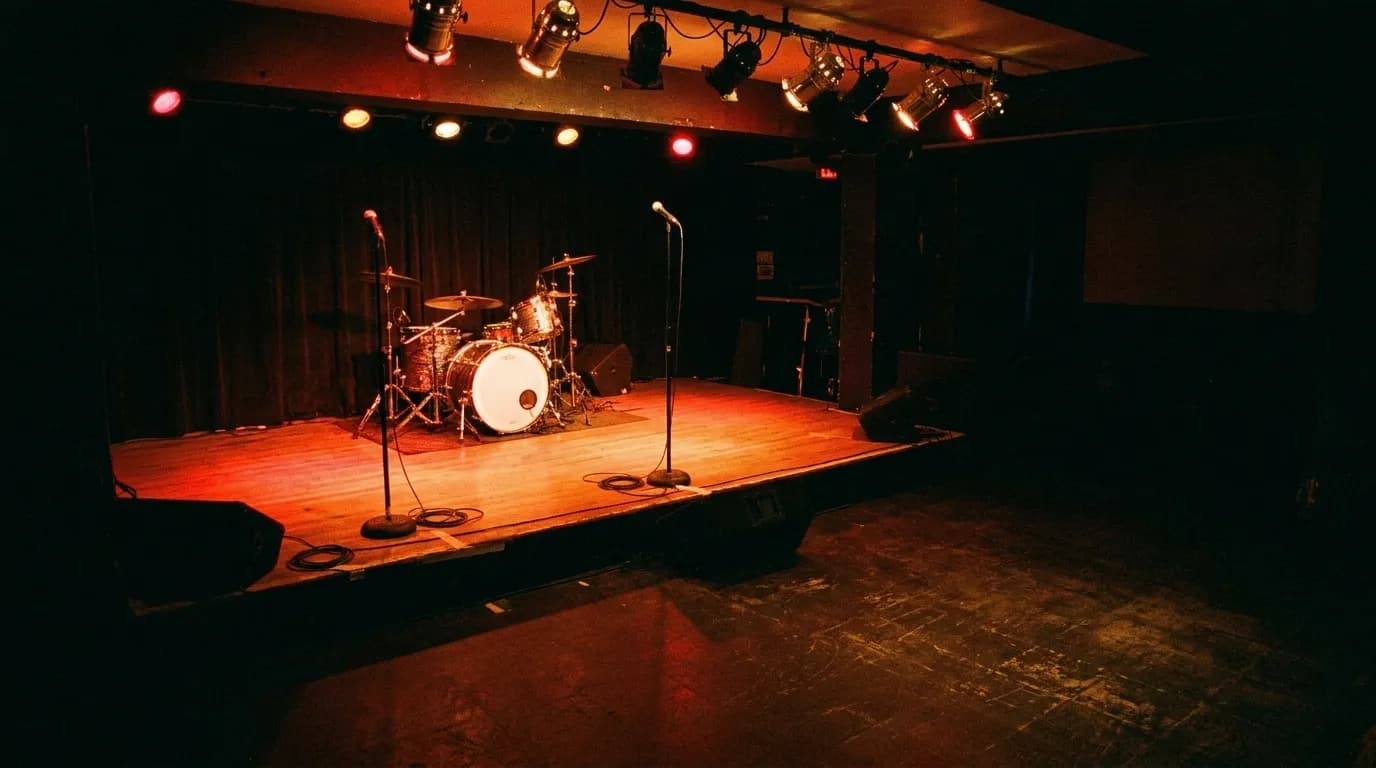
Barbès, on 9th Street in Park Slope, has put on live music every night for more than two decades — Peruvian cumbia, Balkan brass, Brazilian choro, Venezuelan harp, often several different sets in one evening in a back room that holds not very many people. There is no scenario in which you turn up and nothing is happening. In the East Village, Nublu has done a comparable job on Avenue C since 2002, running jazz that bleeds into electronic and back, and it keeps the kind of hours where a 10pm arrival is early. Neither venue requires you to know who is playing, which is the entire point: you are buying the room's taste, not a specific artist.
Jazz has the deepest bench for a same-night decision
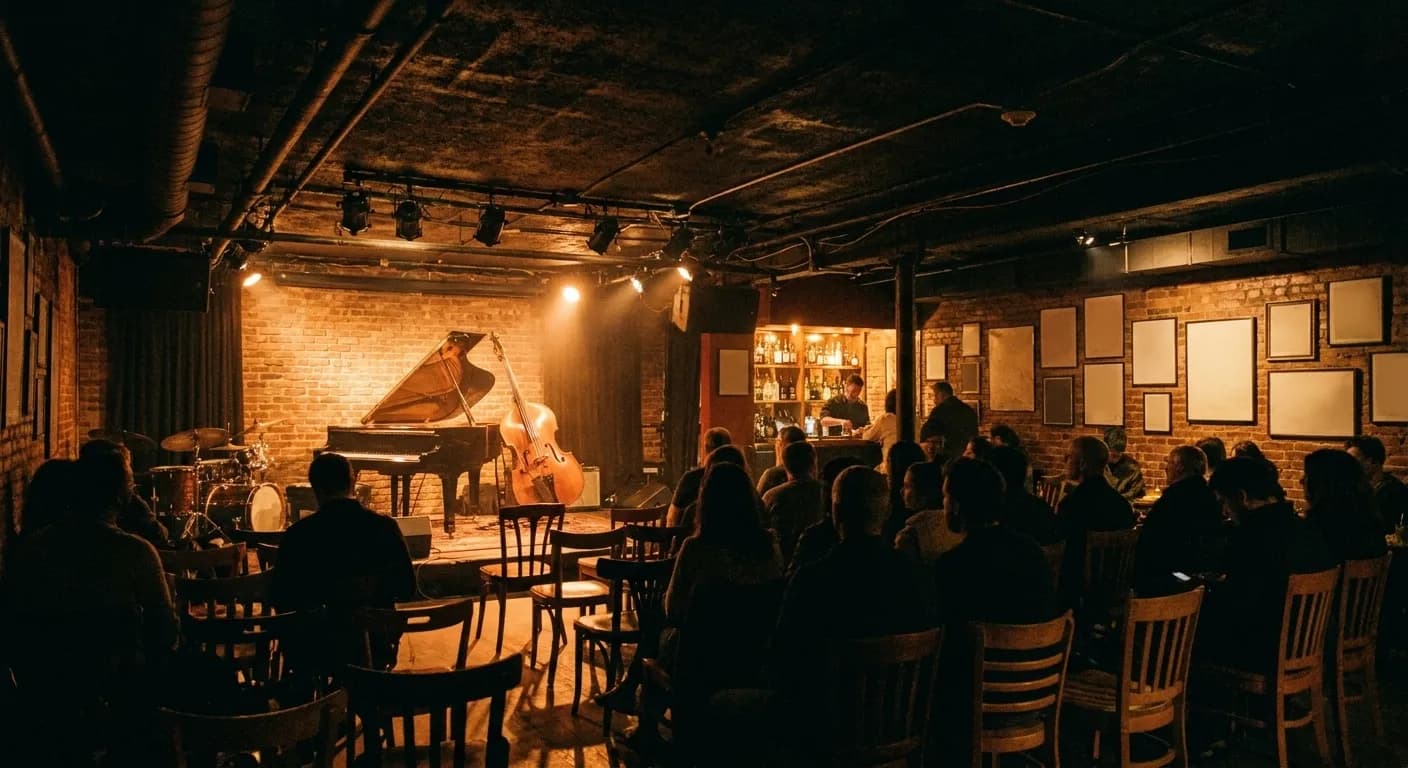
New York jazz clubs run multiple sets a night, which means multiple chances at a door. Smalls, on West 10th Street, presents several bands in an evening and stays open into the small hours — its late programming runs past 3am, and the room across the street under the same ownership, Mezzrow, gives you a second option ten steps away if the first is full. Birdland in the Theater District runs an early and a late show most nights. The Village Vanguard remains the room to see if you want the historic one, but it is also the least spontaneous of the group and worth reserving rather than chancing.

The 11pm walk-up loophole
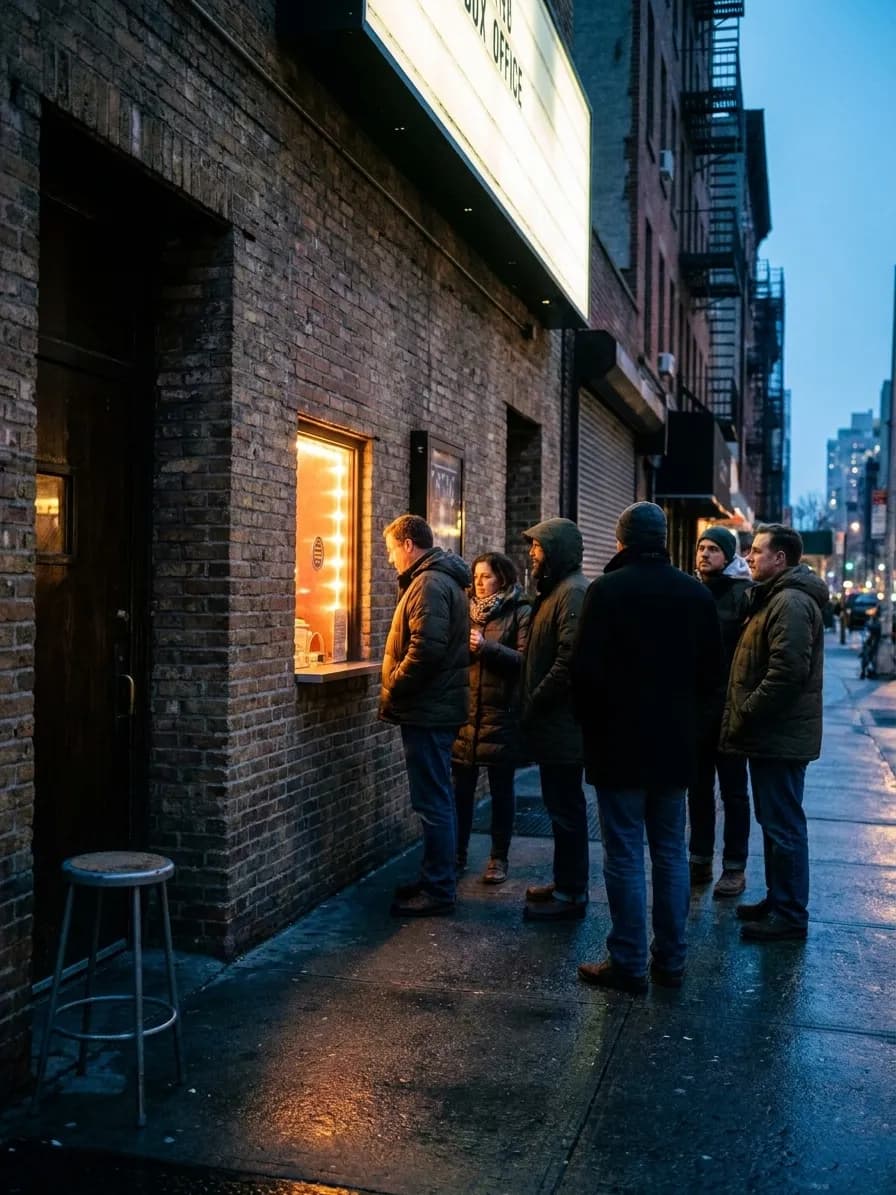
The most reliable late-night option in the city is also the least known to visitors: Dizzy's Club at Jazz at Lincoln Center runs Late Night Sessions from 11pm Thursday through Saturday, and they are walk-up only. No advance ticket exists to be sold out of. There is a food-and-beverage minimum per person per set, and student pricing is meaningfully cheaper, but the structural point stands — a room with a view over Columbus Circle, a serious band, and a door that opens for people who did not plan. For the earlier reserved sets at the same club, sold out is not final either: there is a standby list, and it moves.
Door tactics that actually work
Three habits get you in. First, aim for the second set rather than the first — the room thins after the early crowd leaves and standby lists clear fastest between sets. Second, go alone or in a pair; a room that cannot fit four can almost always fit one, and small clubs will seat singles at the bar when the tables are gone. Third, phone the venue rather than reading its listing. Small New York music rooms answer the phone in the evening, and the person answering knows exactly how full the 10.30 is, which is information that exists nowhere online.
What time things really start
The set time on a listing is the time the band is meant to begin, and in a jazz club that is broadly accurate. In a bar-venue, it is aspirational by twenty to forty minutes, and arriving exactly on time usually means watching a soundcheck. The exception cuts the other way with multi-band bills: doors at eight with three acts means the headliner is on close to eleven, so if you came for the last name on the bill you have a lot of evening to fill first. Work out which of the two situations you are in before you leave the house — it is the difference between a good night and ninety minutes of standing.
What a night actually costs
The sticker price is rarely the whole price, and in New York music rooms the structure is fairly consistent once you know it. Jazz clubs typically charge a set admission plus a per-person food-and-beverage minimum per set, which means the advertised number is roughly two-thirds of what you will spend. Bar-venues usually invert it: a small cover or none at all, but you are expected to keep buying drinks, and the tip on a cash-only bar tab is the band's actual income at a no-cover room. Several clubs run cheaper student rates and some waive the drink minimum for late sets. The genuinely cheapest serious music in the city is the second set on a weeknight at a club with student pricing — a fraction of a weekend ticket, in a half-empty room, often with the better playing because the band has warmed up.
Getting home is part of the plan
The subway runs all night, which is the quiet advantage New York has over almost every other music city, but overnight service is slower and several lines run short or reroute after midnight. A late set in Park Slope or on Avenue C is entirely doable without a car; it simply requires accepting that the ride home takes longer than the ride out. Check your line's overnight pattern before the last set rather than after it, and the whole evening stays cheap.
Please drink responsibly. Must be of legal drinking age.
Tags: #livemusicinnyc #nyctonight #nycjazz #westvillage #parkslope #eastvillage #smallsjazzclub #barbesbrooklyn #nublu #latenightnyc #nycmusic #jazzclub #nycnightlife #livemusic
All trademarks are the property of their respective owners.
Ask Karpo first
Set times, door policies and standby lists are the three things that decide whether a spontaneous music night works, and none of them are searchable in a useful way. Ask Karpo where to go from wherever you are standing and it can factor in the hour you are asking at rather than the weekend you are not planning.