New York still has rooms where the music happens live, every night, without a backing track or a playlist in sight. Not nostalgia venues coasting on reputations—working clubs where musicians show up, tune, and play until the room empties or the sun comes up. Most of them are in the West Village, where the rent somehow hasn't killed everything yet, and a few are in Brooklyn where the indie kids went when Manhattan got too expensive. You want live music near you in this city? Start with the places that never stopped.
Karpo knows which sets are worth the cover tonight, whether you want front-row jazz or a cramped indie basement. Ask and we'll give you the one room where you need to be.

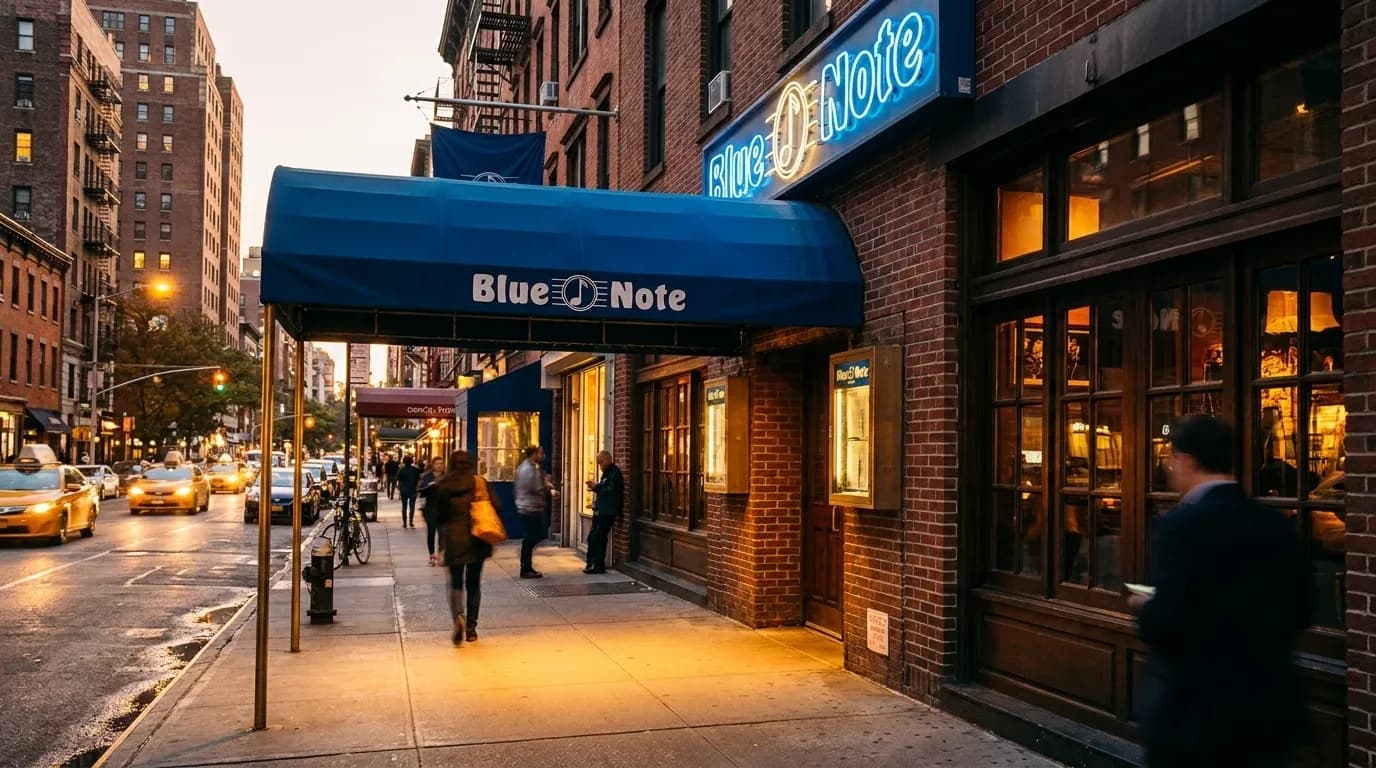
Blue Note: the one tourists get right
Blue Note on West 3rd Street books names you've actually heard of—Roy Hargrove played here before he died, Chick Corea did residencies, and on any given week you'll see someone who recorded albums your parents owned. The room itself is small, maybe 200 seats packed tight around little cocktail tables, and yes, there's a two-drink minimum that'll run you around twenty-five dollars each. Shows are usually two sets, eight and ten-thirty, sometimes an extra late one on weekends. The sound is clean, the sightlines are decent even from the back, and the vibe is more serious listening than background hang.
Get there early if you want a table up front; they seat first-come within your reservation time slot, and the difference between row one and row six matters in a room this size. The bar seats along the side are cheaper, no table minimum, and you can slip out between sets without climbing over anyone. Monday nights sometimes feature younger players or sidemen from famous bands doing their own thing—covers drop, crowds thin out, and the music gets looser.
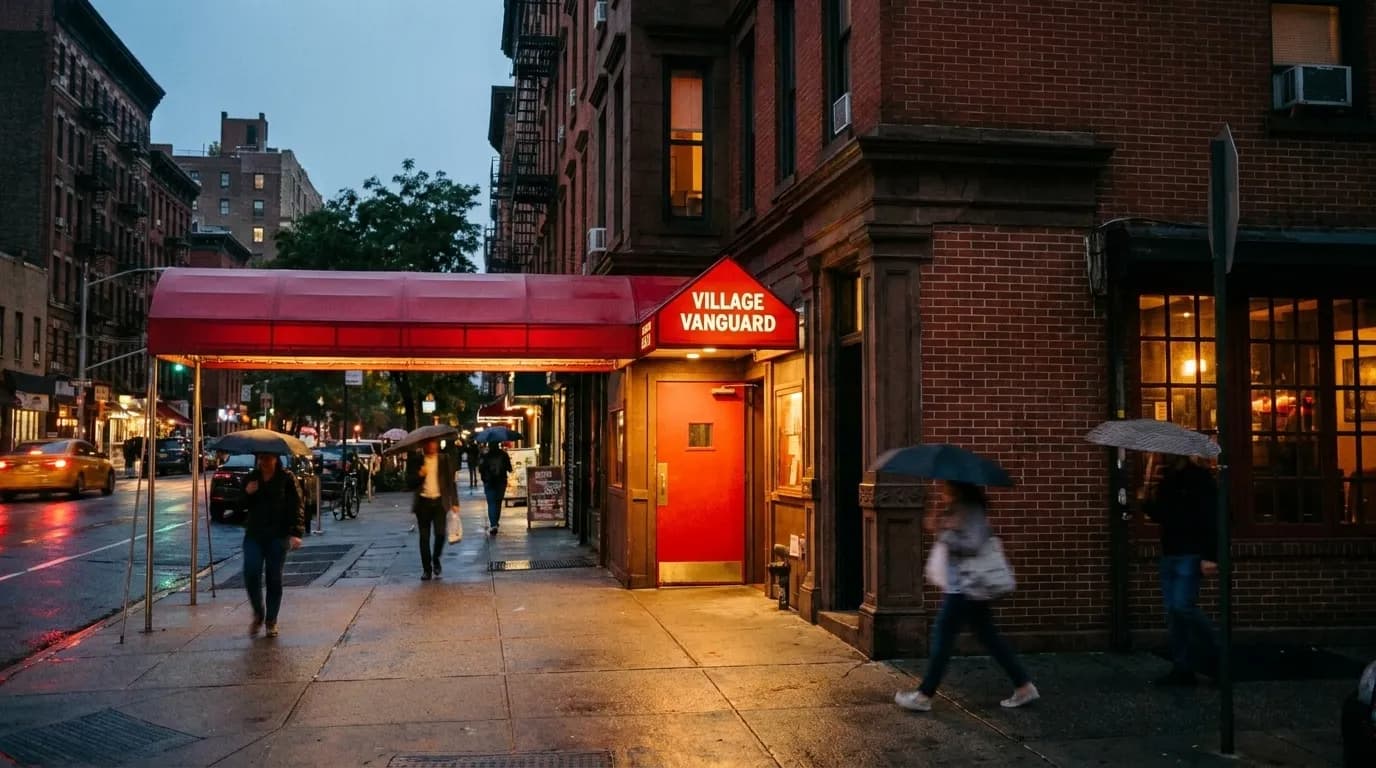
Village Vanguard: the basement that never changed
Village Vanguard is the one every jazz musician wants to play. It's been in the same basement on Seventh Avenue South since 1935, same low ceiling, same red walls, same terrible stairs you have to navigate in the dark while a trio works through a Bill Evans tune. The room is tiny and triangular, the piano's shoved in the corner, and the acoustics are so good that every album recorded here—Coltrane, Rollins, Monk, Bill Evans' Sunday at the Village Vanguard—sounds like the band is three feet from your face.
Shows run Tuesday through Sunday, usually three sets a night starting around eight-thirty. No photos, no talking during the music, and they will ask you to leave if you're on your phone. Cover runs around thirty-five to forty-five depending on who's playing, plus that drink minimum again. Sit along the wall if you can—the center tables are cramped and you'll be bumping elbows with strangers all night. The Vanguard Jazz Orchestra plays every Monday, same band for decades, and it's the cheapest ticket all week if you just want to hear what a basement in 1957 sounded like.
Smalls: the all-night session
Smalls on West 10th Street is where musicians go after their paying gigs end. It's another basement, even smaller than the Vanguard, and the format is simple: twenty-dollar cover gets you in for the whole night, no drink minimum, stay as long as you want. Music starts around seven-thirty and runs until three or four in the morning, different combos rotating in and out, sometimes six or seven sets if the energy holds. Weekends get packed by midnight—standing room only, people sitting on the stairs, that kind of packed.
The vibe is loose. Players jam, try things, call tunes on the spot. You'll see students from the New School, sidemen from blue-chip bands, and occasionally someone famous sitting in unannounced. There's no food, just a bar with decent beer and wine, and the sound system is whatever it is—some nights pristine, some nights the bass is too loud and the piano's fighting for air. Go late if you want the real session energy; go early if you want a seat. They also run a sister club, Mezzrow, right next door with a slightly more curated lineup and a separate cover. Both rooms stream every set online if you want to preview the vibe before you commit.
Baby's All Right: when you need loud guitars instead
Baby's All Right isn't jazz. It's the Williamsburg room where indie bands on their way up play before they graduate to Brooklyn Steel or Terminal 5. The venue sits on Broadway near the Morgan Avenue L stop, a narrow bar up front and a mid-sized back room that holds maybe three hundred when it's packed. Sound is good, stage is low, and the crowd actually watches the band instead of Instagramming from the back. Cover usually runs fifteen to twenty-five depending on who's playing, and the bar serves decent cocktails and local beer without the markup you'd pay in Manhattan.
Shows typically start around eight or nine, two or three bands on the bill, done by midnight unless it's a weekend and the headliner has an encore in them. The front bar stays open later, good for a drink before or after if you're not in a rush. Check the calendar in advance—Baby's books a mix of national touring acts and local favorites, and some nights sell out while others are half empty depending on who's in town. If the name on the poster played a Tiny Desk Concert in the last two years, get tickets early.
Why these rooms still matter
Streaming killed a lot of live music. Why pay a cover and a drink minimum when you can hear the same songs at home for free? But these rooms survived because they offer the thing a recording can't: a player adjusting in real time to the room, the crowd, the other musicians on stage. You hear someone take a risk, land it or not, and keep going. At Blue Note you're watching a legend run through a catalog forty years deep. At Smalls you're hearing a bass player try a new idea at two in the morning with six people left in the room. At Baby's All Right you're close enough to see the guitarist's hands and feel the drum kick in your chest.
These places also anchor the scenes that feed them. Musicians meet each other here, hear each other, steal ideas, form bands. Audiences learn what they like by showing up, not by letting an algorithm decide. That loop—players and listeners in the same room, night after night—is what keeps a city's music culture alive instead of archived. You don't need to be a jazz obsessive or an indie completist to appreciate that. You just need to show up and listen.
Practical notes
Most of these clubs don't take walk-ins on weekends; reserve ahead through their websites. Blue Note and the Vanguard have formal ticketing systems; Smalls is first-come, cash or card at the door. Subways are easy—take the A/C/E or 1/2/3 to West 4th Street for the Village spots, or the L to Bedford or Morgan for Baby's. Late-night options: Smalls is your only guaranteed all-nighter, though some weekends Baby's has a DJ set after the bands clear out. If you're budget-conscious, skip Blue Note's big-name nights and hit Smalls or the Vanguard Orchestra on Mondays. Dress code is whatever; you'll see sneakers and suits in the same row.
Please drink responsibly. Must be of legal drinking age.
Tags: #livemusicnyc #jazzclubs #bluenote #villagevanguard #smallsjazzclub #babysallright #greenwichvillage #williamsburgmusic #nycnightlife #livemusic #indiemusic #jazznight #nycbars #liveperformance #nycscene
All trademarks are the property of their respective owners.
Ask Karpo first
Before you buy a ticket or walk into a basement you're not sure about, ask Karpo what's actually good tonight. We know which sets are worth the cover, which rooms have the best sound, and when to skip the big name and catch the Monday night session instead. New York has live music every night—we'll point you to the one show that matches what you're craving right now.