The subway platform empties a little after midnight, and you emerge onto a Manhattan street where the dinner-rush crowd has dissolved but the lights still burn. This is when the city sheds its tourist veneer and reveals something more essential: the cooks, the bartenders closing out their own shifts, the night workers, the insomniacs, the people for whom 1 a.m. is barely late. They all need to eat, and Manhattan obliges. What follows isn't a treasure map to secret speakeasies—it's a practical guide to the late night food NYC has sustained for decades, from fluorescent-lit booths to intimate ramen counters where steam fogs the windows even in late May.
The Diner Litmus Test
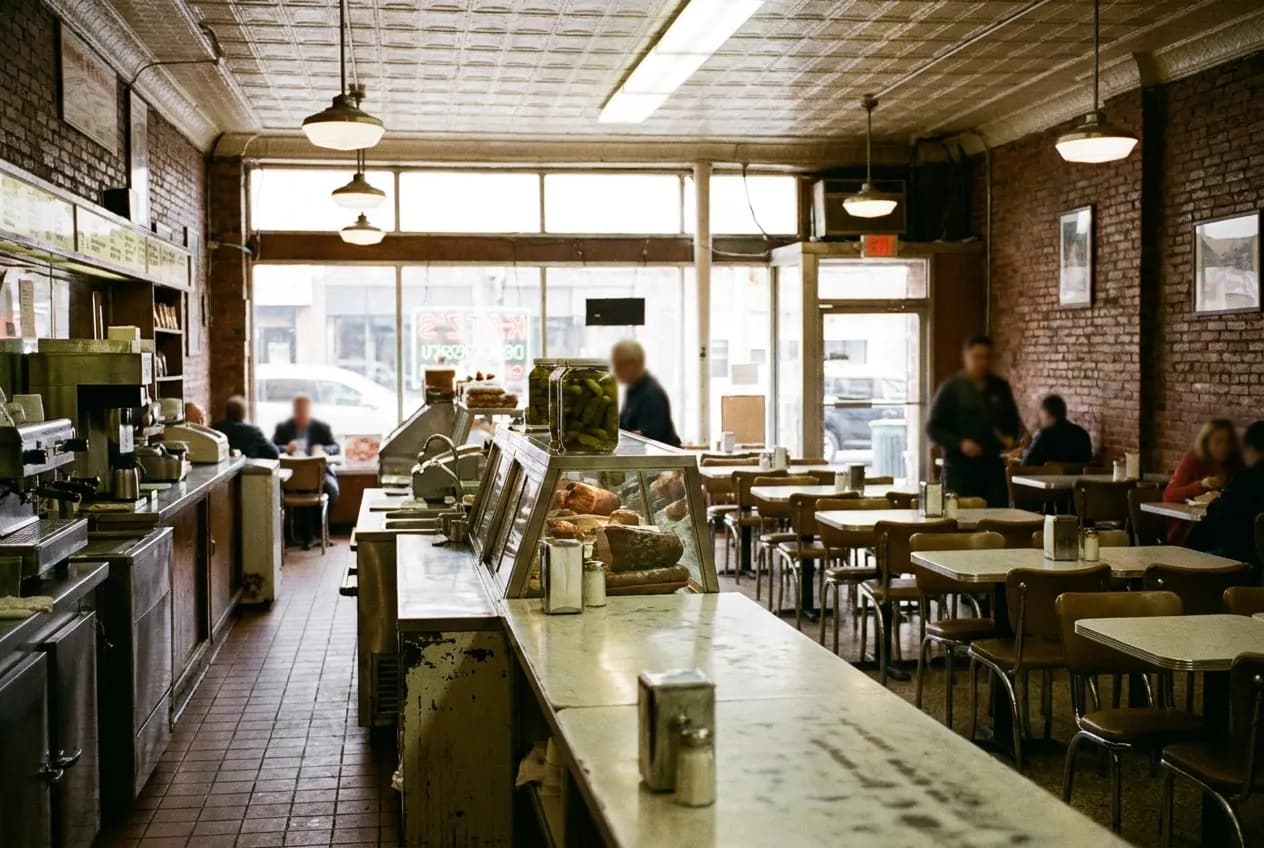
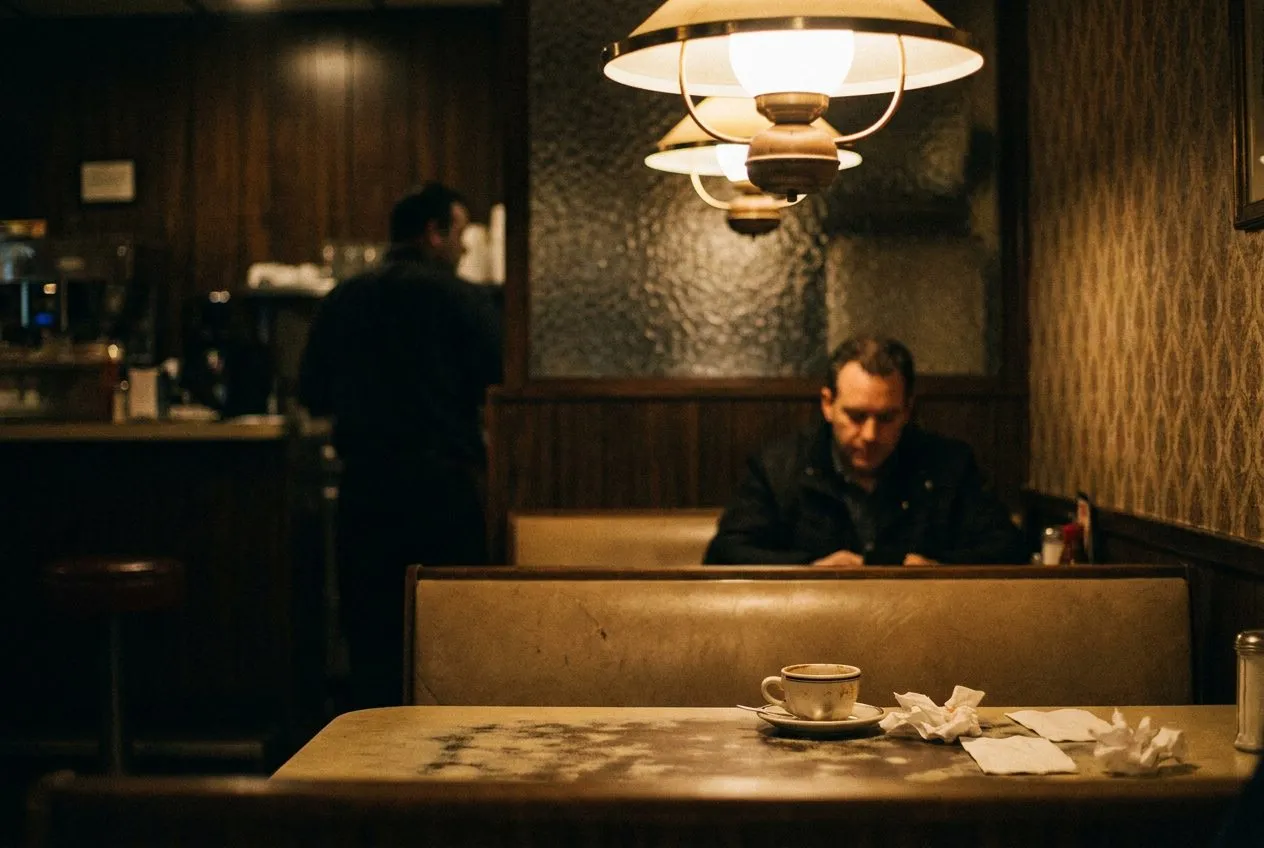
A city's commitment to its night owls can be measured by the quality of its 2 a.m. eggs. Manhattan's classic diners—the ones with Formica counters worn smooth by decades of elbows, where the coffee arrives before you finish sliding into the booth—remain the backbone of after-midnight dining. These aren't theme restaurants playing at mid-century nostalgia. They're working rooms with working kitchens, and the menu arrives laminated and sprawling: Greek specialties next to matzo ball soup next to a full page of omelets.
The light in these places has a particular quality, bright but not harsh, fluorescent tubes that have witnessed every permutation of human need at odd hours. You'll find them scattered through Midtown and the outer edges of the Financial District, identifiable by their corner locations and the small clusters of cabs idling outside. The coffee is strong, the portions are not subtle, and nobody will rush you. In June the air conditioning hums a steady accompaniment to the clatter of plates.
Koreatown's Second Wind
West 32nd Street between Fifth and Broadway transforms after dark into something closer to its Seoul counterpart—a stretch of vertical dining where restaurants stack several floors high and operate on a clock that renders midnight nearly irrelevant. The barbecue spots with table grills and powerful exhaust hoods stay open latest, their windows steamed despite the late-spring warmth outside. This is food that demands participation: you tend the meat, you wrap it in lettuce, you build each bite with the banchan that crowds the table in small ceramic dishes.
The beauty of Koreatown after midnight manhattan empties out is the unhurried pace. Servers no longer navigate a crush of early-evening diners. You can linger over soju or simply nurse a beer while the grill does its work, the smell of caramelizing beef mingling with garlic and sesame oil. Tofu stews arrive bubbling in stone pots, their heat a comfort even when you don't strictly need it. The neighborhood's karaoke rooms upstairs provide a soundtrack—muffled, rhythmic, occasionally soaring.
Ramen's Quiet Hours
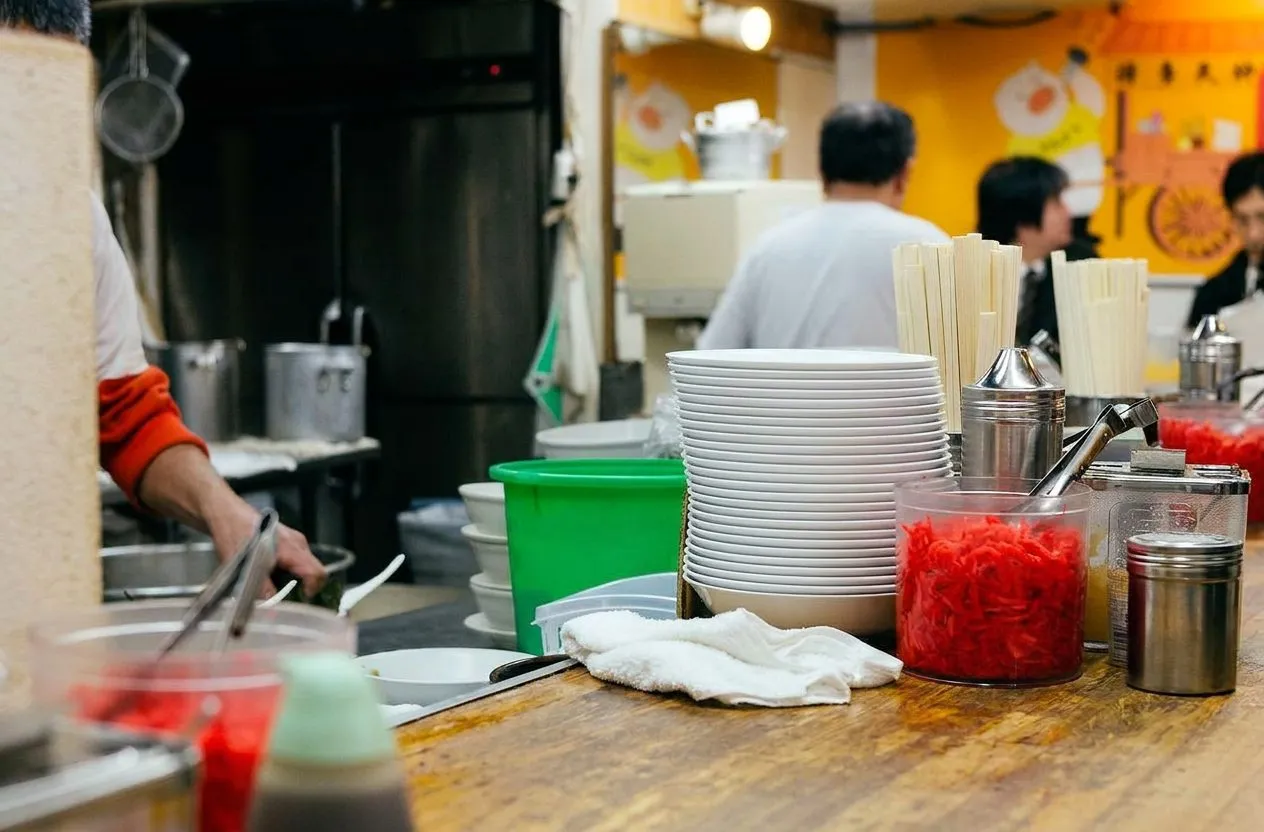
Manhattan's ramen landscape has matured past the days of hundred-person queues, and the late shift shows it at its best. Several East Village and Midtown spots keep their kitchens firing past 1 a.m., serving bowls to a clientele that skews toward industry workers and the genuinely hungry rather than the merely curious. The broth—whether tonkotsu's milky richness or shoyu's clearer amber—tastes somehow more restorative in these hours, the noodles still perfectly al dente, the egg still molten-yolked.
These rooms are small, often just a counter and a handful of tables, lit with paper lanterns or simple pendants that cast warm pools onto blonde wood. The sound is mostly slurping, the hiss of noodles hitting boiling water, the occasional bark of orders into the kitchen. By late May the windows run with condensation, creating a private world that feels far from the street outside. You eat, you pay, you leave satisfied—the transaction elegant in its simplicity.
Pizza by the Slice, Elevated or Otherwise
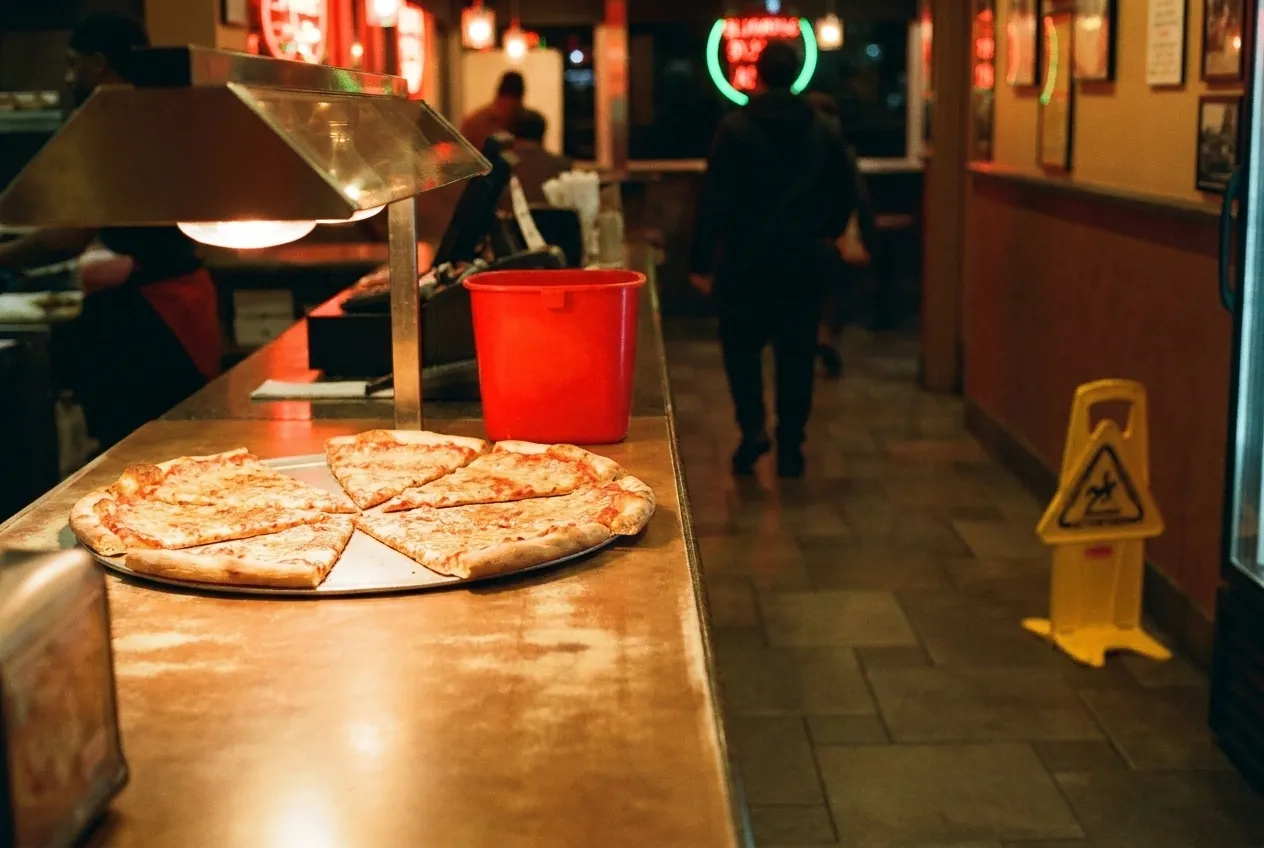
New York's pizza-by-the-slice infrastructure operates around the clock in certain pockets, and quality varies wildly. But the good ones—the places where the pies come out of deck ovens with crusts that shatter and fold in equal measure, where the cheese achieves that ideal state between molten and set—these places earn their late-night lines. You'll find them in the West Village, in Chelsea, scattered through the East Village, each with its own partisan following.
The ritual is efficient: point at the slices you want behind the glass, watch them disappear into the oven for a quick reheat, receive them on paper plates that immediately start to translucent with oil. Eat standing at the narrow counter along the wall or take it outside, where the June night has finally cooled to something almost comfortable. A slice at 1 a.m. is less a meal than a covenant with the city itself—proof you're still in motion, still engaged, still here.
Chinatown's Boundless Clock
Below Canal Street the concept of closing time becomes negotiable. Chinatown's dining rooms, particularly along East Broadway and the streets that web south from Canal, maintain hours that accommodate restaurant workers citywide finishing their own shifts. This is where chefs come to eat after their kitchens close: salt-baked squid, XO-sauced noodles, hot pots for one that arrive with a Sterno flame underneath. The menus run to dozens of pages, laminated and illustrated, offering the kind of encyclopedic choice that 3 a.m. sometimes demands.
The dining rooms themselves are bright, often stark, furnished with round tables and lazy Susans that spin with a particular weighted glide. Fluorescent lights reveal every detail—this isn't about ambiance in the conventional sense. It's about fuel, about flavors that wake up your palate instead of simply filling your stomach. Har gow and siu mai steam in bamboo stacks. Roast meats glisten in window cases. The Cantonese and Fujianese being spoken at neighboring tables outnumber English conversations three to one.
The Bar-Food Paradigm
Not every late-night meal needs to happen in a dedicated restaurant. Manhattan's better bars—the ones serious about their craft, whether that craft involves cocktails or an exceptional beer list—have learned that keeping the kitchen open past midnight transforms occasional visitors into regulars. The menus skew compact: burgers that arrive properly medium-rare, oysters on ice, duck-fat fries, perhaps a steak tartare for the committed. Nothing revolutionary, but executed with the kind of care that matters more at 1 a.m. than at 8 p.m.
These spots cluster in the West Village, the Lower East Side, pockets of the East Village where the bar scene never quite gentrified into bottle service. The lighting is low, amber-toned, the kind that makes everyone look like a better version of themselves. Vinyl spins or doesn't. Conversation hums at a level where you can still think. The burger, when it arrives, is exactly what you didn't know you needed—juice running onto the plate, bun just barely containing the architecture, a pile of fries still crackling from the fryer.
Practical Notes
Subway access is rarely an issue—most of these neighborhoods (Koreatown near 34th Street–Herald Square, East Village near Astor Place or First Avenue, Chinatown near Canal Street) run trains all night, though with longer waits after 1 a.m. Verify hours directly before committing to a trek; even the stalwarts occasionally trim schedules or close for private events. Street parking after midnight becomes feasible in many areas, though hydrant and meter rules still apply. Most classic diners and ramen counters are accessible at street level; Koreatown's vertical restaurants often involve stairs. Bring cash as backup—card readers work most places, but Chinatown especially still favors bills. Expect waits at the true classic spots even late; the good news is turnover stays brisk. June's weather makes outdoor slices pleasant; by 2 a.m. the humidity finally breaks.
Tags: #LateNightEats #ManhattanAfterDark #NYCNightLife #AfterMidnightDining #RightOnTime #NYCFoodScene #MidnightMunchies #KoreatownNYC #ChinatownEats #RamenNYC #NYCDiners #CityThatNeverSleeps #EatLocalNYC #JuneInNYC #ManhattanFood
Please drink responsibly. Must be of legal drinking age.
Sources consulted: Late-Night Dining · NYC Cuisine · Time Out New York Restaurants · NY Times Food · MTA Transit Info
All trademarks are the property of their respective owners.