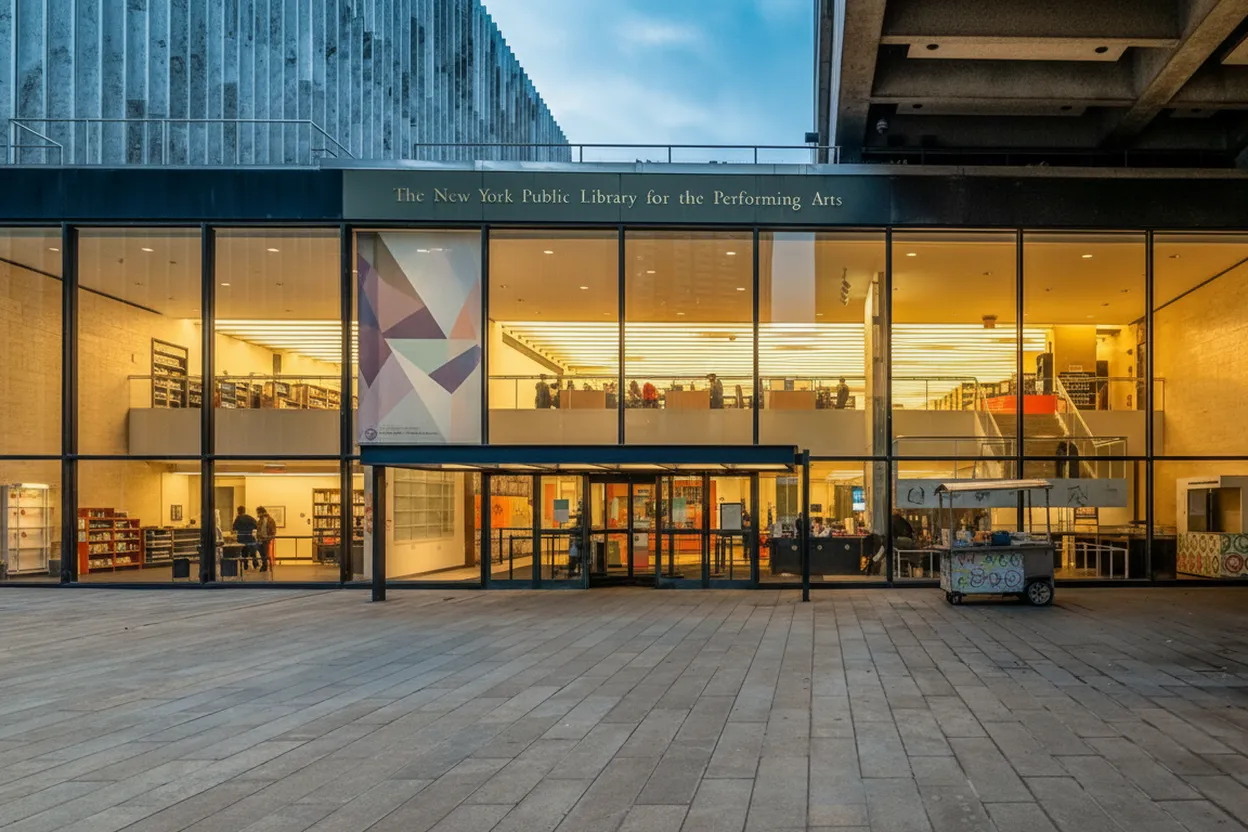
A bright Wednesday afternoon in New York City is a good setting for a quiet music-history stop: the New York Public Library for the Performing Arts at Lincoln Center gives a solo listener room to slow down, search the catalog, and treat recorded pop as research rather than background sound. The practical goal is modest: build a short listening plan around karen carpenter, the Carpenters’ vocal arrangements, and the wider 1970s pop environment without turning the visit into gossip or biography by assumption. Because research-library access depends on the exact item, room, date, and staff workflow, the best plan starts with verification, then keeps a flexible backup.
Want a tighter NYC route before you leave? Text Karpo for a Lincoln Center listening checklist that helps you confirm catalog access, transit status, and backup stops in one place.

NYPL Performing Arts Library at 111 Amsterdam Avenue
Start with the venue itself: NYPL lists the New York Public Library for the Performing Arts at 40 Lincoln Center Plaza, with the entrance at 111 Amsterdam Avenue between West 64th and West 65th Streets. The location page describes the building as fully accessible and notes that it houses circulating, reference, and rare archival collections in theater, film, dance, music, and recorded sound. For this topic, that breadth matters because the useful material may not sit in one obvious shelf area.
Do not build the trip around a single rumored record or clipping unless the catalog shows it and the library confirms how it can be used. NYPL says the Performing Arts Library supports unlimited browsing of circulating collections and on-site research services by walk-in or appointment. That wording gives you a useful decision rule: browse first if your goal is orientation, but contact the relevant division if the trip depends on hearing or handling a specific research item.
Rodgers and Hammerstein Archives of Recorded Sound
The most relevant division to name is the Rodgers and Hammerstein Archives of Recorded Sound, one of the Performing Arts Library divisions listed by NYPL. Treat it as a research pathway, not a guaranteed listening booth. Catalog records for sound items often distinguish between materials that can be used onsite, materials available by appointment, and materials requiring librarian assistance. That difference can decide whether a midday visit becomes a real listening session or only a planning stop.
A practical listening plan should include three layers: a primary Carpenters search, a broader search for 1970s A&M-era pop, and a vocal-performance comparison set. If the exact recording is not available that day, you can still use the visit well by asking staff how recorded-sound requests work, saving call numbers, and noting which items require appointments. The failure mode is arriving with headphones in mind but no verified item request.
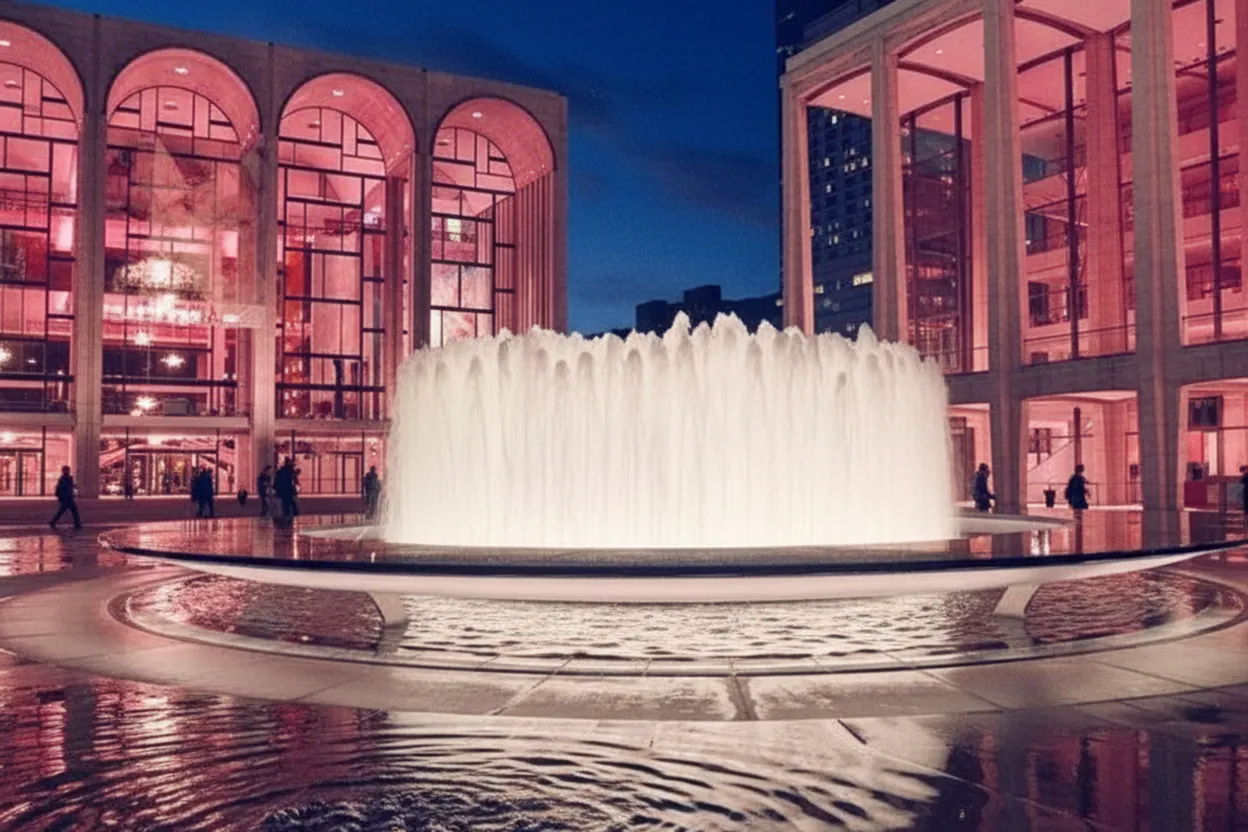
Research Catalog Search for Carpenters Recordings
Use NYPL’s Research Catalog before leaving home, because the current catalog page explains that research collections span NYPL’s research centers and partner shared collections. Search with quoted and unquoted terms: “Carpenters,” “Karen Carpenter,” album titles, and song titles such as “Close to You,” “Sing,” or “Yesterday Once More.” Avoid assuming that a search-result snippet proves immediate access. Open each record and read location, format, call number, and request language.
The catalog itself warns that archival collections may require appointments, and NYPL’s research pages distinguish the Research Catalog from circulating branch materials. That matters for pacing. A moderate, midday version of this stop is not a crate-digging sprint; it is a 60-to-90-minute research session where you identify what NYPL actually holds, what can be used onsite, and what should be requested later. Bring your library card information if you have it, but verify account needs before counting on remote access.
Special Collections Reading Room on the Third Floor
If your path moves from catalog searching into special collections, follow the Katharine Cornell-Guthrie McClintic Special Collections Reading Room rules. NYPL posts separate reading-room hours and notes that same-day requests for onsite materials are accepted until one hour before closing. It also says researchers check coats and large bags with security, and that food, drinks, and camera tripods are not permitted. Those rules are preservation rules, not optional etiquette.
For this article’s listening angle, the tradeoff is control versus discovery. Special collections procedures may slow the visit, but they protect rare material and make staff guidance more useful. If you only have a lunch break, stay with catalog notes and public areas. If you can devote the afternoon, ask whether a seat, appointment, or division consultation is the right next step. Do not photograph, record, or copy anything unless posted policies and staff permission clearly allow it.
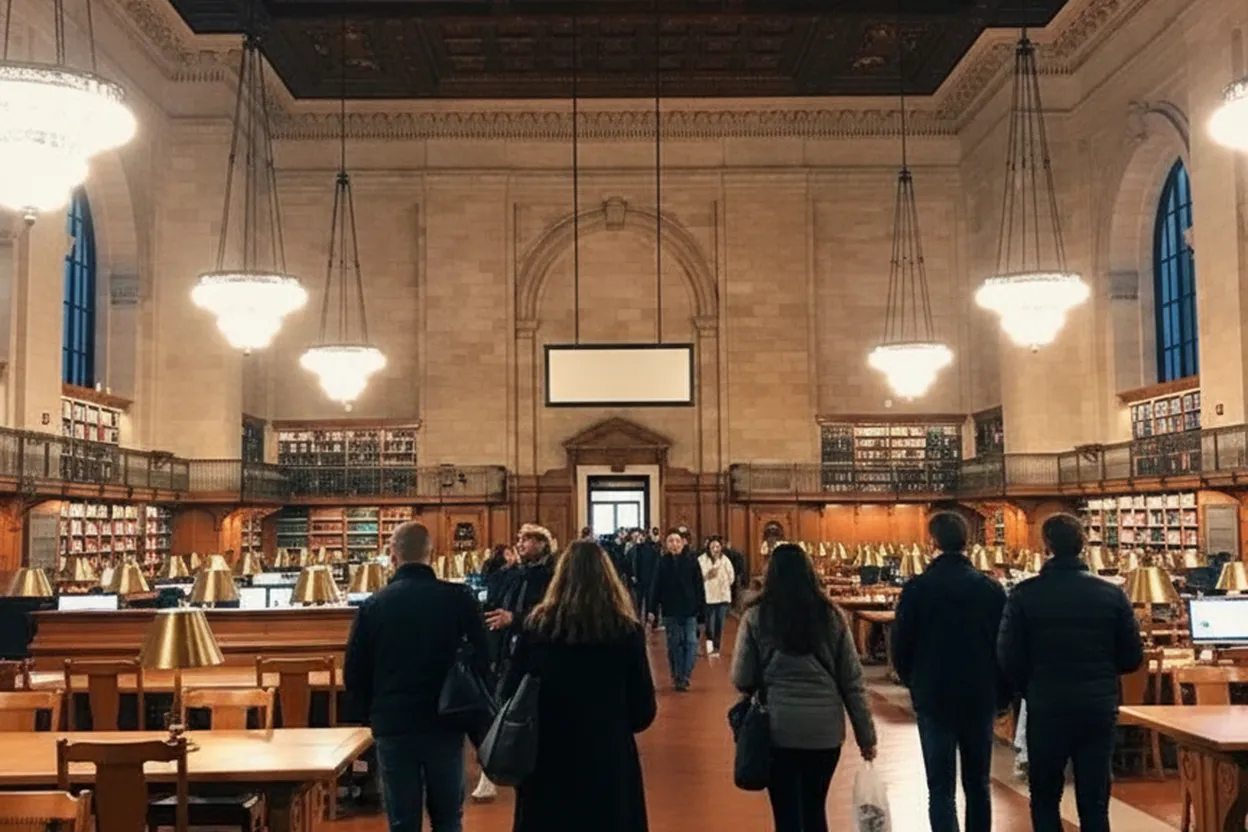
66th Street-Lincoln Center on the 1 Train
For most Manhattan riders, the simplest transit target is 66th Street-Lincoln Center on the 1 train. Lincoln Center’s official directions point riders from Penn Station to the uptown 1 local train and from Grand Central through Times Square to the uptown 1. The campus also lists nearby bus choices including the M5, M7, M10, M11, M66, and M104. Check MTA status before committing, because subway conditions can change within the same afternoon.
Accessibility planning should use current elevator and service information, not memory. Lincoln Center’s accessibility page identifies the nearest accessible subway stations as West 66th Street on the 1 and 59th Street-Columbus Circle on the A, B, C, D, or 1. It also notes that all MTA New York City buses have ramps. If an elevator outage or service change appears in the official MTA app, switch to bus, taxi, Access-A-Ride, or a shorter Columbus Circle walk.
Lincoln Center Plaza Midday Pacing
A reflective solo visit works best if you separate listening from lingering. Arrive with a small notebook, complete the catalog search first, then take a short Lincoln Center Plaza pause before deciding whether to request help. The plaza and Amsterdam Avenue entrance are close enough that you can reset without losing the afternoon. This pacing also keeps the visit educational: you are studying recording craft, arrangement, timbre, and popular-music context, not chasing a dramatic storyline.
The weather slice is a bright weekday afternoon, but comfort still depends on crowding, security lines, and campus events. If the library lobby is busy, move slowly and ask where first-time research visitors should begin. If there is no useful same-day access, do not force the plan. Save the catalog records, confirm the division contact route, and use the remaining time for a broader Lincoln Center or Upper West Side music-history walk.
Ask NYPL Before You Go
The final action is direct verification. Use the NYPL location page, Research Catalog, and contact options for the Performing Arts Library before you travel. Confirm the building hours for Wednesday, August 5, 2026, the relevant division’s access process, and whether any specific Carpenters recording, score, clipping file, or book can be used that day. If staff say an appointment is needed, treat that as the plan, not an inconvenience.
This is a good fit for listeners, students, singers, arrangers, and pop-history readers who want a public-learning activity with a calm tone. It is less useful for someone expecting a museum-style exhibit devoted to one singer. The backup is simple: make the visit a research orientation, then return with verified call numbers and appointment details. Before stepping onto the train, recheck NYPL hours, MTA status, and any item request instructions.
Tags: #AskKarpo #BeforeYouGo #NewYorkCity #NYC #LincolnCenter #NYPL #PerformingArtsLibrary #MusicHistory #RecordedSound #Carpenters #KarenCarpenter #UpperWestSide #LibraryResearch #TransitTips
Sources consulted: Source 1: nypl.org · Source 2: nypl.org · Source 3: nypl.org · Source 4: nypl.org · Source 5: lincolncenter.org · Source 6: grammy.com
All trademarks are the property of their respective owners.
Ask Karpo first
Tell Karpo your date, group size, budget, and starting point. We’ll check current access, timing, transit, and the cleanest New York City plan for New York Public Library for the Performing Arts, Lincoln Center before you head out.


