 Chelsea Consignment Shop Crawl Planner for Your First Studio
Hidden Gems & Odd Finds

Catbird Is a Williamsburg Jewelry Store Near Me Worth the Walk
Catbird at 108 N 7th St makes jewelry browsing feel like a small Williamsburg design visit, with delicate pieces, giftable details, and a walkable Brooklyn afternoon around it.
Catbird at 108 N 7th St in Williamsburg is the kind of jewelry store that rewards a deliberate visit. The shop is compact, highly edited, and centered on delicate pieces that can become part of a daily stack rather than a once-a-year costume. Start with the cases, but do not stop at the first sparkle: look at how a narrow band sits beside another ring, how a tiny charm moves on a chain, and how a small earring changes when you turn your head. The address is useful because it places the purchase inside a real Brooklyn route, with Bedford Avenue, side streets, and the waterfront close enough to make the whole errand feel like an afternoon.
A Small Shop with a Clear Point of View
Catbird feels different from a large jewelry counter because the room asks you to compare small decisions. The charm of a piece may be a slightly uneven edge, a very fine chain, a stone that only flashes at an angle, or the distance between two rings when they are worn together. That editing is useful for a shopper who knows they want something personal but does not want a loud logo or an oversized centerpiece. Begin by standing back and reading the collection as a whole. Then choose three objects with different jobs: one daily piece, one possible gift, and one item that is more expressive than your usual choice. That simple grouping makes the display easier to understand.
The Williamsburg Details Worth Noticing
Outside, the shop sits in the active Williamsburg flow around North 7th Street and Bedford Avenue. Inside, the useful details are quieter: the scale of the trays, the spacing between pieces, and the way warm light makes fine metal look softer than it will in daylight. Take a piece near a window or step outside before deciding. A polished band can look bright indoors and more understated on the sidewalk; a tiny stone can disappear under a coat but become exactly right with a plain shirt. The neighborhood context matters because the walk gives you time to see whether you still want the object after the first excitement has passed.
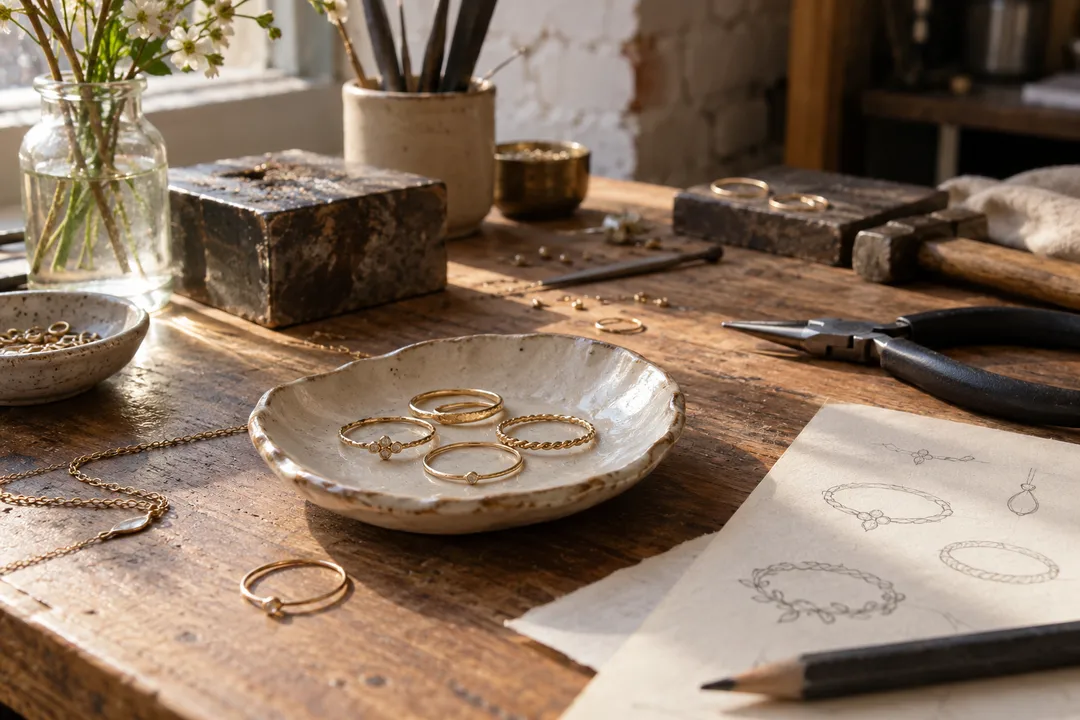
If this is your first visit, begin with narrow rings and simple chains. They show the store’s proportions quickly and are easier to combine with jewelry already in your drawer. Try one ring alone, then beside a ring you own, then with a second option from the case. Notice pressure at the edges, how often the band catches on fabric, and whether you keep looking at it after you have stopped posing your hand. Move next to tiny earrings or charms if you are shopping for a gift. The strongest first purchase is often the quietest one: a piece that can be worn to work, on a weekend, and with clothes that are not carefully styled.
Gift Shopping Without Guesswork
Gift buying works best when you treat the recipient’s existing habits as evidence. If they wear small hoops, look for a charm or a slim chain rather than a completely different scale. If they never wear rings, do not assume a stack will change that. Ask the staff a focused question about a safe silhouette, easy care, or a piece that can be worn alone. Packaging and timing are worth discussing early if the gift has a date attached to it. I would avoid buying a highly specific stone color for someone whose style you do not know. A simple shape with one memorable detail gives the recipient more ways to make it theirs.
What the Store Visit Requires
The store rewards calm handling. Take one item at a time, keep your bag and sleeves clear of the trays, and return pieces to the place where you found them. If the room is busy, start with open displays and wait before asking for a close comparison at a crowded case. A weekday morning is usually easier for careful browsing than a Saturday rush. You do not need a long jewelry vocabulary; say whether you want everyday wear, a gift, a ring to layer, or a small object with more personality. That information is more helpful than asking for whatever is most popular. The point of the visit is to make a considered choice, not to complete a lap as quickly as possible.
A Walk Toward Daylight
After you leave, walk south or west before making the next decision. Bedford Avenue gives you a busy commercial stretch, while the side streets provide a quieter view of the piece and the neighborhood. Continue toward the waterfront if you want open sky and a longer reset, or keep the route close if you are carrying a gift. Daylight is a practical test: it reveals texture, makes scale easier to judge, and shows whether a small stone has the presence you expected. If rain arrives, use a nearby café as the pause instead of forcing a long waterfront walk. The best itinerary leaves room for the purchase to settle.
The Honest Case for Skipping a Big Purchase
Catbird is a strong choice for someone who likes fine details, gradual collecting, and jewelry that can be worn often. It is also useful for a gift buyer who wants something more distinctive than a generic chain-store pendant. It is not the efficient answer for a shopper who needs a broad bridal inventory, a same-day repair, or a large stone comparison. My honest advice is to skip the biggest-looking item on a first visit. The display can make scale feel exciting, but a piece that demands special clothes will get less use than a smaller object that fits your normal week. Start with the object you can imagine wearing next Tuesday.
Practical Notes for 108 N 7th Street One more useful habit is to separate the emotional choice from the maintenance choice. Decide which object you love, then ask how often it needs cleaning, whether it catches on knitwear, and whether you will be comfortable wearing it on the subway, at work, or while carrying groceries. That is where a tiny ring or charm can outperform a louder piece. If you are buying for an anniversary, write the date and the recipient’s usual metal color in your notes before you enter. If you are buying on impulse, take one photo and walk a block before returning. A piece that survives that short pause is usually a better purchase than one that only feels urgent inside the store. A final check is to notice what the piece does when you stop looking at it. If you can carry on a conversation, cross a street, and forget the object for a minute before noticing it again, the fit is doing its job. That balance between quiet and memorable is the reason Catbird works for everyday jewelry. It gives you a detail to keep, not a costume to manage.
Ask Karpo for more information.
Keep reading
- Chelsea Consignment Shop Crawl Planner for Your First Studio
 East Village Consignment Shop Crawl Planner: Leather Jackets
 Harlem Consignment Shop Crawl Planner for a Jazz Night Look