 Tribeca Neighborhood Coffee Crawl Planner With a Stroller
Coffee & Dessert
NYC Japanese Creperie: 3 Steps Before Your Evening Show
Fit a Japanese creperie into your NYC evening by planning backward from show entry, keeping the dessert stop optional and choosing a simple onward route.
Plan backward from entry to your show before adding a Japanese creperie to an NYC evening. The dessert stop should fit the outing you already care about. Give Karpo APP your intended area, the venue you need to reach and the time you want to arrive there. Then ask for a nearby crepe option with a simple onward journey. The three steps on this page are planning backward, choosing a workable format and setting a cutoff. No example establishes a shop's service speed or current queue.
Step one: begin with the show entrance
Use the event's own entry information as the fixed part of the plan. A performance start time, door time and requested arrival time can refer to different things. Read the instructions that apply to your ticket and choose when you intend to reach the actual entrance. Give that target to Karpo rather than asking vaguely for dessert before a show. The difference matters because travel to the neighborhood is only one part of getting into a building and taking your place.
Identify the destination precisely enough to avoid the wrong entrance. A theater complex or performance building can have more than one event space, and the public address alone may not explain where your ticket admits you. Use the organizer's directions where they are provided. You can include those details in your planning request without asking Karpo to invent a door or a shortcut. The dessert search becomes more useful when it is organized around where you actually need to end up.
Now describe the gap between your earlier plans and that arrival target. Say where you expect to be and whether you want to walk or use another means of transport. A suggested route is a planning aid, while the time needed to order, prepare and eat dessert is a separate question. Keep room for the parts that are not established by a map. A short distance between a creperie and a theater does not automatically make the stop comfortable before entry.
Ask for a stop that fits the gap
A practical prompt might read: Find a Japanese creperie near my show venue in NYC for a short dessert stop beforehand. I will be leaving this neighborhood, want to reach the entrance by my chosen time, and prefer an uncomplicated route. Show a couple of candidates and explain the detour for each. Replace the placeholders with your own plans. This asks Karpo to organize a search around your evening without promising that the recommended business will complete an order within a guaranteed interval.
Keep the actual arrival window visible when looking at business information. Being listed as open somewhere in the evening does not answer whether the selected branch's stated hours cover your planned stop. If a candidate has documented ordering or pickup arrangements, read what they say about the fulfillment you intend to use. Avoid combining one branch's hours with another branch's menu or address. A nearby option only becomes useful when the relevant information belongs to the same location you would visit.
Ask for fewer options if the search starts expanding across the city. Before a fixed performance, an interesting crepe farther away may be a good idea for a different day. Keep this comparison focused on the approach to your show. A candidate can earn its place because it offers a supported menu match and a manageable detour, rather than because it appears on a broad dessert ranking. You are choosing a stop within an evening, not deciding where to make an independent food pilgrimage.
Step two: choose how you want to eat
A handheld dessert may suit a brief pause, while a plated order may be better for a seated break. State the format you prefer and use documented service information to evaluate candidates. Do not assume a cone can be carried into the performance venue or eaten while waiting in its entry line. Food and bag policies belong to the event or building. Unless those policies support it, plan to finish the dessert before approaching admission rather than treating the theater lobby as an extension of the cafe.
Keep the order straightforward if your main interest is a small sweet stop. You can choose a listed combination whose ingredients you understand instead of planning a series of unconfirmed substitutions. This is about reducing decisions at the counter, not claiming that a simple order receives priority or is prepared faster. If a particular filling is essential, mention it in the request so the shortlist reflects that preference. If it is merely nice to have, leave yourself room to choose another documented option.
Think about what you will carry for the rest of the evening. An elaborate dessert can be awkward if you also have a coat, bag and another drink to manage. That does not make the food a poor choice in general, but it can make it a poor fit for this outing. Skip extra purchases you do not actually want. Choose the version of the stop you can enjoy comfortably, with enough space in the plan to eat it rather than rushing with it toward the entrance.
Step three: choose a cutoff you control
Set your own leave-by point before arriving at the dessert stop. It should preserve the journey to the show and the arrival margin you chose from the event instructions. The cutoff is a personal boundary, not an estimate of the business's wait. If ordering has not begun by that point, keeping the show plan can mean skipping dessert. Deciding this in advance avoids making the choice while already invested in a queue and hoping that the remaining steps will all happen quickly.
If you arrive with friends, agree that boundary together. One person may be comfortable hurrying while another wants an unpressured entrance. Put the shared target in the Karpo request and make the optional status of dessert clear. Friends arriving separately can also meet at the show instead of requiring everyone to complete the food stop. A plan works better when no one has to choose between abandoning the group at the counter and arriving later than they intended for the event.
Keep a backup that does not create a new deadline problem. The simplest backup may be going directly to the show, rather than searching for another creperie at the last moment. You can ask Karpo for an alternative dessert idea for a future outing or consider afterward only if documented hours and your own energy make that appealing. Do not automatically shift the same order later and assume the shop will be serving. Optional means you can leave the food stop out entirely without damaging the evening.
Practical Notes for the final route
Save the selected branch and your show entrance as distinct destinations. Keep route guidance separate from tickets, reservations and food purchases. Finding a creperie in Karpo APP does not reserve a serving or create a pickup order, and identifying a performance venue does not establish admission. Use the merchant's stated ordering process if you choose to buy ahead, and the event's own process for ticket and entry matters. Share only the confirmations those systems actually provide, rather than treating an itinerary as proof of a transaction.
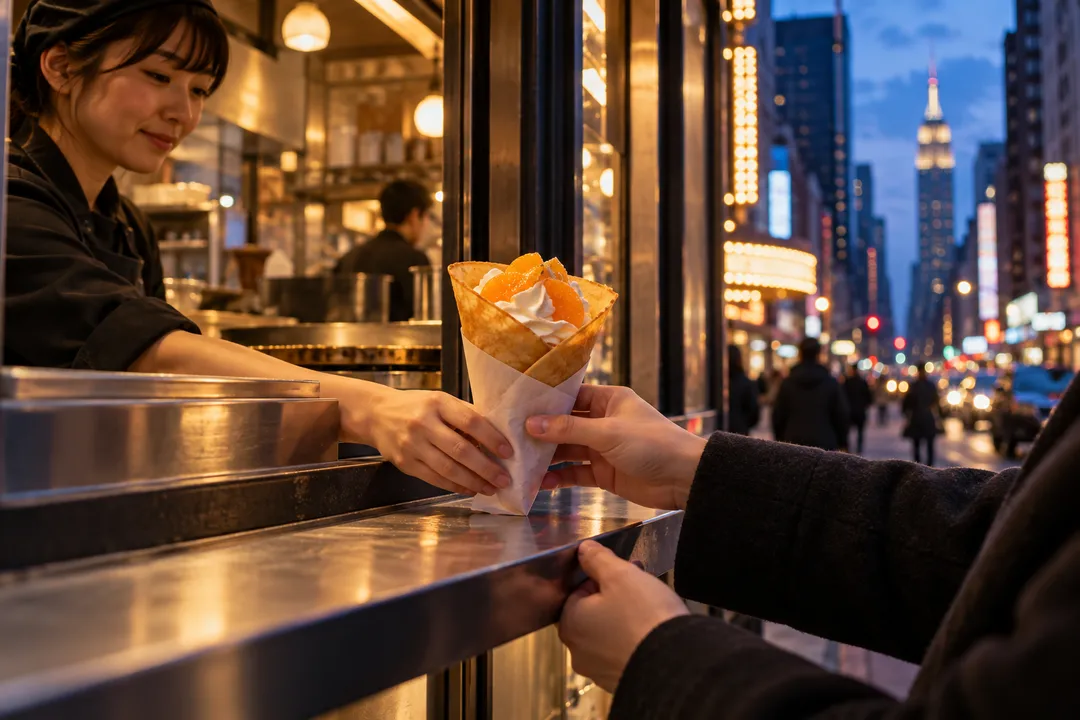
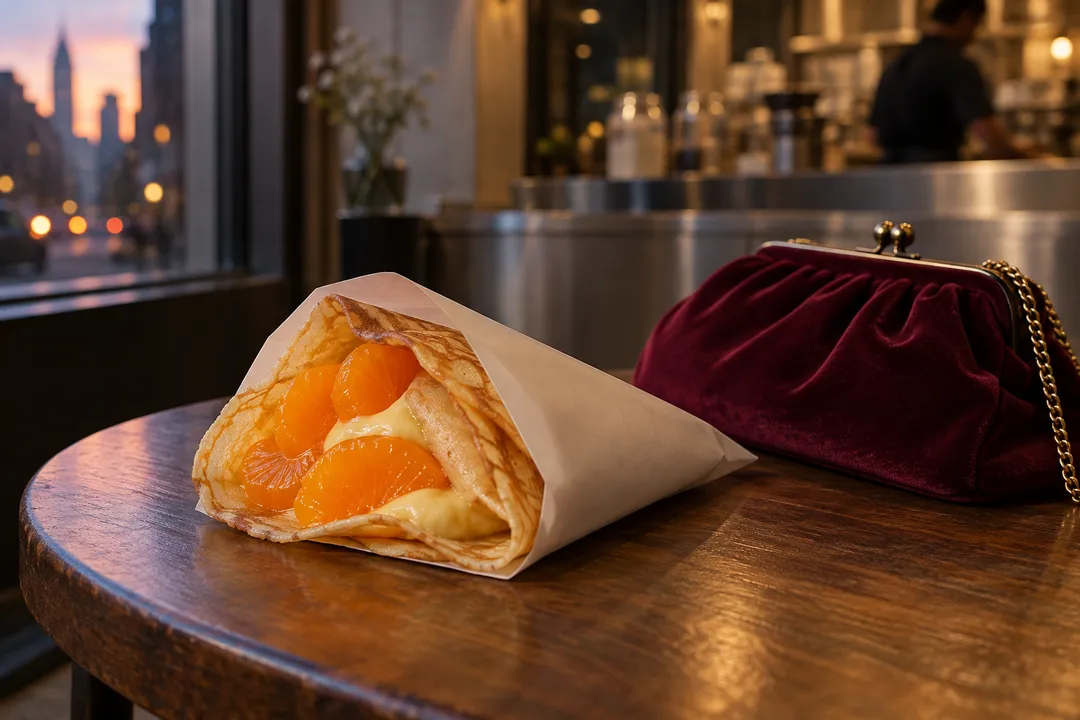
The final evening plan should be easy to explain: a possible dessert stop, a clear departure boundary and one onward destination. Start with the show, let Karpo narrow the food search around it, and select a crepe format you can enjoy within the available gap. Leave the stop out if the practical fit disappears. The images on this page are newly generated, imaginary dessert scenes. They identify no creperie and provide no evidence about portions, opening hours, queues or a real counter's preparation arrangements.
Ask Karpo for more information.
Keep reading
- Tribeca Neighborhood Coffee Crawl Planner With a Stroller
 Flushing Neighborhood Coffee Crawl Planner Beyond Espresso
 Bushwick Neighborhood Coffee Crawl Planner for Mural Hunters