 Mediterranean Food Near Me in NoMad: Ilili's Crispy Brussels Sprouts
Hidden Gems & Odd Finds
jack brennan Verification Walk Through New York Library Archives
A Midtown-to-Civic Center route for checking a trending name through NYPL catalogs, archival finding aids, and municipal records.
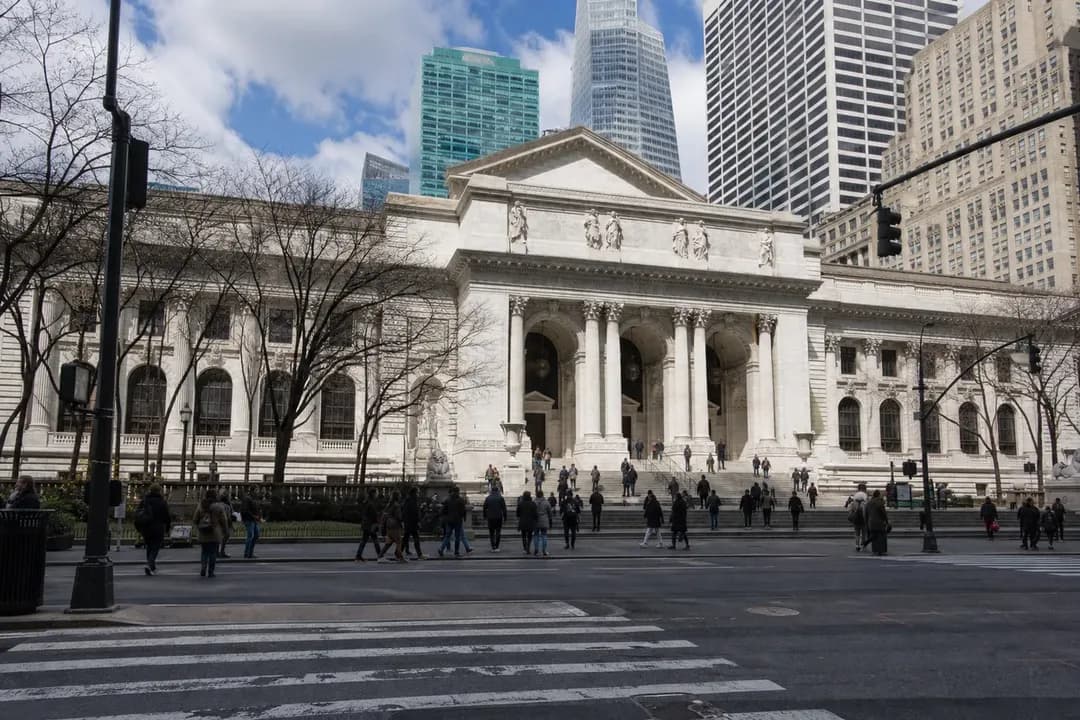
When a name starts moving through New York feeds, the most useful first step is not another search tab. It is a quiet, source-based check in the city’s own knowledge infrastructure. This New York City route starts at the New York Public Library’s Stephen A. Schwarzman Building on Fifth Avenue and 42nd Street, then points toward municipal records if the trail needs public-document support. For anyone trying to understand why jack brennan is trending, the goal is modest: separate catalog evidence, archival context, and official records from reposted guesses. On an overcast Thursday, August 6, 2026, it works as an easy daytime research visit for one curious reader.
Want a cleaner Midtown archive route? Text Karpo before you go for a city-specific checklist that helps you tap the right catalog, desk, and backup stop.
Start At Stephen A. Schwarzman Building On Fifth Avenue
Begin at the Stephen A. Schwarzman Building, Fifth Avenue and 42nd Street, because it gives a name search structure before the day turns into scrolling. NYPL lists the building as fully accessible, with the main entrance on Fifth Avenue and accessible entrances at 40th Street and 42nd Street. Its regular Thursday hours are 10 AM to 6 PM, but division hours can differ, so treat the building clock and the room clock separately.
This stop fits researchers, students, journalists, family-history beginners, and residents who want a sober way to check a claim. It is less useful for anyone expecting instant proof from a single desk. The tradeoff is patience: some materials are open for quiet study, while special collections may require staff consultation or appointments. If the first catalog search is thin, that result is still information, not a failure.
Use The NYPL Research Catalog Before The Reading Room
The Research Catalog is the first filter because it can show books, archival descriptions, item locations, request options, and material held across NYPL research centers. NYPL advises researchers to apply for a library card, search collections, consult staff, and request materials before arriving when possible. Visitors from outside New York can obtain a Visiting Researcher card for three months of collection access, subject to NYPL registration steps.
Search the exact name, then variants only after recording the exact-name result. If a record has no request button, NYPL says it may be in use or restricted, and the correct next move is contacting the holding division. Do not treat absence from the catalog as proof that a person or event never existed. It means the library route has not yet confirmed a match.
Ask NYPL Staff Which Division Owns The Trail
At Schwarzman, the relevant room depends on what the claim says. Local history and genealogy questions may point toward the Milstein Division; manuscripts may point toward Manuscripts and Archives; newspapers and general reference may begin with the General Research Division. NYPL’s own guidance says Ask NYPL can help when a researcher is unsure which division is right, which matters when a trending name arrives without reliable context.
This is where pacing improves. Bring the claim in plain form: name, alleged connection, approximate date, place, and the source that made you curious. Avoid asking staff to verify social-media rumors as a package. Ask instead what catalog, database, clipping file, directory, or finding aid would be appropriate. The failure mode is overloading the desk with speculation; the better move is one narrow question at a time.
Settle Into Rose Main Reading Room For Quiet Checks
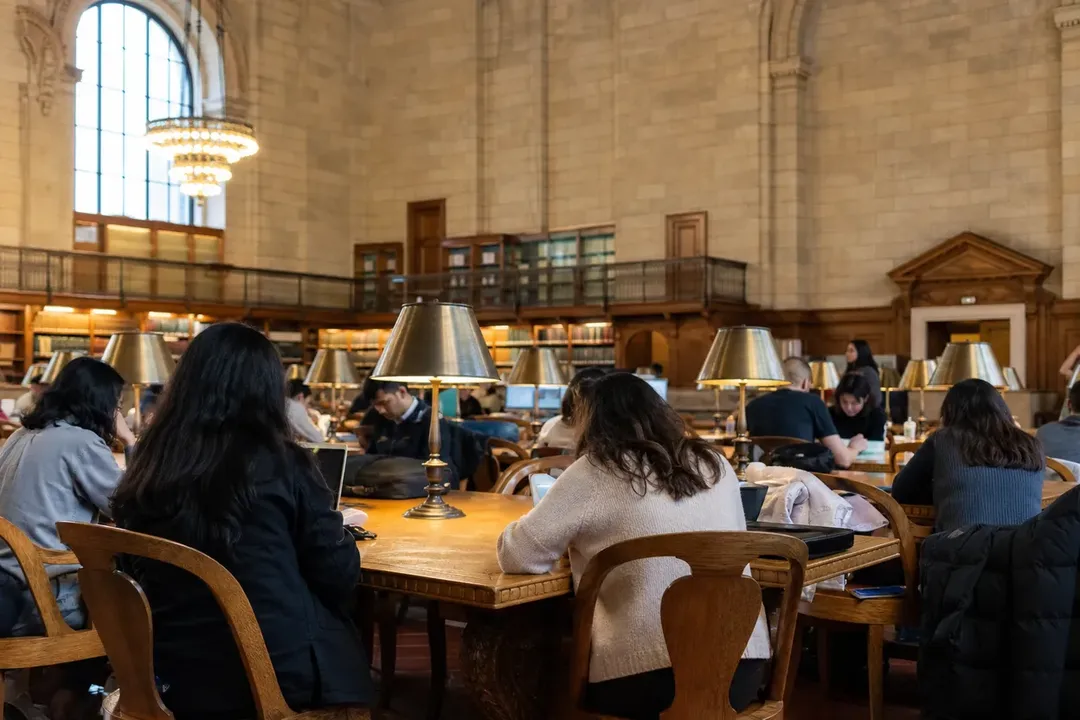
The Rose Main Reading Room is useful when the search turns into reading rather than retrieval. NYPL describes it as open for research and quiet study, with reference volumes available and material requests connected to the Milstein Stacks beneath Bryant Park. Casual visitors can have access through NYPL’s listed visiting hour, but research use is different from sightseeing, so keep the desk, seating, and volume level aligned with that purpose.
For a solo daytime visit, build in twenty minutes for catalog searching, then another thirty for reading notes, saving citations, and deciding whether the next source must be archival, municipal, or external. The room’s strength is focus; its weakness is that it cannot make inaccessible or offsite material appear immediately. If a needed item is offsite or restricted, record the call number and request path instead of improvising.

Ride The 7 Or Walk From Bryant Park With A Backup
The simplest transit choice is usually the 7 train to Fifth Avenue or the B, D, F, or M to 42nd Street-Bryant Park, with Grand Central-42nd Street close enough for many East Side riders. Because transit conditions can change quickly, check MTA service status before leaving, especially if the visit depends on a specific reading-room window. Bryant Park also gives a practical reset point if you arrive early.
Accessibility planning should not wait until the station platform. NYPL identifies accessible building entrances at 40th and 42nd Streets, but subway elevator status is a separate question and should be checked through MTA’s current tools. If the weather stays overcast and foot traffic is heavy near Midtown lunch hours, slow the route down: arrive by one entrance, leave by another, and avoid turning the visit into a timed chase.
Continue To 31 Chambers Street For Municipal Archives
If the library trail points toward government records, the next logical venue is the New York City Department of Records and Information Services at 31 Chambers Street. The Municipal Library and Archives public research rooms are listed as open Monday to Friday from 9 AM to noon and 1 PM to 4 PM, with appointments strongly encouraged. The site also lists research contacts by email for library, archives, and family-history requests.
This is not a drop-in gossip counter. DORIS preserves city-government historical records, and its collection guides can be searched by people, places, subjects, material type, and record group. Use it when the claim involves city agencies, public documents, property, official images, or municipal history. If your question is biographical but not tied to city records, the archive may redirect you, which is a useful boundary.
End By Saving One Citation And One Unanswered Question
Finish the walk with a source note, not a verdict unless the evidence supports one. Save the catalog record, finding aid, staff referral, or official page that moved the question forward. Also save the strongest unanswered question, such as whether the name refers to a different person, whether a date is missing, or whether a record is offsite, restricted, undigitized, or held by another institution.
The final verification action is simple: before posting or repeating anything, contact the relevant NYPL division or DORIS research address with the exact citation and question. Say what you checked, where you checked it, and what remains unresolved. That approach protects the subject, the reader, and the city record. In New York, a careful “not confirmed yet” is often more accurate than a fast answer.
Tags: #AskKarpo #BeforeYouGo #NewYorkCity #NYC #NYPL #SchwarzmanBuilding #LibraryArchives #PublicRecords #MunicipalArchives #BryantPark #MidtownManhattan #CivicCenter #HiddenGems #ResearchWalk
Sources consulted: Source 1: nypl.org · Source 2: nypl.org · Source 3: nypl.org · Source 4: nyc.gov · Source 5: a860-collectionguides.nyc.gov
All trademarks are the property of their respective owners.
Ask Karpo first
Tell Karpo your date, group size, budget, and starting point. We’ll check current access, timing, transit, and the cleanest New York City plan for New York Public Library Stephen A. Schwarzman Building before you head out.
Ask Karpo for more information.
Keep reading
- Mediterranean Food Near Me in NoMad: Ilili's Crispy Brussels Sprouts
 McDonald's Near Me in Midtown: The Burger Joint Hides Behind a Curtain
 Seafood Near Me in Sheepshead Bay: Randazzo's Famous Hot Sauce