 Upper West Side Free Indoor Weekend Plan Finder for Music
Free Things to Do
West Village Indoor Art Exhibition Finder: 4 Townhouse Walks
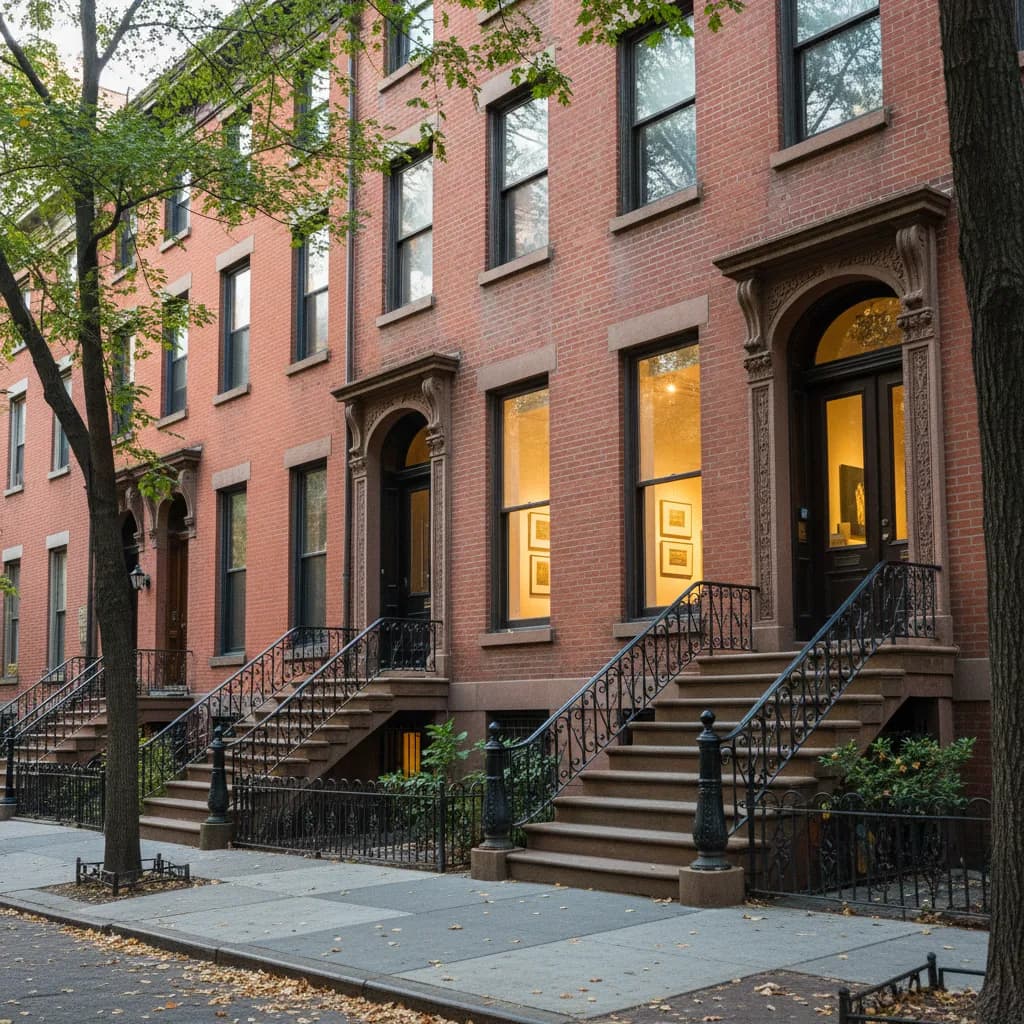
Use a West Village indoor art exhibition finder along Bleecker and Hudson Streets. Group parlor-floor townhouse shows between Abingdon Square and Barrow.
Diagonal Colonial lanes between Fourteenth Street and Houston Street refuse to follow Manhattan's orthogonal numbering, which is why an indoor art exhibition finder becomes indispensable the moment you climb out of the Christopher Street–Sheridan Square 1 train station or the West 4th Street A, C, E, B, D, F, M hub. Exempted from the 1811 Commissioners' Plan because eighteenth-century farm lanes along Greenwich Avenue, Bleecker Street, and Hudson Street were already densely settled, the West Village places West 4th Street directly across West 10th, West 11th, and West 12th Streets. Within these landmarked blocks—preserved since the 1969 Greenwich Village Historic District designation—intimate exhibitions occupy Federal-era brick parlors, carriage houses on Charles Street, and corner storefronts framing Abingdon Square.
Untangling the Diagonal Street Grid Around Bleecker and Hudson
Even lifelong New Yorkers lose their bearings where Bank Street, Bethune Street, and Horatio Street converge toward the Hudson River piers. Instead of relying on numbered street intersections that cross each other at acute angles, anchor your West Village gallery sequence to two reliable north-south spines: Hudson Street on the west and Seventh Avenue South on the east, bridged by the curving diagonal of Bleecker Street.
When you organize your afternoon with an indoor art exhibition finder workflow in the Karpo APP, cluster your stops into two tight triangles. The northern triangle wraps around Abingdon Square, where Eighth Avenue meets Hudson Street and Bleecker Street, grouping carriage-house project spaces and print rooms along Jane Street and West 12th Street. The southern triangle centers on Sheridan Square and Barrow Street, linking corner storefronts and parlor-floor viewing rooms within a five-minute walk of Seventh Avenue South.
Inside Parlor-Floor Brownstones and Carriage-House Viewing Rooms
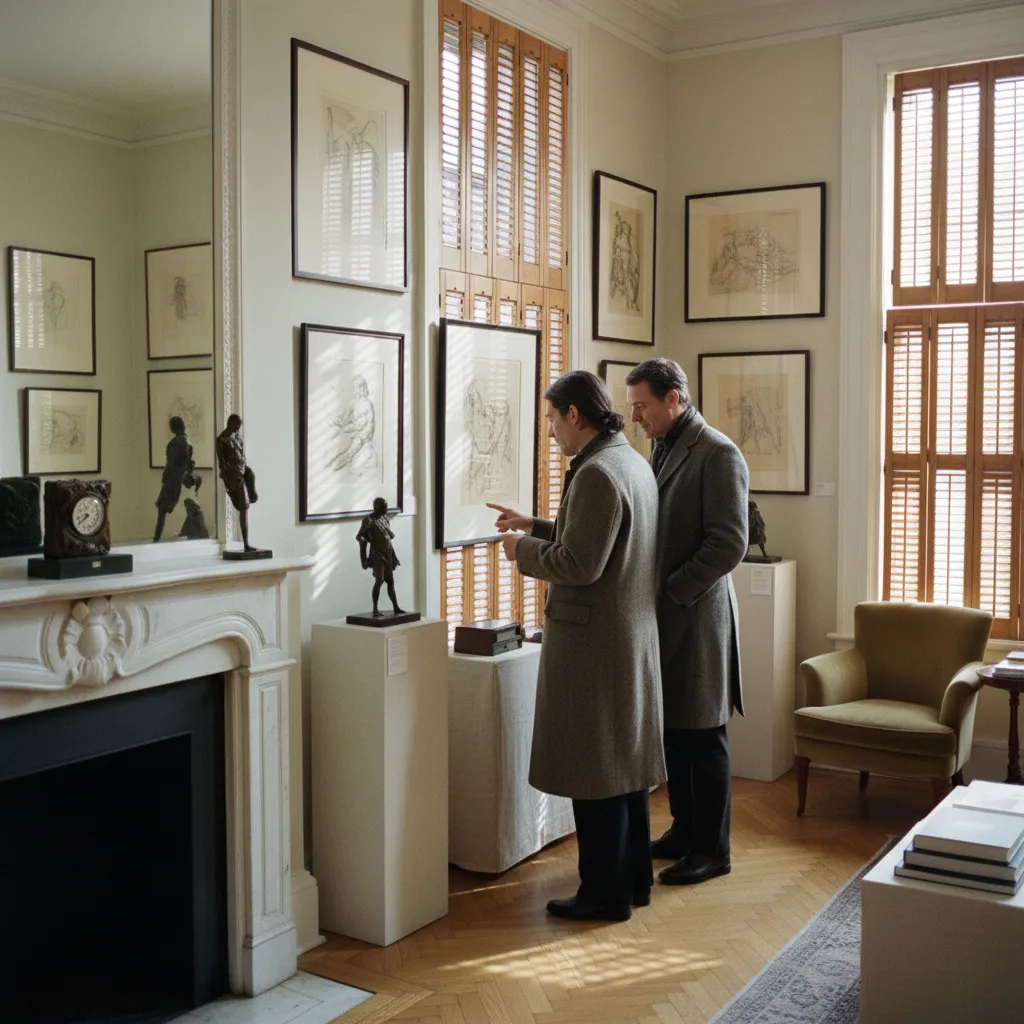
Unlike the cavernous freight warehouses of Chelsea or the cast-iron lofts of SoHo, West Village exhibition rooms preserve domestic nineteenth-century proportions that transform how you look at small-scale art. Parlor floors along Bleecker Street, Bank Street, and Perry Street retain original ten-foot sash windows, carved Italian marble fireplace mantels, and twelve-inch crown moldings. Curators use these intimate architectural frames to showcase works that get swallowed in industrial halls: silver-gelatin darkroom prints, botanical watercolors, ceramic vessels, and small-format oil studies.
Several side-street spaces sit at garden level beneath the main brownstone stoop or inside two-story brick stables originally built in the 1840s for merchant carriages. Entering a garden-level room means stepping down three bluestone steps beneath the wrought-iron stoop landing and ringing a discreet brass bell beside the oak door. Grouping these quiet domestic spaces together lets you adjust your eyes to warm incandescent and window light rather than harsh gallery floodlights.
Neighborhood Collectors, Writers, and Townhouse Parlor Etiquette
Spend forty minutes inside West Village viewing rooms on a weekday afternoon and you will recognize a distinct neighborhood cadence. Retired book editors and biographers from Morton Street and Commerce Street linger over vitrines containing artist correspondence and archival sketchbooks; NYU art history seminar students take pencil notes on clipboards near the window bays; and neighborhood architects inspect hand-carved wood frames and plaster reliefs.
Because parlor-floor floorboards in 1830s Federal townhouses creak underfoot and rooms rarely exceed eighteen feet in width, visitors follow a polite house-guest etiquette. Wipe wet shoe soles thoroughly on the cocoa-fiber mat inside the vestibule, keep heavy canvas totes or umbrellas tucked beside the coat stand near the entry desk, and ask the director before ascending any interior spiral staircase, as upper floors in West Village townhouses almost always serve as private residential quarters or closed archival offices.
Reading Afternoon Window Light Across Tree-Canopied Blocks
Tall London plane trees and ginkgo canopies lining West 11th Street, Charles Street, and Perry Street filter midday sunlight into a soft, dappled glow across parlor-floor windows. If your route includes delicate works on paper, rare artist books, or miniature textiles that sit behind non-reflective museum glass, visit the tree-shaded residential side streets between eleven in the morning and two in the afternoon when overhead glare is minimal.
Later in the afternoon, shift westward toward Hudson Street and Greenwich Street, where wider avenue skies and lower western building heights allow golden late-day light to reach deep into ground-floor storefronts around Abingdon Square and Jackson Square. Ending your loop along Hudson Street also positions you beside sheltered neighborhood cafes and bookshops as evening approaches.
What to Skip and Your Jefferson Market Clock-Tower Plan B
Skip walking directly along the narrowest stretch of Bleecker Street between Perry Street and Charles Street at Saturday midday if you hate waiting behind sidewalk bakery queues that spill across the entire bluestone pavement. Instead, walk one parallel block west along Hudson Street or one block north along West 11th Street, dipping back onto Bleecker Street only at the exact corner of your saved exhibition stop.
If a garden-level or parlor-floor townhouse space is closed for a private collector preview or a rain squall blows in off the Hudson River piers, trigger your Plan B by walking east along Christopher Street to Sixth Avenue and West 10th Street. There, the 1877 Victorian Gothic landmark Jefferson Market Library—originally built as a courthouse with its famous red-brick clock tower—and the adjoining Greenwich Avenue arcades provide immediate indoor architectural shelter, public reading rooms, and easy access to the West 4th Street subway concourse.
Sequencing Your Townhouse Loop in the Karpo APP
Turning the West Village's labyrinth of named streets into a relaxed cultural stroll requires sorting stops by geographical pocket before you set out. In the Karpo APP, you can save parlor-floor and storefront exhibition pins around Abingdon Square, Bleecker Street, and Sheridan Square, checking the walking sequence so you never cross Seventh Avenue South more than once.
Pay attention as well to how narrow cross streets change elevation slightly toward the Hudson River bulkhead along West Street. Walking westward from Greenwich Avenue toward Hudson Street puts a gentle downhill grade beneath your feet and opens up wider western sky vistas at every intersection, making late-afternoon strolls between Bethune Street and Barrow Street feel remarkably unhurried even during the weekday rush.
Start at the 14th Street–Eighth Avenue station on the A, C, E, and L lines, walk south through Abingdon Square along Hudson Street and Bank Street, weave east across Bleecker Street and Perry Street, and wrap up near Sheridan Square on the 1 train or West 4th Street on the A, C, E, B, D, F, and M lines. Grouping four or five townhouse rooms into this north-to-south arc delivers one of Manhattan's most atmospheric indoor art walks.
Ask Karpo for more information.
Keep reading
- Upper West Side Free Indoor Weekend Plan Finder for Music
 Astoria Free Indoor Weekend Plan Finder for Visiting Parents
 Williamsburg Free Indoor Weekend Plan Finder With Kids