 Flatiron Holiday Window Walk Planner for Remote Teams
Free Things to Do
Upper West Side Indoor Art Exhibition Finder: 4 Arcade Loops
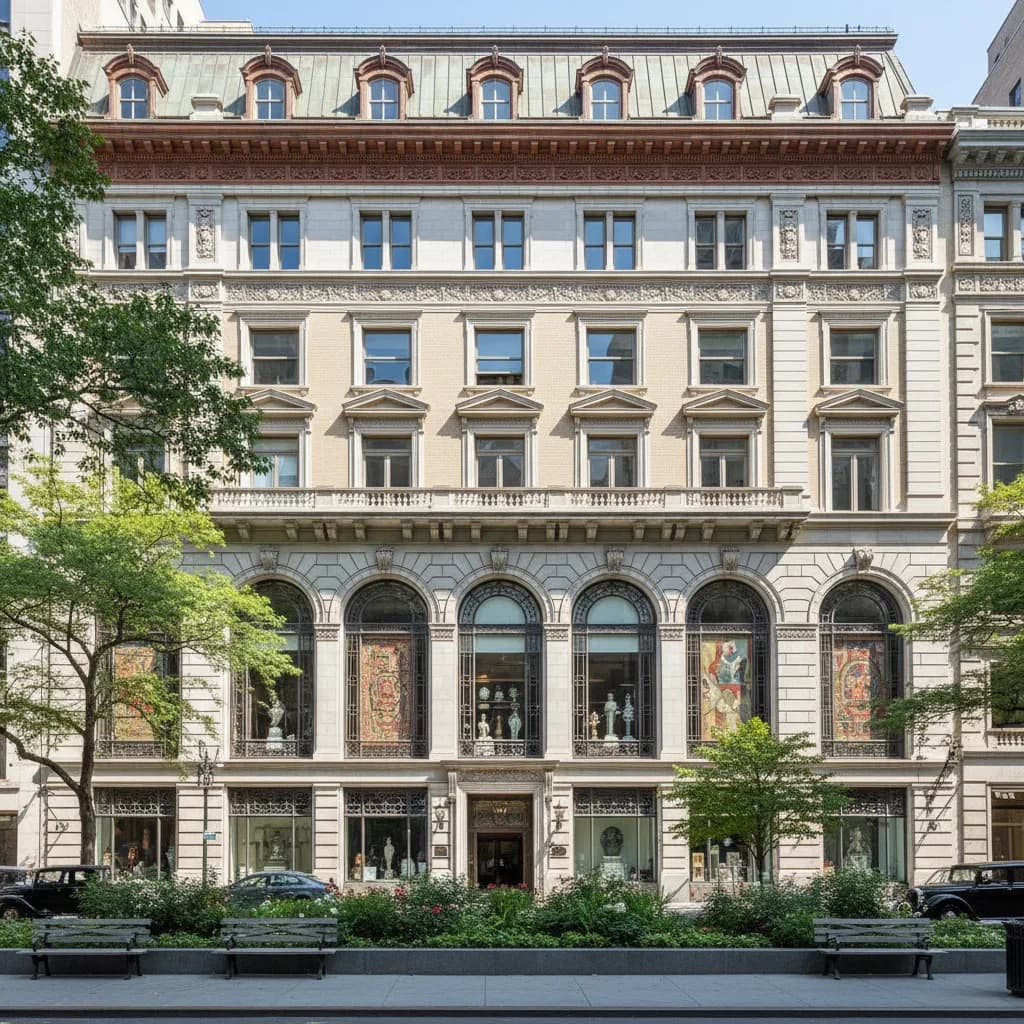
Use an Upper West Side indoor art exhibition finder along Broadway, Amsterdam, and Columbus. Link pre-war arcade shows from 65th to 86th Street.
Grand limestone arcades and academic gallery halls stretching from Columbus Circle to Cathedral Parkway give Manhattan's west side an institutional scale that rewards careful planning with an indoor art exhibition finder before you exit the 72nd Street 1, 2, 3 express station or the 81st Street–Museum of Natural History B, C stop. Catalyzed by the 1904 opening of the original IRT Broadway subway line—still commemorated by the landmarked brick-and-terra-cotta control house at Verdi Square—the Upper West Side developed a distinct architectural hierarchy: monumental Beaux-Arts apartment blocks along Broadway and West End Avenue, sunny commercial storefronts on Amsterdam Avenue and Columbus Avenue, and quiet Renaissance Revival brownstones lining the numbered cross streets between Riverside Park and Central Park West.
Grouping Lincoln Square Foyers and the 70s Brownstone Corridor
Walking the entire forty-five-block length of the Upper West Side on foot in a single afternoon is a recipe for exhaustion, because the blocks between avenues measure up to eight hundred feet long. Instead, divide the neighborhood into two self-contained indoor viewing zones separated by the wide crosstown artery of West 79th Street.
South of West 79th Street, the Lincoln Square and Verdi Square zone between West 62nd Street and West 76th Street concentrates university decorative-arts showcases, performing-arts archival galleries, and historical society exhibition halls along Broadway and Central Park West. Using an indoor art exhibition finder workflow in the Karpo APP lets you pair these large-format institutional foyers with intimate brownstone parlor rooms tucked along West 70th Street and West 74th Street without backtracking across the busy Broadway median.
Exploring Pre-War Broadway Arcades and Amsterdam Avenue Storefronts
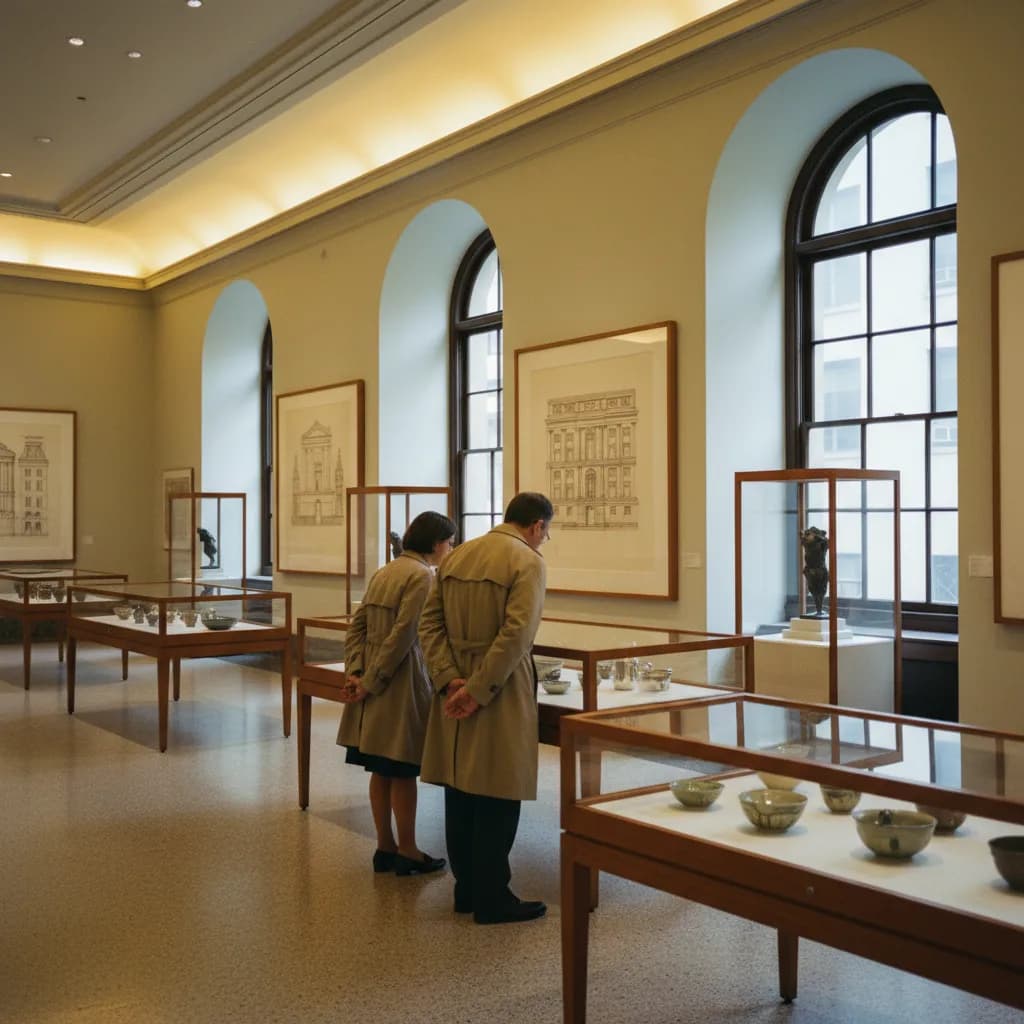
North of West 79th Street, the architectural rhythm shifts toward the broad tree-lined blocks between West 80th Street and West 96th Street, plus the academic quadrangles near West 110th Street and Morningside Drive. Along Broadway and Amsterdam Avenue, early twentieth-century buildings constructed between 1905 and 1928 feature deep recessed courtyard entries, vaulted Guastavino tile ceilings, and wraparound mezzanine vitrines.
These pre-war ground floors excel at presenting decorative arts, architectural models, rare book bindings, and mid-century photography installations. Because Broadway's wide planted malls create an open sky vista down the center of the avenue, both eastern and western sidewalks receive steady natural light throughout the day. Walk north along the eastern sidewalk of Amsterdam Avenue from West 81st Street to West 88th Street, then loop back south along Columbus Avenue to inspect corner cultural spaces and neighborhood print rooms.
Scholars, Chamber Musicians, and Uptown Viewing Room Culture
Step into an Upper West Side exhibition hall on a weekday afternoon and you will immediately sense a neighborhood steeped in music, literature, and academic research. Juilliard and Manhattan School of Music students with violin cases strapped to their backs stop into Lincoln Square foyers between rehearsals; Columbia University architectural historians and Barnard curators examine archival blueprints and ceramic glazes with magnifying loupes; and longtime West End Avenue residents spend an unhurried hour reading every single curatorial wall label from start to finish.
Because Upper West Side visitors treat exhibition rooms like public reading rooms, a calm, scholarly etiquette prevails. Visitors check bulky winter parkas and wet umbrellas at the attended cloakroom counter near the lobby entrance, keep conversations hushed so chamber rehearsal audio or acoustic gallery installations remain clear, and leave ample viewing distance in front of glass table vitrines so three or four readers can study historical documents side by side.
Matching Morning Park Light and Afternoon Hudson Breeze
Orientation between Central Park and the Hudson River shapes the natural lighting inside Upper West Side buildings. Exhibition halls facing Central Park West catch crisp, unobstructed eastern sunlight over the park reservoir and treetops between ten in the morning and one in the afternoon, making late morning the ideal window for inspecting detailed works on paper, textiles, and historical manuscripts.
By mid-afternoon, cross westward toward Broadway and Riverside Drive, where the sun drops toward the Hudson River palisades and sends warm afternoon rays down the numbered cross streets between West 72nd Street and West 86th Street. Saving west-facing Broadway arcades and Amsterdam Avenue corner rooms for the second half of your walk keeps every gallery interior naturally bright until dusk.
Pay close attention to the stone entry vestibules inside pre-war buildings along West End Avenue and Broadway when transitioning from bright outdoor avenues into dimmer gallery halls. Pausing for thirty seconds in the marble-lined outer foyer allows your eyes to adapt gradually before you examine subtle charcoal drawings, hand-woven tapestries, or low-lit archival photography cases.
What to Skip and Your Lincoln Square Covered-Plaza Plan B
Skip trying to cut through the basement concourse of the 72nd Street and Broadway subway island during the three-to-four afternoon school dismissal rush, when narrow turnstile aisles and stairway landings bottleneck with commuters. Instead, use the secondary entrance at West 73rd Street on the north side of Verdi Square, which gives you a calmer entry and exit path directly onto the Broadway promenade.
You should also skip walking along exposed Riverside Drive during a freezing northwest wind off the Hudson River if your goal is staying warm between exhibitions. When winter gusts or heavy rain roll across the river, trigger your Plan B around West 65th Street and Broadway: the covered limestone colonnades, indoor public atriums, and glass-enclosed pedestrian bridges around Lincoln Square let you move between multiple cultural foyers and sheltered seating areas within a single block of the 66th Street–Lincoln Center 1 train platform.
Building Your Uptown Sequence in the Karpo APP
Because Upper West Side exhibition spaces range from grand Central Park West halls to tucked-away academic galleries near Cathedral Parkway, organizing your stops by subway node in the Karpo APP saves thirty minutes of unnecessary walking. Group your pins around either the 66th–72nd Street southern cluster or the 81st–86th Street central cluster before you step onto the train.
Comparing walking distances between Columbus Avenue and Broadway in the Karpo APP also helps you time your transitions around matinee curtain times at Lincoln Square, when avenue crosswalks briefly fill with theatergoers between five and six in the evening.
For an effortless two-hour cultural afternoon, ride the B or C train to 81st Street, trace the brownstone blocks and Columbus Avenue spaces south to West 72nd Street, cross Verdi Square to explore the Broadway pre-war arcades down to West 65th Street, and hop on the 1, 2, or 3 train back downtown.
Ask Karpo for more information.
Keep reading
- Flatiron Holiday Window Walk Planner for Remote Teams
 SoHo Holiday Window Walk Planner for a Sketchbook Afternoon
 Upper East Side Holiday Window Walk Planner After a Museum