 Flatiron Holiday Window Walk Planner for Remote Teams
Free Things to Do
SoHo Indoor Art Exhibition Finder: 5 Cast-Iron Loft Routes
Plan a SoHo indoor art exhibition finder route along Mercer, Wooster, and Greene Streets. Group landmark cast-iron loft shows between Houston and Broome.
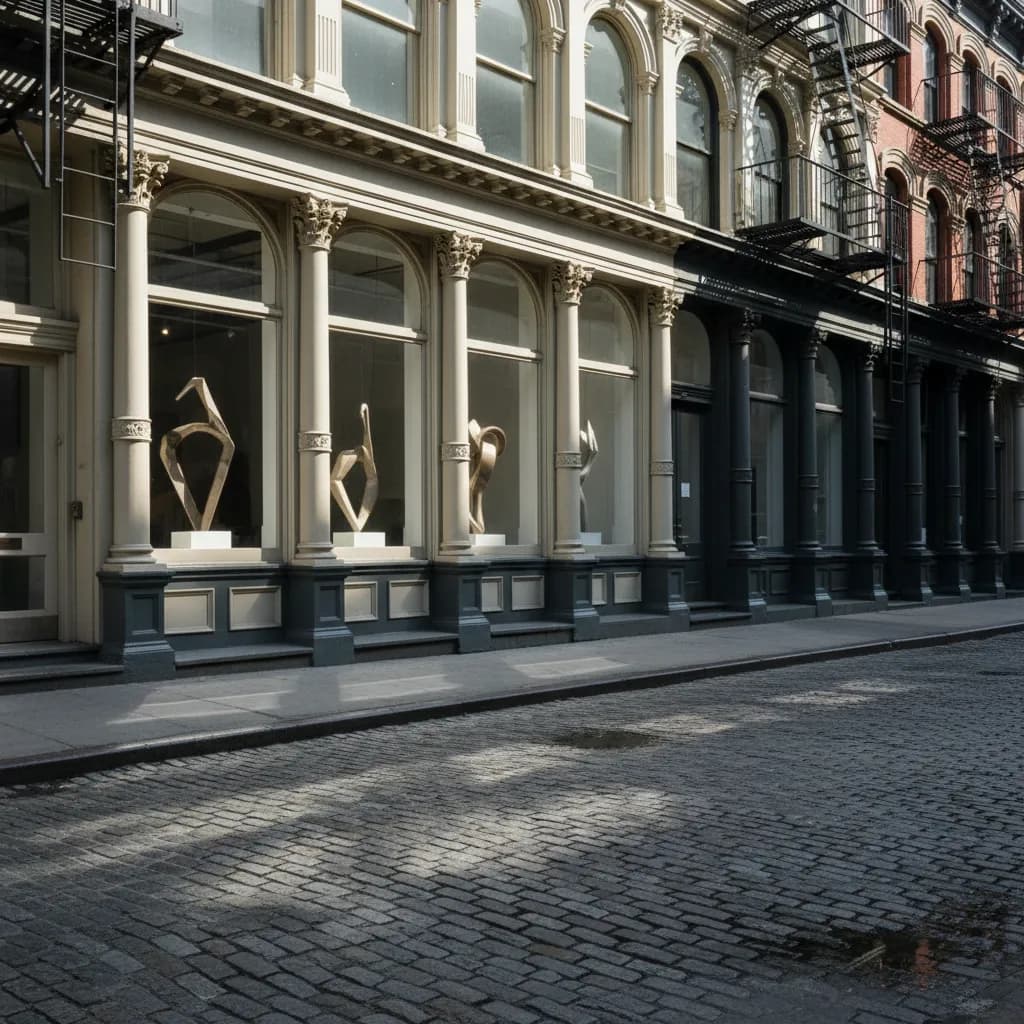
Fluted cast-iron facades between West Houston Street and Canal Street shelter some of New York's most monumental interior viewing volumes, and an indoor art exhibition finder helps you separate public parlor-level showcases from appointment-only upper lofts before you exit the Prince Street N, R, W station or the Spring Street C, E platform. Protected since the 1973 designation of the SoHo-Cast Iron Historic District by the Landmarks Preservation Commission, former nineteenth-century textile warehouses along Greene Street, Wooster Street, and Mercer Street feature fourteen-foot ceilings, slender iron support columns, and deep floor plates spanning up to a hundred feet from front window to rear air shaft. Without a deliberate block-by-block sequence, visitors waste half their afternoon walking past retail shoe windows on Broadway instead of stepping into the quiet non-profit foundations and upstairs viewing rooms one block west.
Distinguishing Street-Level Vaults from Second-Story Loft Foundations
Architecture dictates how art is experienced across SoHo's core grid. Because cast-iron storefront arches were engineered in the 1870s and 1880s to maximize window glass for dry-goods merchants examining bolt fabrics under natural light, ground-floor spaces on Wooster Street and Greene Street bathe sculptures and monumental canvases in shadowless illumination without relying on heavy overhead theatrical spots. Sidewalk vault lights—those grids of thick purple-tinted glass prisms set into iron frames along the curb—still mark the historic freight basements beneath the main exhibition floors.
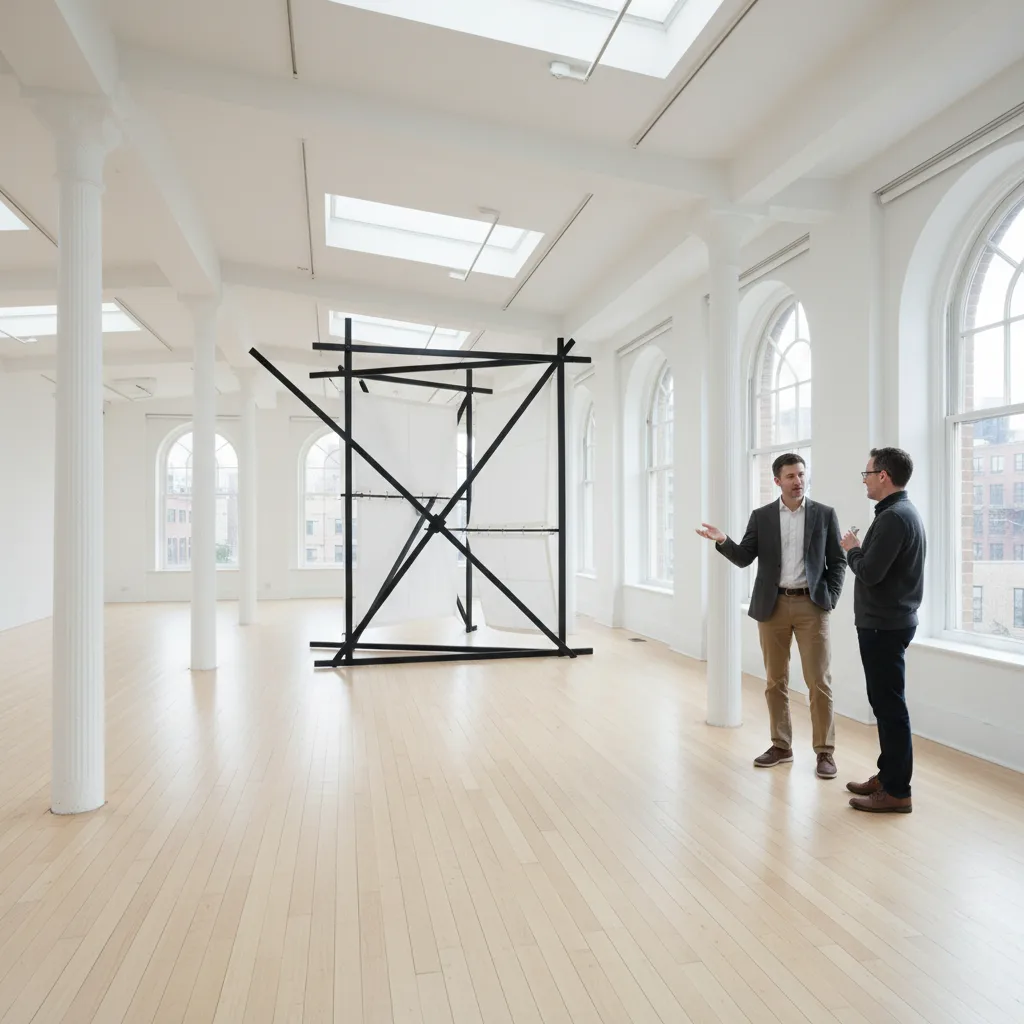
Second-floor and third-floor loft foundations along Mercer Street and Broome Street operate with a completely different spatial cadence. Here, visitors step off Belgian-block paving into marble-wainscoted lobbies, sign a paper guest register or check an engraved brass plaque beside the elevator shaft, and ascend into columned chambers that run the full length of the building. Using the Karpo APP as your indoor art exhibition finder lets you tag these multi-story architectural installations separately from quick ten-minute street-front stops so you allocate at least forty minutes for long-duration sound, earthwork, or minimalist light rooms.
Sequencing Mercer, Greene, and Wooster Without Broadway Crowds
Smart routing in SoHo means treating Broadway as a hard eastern boundary rather than a walking corridor. Once midday shoppers pack the sidewalks outside apparel flagships between Prince Street and Grand Street, foot speed drops to a crawl. Instead, drop down into the quieter canyon of Mercer Street or Greene Street between West Houston Street and Spring Street, where wide loading docks and stone steps keep the pedestrian flow calm even on Saturday afternoons.
Organize your walk in an S-curve across the three parallel cobblestone streets. Start at the northern end of Wooster Street near West Houston, walk south to Broome Street while visiting the western and eastern loft doorways, cross one short block east to Greene Street at Broome, and trace Greene Street north back toward Prince Street before finishing along Mercer Street. This tight three-street weave keeps every transition under three minutes on foot and shields you from crosswind gusts funneling off Sixth Avenue.
Who You Will Meet Inside and How Loft Rooms Operate
SoHo's long-standing non-profit foundations and design-adjacent galleries attract a noticeably quieter, more contemplative crowd than opening-night party districts elsewhere in Manhattan. On a Wednesday or Friday afternoon, you will regularly share the floorboards with architectural historians sketching column capitals in clothbound notebooks, European museum curators comparing lighting proportions across full-floor installations, and Parsons industrial design students examining material joints on sculptural furniture pieces.
In these hushed, high-ceilinged rooms, acoustics carry across polished hardwood and plaster, so visitors observe strict library-level quiet and keep voices to a murmur. Several long-running SoHo foundation rooms maintain continuous environmental installations where natural light shifts across the floor over the course of the afternoon; local regulars know to silence watch alarms, leave wet umbrellas in the galvanized vestibule stand by the stairwell door, and wait patiently at the room perimeter rather than stepping across taped floor boundaries.
What to Skip and Your Thompson Street Rainy-Day Plan B
Skip cutting across Canal Street between Broadway and West Broadway during late afternoon delivery hours, when hand-truck traffic, souvenir stalls, and commuter queues around the Canal Street subway complex turn the southern sidewalk into an obstacle course. You should also skip entering ground-floor commercial pop-up showrooms that disguise weekend brand activations as art exhibitions; a quick check of the window vitrine—looking for wall checklists, curatorial wall text, and unbranded lighting rigs rather than merchandise racks—saves twenty minutes of wasted time.
If an upstairs foundation loft temporarily pauses entry for twenty minutes to regulate room capacity or clean floor surfaces during wet weather, activate your Plan B by heading one block west to Thompson Street or Sullivan Street between Spring Street and Watts Street. These narrower brick blocks west of West Broadway preserve quieter, studio-scale storefront galleries and sheltered espresso counters where you can dry your coat, review your saved stops in the Karpo APP, and pivot north toward Washington Square Park without retracing Broadway.
Filtering Historic Loft Stops with the Karpo APP
Because SoHo mixes permanent minimalist installations, rotating contemporary sculpture spaces, and architectural design showcases within the same five-block historic district, filtering your route before leaving the subway prevents decision fatigue on the cobblestones. In the Karpo APP, you can group your saved SoHo stops by block face—pairing Greene Street's iron-columned lofts with Mercer Street's quieter courtyard-facing rooms—and sequence them around your arrival station.
Reading the natural daylight shift across SoHo's north-south canyons also sharpens your viewing order. East-facing loft windows on the west side of Wooster Street and Greene Street catch direct morning brightness before noon, whereas west-facing upper rooms glow with warm reflected light off opposite cast-iron facades in the middle of the afternoon. Scheduling monochrome painting and paper shows for earlier slots while saving illuminated sculpture and spatial sound installations for late afternoon keeps your eyes fresh across five or six stops.
For a focused ninety-minute loop, ride the C or E train to Spring Street on Sixth Avenue, walk east through the historic cast-iron core via Broome Street and Greene Street, and exit at Prince Street on the N, R, and W lines or Broadway–Lafayette Street on the B, D, F, M, and 6 lines. Grouping indoor stops along those three parallel streets turns a blustery Manhattan afternoon into an effortless architectural and artistic walk.
Ask Karpo for more information.
Keep reading
- Flatiron Holiday Window Walk Planner for Remote Teams
 SoHo Holiday Window Walk Planner for a Sketchbook Afternoon
 Upper East Side Holiday Window Walk Planner After a Museum