 Chelsea Consignment Shop Crawl Planner for Your First Studio
Hidden Gems & Odd Finds
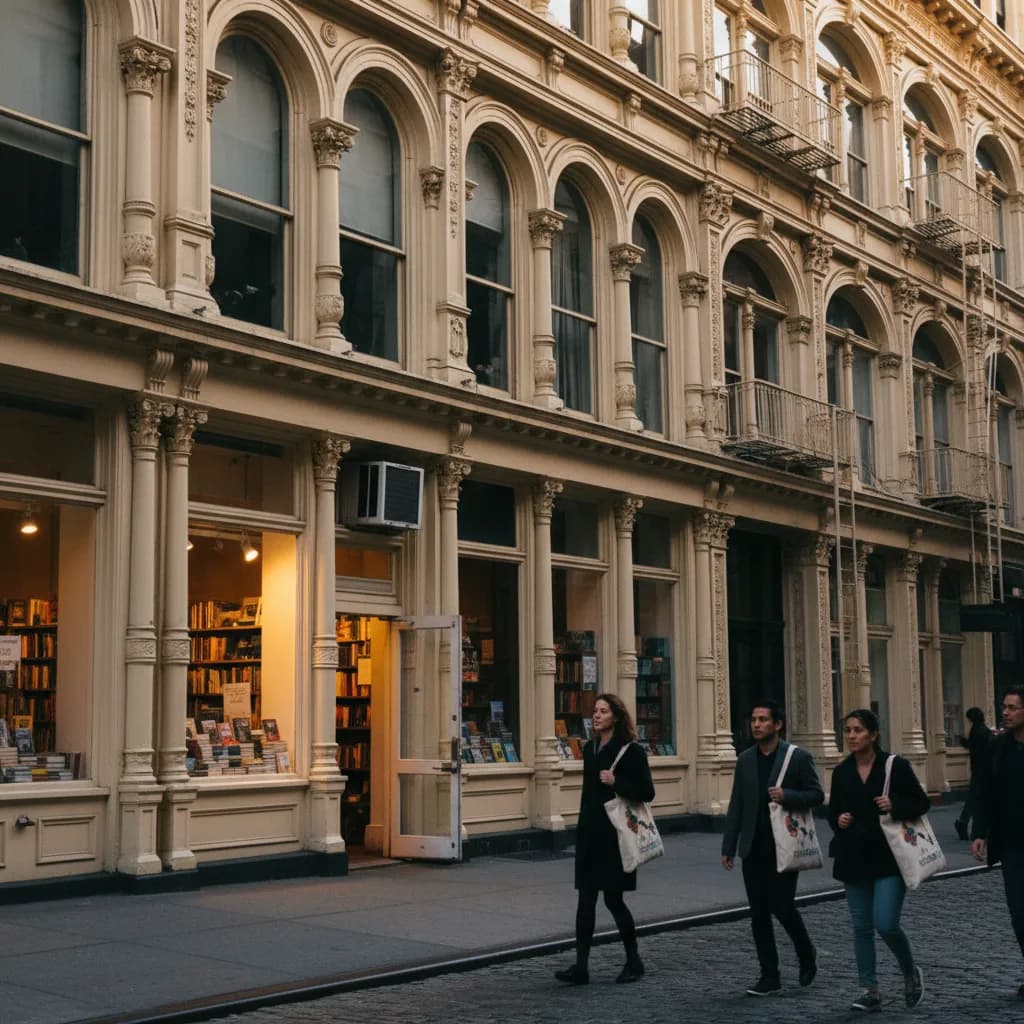
SoHo Independent Graphic Bookshop Picks: 3 Shelves Compared
SoHo has no comics-only store, but McNally Jackson on Prince Street, Housing Works on Crosby and Bond Street art books cover graphic reading on foot.
McNally Jackson moved its SoHo flagship a few blocks west in March 2023, from 52 Prince Street to 134 Prince Street, and that move is the starting point for anyone looking for an independent graphic bookshop in SoHo. The neighborhood does not have a comics-only store, so the real decision is which of three very different shelves suits your visit: a large independent bookstore with a curated graphic novel section, a used bookstore cafe on Crosby Street, or the art and photo book specialists a short walk east.

Option One: McNally Jackson for Curated New Graphic Novels
Sarah McNally opened the original store in 2004, and it grew into one of the best known independent bookstores in Manhattan, with later branches in Brooklyn and at the Seaport. An older Publishers Weekly profile of the SoHo shop noted something revealing about how the staff think: Alison Bechdel's Fun Home was shelved only with graphic novels rather than memoir, and the compact graphic novel section was among the fastest turning in the store. That habit of treating comics as literature still shapes how independent general bookstores in the city curate them.
Pick this option if you want new hardcovers and literary graphic fiction, translated European albums or the season's most discussed graphic memoir. Skip it if you want superhero runs, manga volumes in depth or back issues; a general independent store will carry a selection, not a library. The move to 134 Prince Street put the shop closer to Sixth Avenue, so it pairs naturally with a walk west toward the West Village afterward.
Option Two: Housing Works on Crosby Street for Used Finds
Housing Works Bookstore Cafe on Crosby Street sells donated used books, and its proceeds support Housing Works, the nonprofit that serves New Yorkers affected by HIV and AIDS and homelessness. The double-height room with its spiral staircase and wooden balcony is one of the most photographed bookstore interiors downtown, and volunteers help run the floor. Graphic novels turn up among the donations rather than in a dedicated department, which is exactly why the browsing can be rewarding.
Choose this stop when you are happy to dig and you care about price more than selection. Collected editions, older graphic memoirs and the occasional art book appear on the shelves without warning. The honest downside is unpredictability: on some visits you will leave empty-handed. Give it twenty minutes, grab a coffee at the cafe counter if the room is calm, and move on if the comics shelves are thin that day.
Option Three: Art and Photo Books on Bond Street
Walk east across Broadway and Lafayette to Bond Street in NoHo, where Dashwood Books has long specialized in photobooks and artist publications. It is not a comics store, but readers who love the visual side of graphic storytelling, such as sequential photography, zine-like artist books and limited small-press runs, often find more inspiration here than in a mainstream comics aisle.
This option suits illustrators, designers and readers who already own the graphic novels everyone talks about and want something stranger. It does not suit someone looking for an easy gift for a teenage manga fan. If you need that instead, Forbidden Planet at 832 Broadway near Union Square is about a fifteen-minute walk north and carries a far wider comics and manga range.
How to Choose Between the Three
Start from what you want to carry home. A specific new graphic novel points to McNally Jackson. A bargain or a surprise points to Housing Works. A visual object that feels closer to a print than a paperback points to Bond Street. If you cannot decide, McNally Jackson and Housing Works sit within an easy ten-minute walk of each other, so you can compare their graphic shelves directly and buy from whichever surprised you more.
Budget matters too. New hardcover graphic novels add up quickly, so many regulars use the used shelves on Crosby Street to sample a creator's earlier work before buying the new release on Prince Street. That order also supports two very different kinds of independent bookselling in a single afternoon, one commercial and one charitable.
Reading the Cast-Iron Streets Between Stops
The walk between these shops crosses the SoHo-Cast Iron Historic District, designated in 1973, and it is worth looking up. At Broadway and Broome Street, the Haughwout Building from 1857 is known for installing the first commercial passenger elevator, and its repeating arched windows read almost like panels on a comics page. Greene Street holds one of the densest runs of cast-iron facades in the city.
For graphic novel readers, this streetscape has a second life: SoHo's loft buildings appear in countless New York comics, from crime stories to art-world satire. Walking Greene Street between bookstores, you can spot the fire escapes, loading docks and column capitals that illustrators borrow when they need a page to say downtown Manhattan.
Getting There and Timing the Visit
The R and W stop at Prince Street, the C and E stop at Spring Street, and the B, D, F and M stop at Broadway-Lafayette, so every one of these shops is within a few minutes of a subway entrance. Weekend afternoons bring heavy shopping crowds to Broadway and Prince Street, which makes browsing slower. Weekday mornings and early evenings are calmer for anyone who wants time with a shelf.
Bring a sturdy bag if you plan to visit all three, because oversized art books and hardcover graphic novels are heavy. If rain sets in, the walk from Crosby Street to Prince Street is short enough to manage, while the detour to Bond Street can wait for another day. A late-afternoon start also lets you finish near Sixth Avenue just as the light drops over the cast-iron fronts.
Planning Your SoHo Book Afternoon With Karpo
Karpo APP works well as a planning partner for this kind of comparison. Tell Karpo whether you want new graphic novels, used finds or art books, how long you have and which subway line you are arriving on, and it can help you put the three options in a sensible order and save the shortlist in one chat.
If your afternoon grows, ask Karpo for a coffee stop or a gallery between shops, then keep notes on the titles you spotted so you can compare them later. It is a simple way to turn a vague search into a two-hour plan that fits the neighborhood.
Ask Karpo for more information.
Keep reading
- Chelsea Consignment Shop Crawl Planner for Your First Studio
 East Village Consignment Shop Crawl Planner: Leather Jackets
 Harlem Consignment Shop Crawl Planner for a Jazz Night Look