 SoHo Tailor Alteration Shop Finder for Sample Sale Finds
Neighborhood Guides
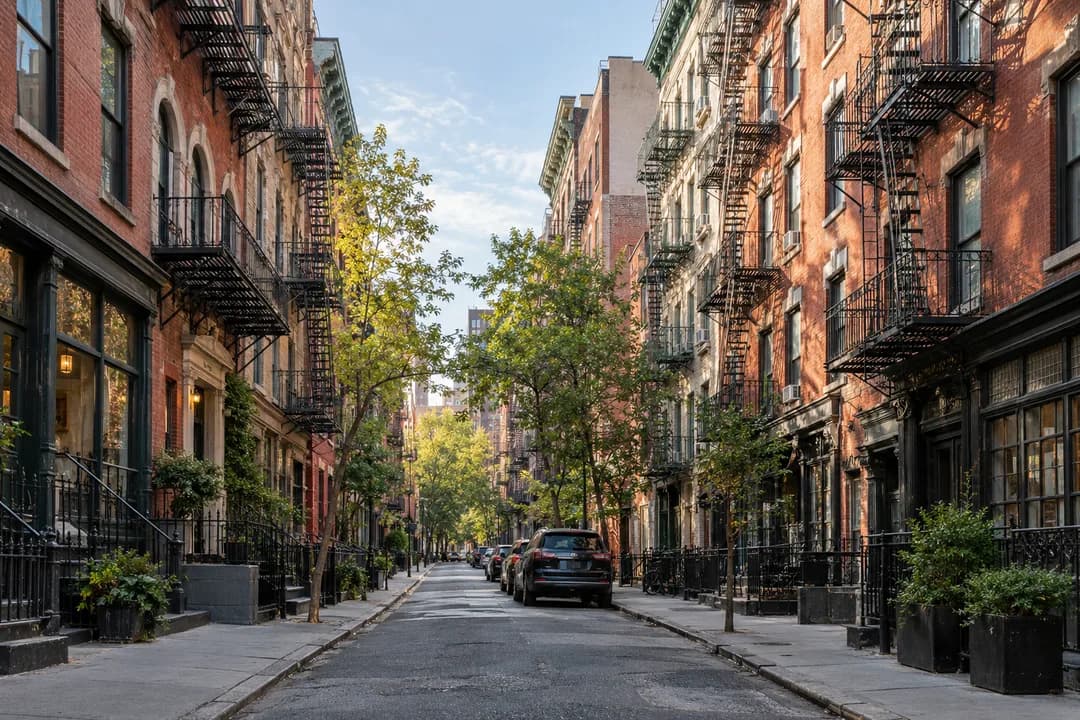
Lower East Side Historic Walking Route: Six Outdoor Stops
Follow a Lower East Side historic walking route between tenement exteriors, a synagogue, settlement houses, and neighborhood public spaces at your own pace.
For over a century, the Lower East Side served as the primary gateway for millions of immigrants arriving in the United States. Between 1880 and 1920, this compact neighborhood of brick tenement buildings became the most densely populated residential district on Earth, sheltering Eastern European Jewish, Italian, Irish, German, and later Chinese and Puerto Rican families. Starting at the Delancey Street Essex Street subway station serving the F, J, M, and Z trains, New York, NY 10002, this historic walking route navigates the vibrant streets where immigrant resilience forged modern urban America. Walking past preserved tenement facades, ornate house of worship domes, and historic union settlement houses offers an unforgettable encounter with the immigrant struggles that defined twentieth-century labor, education, and cultural rights. The narrow streets remain alive with generational family businesses, vibrant street art murals, and historic community institutions that tell an enduring story of survival and mutual aid across generations. Every block preserves a layered physical archive of early tenement labor unions, pushcart markets, and cultural presses that welcomed newcomers and defended human dignity.
The Tenement Museum and Orchard Street
Begin on Orchard Street with the two tenement buildings treated as distinct historical sites. The Tenement Museum's account of 97 Orchard describes a residence occupied between 1863 and 1935. Its history of 103 Orchard dates that building to 1888 and follows a much longer residential story, including families who arrived after World War II. Combining both addresses under one construction date erases the difference between the buildings and the generations they represent. From the pavement, compare the scale of the facades and the relationship between upper residential windows and street-level commercial space. This is an exterior stop. An apartment tour is a separate museum experience, not something the walking route includes automatically. Leave room in your notes for a household's particular dates rather than assuming that every family described by the museum lived in the same building or period.
Eldridge Street Synagogue and Moorish Architecture
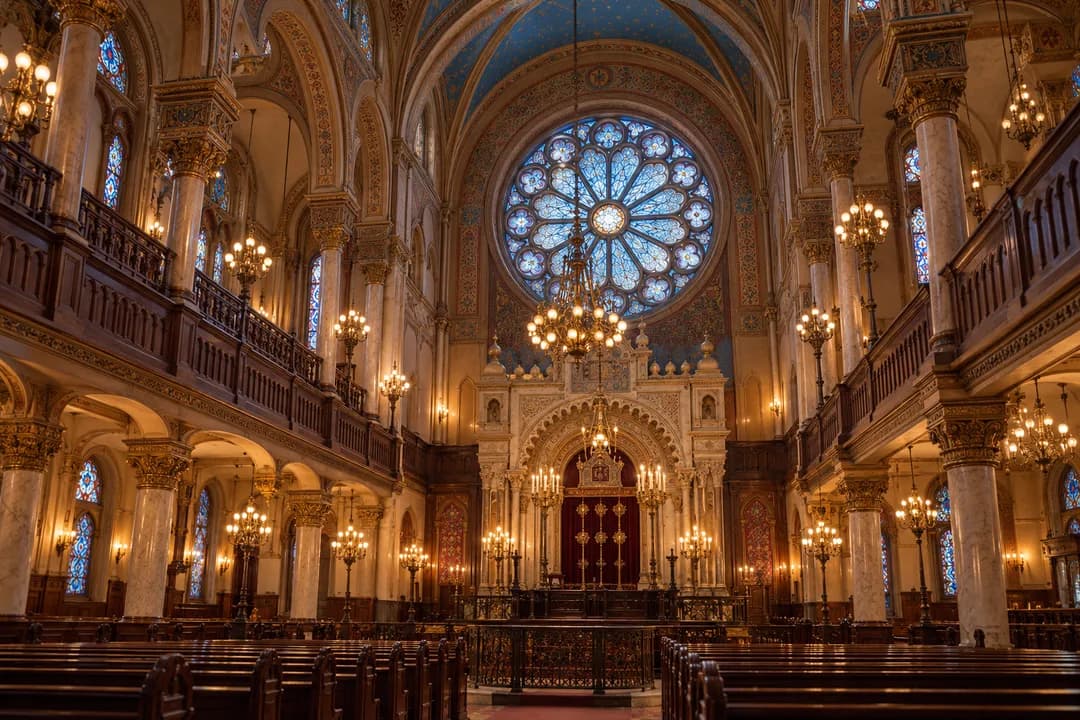
For Eldridge Street, head south on Orchard Street to Canal Street, turn west, and continue to Eldridge Street. Turn south onto Eldridge for the museum and synagogue exterior. Orchard, Allen, and Eldridge run broadly parallel, so an instruction to turn east from Allen directly onto Eldridge cannot work. Use the connecting cross street rather than trying to navigate between parallel streets as though they intersected. The synagogue's architecture offers a different kind of evidence from the tenement facades: a communal religious building expressed ambitions beyond the scale of individual rented rooms. Observe the frontage from the sidewalk and leave any sanctuary visit for a separate admission plan. Do not infer interior access from a description of the stained glass or restoration. A worthwhile exterior pause can focus on the contrast between the building's entrance, its upper windows, and the surrounding street without promising an interior experience.
Henry Street Settlement and Public Health Pioneers
Return north to Canal Street, continue east to Pike Street, then go south to Henry Street and turn east toward the Henry Street Settlement buildings. This leg links the housing story with the history of organized neighborhood support. Lillian Wald founded the settlement in 1893. Keep the settlement's social work and its later arts institutions connected without pretending they occupy a single doorway. Abrons Arts Center is on Grand Street at Pitt Street, as its own institutional page makes clear. It is an optional detour, not a building across the street from the Henry Street houses. For the six-stop core route, stay with Henry Street before heading back toward Seward Park. The settlement stop is a good place to ask how assistance was organized around everyday needs, while avoiding an invented account of what a visitor can enter or see in a working social-service institution.
Seward Park and the Forward Building on East Broadway
Continue west on Henry Street to Clinton Street, then north toward East Broadway and Seward Park. East Broadway is a connecting street, not an instruction to turn north along the length of it. At the park, pause before continuing toward the Forward Building frontage on East Broadway. These form the fourth and fifth stops of the core route. The contrast is useful: the park and library concern shared neighborhood space, while the newspaper building recalls the circulation of news, argument, and political ideas. Read the facade without assuming that a former institutional building still has the same use or admits casual visitors. This walk is about how different places supported community life. It is not a promise that an original newsroom, historic classroom, or period interior survives in a form available to enter. Keep observations separate from conclusions about who used each room and when.
Essex Street and the Market Corridor
For the sixth stop, return to Essex Street and head north toward Houston Street, using the street corridor to think about market trade and the movement from outdoor vending to indoor markets. The history of pushcarts belongs to the neighborhood, but today's storefronts do not all represent unchanged businesses in unchanged premises. If you add a food stop, make it a separate choice rather than use an unsupported adjacency claim to navigate. Use Essex and Houston as the final street junction, keeping a clear endpoint even if companions choose different places for a later meal. From there, decide whether to extend the outing along Houston or end the historical walk. That choice keeps the itinerary usable without tying the route to an unverified restaurant recommendation or a promised menu item.
Six Outdoor Stops and Optional Extensions
The six stops are Orchard Street's tenement exteriors, Eldridge Street, Henry Street Settlement, Seward Park, the Forward Building, and the Essex-to-Houston market corridor. Abrons is optional and adds a separate leg. Take a street map for the Canal and East Broadway connections, and use marked crossings rather than following the shortest line between pins. The walk can end at Seward Park if the last leg feels too long. Museum entry, toilets, seating, and refreshments are separate practical decisions, not guaranteed services included in an outdoor route. In the Karpo APP, describe the neighborhood, your companions, available time, and interest in immigrant history to ask for places and plans that fit. Both images are AI-generated illustrations rather than documentary photographs. They should not be used to identify a particular storefront, establish a building's age, or infer current access to an interior.
Ask Karpo for more information.
Keep reading
- SoHo Tailor Alteration Shop Finder for Sample Sale Finds
 Williamsburg Tailor Alteration Shop Finder for Bike Riders
 Upper West Side Tailor Alteration Shop Finder for Kids