 SoHo Tailor Alteration Shop Finder for Sample Sale Finds
Neighborhood Guides
Harlem Historic Walking Route: From Stage to Street
Follow an outdoor Harlem history walk linking the Apollo frontage, Schomburg, Strivers' Row, and Langston Hughes House, with clear boundaries for indoor visits.
During the 1920s and 1930s, Harlem became the vibrant cultural and intellectual capital of the African American world. Known as the Harlem Renaissance, this golden age of creative output revolutionized American literature, jazz music, visual arts, and political philosophy. This self-guided historic walking route begins on West 125th Street in front of the legendary Apollo Theater, New York, NY 10027, accessible directly via the A, B, C, and D express subway trains at 125th Street, or the 2 and 3 lines at Malcolm X Boulevard. Covering approximately two miles through Upper Manhattan, the route guides walkers through monumental jazz theatres, historic literary townhouses, and masterfully planned nineteenth-century residential enclaves. Walking through Harlem provides a vivid connection to visionary cultural icons who permanently altered the course of modern global culture. The neighborhood's stately avenues and brownstone cross streets reflect decades of architectural pride, musical innovation, and enduring grassroots community leadership.
The Apollo Theater and West 125th Street
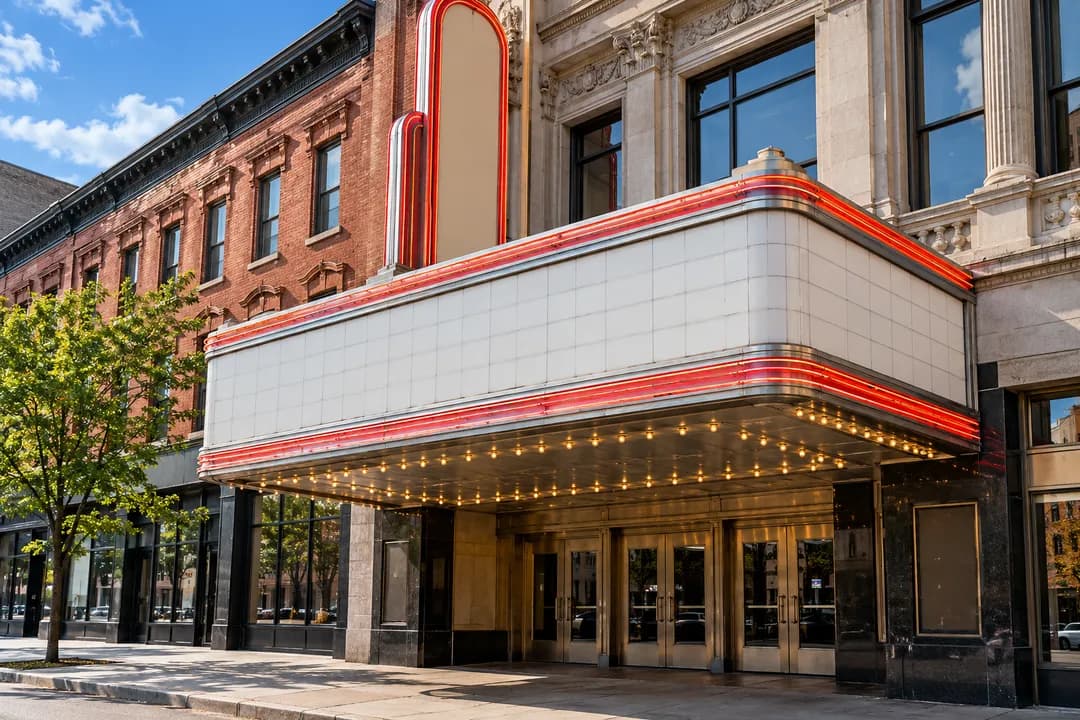
Standing proudly at 253 West 125th Street, New York, NY 10027, the Apollo Theater represents one of America's most sacred cultural shrines. Designed by George Keister and opened in 1914 as Hurtig and Seamon's New Burlesque Theatre, the venue began welcoming integrated African American audiences and performers in January 1934 under producers Leo Brecher and Frank Schiffman. The theater's legendary Amateur Night launched the groundbreaking careers of Ella Fitzgerald, who won in 1934 at age seventeen, alongside Billie Holiday, James Brown, Sarah Vaughan, and Stevie Wonder. Walking beneath the glowing crimson neon marquee and past the Apollo Walk of Fame embedded in the terrazzo sidewalk, visitors feel the pulse of twentieth-century American musical innovation. The surrounding 125th Street corridor remains Harlem's primary commercial boulevard, lined with historic brick storefronts, street merchants, and civic institutions that preserve the lively public rhythm of uptown Manhattan. This itinerary treats the Apollo as an exterior historical stop. The Apollo's own notice states that the historic theater is closed for renovation, with programming at the Victoria. A frontage stop is not a ticket or an invitation to enter the historic auditorium.
Hotel Theresa and Adam Clayton Powell Boulevard
Walking one block east to Adam Clayton Powell Jr. Boulevard brings walkers to the monumental Hotel Theresa at 2080-2090 Adam Clayton Powell Jr. Boulevard, New York, NY 10027. Erected in 1913 by architect George & Edward Blum, this thirteen-story white terracotta and red-brick Renaissance Revival structure was nicknamed the 'Waldorf of Harlem.' In 1940, the hotel dropped its segregation policies and quickly transformed into the premier social, intellectual, and political nexus of the African American elite. Prominent guests and residents included heavyweight champion Joe Louis, musician Duke Ellington, civil rights leaders Malcolm X and Martin Luther King Jr., and international dignitaries such as Fidel Castro and Nelson Mandela. Today, the preserved landmark houses commercial offices and cultural organizations, its ornate terracotta friezes gleaming in the Upper Manhattan sun while honoring a pivotal era of desegregation in American hospitality.
The Schomburg Center and West 135th Street Library
Head north on Malcolm X Boulevard to West 135th Street for the Schomburg Center. Its history needs three distinct dates. NYPL's branch records identify 1905 as the opening year of the 135th Street Branch. A specialist department developed in 1925, and the library acquired Arturo Schomburg's collection in 1926. The building's history, the department's formation, and the arrival of a collection should not be collapsed into a single founding event. Read the NYPL branch finding aid alongside NYPL's Schomburg collection guide. At this stop, the useful question is how collecting and preserving evidence supported cultural life as much as performances did. The route works as an exterior walk. Exhibition or research-room access is a separate visit, and being outside the institution does not mean that its collections are available for casual browsing.
Striver's Row and the St. Nicholas Historic District
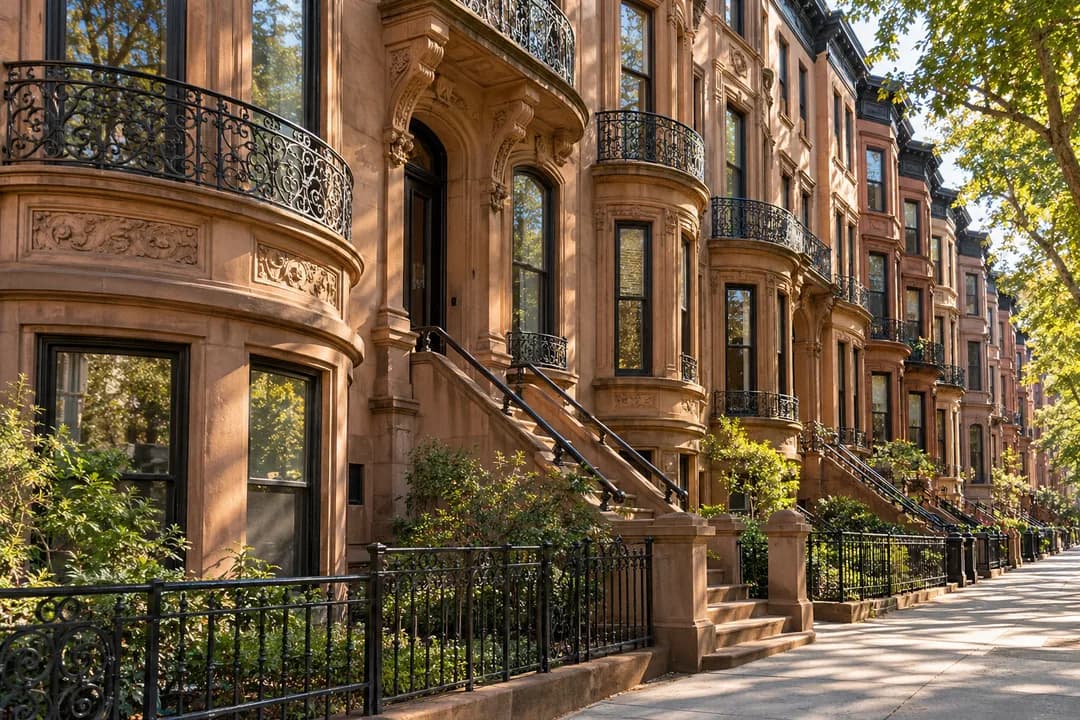
Walking west along West 138th and West 139th Streets between Adam Clayton Powell Jr. Boulevard and Frederick Douglass Boulevard brings you to Strivers' Row. Compare three architectural groups rather than treating each street as a single design. The south side of West 138th Street has red brick and brownstone buildings designed by James Brown Lord in the Georgian Revival style. The north side of West 138th and the south side of West 139th share yellow brick, white limestone, and terra cotta trim, designed by Bruce Price and Clarence S. Luce in the Colonial Revival style. The north side of West 139th has dark brick, brownstone, and terra cotta buildings designed by Stanford White of McKim, Mead & White in the Italian Renaissance Revival style. The Strivers' Row community's architectural account distinguishes these groups. Use the street sides as your comparison framework, looking from the public pavement rather than entering private rear alleys. Write down which facade you observed before attaching an architect's name to it.
Langston Hughes House and East Harlem Enclave
Return east from Strivers' Row toward Malcolm X Boulevard, walk south to West 127th Street, then continue east across Fifth Avenue onto East 127th Street toward the Langston Hughes House. A cross street runs east and west here: describing the move onto East 127th Street as a southward turn would be misleading. Hughes lived at this brownstone from 1947 until his death in 1967, after the period usually called the Harlem Renaissance. That timing is part of its interest. The house connects the earlier movement with the later working life of one of its major writers, rather than preserving his residence from the 1920s. Use the sidewalk as the viewpoint and keep any indoor program separate from this route. The change from a busy avenue to a residential block is an opportunity to slow down, read the building as a home, and avoid treating the street as a performance set.
Five Main Stops and Practical Walking Choices
Allow a generous outing for the avenue distances, road crossings, and time spent reading. The route can finish early at the Schomburg if the northern residential section would make it too long. Keep the Apollo, Hotel Theresa, Schomburg, Strivers' Row, and Hughes House in your notes as five main stops with different functions: performance, hospitality, collecting, housing, and writing. Their histories overlap without belonging to exactly the same decade. This distinction is more useful than promising seven music stops when the itinerary includes several places whose central story is not music. For a companion with limited stamina, agree on the shorter endpoint before leaving the first block. Ask the Karpo APP for places and plans that fit your interest in Harlem's cultural history, your available time, and your companions. The two images are AI-generated illustrations, not current photographs. In particular, an illustrated theater frontage does not establish that a venue admits visitors or has an event that day.
Ask Karpo for more information.
Keep reading
- SoHo Tailor Alteration Shop Finder for Sample Sale Finds
 Williamsburg Tailor Alteration Shop Finder for Bike Riders
 Upper West Side Tailor Alteration Shop Finder for Kids